The shelf is no longer won in the buyer meeting. It is won in the weeks before it, when your team has already mapped what consumers are moving toward and built a story the buyer cannot ignore. Category growth strategy in 2026 is about closing the distance between what the data is showing and what ends up in a pitch deck. The brands gaining ground are not guessing at white space. They are identifying it with real-time consumer evidence and arriving at every conversation with a proof deck, not a proposal. If you are building or defending a retail category position, this is where that work starts.
Key takeaways
- Clean label is up 182% in the past year across snack innovation, while most CPG portfolios still lead with the same ingredient architecture they had in 2023. Understanding how to prove your product deserves shelf space starts with exactly this kind of gap.
- Intense flavor is up 58% as a consumer need signal, while “unique” and “satisfying” are declining. Consumers are not looking for novelty for its own sake. They want a specific, repeatable flavor experience. That distinction changes how you brief R&D and how you pitch positioning.
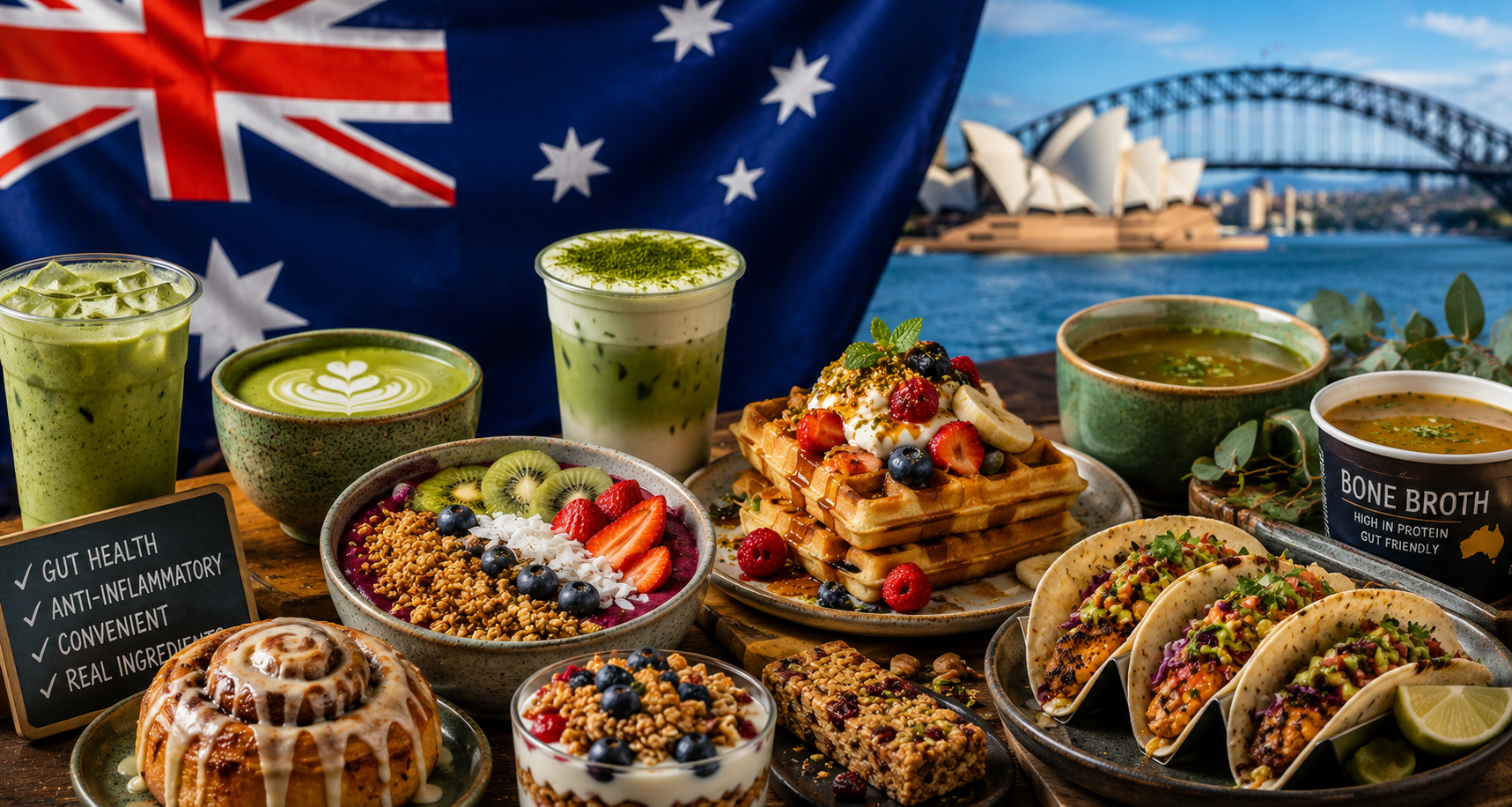
- Matcha is reaching new consumers 124% faster than a year ago, and pistachio is not far behind at 116%. Both are crossing from foodservice into retail at pace. A retail category review right now will show you whether your portfolio has a position on either before another brand takes it.
“Fresh” and “convenient” are both growing together, up 22% and 12% respectively. The gap between category management and actual consumer demand is widest here, and new retail products entering the space confirm it. This is not a premium SKU moment. It is a Tuesday product with a premium feel.
What a category growth strategy actually means in 2026
Category creation is the ultimate growth strategy when it is grounded in consumer evidence, not assumption. The brands that win incremental distribution are not the ones that show up with the broadest portfolio. They are the ones that show up with the sharpest proof that their product fills a gap the buyer’s category currently has.
That gap is almost never obvious from standard market data. Velocity figures tell you what is selling. They do not tell you what consumers are shifting toward before it shows up on the shelf. Tastewise, a human- and agent-powered food intelligence and marketing platform, surfaces the signals that sit upstream of sales data: which consumer needs are accelerating, which ingredients are crossing lifecycle stages, and where the white space in a category is actually building.
The Tastewise US consumer panel shows that clean label is growing 182% in the past year across snack innovation. That is not a niche signal. It is a structural shift in what consumers expect as a baseline. Premium is up 21% at the same time. Consumers are not trading off quality for convenience. They are asking for both. Your product innovation brief, your pack copy, and your buyer narrative all need to reflect that.
See how leading CPG teams identify white space before competitors do. Explore the product innovation solution.
How to read the signals that drive real shelf growth
Consumer demand moves in layers. The top layer is what is already on shelf and selling. The layer beneath it is what consumers are choosing in foodservice and independent retail before it becomes mainstream. The layer beneath that is what is building in consumer need signals and ingredient momentum before it reaches any menu or any shelf at all.
Your category growth strategy needs to operate across all three. Not because foresight is interesting, but because your buyer’s reset cycle runs 12 to 18 months. The moment something is trending in search, it is too late to lead the category with it. You need to be in front of the buyer 6 months before the data becomes obvious to everyone.
Across the Tastewise US consumer panel, intense flavor is growing at 58% as a consumer need signal. It is overtaking “unique” and “satisfying,” both of which are declining. That is a meaningful repositioning of what consumers are asking for in their snack. They do not want a product that surprises them once. They want a product with a flavor profile they can count on and reach for again. That changes the brief for R&D. It also changes the claim structure on pack and the conversation you have with a buyer about repeat purchase rate.
Matcha is reaching new consumers 124% faster than in the past 12 months, with pistachio at 116%. Both are in the early lifecycle stage, which means they are still accessible as a lead positioning ingredient for a new SKU. Hazelnut is up 148%. These are not just flavor trends. They are the inputs your team needs to build a retail sell-in story that shows a buyer exactly where their shoppers are heading and why your product gets there first.
Building the buyer-ready narrative from your category data

The gap most CPG teams leave in their pitch is between the signal and the story. They have data. They do not always have a narrative that connects that data to a buyer’s commercial problem. Category growth strategy lives in closing that gap.
A buyer at a major grocery retailer is making decisions under two kinds of pressure. The first is performance: what is selling, what is stagnant, and what is taking shelf space without justifying it. The second is forward-looking risk: where is the category heading and which brand helps them get there without guessing. Your job is to answer the second question so convincingly that it removes the risk from the first.
That narrative has three parts. The first is the consumer signal: what is actually shifting in behavior, framed around your specific buyer’s shopper base. The second is the category context: where the white space sits and why it is still open. The third is the product proof: why your SKU fills that space better than what is currently on shelf. Each part needs its own evidence. A strong consumer demand map gives you all three from a single data pull, not from three separate research projects spread across two quarters.
The NielsenIQ Consumer Outlook 2026 notes that in-store purchases still account for around 77% of FMCG sales. The shelf still matters enormously. What has changed is the evidence standard your buyer needs before they make a move. General category commentary no longer gets a listing. Consumer-backed, category-specific proof does.
Walk into your next buyer meeting with evidence that already holds up under scrutiny. Request a Tastewise demo.
What this means for CPG teams in 2026
The same consumer shift shows up differently depending on where your team sits. Here is what the data means by function.
Innovation and R&D. Clean label growing 182% and premium up 21% in the same category is not a contradiction. It is the brief: simple, high-quality, ingredient-forward. Your next snack SKU does not need to reinvent the format. It needs to be the cleanest, most craveable version of a format consumers already trust.
Category strategy. The decline of “unique” and “satisfying” as consumer need signals tells you that novelty alone is not a defensible shelf position. Consumers are moving toward repeatable, intense flavor experiences. Your category argument to a buyer needs to be built around consumer loyalty, not trial.
Insights and strategy. Matcha, pistachio, and hazelnut are all reaching new consumers at triple-digit growth rates. Each one is at a lifecycle stage where a CPG brand can still lead rather than follow. The window for each ingredient as a differentiated shelf position is open now. It will not be open in 18 months.
Sales teams. Every one of these signals can be translated into a buyer-specific story in under an hour when the data is already structured for sell-in. That is the difference between arriving at a meeting with category commentary and arriving with a proof deck. A strong food intelligence platform is what makes the second one repeatable across every account, every rep, and every reset cycle.
The broader category growth picture worth watching
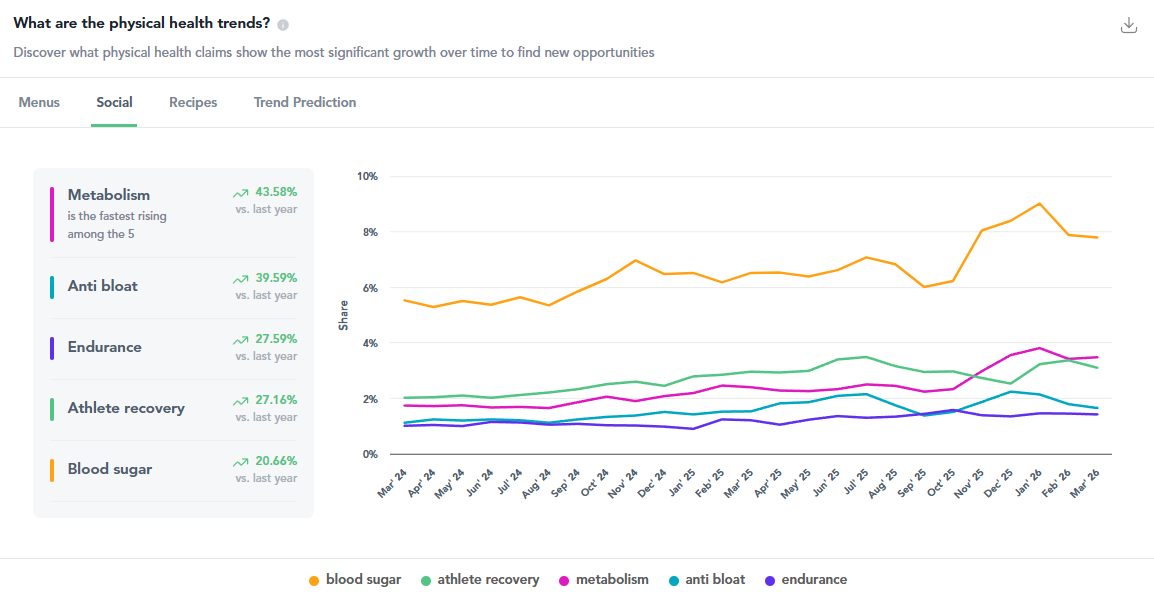
Beyond ingredient momentum, the direction of consumer need signals tells you something important about where the whole snack category is heading. Energy is up 45% as a consumer motivation. Wellness is up 14%. Gut health is growing at 36%. These are no longer niche health claims. They are becoming baseline expectations for a category that used to compete entirely on taste.
Seasonal is up 35%, which means your LTO strategy has more leverage than it did two years ago. Consumers are associating specific flavor profiles with specific times of year at an accelerating rate. That is a commercial signal for your promotional calendar, not just your innovation roadmap.
What is declining is equally instructive. Refreshing is down 38%. Satisfying is down 36%. These were defensible shelf positions for snacks in 2022. They are not today. If your current retail packaging or your buyer pitch still leans heavily on either, the consumer data suggests you are solving for a problem that has already moved on. The 2026 food and beverage trend forecast gives your team the full picture across categories before your next planning cycle closes.
Turn your category signals into your next shelf win
The white space in your category exists right now. Clean label, intense flavor, matcha, pistachio, and a fresh-meets-convenient consumer expectation are all sitting there with no clear brand owner. Most of your competitors are looking at the same velocity data and making the same incremental decisions. The brands that gain ground in 2026 will be the ones that move upstream, identify the signal before it peaks, and arrive at the buyer meeting with a story that lands.
That is what a category growth strategy built on consumer evidence looks like. Not a research project. A proof deck your team can carry into every buyer meeting that follows.
Build the category growth strategy your buyer cannot say no to.
FAQs about Category Growth Strategy
A category growth strategy is the approach a brand uses to identify where demand is building within a product category and use that evidence to secure distribution, defend shelf space, or launch new SKUs. In 2026, the most effective strategies are built on real-time consumer signals rather than historical sales data alone. Brands that lead with forward-looking evidence consistently outperform those that arrive at buyer meetings with category data that describes where the market has already been.
Start with consumer need signals, not just ingredient trends. If you know that clean label is growing 182% and intense flavor is up 58% in your category, you can build a buyer narrative around where the shopper is heading, not just what they bought last quarter. Pair that with lifecycle stage data for key ingredients and you can show a buyer precisely which gap their current shelf set has and why your product closes it. That is the conversation that gets a listing.
Most CPG teams run formal strategy cycles on a 12 to 18 month cadence, which aligns with retail reset schedules. The problem is that consumer signals move faster than that. Ingredients like matcha and pistachio are reaching new consumers at triple-digit growth rates, which means a signal that is early-stage today can be mainstream before your next planning round closes. Teams that track consumer demand continuously, rather than in quarterly snapshots, consistently have more defensible buyer conversations and shorter times from concept to shelf.