





Zamburinas are having a moment in Spain, and the timing is not accidental. Consumer interest in premium shellfish is climbing in a market where fresh seafood is simultaneously becoming more expensive and more aspirational. If your team works in innovation, category management, or retail sales for a food and beverage brand in Spain, the Spanish summer food trends around queen scallops deserve more than a passing glance. The consumer signal is real, the shelf gap is visible, and the preparation trend that is pulling the category forward is one your R&D team can build on right now.
Key takeaways
- Vieiras (scallops including zamburinas) are up 14.5% in the past year in Spain, making them the fastest-growing premium shellfish signal in the market. Consumers are choosing them ahead of established favourites like mejillón and almeja. Your innovation brief should reflect that acceleration.
- “A la plancha” is up 14.5% and holds 12.2% consumer share across Spanish foodservice, making hot-plate preparation the dominant format signal for premium shellfish this summer. Pre-marinated or easy-sear retail formats built around this behaviour have almost no brand competition.
- The gourmet canned seafood segment is gaining strong ground in 2026, with Spanish consumers actively seeking convenience-meets-premium. That intersection is where zamburinas fit perfectly. Your retail pitch has a natural home in the growing premium conservas aisle.
- “Fresco” (fresh) is up 73.5% as a consumer claim in Spain alongside “conveniente” (convenient), which is up 45.7%. The consumer is not choosing between quality and ease. They want both. Your product brief needs to deliver both.
Zamburinas trends for the Spanish consumer
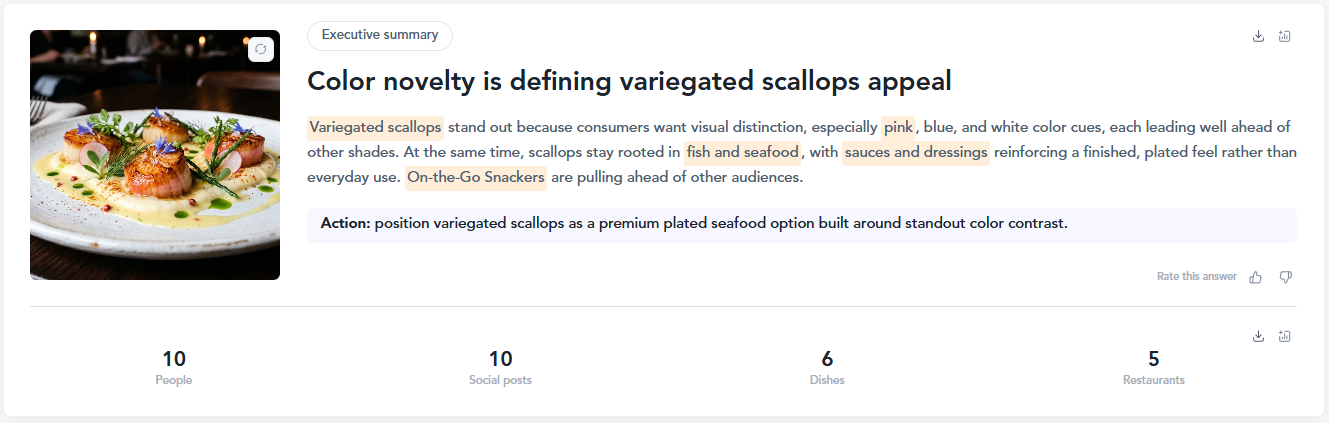
Zamburinas, Spain’s queen scallops from the Galician Rias Baixas, are moving from regional delicacy to national premium signal. Younger consumers who shop at premium and mid-premium grocery are driving this, looking for restaurant-quality experiences they can replicate at home without the skill barrier. The tapas ritual is not disappearing. It is upgrading. And zamburinas a la plancha is the upgrade consumers are reaching for.
The Tastewise platform shows scallop signals (vieiras, vieiras de mar, zamburinas) growing at 14.5% and 22.7% respectively in the past year in Spain, with 11.1% menu share on restaurant platforms. Consumer claims data is equally clear: “a la plancha” holds a 12.2% share and is growing at 14.5%, while “fresco” is up 73.5% and “conveniente” is up 45.7%. These signals read together tell a single story. The consumer wants premium, they want ease, and they are already choosing the format. The brand response has not caught up.
The opportunity is a direct line between what consumers are already doing and what the retail shelf is not yet offering. Pre-marinated zamburinas ready for the plancha. Vacuum-sealed portions with garlic, olive oil, and parsley already applied. Gourmet canned formats that carry the Galician origin story on pack. Each is a viable SKU with a consumer demand base that exists today, not in two years.
The summer food trends 2026 report covers the full picture of where premium shellfish sits within Spain’s evolving summer category.
Shifting tapas culture accelerates premium seafood retail success
The Spanish retail shopper is not the same as five years ago. The rise of gourmet grocery formats, premium convenience, and home-entertaining culture means the line between tapas bar and kitchen counter is blurring fast. According to a recent gourmet preserves trend report, gourmet canned foods are among the dominant trends in Spain in 2026, with consumers actively seeking products that combine practical formats with exceptional flavour. Zamburinas in canned and conserva formats sit directly at that intersection, with gourmet versions already appearing on delivery platforms at premium price points.
What this means for your retail pitch is straightforward. The traditional conversation about fresh seafood in Spain has been defined by barriers: price perception, preparation anxiety, and odour concerns. According to ESM Magazine’s recent seafood report, preparation difficulty and odour remain among the top barriers to seafood consumption in Spain. The counter to those barriers is exactly what a well-positioned zamburina product delivers. Pre-handled. Origin-marked. One pan. Three minutes. Done.
Category buyers at major Spanish supermarket chains are actively looking for products that reduce friction while trading the shopper up. A zamburina SKU that leads with ease-of-preparation and Galician premium provenance does both. It answers the buyer’s challenge before they ask.
High velocity seafood movements transforming Spanish shelves
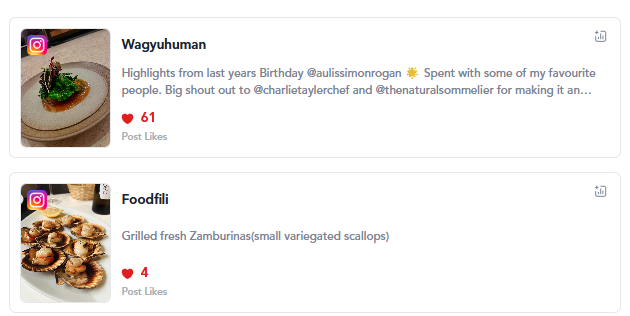
The Tastewise data for Spain’s seafood category shows a clear split between what is growing and what is stalling. Here are the signals that matter for summer 2026.
Vieiras and zamburinas: accelerating scallop demand
Consumer reach for vieiras (scallops) grew 14.5% in the past year in Spain, and vieiras de mar, the specific market designation that covers zamburinas, grew 22.7% over the same period, with 11.1% menu share on delivery and restaurant platforms. Consumer demand is already there. The menu operators are already responding. Retail has not. Your team has a window to be first on shelf with a format consumers are already choosing in restaurants.
“A la plancha”: the preparation method that owns premium shellfish
Among all consumer claims in the zamburina category, “a la plancha” holds 12.2% share and is growing 14.5% in the past 12 months. This is not a niche cooking preference. It is the dominant preparation ritual for consumers engaging with premium shellfish in Spain. A retail product built around plancha-readiness, with a seasoned or pre-marinated format, directly mirrors the consumer behaviour that is already driving demand. The sell-in story practically writes itself.
Gourmet conservas: the format bridge from foodservice to retail
The conserva segment for zamburinas is active. In the Tastewise operator data for Spain, zamburinas en salsa de vieira and zamburinas al natural in canned formats appear across delivery platform menus at price points from €5 to €9 per unit. The gourmet canned seafood trend reported by multiple Spanish food media outlets in 2026 confirms that consumers are willing to pay a premium for shelf-stable formats that carry quality cues. An origin-led canned zamburina SKU sits in this space cleanly.
Bacalao negro and cobia: the wild cards worth watching
Two ingredients adjacent to the zamburina conversation are bacalao negro and cobia, both growing above 20% in the past year in Spain. They confirm a broader consumer appetite for premium, lesser-known seafood with an authentic origin story. If your portfolio strategy is wider than a single SKU, these are the co-innovation signals worth tracking alongside zamburinas.
Identifying whitespace culinary demand to score the sweet spot
The gap between what consumers want and what currently exists on the Spanish retail shelf is where your next winning product lives. The Tastewise data is specific about where that gap sits.
Zamburinas a la plancha is the most searched and most cooked home preparation for this product in Spain. The recipe corpus shows “zamburiñas a la plancha con salsa verde,” “zamburiñas a la plancha” with two sauces, and basic plancha recipes dominating the kitchen preparation signal. The consumer knows what they want. They are making it at home from raw product bought loose or frozen. No one has packaged the answer.
The whitespace is a pre-marinated or pre-seasoned zamburina format designed for plancha cooking. Garlic, parsley, and olive oil are the top flavour companions already appearing in consumer-generated recipes and restaurant menu items. Aceite de oliva virgen is up 32.9% in the past year across the Spanish consumer panel. Perejil (parsley) holds a 0.54% menu share and is growing. Ajo (garlic) is consistently present across the top zamburina menu formats. Your R&D team has a three-ingredient flavour system with consumer demand evidence at every point.
For foodservice innovation teams, the equivalent whitespace is a more-premium, limited-time zamburina dish built for summer terraza menus. The “verano” (summer) occasion signal holds a 3.45% consumer share in Spain with 7.8% growth. “Noche fuera” (night out) is up 9.0%. The summer outdoor dining occasion is a direct entry point for a zamburina LTO that positions the dish as a celebratory but accessible choice.
Food intelligence and menu planning is where operators and CPG teams are finding the clearest signal-to-brief pathways right now.
Tracking local consumer spend across regional tiers

Spain is not one seafood market. It is several, and your retail pitch should reflect that. The Tastewise operator data for zamburinas shows the strongest menu presence in Galicia-associated restaurant brands and delivery operators, with strong representation in Madrid via delivery platforms. The coastal north and the inland capital behave differently, and both are addressable with the right framing.
In Galicia and the northwest, the zamburina story is origin authenticity. The consumer knows Cambados. They know the Rias Baixas. A product that leads with that provenance wins the premium shelf position in the region that produces the ingredient. The anchor framing for regional supermarket buyers is locality and traceability.
In Madrid and other inland metropolitan markets, the consumer relationship with zamburinas is different. They are choosing it as a gourmet experience signal, not as a familiar local product. Here, the retail pitch is restaurant-quality convenience. The “noche fuera” and “gourmet” signals that dominate the premium seafood consumer needs data in Spain (gourmet is at 4.6% share and up 17.9% in the broader market, while “noruego” and “paleo” claims dominate the premium seafood cluster) tell you the inland consumer wants the status cue, not the origin story. Two different messages. Same product. Your sales team needs both versions of the deck.
For coastal tourist regions, the summer occasion is the commercial driver. Operators in Andalucía, Valencia, and the Balearics are already seeing seafood restaurant pricing rise. A zamburina product positioned as an accessible luxury for summer entertaining works across the foodservice operator and retail holiday-format pitch simultaneously.
What this means for CPG brands in 2026
The data points to four specific jobs your team can execute now.
Innovation and R&D
The flavour brief is already written by consumers. Zamburinas a la plancha with garlic, parsley, and extra-virgin olive oil is the combination appearing consistently across home recipes and restaurant menus. A pre-marinated frozen or fresh-chilled format in a plancha-ready tray delivers what consumers are already making, in a format they do not yet have at retail. Add Rias Baixas origin certification and you have a premium positioning that commands a price premium without requiring consumer education.
Category management
Vieiras and zamburinas are the fastest-growing shellfish signal in Spain’s premium seafood category in the past year. They are outpacing mejillón, almeja, and chipirones on growth velocity. In basket penetration terms, a premium zamburina SKU trades the shopper up from standard shellfish. Your category story for the buyer is straightforward: the consumer is already moving this direction. Give them a place to land.
Sales teams
Move away from generic seafood sample kits and into retailer-specific pitch decks built on real-time consumer demand signals. The whitespace opportunity for pre-marinated zamburina formats is visible in the Tastewise data today. Your buyer does not need to take a risk. They need to see where their shopper is already heading. The retail sales intelligence platform is where that deck gets built.
Marketing and communications
The summer seasonal window is tight. “Verano” as a consumer occasion signal is growing at 7.8% in Spain. The July-August peak for premium shellfish consumption in Spanish foodservice aligns directly with the summer entertaining and outdoor dining occasions that are driving consumer engagement. A campaign built around the zamburina a la plancha ritual, tied to summer hosting, speaks to real consumer behaviour. The consumer marketing playbook has the framework.
Preparing for early store resets with predictive AI
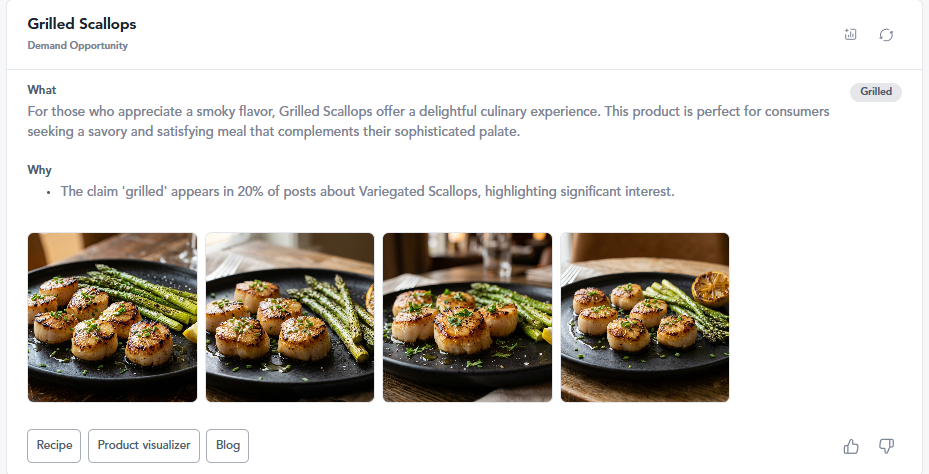
The 2026 category review cycle for Spanish supermarkets is already in motion. Supermercados Mas, Supermercados Dia, and other major chains appear in the Tastewise whitespace data as operators with active opportunity gaps in premium shellfish. That is not a coincidence. It is a signal that your category management team should be building the brief now, not after the reset.
The brands that will win the 2027 shelf position are the ones making the pitch in Q3 2026. The consumer demand data exists. The flavour system is clear. The format whitespace is open. What separates a brand that wins the listing from one that does not is the ability to walk into that buyer meeting with a proof deck built on real consumer signals rather than generic category trend reports.
AI platforms for food trend analysis are changing how fast that brief can be built and how specifically it can be targeted to a buyer’s exact regional footprint. The brands using that capability are already ahead of where the category will be in 12 months.
FAQs about zamburina food trends
The strongest consumer signal around zamburinas in Spain right now is “a la plancha” preparation, which holds a 12.2% share in the zamburina consumer claim data and is growing at 14.5% in the past 12 months. Flavour companions showing consistent growth alongside this format are garlic, parsley, and extra-virgin olive oil. From a channel perspective, delivery platform menu data shows zamburinas appearing at premium price points between €12 and €27 per serving, with both plancha and gratinado formats driving the highest average transaction values.
Vieiras and zamburinas are the fastest-growing premium shellfish signals in Spain, up 14.5% to 22.7% in the past year, in a category where fresh seafood consumption has declined overall due to price and preparation barriers. That combination creates a specific opportunity: the consumer wants premium shellfish, but the fresh-fish aisle is losing them. A pre-marinated, plancha-ready retail format removes the preparation barrier while trading the shopper up on value. The gourmet canned format is a second entry point in a segment growing strongly in Spain in 2026.
The most effective retail pitch for premium shellfish in Spain in 2026 is one built on consumer demand signals specific to the buyer’s regional footprint. A buyer in Galicia responds to origin provenance data. A buyer in Madrid responds to gourmet convenience signals. A buyer covering coastal tourist regions responds to summer occasion data. The food intelligence platform gives your sales and category teams the regional signal layer they need to personalise the pitch and back it up with evidence the buyer can take to their own commercial team.

We’d love to learn your goals and see how Tastewise fits
We’d love to learn your goals and see how Tastewise fits
Get a personalized demo
Good taste. Wise move.
Your demo request is confirmed. We’ll reach out within one business day to schedule your walkthrough.
What happens next

See what’s driving demand, then turn it into a sell-in story for retailers and operators.
- Connect consumer panels, market trackers, and agents into one evidence view
- Get the “why” behind what’s changing, with explainable demand drivers
- Walk away with a buyer-ready narrative and next steps to activate
Trusted by





“Tastewise is my secret tool for knowing what consumers want next and why.“