





The shelf is not getting bigger. Retail buyers in 2026 are working with the same linear footage they had three years ago, and the number of new retail products pitching for space has never been higher. Buyers are not hostile to innovation. They are hostile to risk. If your team is preparing a sell-in for new retail products this year, the question is not whether your product tastes great. The question is whether you can prove, before a single unit ships, that it will move. 85% of new CPG products fail within their first year, how will your product be different?
Key takeaways
- Hot honey is growing 27% in the past 12 months on pizza menus with very little brand response at retail. When consumer demand outpaces supply, the buyer has a problem your product can solve. That is the conversation you want to be having.
- Comfort is the fastest-growing consumer experience signal in food and beverage, up 63% since last year. Buyers are watching for products that fit how consumers actually feel right now, not where trends were 18 months ago.
- Ranch features on nearly 4 in 10 pizza menus and pizza operators are recording the highest growth in jalapeno additions of any cuisine. Flavor combinations with this kind of menu-level traction give buyers a proof point they can take to their category team.
- Consumer whitespace. Demand that is real but unbrandowned. It is the single strongest argument you can walk into a buyer meeting with. Your sell-in story needs one.
What buyers actually weigh when evaluating new retail products
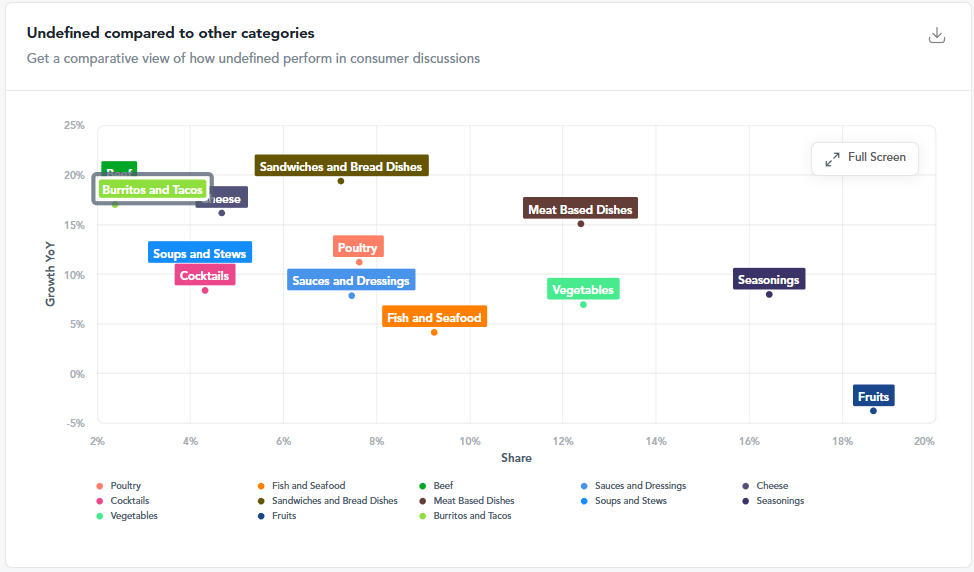
Retail buyers are not evaluating your product. They are evaluating the risk of listing it. A buyer’s job is category performance, not product discovery. Every new SKU they add displaces something that already has velocity data behind it. Your pitch has to answer one question before it answers any other: why will this grow the category rather than just redistribute it?
The shift in how buyers think about new products in retail has accelerated since 2023. Focus groups and trend reports are table stakes. What moves buyers now is real-time consumer demand evidence. Signals that show shoppers are already looking for what you are selling, and that no one has given it to them yet. That gap between demand and supply is called whitespace, and it is the most persuasive thing on any sell-in slide.
The 2026 buyer’s mindset: incremental growth over novelty
Buyers are measured on category performance, not on how many new brands they list. That means the pitch that wins is the one that shows your product adds to the total basket value of the aisle rather than trading shoppers away from an existing SKU. This is what buyers mean when they say they want incremental growth.
The brands getting listed in 2026 are the ones who come in with a consumer jobs-to-be-done argument. Not “our product is on trend” but “here is a specific consumer need that your current shelf does not meet, here is the size of that need, and here is how our product is built to fill it.” That is a different kind of conversation, and it requires a different kind of preparation.
Top 10 high-growth signals for new retail products in 2026
These are the consumer demand signals showing the strongest momentum right now. Each one represents a gap your team can build toward.
1. Hot honey
Sweet heat with broad cross-category reach. Hot honey is growing 27% in the past year and is indexed 115 times higher on pizza than any other category. Buyers see it as a flavor platform with clear consumer pull and almost no brand-level response yet.
2. Comfort-forward flavor profiles
Consumer demand for comfort as an eating experience is up 63% since last year. Buyers are looking for products that deliver a sense of ease and indulgence together, particularly in snacking and meal kit formats.
3. Sweet heat combinations
Hot honey plus jalapeno plus ranch is emerging as the defining trio of the next product cycle. Each ingredient has independent menu traction. Together they signal a flavor story that consumers are already building themselves.
4. Protein-led builds
Consumers are actively seeking protein at more occasions, not just at breakfast. Buyers in the better-for-you aisle want to see protein positioned as a genuine functional benefit with the demand data to back it.
5. Birria and brisket
Both are in the trending lifecycle stage on pizza and are moving into adjacent categories. Consumers are comfortable with protein-forward builds that borrow from other food cultures. Buyers in bold flavor and ethnic-inspired aisles are watching.
6. Sourdough and fermented bases
Still emerging but gaining ground as fresh and digestive-health signals rise. Buyers are looking for products that can carry a clean-label story alongside a flavor story.
7. Ranch as a platform
Ranch features on nearly 4 in 10 pizza menus nationally. It is no longer a condiment. It is a flavor system. Buyers see ranch-adjacent SKUs as low-risk additions with proven demand behind them.
8. Ancient grains
Emerging in pizza and moving into crackers and snacks. Consumer interest in grain provenance is growing alongside the fresh signal. Buyers in natural and specialty channels are most receptive.
9. Functional heat
Jalapeno is recording its highest menu growth on pizza of any cuisine. The consumer pairing of heat with function. Digestive health, metabolism, immune support. This combination is just beginning to show up at retail and buyers in the health aisle are paying attention.
10. Regional flavor layering
Consumers are building flavor combinations that reflect specific regional food cultures. Buyers who manage regional accounts are increasingly looking for products that feel locally resonant, not nationally generic.
Identifying consumer whitespace for new retail products
Whitespace is not the same as a trend. A trend tells you where consumer interest is moving. Whitespace tells you where that interest has no brand answer yet. The distinction matters because buyers do not fund trends. They fund solutions to unmet demand.
CPG marketing teams that win at retail in 2026 are the ones identifying specific flavor pairings, functional benefits or occasion-based needs that consumers are already signaling but that the current shelf does not serve. Hot honey on pizza has 27% growth in the past year and 94% menu share on pizza menus that feature it. At retail, that flavor story is largely unclaimed. That is whitespace with consumer demand already behind it.
Your team can find this kind of signal by looking at where menu growth is high, brand response is low, and consumer motivation data points to a recurring need rather than a seasonal one. The combination of those three factors is what turns a category observation into a buyer conversation.
Building the sell-in story that holds up under scrutiny
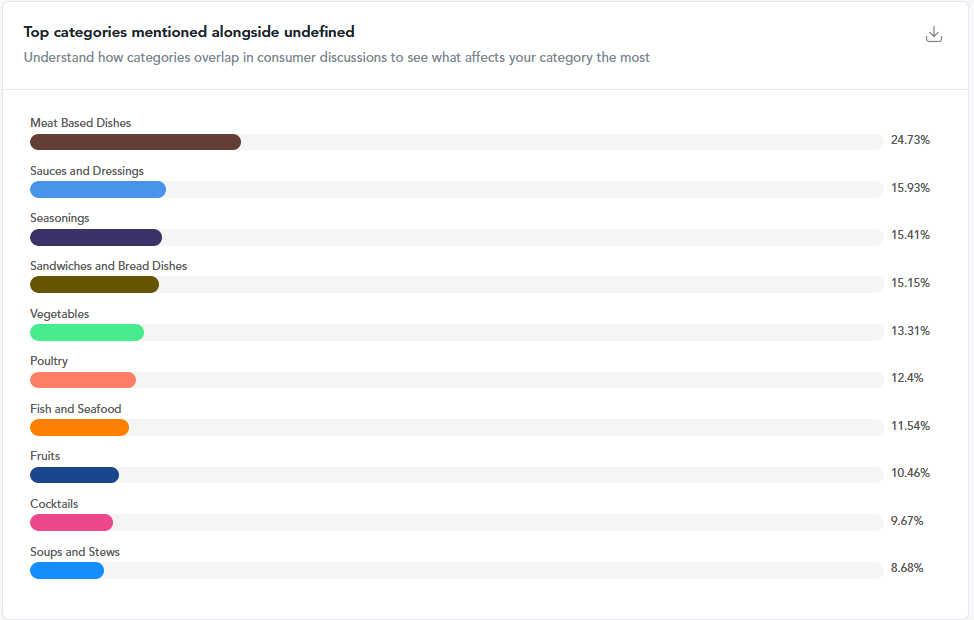
The strongest sell-in stories are not creative. They are evidence-based. A buyer will pressure-test your velocity projections, your margin assumptions and your category fit argument. Your job is to make sure none of those answers require a leap of faith.
Use menu data to show that consumers are already choosing this flavor combination in foodservice contexts, then frame it as unmet demand at retail. A product that consumers are ordering in restaurants but cannot find on a shelf is a category gap, and category gaps are exactly what buyers are paid to fix.
Consumer motivation data strengthens the argument further. When you can show a buyer that the comfort signal is up 63% in the past 12 months and your product is built around a comfort-first eating occasion, you are not asking them to bet on a hypothesis. You are connecting your product to a documented shift in how consumers want to feel when they eat. The food intelligence tools your team uses to find these signals are the same tools that turn a sample kit into a proof deck.
Your sell-in story is only as strong as the evidence behind it. See how your team can walk into every buyer meeting with consumer demand data that holds up under scrutiny.
Justifying premium placement with category analytics
Premium shelf placement. Eye level, end cap, feature position. Each requires a stronger argument than a good product. Buyers need to show their category director that the placement decision will improve the performance of the entire aisle, not just the one SKU.
The argument that works is demographic incremental. Show that your product brings a shopper into the aisle who was not already buying from the category, or that it increases the basket size of a shopper who already visits. Consumer demand data from food intelligence platforms can show you which consumer segments are underserved by the current shelf set, and where your product sits in relation to that gap.
Hot honey as a retail SKU, for example, can attract a younger, flavor-curious shopper who currently buys premium hot sauce but has no sweet-heat option at a comparable price point. That is a new consumer entering the aisle. That is the incremental argument a buyer needs to justify the placement.
Regional relevance and localized demand for new products in retail
In-store purchases still account for around 77% of FMCG sales, which means the physical shelf is not going anywhere. The regional buyer managing that shelf needs localized evidence, not national aggregates.
Buyers do not manage national shelves. They manage regional ones. A product with strong aggregate consumer data may still underperform if the demand is concentrated in markets the buyer does not serve. Your pitch needs to reflect the geography of the demand, not just the total signal size.
The Tastewise food intelligence platform tracks demand signals at a regional level, which means your team can show a Midwest buyer where comfort-forward, familiar flavor profiles are growing fastest in their region, and show a West Coast buyer where fresh and functional signals are leading. Two different stories for two different buyers, both grounded in the same underlying data.
This kind of localization is increasingly the difference between a listing and a pass. Buyers who have been burned by nationally trending products that flatlined in their region are now asking for regional demand evidence as a standard part of the pitch process. If your team cannot provide it, the brand in the next slot probably can.
What this means for CPG teams preparing new retail products in 2026
For innovation and R&D teams
Consumer demand signals are the earliest possible validation for a new concept. Before you commit development resources to a SKU, check whether the flavor combination, functional benefit or occasion it is built around has real consumer traction or just category-level interest. The two are not the same and buyers can tell the difference.
For category managers
Your job in the sell-in is to show that the new SKU improves your total category contribution, not just your brand share. Bring the basket analysis and the consumer demographic argument. Show the buyer what the shelf looks like before and after your product is in it.
For sales teams
Walk into the buyer meeting with a consumer demand map, not a sample kit. Show where the demand is, where the whitespace is, and exactly where your product sits in that picture. That is a conversation a buyer can take to their category director.
For marketing teams
CPG marketing in 2026 is increasingly about generating the evidence that sales teams need for retail conversations, not just the creative that consumers see on shelf. Build the sell-in narrative at the same time you build the consumer campaign.
The future of new retail products: what 2027 is already signaling
The next evolution in retail buying is more frequent shelf resets driven by faster-moving consumer signals. Buyers who have access to real-time demand data will begin resetting shelves on a rolling basis rather than on fixed annual cycles. Brands that are not tracking consumer signals continuously will find themselves on the wrong side of those resets.
Hyper-personalized retail tiers. Shelves that vary significantly by store cluster rather than just by region. These are already being piloted by several major retailers. The implication for brands is that localized consumer demand evidence will become a baseline expectation, not a differentiator. The pitch that lands in 2027 will require granular demand data as standard.
Your team’s competitive advantage is not just having access to this data. It is building the internal workflow to turn it into a buyer-ready story in hours, not weeks. That is where the speed advantage lives, and it is already separating the brands getting listed from the ones waiting for the next review cycle.
Your next buyer meeting is already on the calendar. The brands walking in with consumer demand evidence are the ones getting listed. See how leading CPG brands use Tastewise to build buyer-ready stories from real-time data before the pitch.
FAQs about new retail product evaluation
Buyers are primarily evaluating risk. They want to see evidence that a product will grow their category rather than redistribute existing sales. Consumer demand data, whitespace analysis and regional demand evidence are now standard expectations in a sell-in meeting, not premium additions. Brands that come in with documented consumer traction are significantly more likely to secure a listing than those relying on trend reports alone.
Whitespace is the gap between consumer demand and available supply. Your team can find it by looking at where specific flavor profiles, functional benefits or occasion-based needs are growing in foodservice but have little or no brand representation at retail. Menu data is one of the strongest early signals because foodservice operators respond to consumer demand faster than retail cycles allow. A flavor combination gaining strong menu traction but absent from retail shelves is a whitespace opportunity with evidence behind it.
Buyers manage specific regional territories and they are increasingly asking for localized demand evidence as part of the standard pitch. A product with strong national aggregate data may still underperform in a specific region if the demand is concentrated elsewhere. Your team should be able to show regional signal strength for the buyer’s territory as part of the sell-in narrative. Brands that provide this level of specificity demonstrate both preparation and a genuine understanding of how the buyer’s business works.



We’d love to learn your goals and see how Tastewise fits
We’d love to learn your goals and see how Tastewise fits
Get a personalized demo
Good taste. Wise move.
Your demo request is confirmed. We’ll reach out within one business day to schedule your walkthrough.
What happens next

See what’s driving demand, then turn it into a sell-in story for retailers and operators.
- Connect consumer panels, market trackers, and agents into one evidence view
- Get the “why” behind what’s changing, with explainable demand drivers
- Walk away with a buyer-ready narrative and next steps to activate
Trusted by





“Tastewise is my secret tool for knowing what consumers want next and why.“