







The sushi food trend is still growing, but the behavior behind it is shifting fast. Tastewise Category Dashboard data shows sushi sits at 1.0% social share with +19.3% YoY growth, after a major spike and a recent decline. That pattern matters for brands and operators: the demand is real, but the “viral spike” phase is unstable. The opportunity now is execution through formats, flavor intensity, and ingredient choices that match how people are eating sushi right now.
Sushi trend overview
- Sushi holds 1.0% social share and is up +19.3% YoY, after peaking and then declining.
- “Intense flavor” is the fastest-rising need at +338%, pushing bolder, sauce-forward builds.
- Top dishes include rice (8.8%), sashimi (7.8%), and nigiri (6.2%), keeping classic formats central.
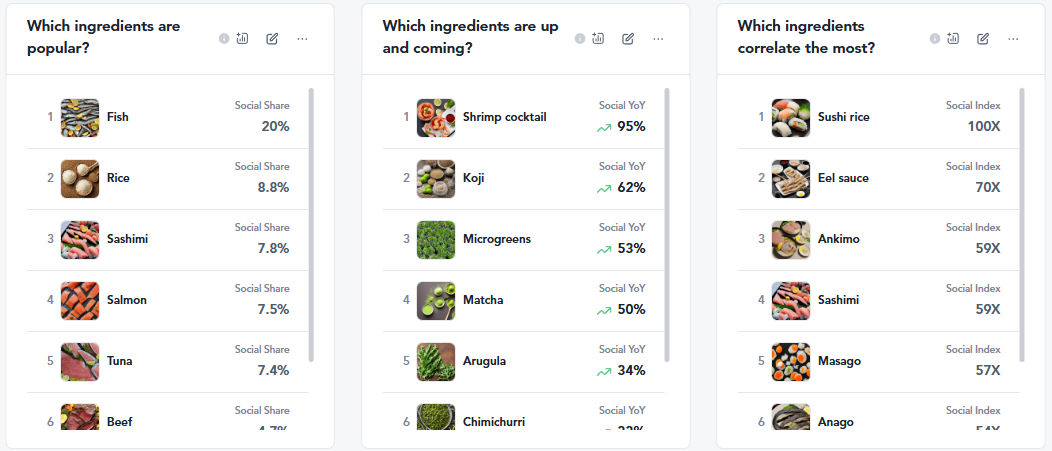
- Shrimp cocktail (+95%), koji (+62%), and microgreens (+53%) are climbing fast, pointing to premiumisation and deeper flavour.
Sushi is growing, but the hype curve is flattening
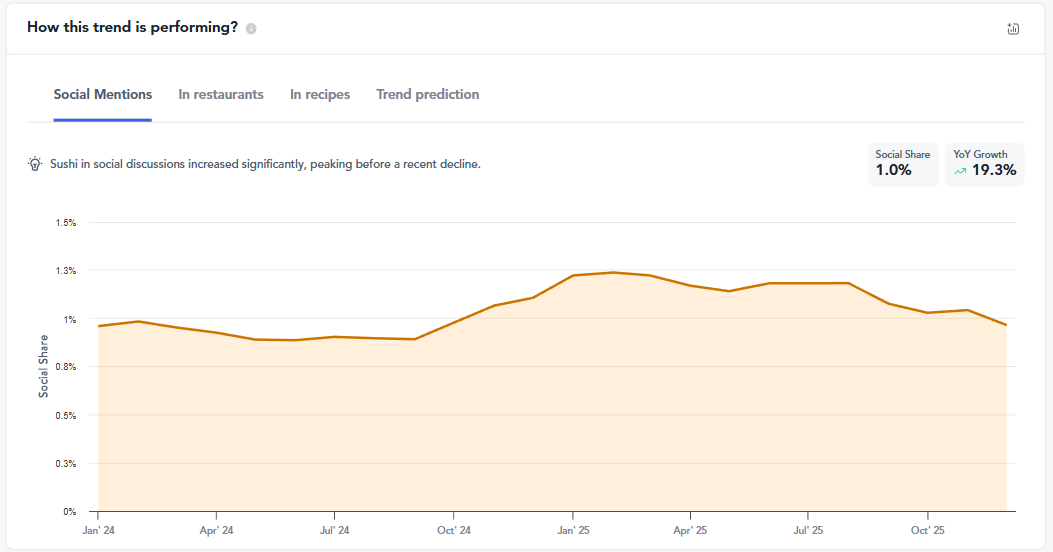
Tastewise Trend Performance shows sushi climbed sharply, peaked, then pulled back. That’s not a collapse. It’s a reset.
For CPG and foodservice, this changes the playbook:
- Big seasonal bursts become harder to predict
- Repeatable menu items and retail SKUs become more valuable than one-off gimmicks
- Winning depends on building products that perform even when the conversation cools
This is why the sushi food trend is less about awareness and more about conversion: what consumers actually order, cook, and repurchase.
“Fresh” is expected. The growth is in intense flavour.
Tastewise Consumer Needs data explains what consumers want when sushi shows up in their feed.
Top needs discussed:
- Tasty (15%)
- Fresh (9%)
- Attractive (7%)
- Spicy (5%)
- Fun (4%)
Those are baseline drivers. The growth drivers are different.
Up-and-coming needs include:
- Intense flavor (+338%)
- Silky (+198%)
- Sweet and savory (+160%)
- Depth (+130%)
- Buttery (+127%)
- Ritual (+119%)
- Playful (+112%)
This is the clearest shift inside the sushi food trend: consumers want bigger sensory payoff. More sauce. More richness. More texture contrast.
What that means in product terms
- Spicy tuna doesn’t just mean heat. It means creamy heat (mayo-based), plus texture.
- “Silky” and “buttery” support fattier fish cuts, richer toppings, and smoother sauces.
- “Depth” maps to fermentation and aged flavors, not just salt.
The core dish set is stable, but the meal formats are changing
Tastewise Dish Insights shows what sushi consumers are actually talking about most:
Most popular dishes by social share:
- Rice (8.8%)
- Sashimi (7.8%)
- Soup (7.3%)
- Nigiri (6.2%)
- Maki (5.3%)
- Ramen (4.2%)
- Sake (3.7%)
This isn’t a roll-only story. Rice and sashimi are the anchors. Soup is also a top companion, which pushes sushi into a fuller meal occasion instead of a “light bite.”
For foodservice, that supports:
- sushi + soup bundles
- lunch combos with warm items
- “pick 2” builds that don’t rely on specialty rolls alone
That’s how you make the sushi food trend durable in a menu strategy.
Emerging items show where sushi demand is expanding
Tastewise Dish Insights also shows which related dishes are moving up the fastest:
Up-and-coming dishes (social YoY growth):
- Japanese BBQ (+47%)
- Matcha latte (+44%)
- Truffle fries (+44%)
- Filet mignon (+40%)
- Asian beer (+38%)
- Coconut shrimp (+38%)
- Sando (+35%)
This cluster matters because it describes what sushi is being paired with and what it’s competing against.
Japanese BBQ and sando growth pushes Japanese flavours into:
- grilled proteins
- handheld formats
- higher-satiety meals
That’s a different job than traditional sushi rolls. It also raises the bar for sushi to feel more “worth it” in a meal decision.
For CPG, this is a cue to build around:
- Japanese flavour systems that work across formats (bowls, sandwiches, proteins)
- multi-part meal kits rather than single items
- pairings that travel well (ready-to-drink, snackable sides)
The sushi menu foundation is set, but roll innovation is getting crowded
Tastewise Dish Correlation data shows a tight cluster of roll items all indexing similarly:
- California roll (102X)
- Tekka maki (102X)
- Nigiri (102X)
- Dragon roll (102X)
- Maki (102X)
- Tempura roll (102X)
- Spicy tuna roll (102X)
When everything correlates at roughly the same strength, differentiation gets harder. Operators can’t rely on “another roll” to create a new reason to buy.
The better path inside the sushi food trend is to innovate through:
- toppings and sauces
- texture engineering (crunch, tempura bits, crispy onions, seeds)
- temperature contrast (warm proteins + chilled rice)
- hybrid formats (bowls, salads, sandwiches)
Ingredients show a split: premium seafood plus fermentation and greens
Tastewise Ingredient Performance shows what’s driving sushi conversations.
Most popular ingredients by social share:
- Fish (20%)
- Rice (8.8%)
- Sashimi (7.8%)
- Salmon (7.5%)
- Tuna (7.4%)
- Beef (4.7%)
- Shrimp (4.3%)
Fish dominates at 20%, which keeps seafood quality and sourcing central to the sushi food trend. But the growth list shows what’s changing around that core.
Up-and-coming ingredients (social YoY growth):
- Shrimp cocktail (+95%)
- Koji (+62%)
- Microgreens (+53%)
- Matcha (+50%)
- Coconut shrimp (+38%)
- Arugula (+34%)
- Chimichurri (+33%)
This isn’t one direction. It’s three:
1) Premiumisation through shrimp and seafood upgrades
Shrimp cocktail at +95% YoY points to more premium seafood cues and plated presentation. That supports:
- elevated shrimp rolls
- shrimp-topped nigiri
- sushi trays with “special occasion” positioning
2) Depth through fermentation
Koji at +62% YoY fits the rising “depth” need (+130%) from Consumer Needs. Koji-based marinades, glazes, or seasoning blends give:
- savoury complexity
- longer flavour finish
- a reason to trade up
3) Freshness redefined through greens
Microgreens (+53%) and arugula (+34%) modernise “fresh” without relying on the usual cucumber/avocado combo. For product development, greens can become:
- a garnish system
- a texture contrast
- a premium visual cue
What consumers associate most with sushi isn’t what will drive growth
Tastewise Consumer Needs shows “Japanese” dominates the conversation (95%). That’s the identity lock-in. But identity isn’t the growth lever anymore.
Growth is coming from sensory needs:
- Intense flavor (+338%)
- Silky (+198%)
- Buttery (+127%)
- Depth (+130%)
- Sweet and savory (+160%)
If you’re building into the sushi food trend, your innovation brief should start with these attributes, then map them to formats that scale.
How to execute the sushi trend in foodservice and CPG
Build products that hold up when social interest cools
Tastewise Trend Performance shows sushi peaked and declined after growth. That makes consistency the priority.
Foodservice execution
- Keep 1–2 hero rolls, but expand into bowls and warm sides
- Use soup and rice-based pairings to lift check size (both are top dishes)
- Push sauce-led LTOs that hit “intense flavour” without rebuilding the kitchen
CPG execution
- Sushi rice is the #1 correlated ingredient (100X), so lean into rice solutions: seasoned rice kits, frozen rice bases, or rice-forward meal builders
- Sauce kits and toppings drive repeatability better than fragile raw formats
- Use fermentation cues (koji) to deliver “depth” without adding complexity for the consumer
Treat sushi as a platform, not a single item
Tastewise Dish Insights shows sushi overlaps with ramen, soup, and sake in trending dishes. That creates space for platform strategies:
- Japanese meal bundles
- “mix-and-match” trays
- pairings that feel complete, not snacky
This is how the sushi food trend becomes a system that can scale across channels.
Where the sushi trend is easiest to win
If you need the shortest path to impact, the data points to three moves:
Increase flavour intensity
The fastest-rising need is Intense Flavor (+338%). Build around sauces, spice, and umami.
Change formats toward fuller meals
Rice (8.8%) and soup (7.3%) are top dishes, so consumers are already eating sushi as a meal set.
Modernise the ingredient story
Premium seafood cues (shrimp cocktail +95%) plus fermentation (koji +62%) plus greens (microgreens +53%) match where the sushi food trend is moving.
FAQs about Sushi food trend
Yes. Tastewise Trend Performance shows the sushi food trend is up +19.3% YoY with a 1.0% social share. Social discussions spiked earlier and then declined, which points to steady demand without constant viral lift.
Tastewise Consumer Needs shows the most discussed drivers are Tasty (15%), Fresh (9%), Attractive (7%), Spicy (5%), and Fun (4%). The fastest growth is coming from sensory needs like Intense flavor (+338%), Silky (+198%), and Sweet and savory (+160%).
The base is stable, but the growth is moving toward bigger flavor and fuller meals. Tastewise Dish Insights shows consumers still anchor on rice, sashimi, nigiri, and maki, while emerging interest is building around Japanese formats that feel more filling and craveable.
Tastewise Dish Insights shows the top dishes by social share are Rice (8.8%), Sashimi (7.8%), Soup (7.3%), Nigiri (6.2%), Maki (5.3%), Ramen (4.2%), and Sake (3.7%). Sushi is being consumed as a meal set, not only as rolls.
Tastewise Dish Insights shows the fastest-growing related dishes include Japanese BBQ (+47% YoY), Matcha latte (+44% YoY), Truffle fries (+44% YoY), Filet mignon (+40% YoY), Asian beer (+38% YoY), Coconut shrimp (+38% YoY), and Sando (+35% YoY). This supports a more indulgent Japanese food occasion around sushi.
Tastewise Ingredient Performance shows the most popular ingredients are Fish (20%), Rice (8.8%), Sashimi (7.8%), Salmon (7.5%), Tuna (7.4%), Beef (4.7%), and Shrimp (4.3%). Fish leads the conversation by a wide margin, so seafood cues remain the centre of the trend.



We’d love to learn your goals and see how Tastewise fits
We’d love to learn your goals and see how Tastewise fits
Get a personalized demo
Good taste. Wise move.
Your demo request is confirmed. We’ll reach out within one business day to schedule your walkthrough.
What happens next

See what’s driving demand, then turn it into a sell-in story for retailers and operators.
- Connect consumer panels, market trackers, and agents into one evidence view
- Get the “why” behind what’s changing, with explainable demand drivers
- Walk away with a buyer-ready narrative and next steps to activate
Trusted by





“Tastewise is my secret tool for knowing what consumers want next and why.“