





Your retail shelf strategy is what separates the brands that get listed from the ones that get passed over. Retail resets are moving faster, and the brands winning shelf space in 2026 are the ones walking into buyer meetings with evidence, not assumptions. If your pitch still leans on brand heritage and projections, the buyer across the table is already ahead of you. Proof is what closes a listing.
Key takeaways
- One in four new CPG SKUs is no longer purchased a year after launch, rising to around 40% by year two (Marketing Letters, 83,719 US product launches). Brands that beat those odds validate against live demand before committing to development.
- FMI data shows just 7.1% of all US grocery sales were completed online in 2024. Physical retail is still where revenue is made. Your retail shelf placement strategy is not optional.
- White space identification is now table stakes in category reviews. Show buyers the gap your product fills, not just what it does.
- Consumer demand signals move faster than annual planning cycles. Brands using real-time data reach buyers with the right story before competitors have finished their briefs.
Retail shelf strategy in 2026: what the data landscape looks like
Retail buyers are category managers first. They need to justify every facing, defend every new listing, and prove every onboarded product grows the category. The question is no longer “why is your product good?” It is “why does it belong here, for this shopper, in this store?”
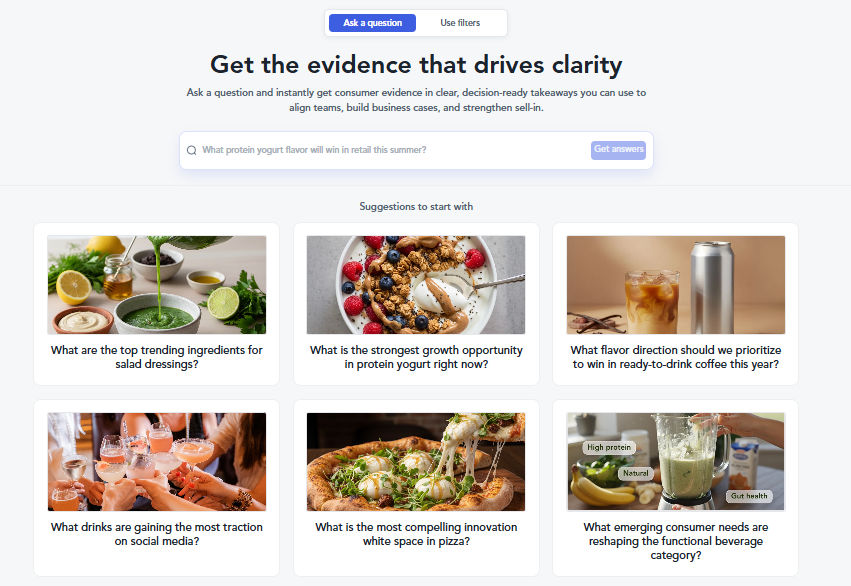
Tastewise’s food intelligence platform makes it possible to answer that with real demand signals across menus, recipes, and consumer behavior. Brands that build retail readiness into their process arrive at retail category reviews with narratives that hold up under scrutiny. Make sure to check out how Tastewise supports retail sell-in and new products in retail
The 2026 retail pitch: replacing gut feel with AI evidence
Instinct is not a retail shelf strategy. Consumer preferences cycle through lifecycle stages faster than most annual planning can track. A flavor trending today may plateau before your SKU hits the fixture.
Your team needs signals that reflect where the consumer is now: which motivations are gaining momentum, which ingredients are moving from menus to mainstream, which combinations already have traction. The brands winning listings in 2026 show buyers that demand already exists. They are not asking buyers to bet on something new.
What retail buyers actually look for in new products
Every listing decision is a category decision. When buyers evaluate a new retail product, they ask three things: does this grow the category, does it serve a need the current range misses, and can the brand prove it with data they can defend internally?
Category uplift is what buyers care about most. If your product answers a motivation that pushes shoppers off-shelf toward a competitor, that is your story. A sell-in story built on live demand signals is one a buyer can take upstairs. One built on brand instinct is one they have to take on faith.
Building retail readiness: creating your data-backed sell-in story
Raw signals are not a pitch. They become one when your team translates them into a structured argument that mirrors the way a buyer thinks. Open with the consumer need, move to the evidence it is real and growing, then introduce your product as the answer to that specific gap.
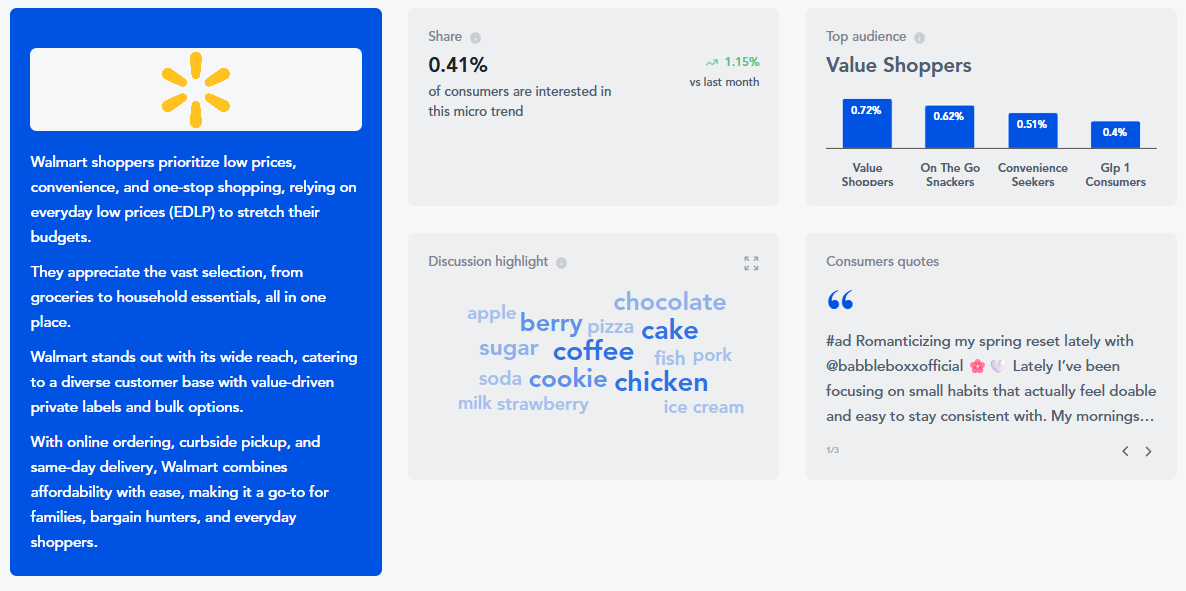
Tastewise’s retail sales solution lets your team build that narrative with the specificity buyers expect. Frame your pitch around the exact shopper motivations growing in the buyer’s banner. That precision shortens the internal sell-in cycle because you are not waiting on custom research to validate a concept you already believe in.
Book a 20-minute demo to see how your team can walk into every buyer meeting with a proof deck ready.
Identifying consumer white space to defend your retail shelf
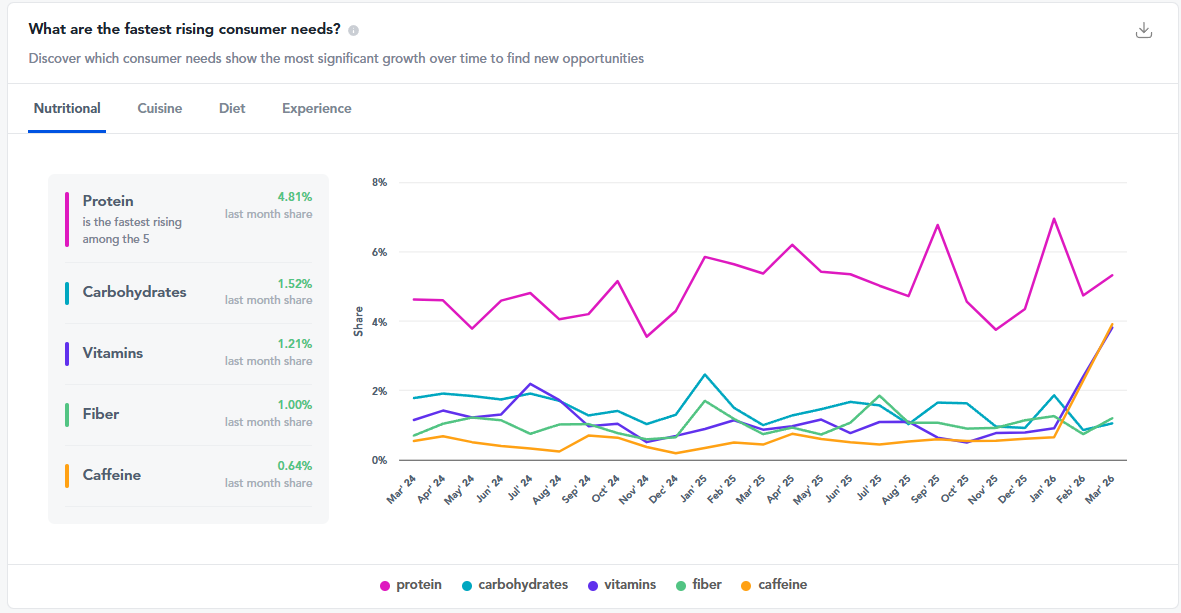
White space is a consumer need that exists in the market but has no product currently meeting it at retail. Flavor combinations gaining menu traction often precede retail demand by six to eighteen months. Functional claims consumers search for but cannot find on-pack are another form. Global flavor profiles underrepresented in mainstream retail are a third.
White space also defends existing listings. If your product is the only SKU answering a specific consumer need, that is a retention argument as powerful as any acquisition pitch. Pairing this analysis with a full category growth strategy from insight to shelf placement gives your team the complete picture.
Mini category snapshot: what demand signals look like in practice
At any given point a category has ingredients and flavors moving through lifecycle stages: trending, emerging, plateauing, declining. Brands that win shelf space map their product to a trending or emerging signal and show the buyer the consumer is already there. Brands that get delisted built around signals that peaked before the SKU reached the fixture.
Showing a buyer the lifecycle stage of the consumer need your product answers is a forward-looking argument, not a retrospective one. That is what justifies a new facing.
What this means for CPG brands in 2026
- Innovation and R&D: Validate concepts against live demand before development commits. Lifecycle stage data helps you sequence your pipeline so products are ready when the consumer need peaks.
- Category strategy managers: Map your product to specific white space in the buyer’s category. A gap-based argument is harder to reject than a quality argument.
- Marketing directors: Convert real-time signals into campaign hooks tied to the consumer motivation already growing in your category.
- Sales teams: Walk into every buyer meeting with a current proof deck. The brands that get called back made the buyer’s job easier.
The 2026 food and beverage trend forecast gives your team a full view of where demand is heading. Use it as the foundation for your retail shelf strategy this year.
Your retail buyer needs a story they can defend. Build it before your next category review.
FAQs about your retail shelf strategy
A retail shelf strategy is the evidence-based case your brand builds to secure, maintain, and grow product placement at retail. Buyers now need data they can defend internally. Brands that arrive with consumer demand evidence and white space arguments win listings. Brands that rely on brand story alone are losing them.
Start with the consumer gap, not the product. A strong retail shelf strategy begins by identifying a shopper need growing in the buyer’s category that the current shelf does not answer. Introduce your product as the solution, backed by demand signals specific to that banner and shopper profile.
It is demand that exists in the market with no product currently meeting it at retail. Track where consumer motivations, flavors, and functional claims are growing in menu and recipe data before they reach mainstream shelf. Lifecycle stage analysis is the most reliable method for building a retail shelf strategy around emerging demand.
Your pitch should be a living document, not something assembled two weeks before a buyer meeting. The most effective teams refresh their category arguments each quarter so the evidence is ready when a reset window opens.



We’d love to learn your goals and see how Tastewise fits
We’d love to learn your goals and see how Tastewise fits
Get a personalized demo
Good taste. Wise move.
Your demo request is confirmed. We’ll reach out within one business day to schedule your walkthrough.
What happens next

See what’s driving demand, then turn it into a sell-in story for retailers and operators.
- Connect consumer panels, market trackers, and agents into one evidence view
- Get the “why” behind what’s changing, with explainable demand drivers
- Walk away with a buyer-ready narrative and next steps to activate
Trusted by





“Tastewise is my secret tool for knowing what consumers want next and why.“