





Retail category reviews are being reset faster than most CPG teams can refresh their sell-in stories. Buyers are sitting across the table from three or four suppliers pitching the same shelf position, and the brand that walks in with the strongest consumer evidence wins, not the one with the best relationship or the slickest deck. Brands that treat retail shelf strategy as a data discipline, not a design exercise, are the ones walking out with expanded facings.
If your team is still building its retail category review pitch from last quarter’s scan data and a few trend reports, the gap between you and the competition is wider than you think. Real-time consumer demand signals are now the baseline expectation, not a differentiator.
Key takeaways
- Shelf resets now happen up to four times a year in major grocery chains, compressing the window your team has to build a category case. If you are not tracking consumer demand signals continuously, you are preparing for the last review, not the next one.
- The brands winning category reviews in 2025 and 2026 are pairing POS and scan data with forward-looking consumer signals showing buyers not just where demand has been, but where it is heading. That shift from backward to forward is what separates a listing from a lost pitch.
- Functional and better-for-you claims are the fastest-growing signals across retail snack, dairy, and beverage categories in the past 12 months. Your next sell-in story needs to connect your product to the specific consumer motivations driving those claims, or your buyer will find a brand that can.
- White space still exists in most retail categories ingredients, occasions, and flavor profiles with strong consumer demand and almost no brand response yet. Your team can find it, claim it, and defend it with data before your competitors bring it to the same buyer.
What is actually happening in retail categories right now
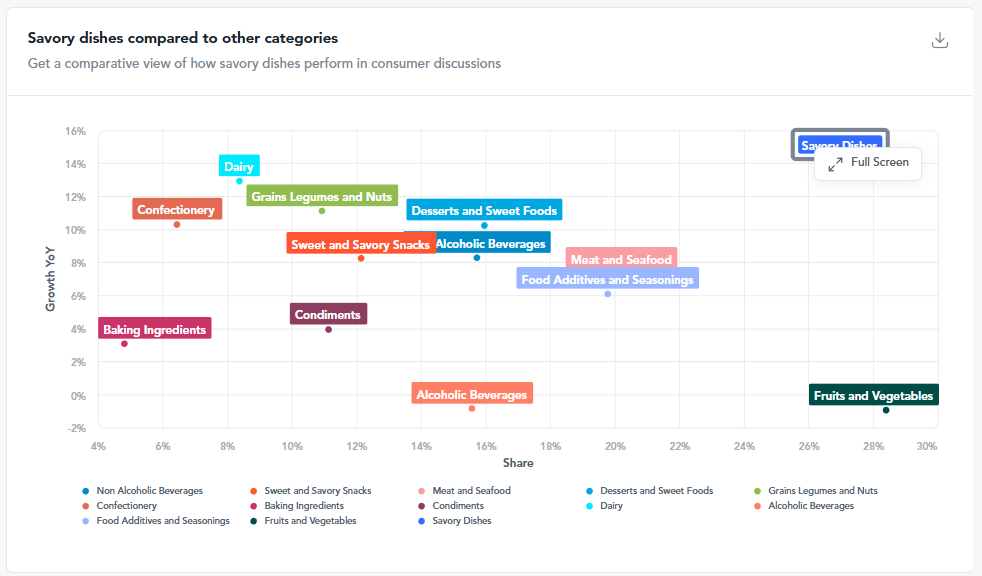
The retail category review has changed structurally, not just procedurally. Buyers are under more pressure to justify every SKU on the shelf, and they are asking suppliers to come to the table with consumer evidence that goes beyond sales velocity. The driver is the consumer themselves: shopping behavior has fragmented across format, occasion, and functional need in a way that traditional category frameworks were not built to capture. A buyer who once needed to know that a product sold well now needs to know why it sold, and what will drive the next wave of demand.
Across Tastewise consumer intelligence data, the shift is visible in how consumer motivations are moving. In the snack category, functional and better-for-you motivations have grown significantly in the past year, with protein, gut health, and natural ingredients driving the majority of that growth. In beverages, the clean-label signal has strengthened alongside hydration and energy, and consumers are choosing products that serve a specific occasion morning recovery, afternoon focus, post-workout rather than a generic need. In dairy and refrigerated, flavor innovation tied to global profiles is gaining ground on classic builds.
For your team, this creates a specific kind of opportunity. The brands that win category reviews are the ones that arrive with a story the buyer cannot build themselves. They connect a rising consumer motivation to a gap on the current shelf, show why their product fills it, and back the argument with evidence that holds up under scrutiny. That is a very different conversation from presenting a trend slide and asking for a listing. See how Tastewise helps CPG and retail teams build retail category strategies backed by real consumer demand.
Ready to build a category case your buyer cannot dismiss?
What retail category buyers actually need from you in 2026
Category managers at major grocery and mass retailers have become significantly more data-literate in the past three years. The average buyer now comes to a review meeting having already run their own analysis using internal POS data and syndicated reports. What they cannot access on their own is forward-looking consumer demand data: what shoppers are moving toward before it shows up in scan, what flavor profiles are gaining momentum in adjacent categories, and what white space still exists on their shelf that a competitor has not already claimed.
According to research from the Food Industry Association, category captains and co-pilots who bring proprietary consumer evidence to review meetings are significantly more likely to secure prime shelf placement than those relying solely on historical sales data. The gap is not in the relationship it is in the evidence. Buyers are making decisions that affect their own performance metrics, and they will back the supplier who makes the strongest case for why a particular facing deserves a spot.
Your team’s job in a category review is not to defend your existing listings. It is to build the case for where the category is going and why your product belongs at the front of that journey. That requires consumer data that is current, specific to your retail channel, and connected to the buyer’s own category KPIs not a generic trend deck that could apply to any brand in the aisle.
Mini category snapshot: functional snacks in US retail
Based on Tastewise consumer intelligence data, Q1 2026:
- Protein is the fastest-growing consumer motivation in the snack aisle, up significantly in the past 12 months. About 1 in 3 snack consumers now actively seeks a protein claim on pack a structural shift, not a short-cycle spike.
- Gut health and prebiotic claims are the second-fastest-growing motivation, with particularly strong traction among Millennial and Gen Z shoppers purchasing in the natural and specialty channel.
- Flavor white space: chili-lime, miso, and yuzu are gaining momentum in adjacent categories and have very little brand response in mainstream snack at retail. Consumers are already choosing them in foodservice; the retail shelf has not caught up yet.
- The clean-label signal is strengthening across the aisle. Shoppers who prioritize “no artificial ingredients” are growing in number in the past 12 months, and they cross-shop between snack, dairy, and beverage giving your team a cross-category story to take to the buyer.
This is the kind of snapshot your team can build for any category, any retailer, and any planning window. The point is not the data in isolation it is the narrative it makes possible. When you walk into a review meeting and tell a buyer that chili-lime is growing in foodservice while their snack shelf has no SKU positioned for it, you are not presenting a trend. You are presenting a gap with a proof deck behind it. That is a category review you can win.
Building a retail category sell-in story that lands
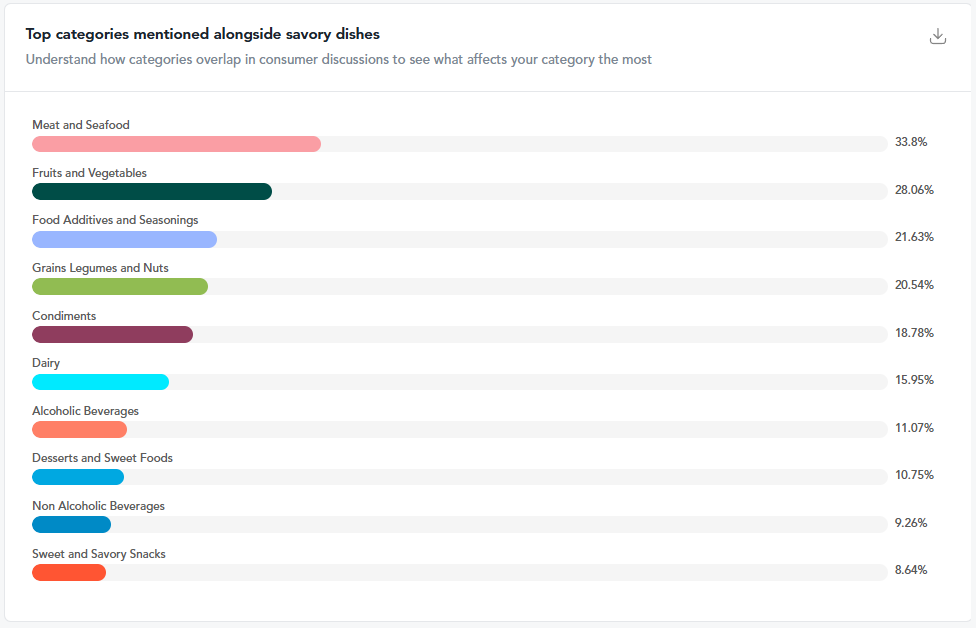
The best category review presentations follow a structure the buyer already understands: here is where the consumer is going, here is the gap on your shelf, here is the product that fills it, and here is the evidence that it will perform. The brands that fail in review meetings typically skip the first step or present consumer data that is too generic to be credible. Saying “health and wellness is trending” does not move a buyer. Saying “gut health claims are up significantly in your snack aisle in the past 12 months, and your current range has no SKU positioned against it” does.
Start by mapping your product to the consumer motivations driving growth in your specific category. This is not the same as finding a trend that sounds relevant. It requires looking at the actual signals in your buyer’s retail channel, at the specific format and occasion your product plays in, and at the consumer profiles that are growing fastest in that context. A protein snack pitched to a buyer whose shoppers skew toward indulgence needs a different story than the same product pitched to a natural and specialty channel buyer.
From there, build the shelf-gap argument. Use ingredient-level and flavor-level data to show where consumer demand exists with no current brand response. This is the white space section of your sell-in story and it is the part most teams skip because they do not have the data to support it. When you can show a buyer a specific flavor profile with strong consumer growth and no current facing in their planogram, you have given them something they cannot get from any other supplier in the room.
Finally, connect the consumer story to the buyer’s own metrics. Buyers are judged on category growth, basket size, and shopper loyalty. Your sell-in story should show how your product contributes to all three not just to your own sales target. The brands that bring this kind of buyer-centric narrative to a category review are the ones that get the call before the next reset, not after it. For a deeper guide to building data-backed sell-in narratives, explore how leading CPG brands use Tastewise for sales enablement and retail pitches.
Your next category review window is already open. Book a demo with Tastewise and see how your team can walk into the buyer meeting with a proof deck, not a pitch deck.
Retail categories move differently by region. Your data should too.
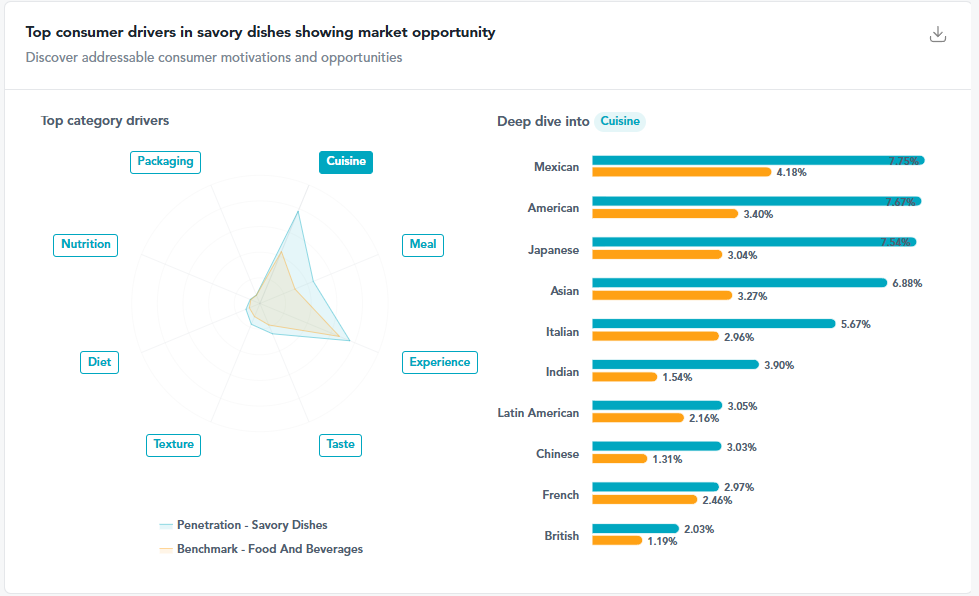
One of the most common mistakes CPG teams make in category reviews is presenting national-level consumer data to a buyer who manages a regional or format-specific shelf. A consumer motivation that is growing strongly across the US may be at a much earlier adoption stage in the Southeast, or it may already be saturated in the Northeast. Presenting the national number without regional context tells the buyer you do not understand their specific shopper and that undermines the entire story.
Regional flavor adoption patterns are particularly important in snack, sauce, and beverage. Chili-lime, for example, is significantly more advanced in adoption across the Southwest and West Coast retail markets than in the Midwest a detail that changes both the pitch and the suggested assortment. Similarly, prebiotic and gut-health claims are growing fastest in the natural and specialty channel nationally, but the mainstream grocery channel in certain markets is already seeing meaningful uptake.
For your category review, this means segmenting your consumer evidence by the buyer’s actual trade area before you walk in the room. The Tastewise platform lets your team pull category signals filtered by region, channel, and retail format so you are not asking a Midwest grocery buyer to believe in a trend that is currently a coastal signal. That specificity is what makes the data credible, and credible data is what makes the sell-in story stick. For context on how retailers themselves think about regional category performance, the Food Marketing Institute’s category management research provides a useful baseline for understanding buyer priorities at the regional level.
Timing your retail category data to the review calendar
Category reviews are scheduled events, but the preparation window is much shorter than most teams realise. Major grocery chains typically lock their planogram decisions four to six weeks before a reset date which means your consumer evidence needs to be current, compiled, and structured into a buyer-ready narrative well before that window closes. A team that starts pulling data two weeks before the meeting is already behind.
The most effective approach is to treat the review calendar as a continuous planning cycle rather than a series of one-off events. This means maintaining live visibility into the consumer signals in your category throughout the year not just in the six weeks before a review. When a new motivation starts gaining traction in your category, your team should know about it before your competitors do, and certainly before your buyer does.
According to Nielsen IQ’s 2025 category management report, brands that present consumer evidence tied to forward-looking demand signals rather than backward-looking sales data alone are more likely to secure listings and defend existing shelf positions during resets. The reason is straightforward: buyers are trying to predict what their shoppers will want next season, and a brand that can show them is more valuable than one that can only show them what sold last season. Nielsen IQ’s category management findings are worth reviewing alongside your own category data before every planning cycle.
Your team’s review preparation should include three things: a current consumer motivation map for your category, a shelf-gap analysis showing where demand exists with no brand response, and a regional view of how those signals vary across your buyer’s trade area. With those three components, you have the spine of a sell-in story that is specific, defensible, and built for the buyer sitting across the table from you not for a generic audience. Download the Tastewise Win the Shelf playbook for a step-by-step guide to building this kind of review-ready narrative.
What winning retail categories means for your team
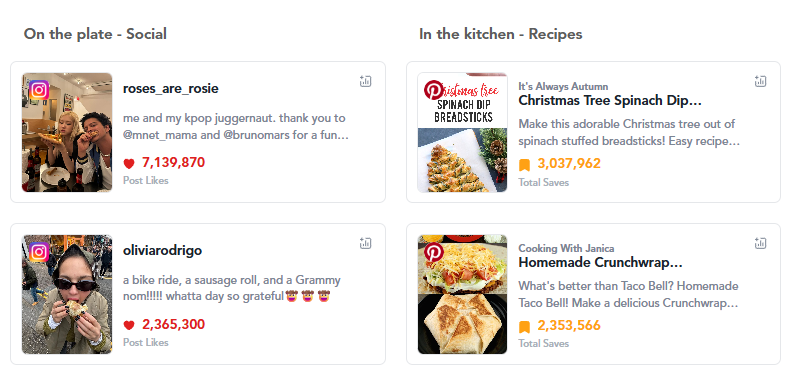
The implications differ by role, but the underlying requirement is the same: your team needs consumer evidence that is current, specific, and buyer-ready before the review window opens.
For category strategy managers
Your job is to show the buyer a gap they did not know existed. White space analysis built on real consumer demand signals not just scan data is what separates a compelling category story from a defensive one.
For sales teams
The sell-in conversation changes when you can show a buyer exactly which consumer motivations are growing in their specific retail format, with the shelf-gap data to back it up. You are not asking for a listing. You are showing them where their shopper is already heading.
For marketing directors
Category review wins compound. When your brand secures prime placement based on a consumer evidence story, that story becomes the foundation for the next campaign brief, the next limited-time offer pitch, and the next retailer conversation.
For innovation and R&D teams
The review cycle is one of the fastest feedback loops available to you. Consumer signals that are gaining traction in the category today will be the product briefs of the next planning cycle. Reading them early gives your team months of runway.
Your next category review
The consumer evidence that wins a retail category review already exists. The question is whether your team has it before the meeting, or whether you are still building the story while your competitors are already in the buyer’s calendar. Book a demo with Tastewise and see how your team can prepare a review-ready category narrative in days, not months.
FAQs about retail category review
You need three types of evidence: current consumer motivation data showing what is driving purchase decisions in your category, a shelf-gap analysis showing where demand exists with no brand response, and regional context showing how those signals vary in your buyer’s specific trade area. Historical sales data and scan are baseline buyers already have those. What moves the decision is forward-looking consumer evidence they cannot build themselves.
Most major grocery chains lock planogram decisions four to six weeks before a reset. That means your consumer evidence needs to be compiled and structured into a buyer narrative at least six to eight weeks before the review meeting. Teams that maintain continuous visibility into category consumer signals rather than pulling data in the weeks before the meeting consistently arrive better prepared and with more specific evidence.
White space is where consumer demand is growing and the current shelf has no response. To find it, you need to map consumer motivations and ingredient or flavor signals in your category against what is currently stocked in the planogram. The gaps where demand is up in the past 12 months but brand response is minimal or absent are your white space opportunities. These are the strongest arguments you can bring to a buyer, because they are not asking for a new listing they are pointing to a consumer need the category is currently failing to serve.




We’d love to learn your goals and see how Tastewise fits
We’d love to learn your goals and see how Tastewise fits
Get a personalized demo
Good taste. Wise move.
Your demo request is confirmed. We’ll reach out within one business day to schedule your walkthrough.
What happens next

See what’s driving demand, then turn it into a sell-in story for retailers and operators.
- Connect consumer panels, market trackers, and agents into one evidence view
- Get the “why” behind what’s changing, with explainable demand drivers
- Walk away with a buyer-ready narrative and next steps to activate
Trusted by





“Tastewise is my secret tool for knowing what consumers want next and why.“