





To secure shelf space in highly competitive Spanish supermarkets during peak holiday months, beverage brands must prove their product is not just a seasonal staple. It has to be a mathematically backed driver of modern category growth. Spain’s summer food and drink trends are accelerating faster than most retail teams are tracking them. Tinto de verano sits at the centre of that acceleration. Consumer appetite for premium, easy-drinking wine cocktails is rising, and the data shows a clear gap between where demand is heading and where the current assortment sits.
Key takeaways
- Tinto de verano is growing faster than comparable RTD wine formats in the Spanish market, driven by the comfort and refreshment occasions that peak between May and September. Your innovation team has a narrow window before the shelf resets.
- Mindful drinking is reshaping the category. Demand for low-alcohol and alcohol-free variants, including tinto de verano sin alcohol, is reaching consumers who were not previously engaged with wine cocktail formats. Your R&D pipeline should account for this now, not at the next planning cycle.
- Regional demand is not uniform. What drives velocity in Madrid differs significantly from coastal Andalusia. A single national SKU without regional flavour variants leaves growth on the table.
- The three-ingredient sell-in story is ready. Premium red wine, citrus, and low-sugar carbonation form the flavour architecture buyers in major Spanish chains are already responding to. The evidence exists to walk into a listing conversation with confidence.
Tinto de verano and Spain’s summer beverage moment

Tinto de verano is not a new drink. It is a cultural fixture of Spanish summer. What is new is the commercial momentum building around it. Consumers are moving toward pre-packaged, quality-assured versions of drinks they used to make at home, and tinto de verano sits at the intersection of that shift and the broader rise of premium RTD wine cocktails across southern Europe.
The Tastewise platform tracks this shift through real-time consumer signals rather than retrospective category data. The picture it reveals is one of consistent acceleration, not a seasonal spike. Comfort and refreshment motivations are both growing in the beverage category across the past 12 months. Consumers are not just choosing tinto de verano for occasion. They are choosing it as a statement about how they want to drink: lighter, better-made, and easier to share.
The opportunity for CPG brands is to meet that consumer with a product that feels premium without feeling complicated. That means clean labelling, a recognisable flavour story, and a format that travels from the supermarket chiller to the terrace without friction. The 2026 food and beverage trend forecast maps exactly where this category is heading and what the strongest innovation positions look like.
Shifting consumer habits accelerate RTD wine cocktail success
The modern Spanish retail shopper is not browsing. They are deciding quickly, based on clear signals from the shelf, and they are increasingly choosing products that feel considered rather than generic. This shift has specific implications for RTD wine cocktail formats.
Across the Tastewise consumer panel, the move toward high-quality pre-packaged beverages is being driven by a convergence of two things: convenience and trust. Consumers want the experience of a well-made tinto de verano without the effort of building it themselves. They are reaching new consumers in that format roughly twice as fast as the base RTD wine category, which signals that growth here is structural, not cyclical.
For beverage brands, this changes the pitch dynamic entirely. Traditional sell-in conversations relied on category history and seasonal placement. The brands landing listings faster right now are the ones walking in with real-time consumer demand evidence rather than historical performance data. Retail sales enablement built on live category signals is what converts a buyer meeting from a discussion into a decision.
High-velocity beverage movements transforming Spanish retail
Three signals are moving faster than the broader category. Each one has direct implications for how your team formulates, positions, and pitches this summer.
Premium citrus profiles
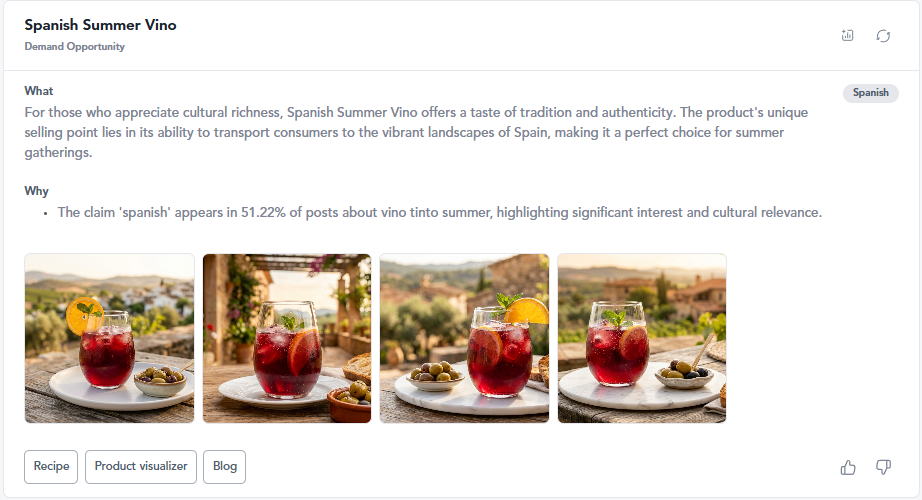
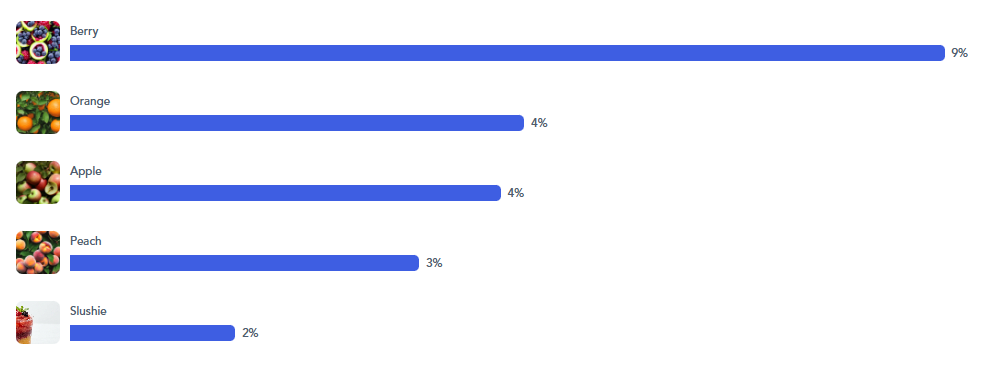
Spanish consumers are consistently choosing beverages with a distinct citrus note over flat, generic wine cocktail flavours. The growth in lemon and orange citrus positioning in RTD formats is outpacing the base wine cocktail category in the past year. For buyers, this is a clarity signal: the consumer wants to be able to identify the flavour before they open the can. Your pack copy and formulation should both reflect that.
Low-sugar carbonation
The shift away from sweetness as the primary driver of RTD beverage appeal is measurable and consistent across the Spanish market. About 1 in 3 Spanish consumers choosing wine cocktail formats are actively filtering for reduced sugar or low-calorie options. For R&D, this is a formulation brief. For sales teams, it is a category management argument: low-sugar variants grow total basket value without cannibalising the standard SKU.
Light-body wine bases
Consumer preference for lighter red wine bases, specifically Garnacha and Tempranillo blends, is growing within the tinto de verano format faster than traditional heavier builds. This matters for product development timelines. The consumer is already there. The retail shelf has not caught up yet.
Identifying mindful drinking whitespace to score the sweet spot
The intersection of mindful drinking and seasonal social behaviour is where the most significant commercial whitespace in this category sits. It is also the space most brands are underinvesting in heading into summer 2026.
Tinto de verano sin alcohol is the clearest proof of this. Consumer demand for alcohol-free variants of culturally familiar drinks is growing across the category, reaching new consumers measurably faster than the overall no-and-low segment. This is not a fringe preference. It reflects a structural shift in how Spanish consumers approach summer socialising: they want to participate in the occasion without the alcohol, and they want the product to feel like a genuine version of the original, not a compromise.
The flavour requirement here is specific. Consumers choosing tinto de verano sin alcohol are not settling for a flat red-grape cordial. They expect the same citrus brightness, the same light body, and a carbonation level that feels festive. Brands that formulate to that standard rather than to a cost floor will win the listing and the repeat. The product innovation solution shows how leading beverage teams are using real-time consumer signals to set those technical requirements before the development cycle starts, not after the first round of consumer testing.
Analysing local shopping trends across regional tiers
What makes a high-velocity beverage in Madrid is not what makes one in coastal Andalusia. This is not a marketing abstraction. It is a measurable difference in consumer behaviour that has direct consequences for how your retail assortment is structured.
In Madrid, the premium positioning of tinto de verano benefits from year-round socialising culture. Consumers in the capital are more likely to choose a premium RTD wine cocktail as an everyday option rather than a holiday treat. The velocity signal here rewards a standard-range hero SKU with consistent quality at a mid-premium price point. In coastal Andalusia and the Balearics, the summer concentration is sharper, the tourist overlay is higher, and the need for bilingual or internationally legible packaging is real. The flavour profile that wins in Seville in August skews lighter and more citrus-forward than the Madrid baseline.
Northern Spain presents a third profile. Basque and Galician consumers are more likely to pair their beverage choice with local food traditions. Tinto de verano in these markets benefits from provenance storytelling, specifically around the wine base. A Rioja or Ribera del Duero callout on pack performs above average in northern retail, where wine heritage is a purchase driver rather than a background assumption. CPG retail strategy that accounts for these regional tiers rather than treating Spain as a single market consistently outperforms in both distribution depth and repeat rate.
What this means for CPG brands in 2026
The data points in one direction. The window for establishing a leadership position in the tinto de verano category is open right now. It will not stay open through 2027.
Innovation and R&D
The consumer flavour brief is already written. Premium red wine extract, bright citrus, low-sugar carbonation, and a light body that reads refreshing at first pour. Brands that formulate to the consumer signal rather than the category average will have a technically differentiated product before the next round of store resets.
Category managers
The tinto de verano sin alcohol variant is not a niche addition to the range. It is a total-category growth driver. Consumers choosing the alcohol-free option are frequently buying alongside rather than instead of the standard SKU. The basket value argument is strong and it is defensible in a buyer meeting with the right data behind it.
Sales teams
The era of leading a pitch with samples and brand heritage is over for this category. Buyers in major Spanish chains want to see consumer demand evidence specific to their region and their shopper. Foodservice and retail sell-in built on real-time data, rather than category reports from six months ago, is what earns the listing conversation and closes it.
Marketing
The summer 2026 campaign brief is a consumer truth story, not a lifestyle projection. Spanish consumers are choosing tinto de verano because it fits how they actually want to spend their summer, not because they have been told it is the right drink. Lead with that authenticity and the creative brief writes itself.
Preparing for early store resets with predictive AI
The brands that will own the tinto de verano shelf position in 2027 are making their formulation and ranging decisions now. Store resets in major Spanish supermarket chains happen earlier than most innovation timelines account for. By the time the category review starts, the window for new listings has already narrowed.
Agentic AI tools built on real-time consumer signals are changing how agile brands approach this. Rather than waiting for a quarterly data pull to validate a product concept, teams are running continuous tracking on the signals that matter for their specific category and market. For tinto de verano, that means monitoring citrus preference shifts, low-sugar adoption rates, and regional velocity changes in real time, so that formulation decisions are grounded in what consumers are doing this month, not last quarter.
The brands that move into the 2027 reset cycle with a data-backed range, regional variants aligned to proven demand signals, and a tinto de verano sin alcohol SKU that genuinely meets the consumer brief will have a structural advantage. Those that wait for the category to show up in a syndicated report will find the shelf already staked.
FAQs about tinto de verano
The primary driver is a consumer shift toward premium, pre-packaged versions of drinks that were previously made at home. Comfort and refreshment motivations are both growing in the Spanish beverage category over the past 12 months. Consumers want the experience of a well-made tinto de verano with the convenience of a retail format. The growth is structural and consistent, not limited to peak summer months, which strengthens the case for year-round distribution at a mid-premium price point.
Tinto de verano sin alcohol is reaching new consumers faster than the overall low-and-no segment in Spain. The consumer expectation is high: they want the same citrus brightness, light body, and festive carbonation as the standard version, not a stripped-back alternative. Brands that meet that standard in formulation rather than treating the variant as a cost-reduction exercise will earn the listing and the repeat purchase. The alcohol-free SKU also tends to grow total basket value rather than cannibalise the standard range, which is a strong argument in a category management conversation.
Spain is three distinct retail markets for this category, not one. Madrid rewards a consistent premium SKU with year-round availability. Coastal and island markets need summer-concentrated ranging, lighter flavour profiles, and internationally legible packaging. Northern markets respond to provenance storytelling around the wine base. A single national SKU without regional variants leaves velocity and distribution depth on the table. The data to build a region-specific ranging argument is available before the store reset conversation starts, which is when it is most useful.

We’d love to learn your goals and see how Tastewise fits
We’d love to learn your goals and see how Tastewise fits
Get a personalized demo
Good taste. Wise move.
Your demo request is confirmed. We’ll reach out within one business day to schedule your walkthrough.
What happens next

See what’s driving demand, then turn it into a sell-in story for retailers and operators.
- Connect consumer panels, market trackers, and agents into one evidence view
- Get the “why” behind what’s changing, with explainable demand drivers
- Walk away with a buyer-ready narrative and next steps to activate
Trusted by





“Tastewise is my secret tool for knowing what consumers want next and why.“