





Flavor cycles turn over faster than most planning calendars now. A pairing can move from a few independent cafes to a national chain menu inside two seasons, which leaves quarterly survey work describing a market that already shifted. That gap is why food trend prediction has become a working discipline for CPG teams, R&D leaders and brand managers. The teams getting it right read live demand across menus, home kitchens, retail shelves and social behavior at once.
Key takeaways
- Strawberry hibiscus demand signals are up 184% in the past year and still read as emerging, while hibiscus alone reads mature and flat. Brief R&D on pairings, not headline botanicals.
- Calm and caffeine free claims are both up 44% in the same beverage set. Consumers are choosing a state of mind alongside a flavor, which hands marketing a positioning line early.
- Real fruit claims are up 145% and cold pressed is up 109%, outpacing every single fruit flavor. Put sourcing cues on pack and on the menu board now.
- Menus, recipe logs, shelf listings and social behavior rarely peak together, and the lag between them is the forecast. Build the process around the gap between channels.
Key terms in AI food trend prediction
Demand signal. A demand signal is a measurable movement in consumer behavior within a channel, such as a pairing appearing on more menus or a claim showing up more often in home recipe logs. It is not a single data point, and it is not a sales figure. A percentage attached to a signal describes how much that behavior moved, not how many units sold. Several signals matter together because one channel moving alone is usually noise.
Growth rate. In trend prediction, a growth rate is the change in signal volume across the period stated, most often the past 12 months. When you read that strawberry hibiscus is up 184%, that is the rise in consumer demand signals around the pairing. It is not a rise in retail sales or household penetration. Read it as direction and speed.
Emerging and mature classification. Lifecycle stage is assigned by how fast a signal is growing and how widely it has already spread. Emerging means demand is rising while distribution stays thin. Mature means the term is broadly present and movement has flattened, which is why hibiscus reads mature while strawberry hibiscus reads emerging. Stage sets your commercial timing, because it tells you how much room is left before the category fills.
Whitespace. Whitespace is the gap between proven consumer demand and available commercial supply. In practice it appears as several channels moving while one stays open, such as a pairing live on menus and in home kitchens while retail listings still cluster elsewhere. It is a timing read rather than a permanent condition.
LTO velocity. Limited time offers are where operators test flavors before committing to a permanent line. Tracking how quickly an LTO spreads across chains, and whether it returns the following season, shows which ideas converted. LTO velocity feeds trend prediction because operators put real budget behind these tests, which makes them a stronger signal than a mention.
Confidence scoring. Confidence scoring rates how much weight a signal should carry, based on whether independent sources agree, how long the movement has held and how large the underlying sample is. A high confidence read means several channels point the same way rather than one feed spiking. It tells your team which signals are ready to brief against.
Agentic AI. Agentic AI describes systems that complete a task end to end rather than answering one question at a time. In food and beverage, that means moving from a demand signal to a finished brief, sell-in story or operator pitch without a person reassembling the work at each step. The agents are trained on category data, so the output arrives in a format your team already uses.
Multi channel demand reading. Reading demand across menus, home recipe behavior, retail movement and social consumption signals at the same time. Cross channel confirmation matters because each channel on its own is partial. Social shows interest, menus show operator conviction, recipe logs show habit, and retail shows whether trial converts to repeat purchase. A single channel signal tells you something is happening, not whether it will hold.
Innovation brief. A completed brief carries the ingredient or pairing rationale, the target occasion, the claim set to run on pack, and the competitive gap. R&D, insights and brand teams use it as the working document at a stage gate. What separates an AI generated brief from an agency one is that each line traces back to the signal it came from.
Where food trend prediction stands in 2026

Food trend prediction is the practice of reading early consumer demand to forecast where flavor, format and claim preferences move next. What changed is the speed of the loop. Home cooks post a hibiscus agua fresca, a regional cafe adds a hibiscus cooler, and a chain follows with a packaged version, all inside a year. Your consumer experiences that as one story. Most data stacks experience it as four disconnected feeds.
Across the Tastewise US panel, that pattern is visible in beverages right now. Ritual claims are up 86% since last year and botanical claims are up 18%, so the occasion is growing faster than the ingredient. Hibiscus already appears in the strawberry hibiscus lemonade at Chick-fil-A and the citrus hibiscus tea shaker at Peet’s Coffee. On shelf, listings still skew to loose leaf blends such as Bigelow Butterfly Pea Flower Vanilla Midnight.
That spread between channels is the commercial opening. The restaurant industry forecast puts restaurant and foodservice sales at 1.55 trillion dollars for 2026, with real growth of only 1.3%. Operators trimming menus under that pressure add an item when the evidence is in front of them. Retail buyers behave the same way.
What is food trend prediction and how does it drive growth?
Food trend prediction is the machine learning analysis of multi channel demand signals, from menu velocity to recipe logs to retail movement, to forecast culinary and format shifts before they peak. It drives growth by moving the decision earlier. A team that commits while a flavor is still emerging pays less for the ingredient and meets fewer rivals on shelf.
How modern AI food trend prediction differs from legacy research
Traditional food trend prediction methods run on periodic analyst surveys and briefing cycles that take six weeks or more. By the time the deck lands, the signal it describes has often reached national menus. Food trend prediction AI reads the same behavior continuously and reports movement while it forms. Legacy research tells you what consumers bought last quarter. Continuous reading tells you where intent is heading.
Key data streams in a food industry trend prediction engine
High accuracy trend prediction for food and beverage depends on four streams read together.
- Foodservice menu tracking. Chain and independent menus, where a pairing such as the raspberry hibiscus tea at Over Easy shows regional adoption ahead of national rollout.
- Home culinary behavior. Recipe logs and uploads, where hibiscus has long arrived through zobo, sorrel and watermelon hibiscus agua fresca.
- Social consumption signals. Consumption moments and flavor claims, which show why a flavor gets chosen and not only that it does.
- Retail movement. Shelf presence and promotional velocity, which confirm whether trial converts to repeat purchase.
Together those streams give your product innovation team a lifecycle position rather than a snapshot. One channel moving alone is noise. Four moving in sequence is a forecast you can put capital behind.
How AI-powered trend prediction transforms F&B strategy
What is agentic AI in food and beverage?
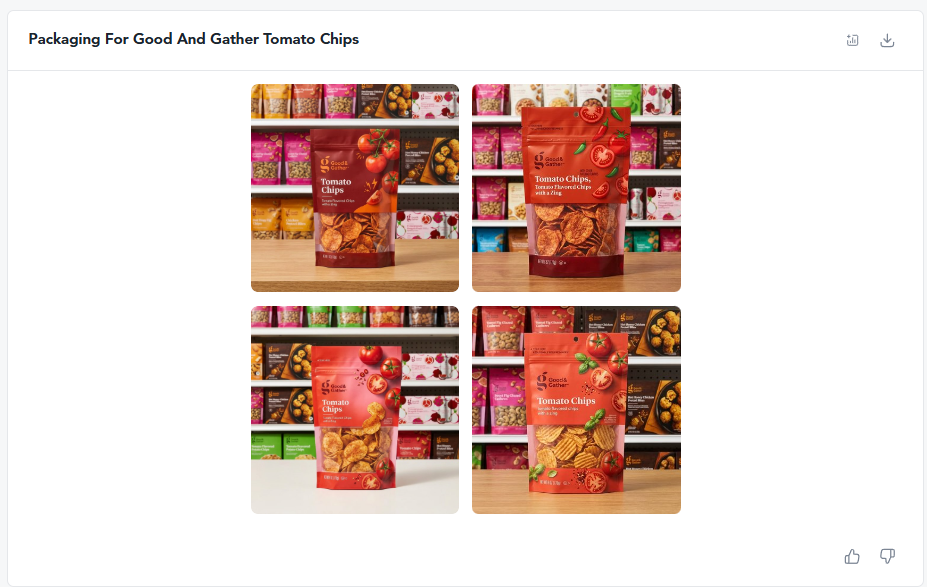
Agentic AI in food and beverage refers to autonomous agents trained on category specific consumer data and built to complete end to end tasks. They move from identifying a demand signal to producing a finished brief, sell-in story or innovation report without manual interpretation at each step. General purpose AI tools carry no view of menu data, retail movement, consumer sentiment or LTO performance. Agents built for this industry are pre-trained on all four, so the output arrives ready to use.
How does Tastewise predict food and beverage trends?
The Tastewise agentic AI platform ingests demand signals from consumer panels, menu tracking, retail movement and social behavior. Those signals are decoded into demand indicators, validated across independent sources and confidence scored before any agent or analyst sees them. The result is a forward looking signal set rather than a backward looking report. Evaluating Tastewise food trend prediction accuracy speed is a question about that pipeline, and it is what surfaces yuzu matcha, up 17% and still emerging, while yuzu alone reads mature.
How is agentic AI different from traditional food trend research?
Traditional research relies on periodic surveys, analyst assembled reports and briefing cycles that can take six weeks. Agentic AI replaces that with a continuous loop. Signals are captured, validated and handed to agents that produce innovation briefs, sell-in stories and operator pitches in minutes. Speed is the visible difference. Traceability is the one that matters in the room, because every output traces back to a validated signal.
What types of outputs does the Tastewise agentic system produce?
- Retail sell-in stories. Buyer ready pitches carrying demand velocity for the category that buyer owns.
- CPG innovation briefs. Ingredient profiles, target audiences and need states written for R&D.
- Operator narratives. Foodservice pitches built on menu presence by segment and market.
- Consumer positioning assets. Campaign frameworks built on the claims and occasions gaining ground.
All four come out of the same agent library. Twelve worked versions sit in our agentic AI examples post, and operator narratives feed straight into foodservice sell-in.
Which F&B teams use agentic AI platforms?
Product innovation managers validate formulations against live demand. Consumer insights leads skip manual aggregation and get to interpretation. Retail category managers and sales enablement teams build buyer decks from one evidence base. Foodservice account managers arrive with menu movement for their segment. Brand strategists claim positioning while a cue such as caffeine free is still gaining ground.
10 ways to apply food trend prediction AI in 2026
- Whitespace identification. Find flavors with real demand and thin retail competition, the way strawberry hibiscus sits ahead of packaged supply.
- Clean label reformulation. Track sourcing cues such as real fruit, up 145% in the past 12 months, before reworking a formula.
- Automated innovation briefing. Turn a validated signal into a concept brief in one session.
- Localized merchandising. Match regional assortment to local menu and recipe signals.
- Data-backed buyer pitches. Give reps demand velocity for the buyer’s own category.
- Foodservice LTO timing. Predict seasonal acceleration before the print deadline closes.
- Predictive flavor pairing. Cross menu movement with home recipe additions, which is how hojicha at 54% growth and taro at 61% surface.
- De-risking R&D spend. Validate the need state before committing to production.
- Competitive benchmarking. Track competitor claims against real adoption curves.
- Macro forecasting. Map shifts such as GLP-1 nutrition, where beverage claims tied to weight loss medication are up more than 600% over the past 12 months.
How do F&B teams apply AI trend prediction in real commercial scenarios?
The scenarios below are illustrative rather than case studies of named clients. Every figure in them is live Tastewise data drawn from this page.
From validated signal to innovation brief. Your R&D team has a cue that looks real but nothing a stage gate will accept. A concept brief assembled from a validated signal carries four parts. The ingredient rationale names the pairing and its lifecycle position, so strawberry hibiscus at 184% growth and still emerging reads differently from hibiscus alone, which sits mature and flat. The target occasion comes from the claims moving alongside it, with calm and caffeine free both up 44% pointing at a low caffeine afternoon reset. The claim set is what goes on pack. The competitive gap names who is already live, in this case the strawberry hibiscus lemonade at Chick-fil-A, and where the shelf is still open. The outcome is a brief your team reviews in the session it was requested, with every line traceable to the signal behind it.
A buyer pitch carrying velocity the buyer has not seen. Your sales team has ten days before a category review, and the deck currently shows category growth the buyer already tracks. The approach is to lead with claim movement instead of category size. Real fruit claims are up 145% and cold pressed is up 109%, both outpacing every single fruit flavor, which moves the conversation from flavor choice to sourcing cue. Cross referencing menu movement against home recipe behavior shows whether the cue is forming in one channel or three. The outcome is a retail sell-in narrative that arrives with demand evidence attached, positioning the brand ahead of a signal the category has not priced in yet.
Timing a foodservice LTO before the print deadline. A chain operator locks summer menus months ahead, so the call gets made while the signal is still forming. Menu tracking shows regional adoption running ahead of national rollout, the way the raspberry hibiscus tea at Over Easy does. Pair that with home recipe additions and the early pairings surface, which is how hojicha at 54% growth and taro at 61% come up. The outcome is a shortlist that reaches the culinary team while the print window is open, with a limited time offer calendar showing what competing operators ran in the same slot last season.
Reformulating a clean label product before relaunch. Your team is reworking a formula and needs to know which sourcing cues will still matter when the product lands. Reading claim velocity separately from flavor velocity answers that. Cold pressed is up 109% and caffeine free is up 44%, so the cue is doing work the flavor alone does not. Botanical claims up 18% alongside ritual claims up 86% show the occasion growing faster than the ingredient itself. The outcome is a reformulation brief committed to the claims with current momentum behind them rather than the ones that tested well two years ago.
How does AI enhance food trend prediction accuracy and speed?
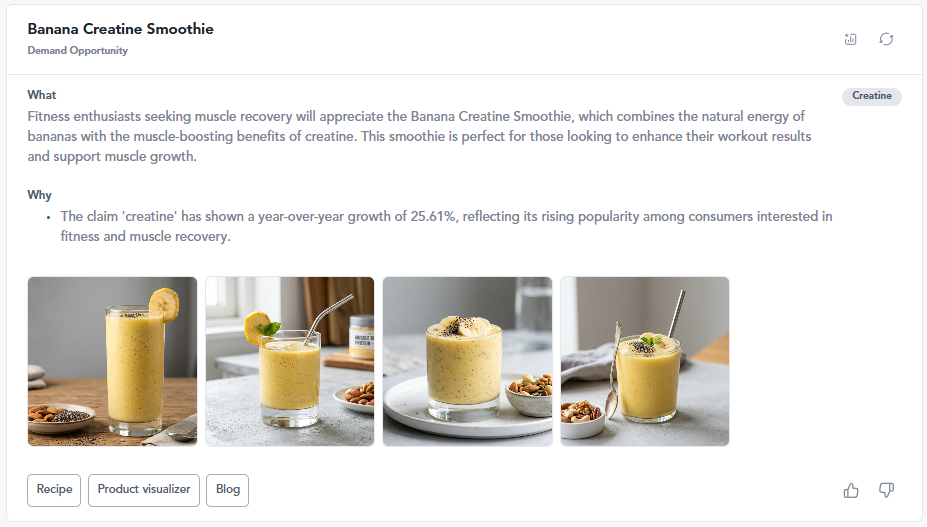
Here is a worked example. The brand is illustrative and every figure is live Tastewise data.
Say your team is weighing a botanical RTD line for next summer. Hibiscus alone looks weak, reading mature with movement flat over the past year. Go one level down and the picture inverts. Strawberry hibiscus is up 184% since last year and still emerging, and the pairing is live in the strawberry hibiscus lemonade at Chick-fil-A and the blackberry hibiscus lemonade at Piada Italian Street Food.
The home kitchen supports it. Hibiscus has reached US recipe logs for years through zobo, sorrel drinks and watermelon hibiscus agua fresca, the shape of an ingredient with cultural roots rather than a passing spike. Retail lags, with listings clustered around loose leaf tea and butterfly pea blends.
Three channels moving with the fourth still open is what a whitespace read looks like. Add the claim data, where calm and caffeine free are both up 44%, and the positioning writes itself as a low caffeine afternoon reset. Accuracy comes from four independent sources agreeing on direction, and speed comes from that read taking an afternoon. Our wider 2026 food predictions work follows the same method.
AI food trend prediction vs traditional market research: a direct comparison
Data freshness. Traditional research captures consumer behavior at a point in time, and the report commonly lands six weeks or more after fieldwork closes. AI trend prediction reads the same signals continuously. A flavor shift that starts in home recipe logs in January can surface as a validated indicator before February menus are printed.
Time to insight. A legacy cycle needs agency engagement, survey design, fieldwork and analyst assembly, commonly four to six weeks end to end. A continuous system runs collection and validation in the background. The wait becomes your team’s judgment call rather than the data arriving.
Cost structure. Traditional research is priced per project, so each new question opens a new engagement and a new budget line. Continuous reading carries its cost in the system rather than in the individual question. That changes how often your team is willing to ask something.
Output format. Legacy research delivers a report your team then translates into a brief, a deck or a pitch. Agentic systems produce the working asset directly, including innovation briefs, retail sell-in stories and operator narratives. The translation step disappears.
Signal breadth. A survey reads one population through one instrument at one moment. Multi channel reading covers menus, recipe logs, retail listings and social behavior at once. The lag between those channels is itself the forecast.
Traceability. A finished report gives you the conclusion and a methodology note. A validated signal set gives you the sources behind each number. That distinction is what holds up when a buyer or a stage gate committee asks where a figure came from.
Choosing between systems is a separate question from choosing between methods. The criteria that separate one tool from another are covered in our guide to AI platforms for trend analysis.
Frequently asked questions about food trend prediction
AI-powered trend prediction for food and beverage uses machine learning and autonomous agents, trained on real consumer and market data, to identify emerging flavor, format and claim demand before it reaches the mainstream. It is the difference between reading that hibiscus is popular and seeing that strawberry hibiscus is up 184% while the parent ingredient sits flat.
Accuracy depends on the breadth of the underlying data and on whether each signal is validated more than once. Tastewise validates signals across consumer panels, menu tracking and retail movement, then applies confidence scoring. That cross checking separates a durable read, such as botanical claims up 18% across channels, from a single spike in one feed.
Minutes rather than weeks. A traditional briefing needs an agency engagement, survey design, fieldwork and analyst assembly, commonly four to six weeks. An agentic system runs that pipeline automatically, so a team moves from a cue such as caffeine free being up 44% to a reviewable brief in one session.
Tastewise reads chain and independent restaurant menus, home cooking and recipe uploads, retail shelf listings and promotional activity, social consumption behavior and LTO performance. Those inputs are decoded and cross validated continuously. It is how one flavor story surfaces as a chain LTO at Taco Bell, a recipe pattern in home kitchens and a shelf gap at retail at once.
Agentic AI accelerates consumer research rather than replacing human judgment. It automates collection, validation, decoding and output assembly, the steps that traditionally absorb weeks and external budget. Your team keeps the strategic call, such as whether a 61% rise in taro justifies a format change.
Lifecycle stage is set by growth rate and spread together. An emerging trend shows demand climbing while distribution is still thin, which is where the commercial room sits. A mature trend is already widely present, so movement flattens even when volume stays high. Hibiscus and strawberry hibiscus show both states at once. The parent ingredient reads mature and flat, while the pairing is up 184% and still emerging. Briefing R&D on the parent term would put your team into a crowded space. Briefing on the pairing puts it ahead of packaged supply.
Four criteria separate systems in this category. Data source breadth, meaning whether the platform reads menus, home recipe behavior, retail movement and social signals or only one of them. Signal validation, meaning whether a movement is confirmed across independent sources before it is reported. Output traceability, meaning whether every figure can be traced back to the source behind it when a buyer asks. Update frequency, meaning whether the read is continuous or refreshed on a reporting cycle. A platform strong on breadth but weak on traceability will not survive a stage gate review.
Trend prediction identifies directional shifts in what consumers want, covering flavor, format and claim preferences before they reach the mainstream. Demand forecasting projects volume, answering how many units to produce and when. The two answer different questions at different points. Trend prediction tells your innovation team whether to develop a strawberry hibiscus RTD at all. Demand forecasting tells supply chain how much to make once the decision is signed off. Teams that run forecasting without trend prediction get accurate volumes for products the market has already moved past.
Social data is useful for consumption moments, meaning when and why a food or drink gets chosen, and for the claims consumers attach to it. Reach metrics on their own are a weaker input, because a post count tells you a term circulated rather than that behavior changed. The value comes from reading social alongside other channels. Social interest that never reaches home recipe logs or menus usually stays a conversation. Social interest that shows up in kitchens and then on menus is the pattern worth briefing against.




We’d love to learn your goals and see how Tastewise fits
We’d love to learn your goals and see how Tastewise fits
Get a personalized demo
Good taste. Wise move.
Your demo request is confirmed. We’ll reach out within one business day to schedule your walkthrough.
What happens next

See what’s driving demand, then turn it into a sell-in story for retailers and operators.
- Connect consumer panels, market trackers, and agents into one evidence view
- Get the “why” behind what’s changing, with explainable demand drivers
- Walk away with a buyer-ready narrative and next steps to activate
Trusted by





“Tastewise is my secret tool for knowing what consumers want next and why.“