







The UK foodservice landscape is shifting faster than most operators’ annual menu cycles can keep up with. UK menu trends in 2026 tell a story of heritage dishes gaining new momentum, Asian-influenced formats breaking into the mainstream, and a generation of diners actively moving away from alcohol toward next-generation coffee and tea. The gap between what consumers are choosing and what most menus are actually offering is widening. For the operators who spot it first, that gap is the opportunity. Tastewise, the agentic intelligence platform for food and beverage, tracks these signals in real time across the UK’s restaurant universe so your team does not have to wait for the annual trend report to act
Key takeaways
- Sunday roast is reaching more UK diners than it did a year ago, up 11.6% in the past year, and tiramisu is following the same direction at nearly 15% growth. Consumers are consistently choosing comfort-forward, occasion-driven formats. Your menu should lead with emotional resonance before functional credentials.
- Matcha latte is now on the menu at nearly 1 in 10 UK foodservice operators, with dishes doubling in the past 12 months. Pistachio, cold foam, and strawberry variants are the growth edge. Operators still offering only one matcha SKU are already behind.
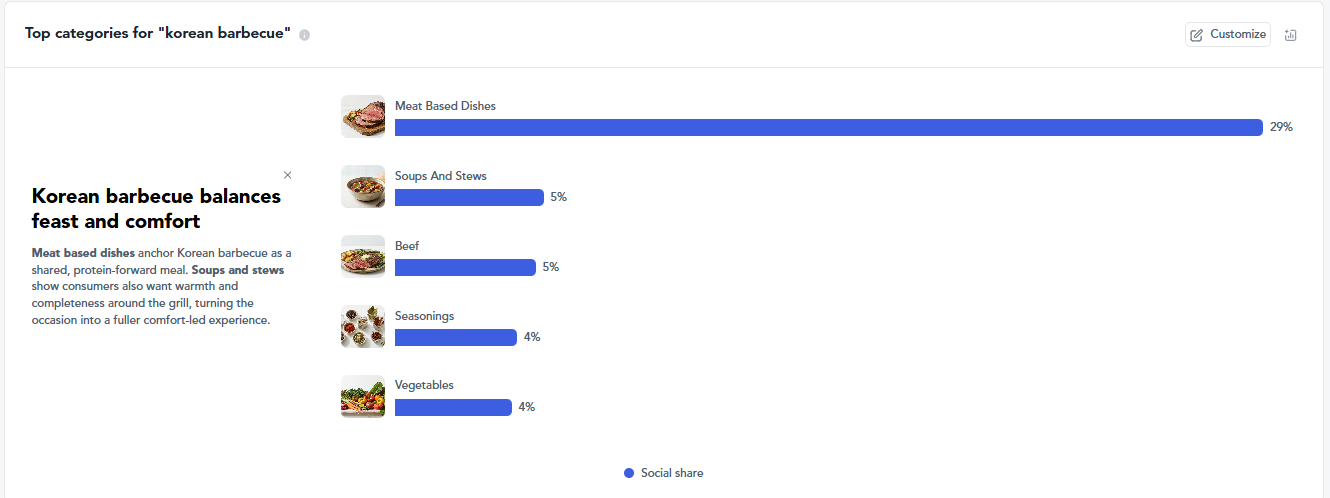
- Korean barbecue is reaching new consumers 29% faster than it was 12 months ago and biryani is growing at 19%. South Asian and Korean cuisine are no longer niche segments in UK foodservice. They are the new mainstream growth engine.
- Declining signals are just as important as growing ones. Craft beer, cupcakes, and espresso martini are all contracting at meaningful scale. Menus still anchoring their identity around these formats are paying for yesterday’s positioning.
What is driving UK menu demand in 2026
British diners in 2026 are not choosing based on novelty alone. The structural shift in consumer behaviour is a return to dishes that carry emotional weight: weekend rituals, heritage formats, and comfort-led occasions. This combines with a consistent move toward globally influenced formats that have crossed from specialist into mainstream. Consumers want a meal that feels considered, not default. That combination of heritage confidence and global curiosity is the operating context for every menu decision your team is making this year.
Across 873,000 UK restaurants and 115 million menu items tracked by Tastewise, the data shows this shift is not a spike. It is a sustained, repeatable direction. Sunday roast is reaching more diners than it was a year ago, up 11.6%. Fish and chips is growing at 19% in the past 12 months, with sausage roll not far behind at 19.7%. These are established dishes at real scale, and they are actively accelerating. At the same time, matcha latte is up 33.5% since last year, Korean barbecue is up 29%, biryani is up 19%, and dosa is up 28%. Globally influenced formats have moved out of the margins and into the menu mainstream.
The opportunity here is not simply to add new dishes. It is to identify which combinations of heritage comfort and global influence your specific operator context can carry credibly. The foodservice trends report for 2026 maps the full picture of where operator whitespace sits across UK menu categories.
The dishes with real momentum right now
The clearest way to read UK menu opportunity is to separate the trending tier from the early-stage tier, then compare what operators are actually serving.
In the trending tier, matcha latte sits at the top. Consumers are choosing it 33.5% more than they were a year ago, and the number of matcha dishes on UK menus has doubled in the past 12 months. The menu innovation gap is significant. A pistachio matcha latte at Starbucks, an iced banana matcha at Black Sheep Coffee, and honeycomb variants at Caffè Nero show the range of what operators are experimenting with. Operators still running a single core matcha build have already ceded differentiation to whoever customises first.
Korean barbecue is the strongest trending dish in the savoury space, reaching new consumers 29% faster than it was a year ago. Korean formats carry both the cultural authenticity credential that matters to younger UK diners and the occasion anchoring (communal, social, considered) that drives repeat visits. Biryani and dosa reinforce the same signal: South Asian cuisine has reached mainstream trending status, with biryani up 19% and dosa up 28% in the past 12 months. These are not dishes that belong only on specialist menus. They belong in the conversation at any casual dining or fast-casual operator targeting the under-40 UK diner.
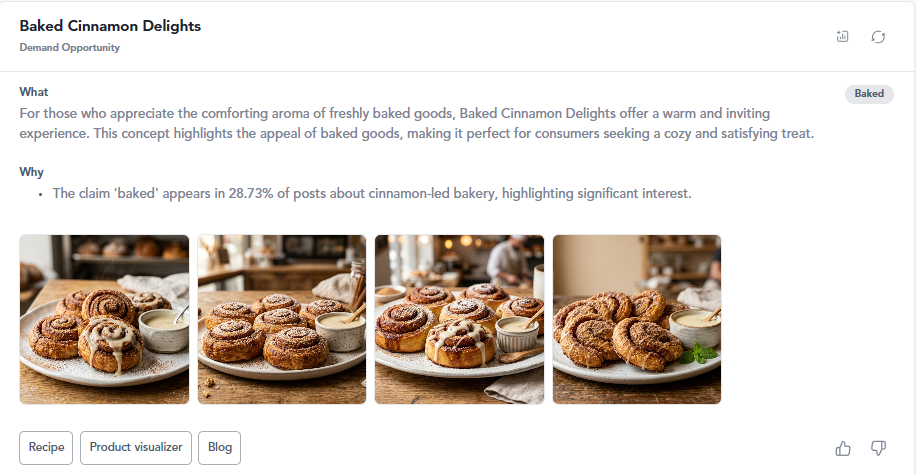
Cinnamon bun is up 23% in the past year, hot cross bun is trending, and banana bread is up 29%. The baked goods category is experiencing a sustained revival that consistently favours warmth, nostalgia, and clear flavour identity over elaborate presentation. Brunch and morning dayparts are the highest-growth contexts for this format.
Within the early-stage tier, the dishes worth watching are acai bowl (up 45.5%), hojicha (up 63%), and karahi (up 37%). Dirty soda is growing from a very small base and is too early for most operators to build a format around, but it signals an important direction: customisable, bold, sweet-and-sour, zero-alcohol adjacent. Acai bowl and hojicha have enough scale to act on now.
Your menu innovation pipeline should be separating these tiers with different decision timelines. Trending dishes need a decision in the next quarter. Early-stage dishes need a watch brief and a return date. Do not mix the two, or your menu ends up acting on signals that were already saturated by the time they reached your planning table.
Where the decline signals are and why they matter as much as the growth
Knowing what not to invest in is as commercially valuable as knowing what to build toward. The UK data is clear on this.
Craft beer is contracting at 31% in the past year and is now classified as declining. Consumers are choosing it consistently less than they were. Gin is off 28%, IPA beer is down 23%, and espresso martini is declining at 15%. The cocktail bar era is contracting: aperol spritz is down 14% and mojito down 13%. These are not category wobbles. They are a structural shift away from occasion-specific alcohol formats. Consumers are not abandoning hospitality. They are redirecting their spend toward formats that deliver sensory interest without the alcohol premise: matcha, hojicha, iced latte variants.
Birthday cake is down 41%. Cupcakes are off 38%. Chocolate cake is declining at 24%. This is not a signal that UK consumers have stopped eating sweet things. It is a signal that the bakery occasion has matured: consumers want bakery items that carry a specific flavour story, not just a celebration format. Cinnamon bun, basque cheesecake, and banana bread are growing precisely because they offer that specific flavour identity. Birthday cake and cupcake do not.
For operators, the most important action from the decline data is an honest audit of any menu category anchored to these formats. A wine list built around sparkling wine (down 16%) and red wine (down 11%) is not just missing growth. It is signalling an operator who has not been paying attention.
The daypart and occasion shifts your menu is probably missing
The occasion data from the Tastewise UK consumer panel reveals consistent shifts in when and how UK consumers want to eat that most menus have not caught up with yet.
Weekend and cosy occasion framing is growing at 15% and 35% respectively. The Sunday roast’s 11.6% growth is inseparable from this: consumers are not just choosing specific dishes, they are choosing specific experience frames. Menus that describe dishes in terms of occasion (a proper Sunday, the right kind of afternoon) are outperforming menus that describe dishes in terms of ingredient lists.
Weekday occasion framing is up 28%. Consumers are choosing to eat out more purposefully on weekdays, not reserving restaurants for the weekend. QSR and fast-casual operators who build weekday-specific formats (lunch specials with clear flavour identity, quick-service formats that feel deliberate rather than functional) are well-positioned to capture this shift. It is a build-ahead-of-demand play with a short runway.
The brunch daypart, historically strong in the UK, is being reshaped. Brunch is holding but the specific dishes driving it are changing. Consumers are moving away from eggs benedict (down 14%) and pancake (down 5%). The brunch dishes gaining traction are the ones with stronger flavour specificity: shakshuka, cilbir, and French toast, which is up 22% in the past year. Operators running a 2019-era brunch menu need a rethink.
The ingredient signals operators should act on first
Four ingredient-level signals from the UK Tastewise data are worth immediate attention.
Pistachio is reaching consumers 44% faster than it was a year ago and has already reached real scale on matcha latte menus across UK chains. It is the highest-growth flavour in the sweetened beverage and bakery space and it pairs consistently with chocolate (up 28%), latte (up 21.5%), and cinnamon (up 26%). A pistachio-led bakery or beverage SKU in Q3 2026 is not a risk play. It is a table-stakes move.
Hojicha is reaching new consumers 63% faster than last year with a trending lifecycle classification. Hojicha is roasted Japanese green tea: toasty, mellow, slightly sweet. It is the next matcha. The consumers choosing it today skew toward foodies and the health-conscious. That is exactly the audience that drove matcha from specialist to mainstream over the past three years. Early movers in hojicha-led beverages will own the category narrative before it becomes a default.
Cold foam has grown 97% in the past year and now appears on about 1 in 8 matcha menu items across UK operators. This is not just an ingredient trend. It is a presentation signal. Consumers are consistently choosing visually layered, textured drinks. Operators building new beverage formats should be designing for visual contrast, not just flavour balance.
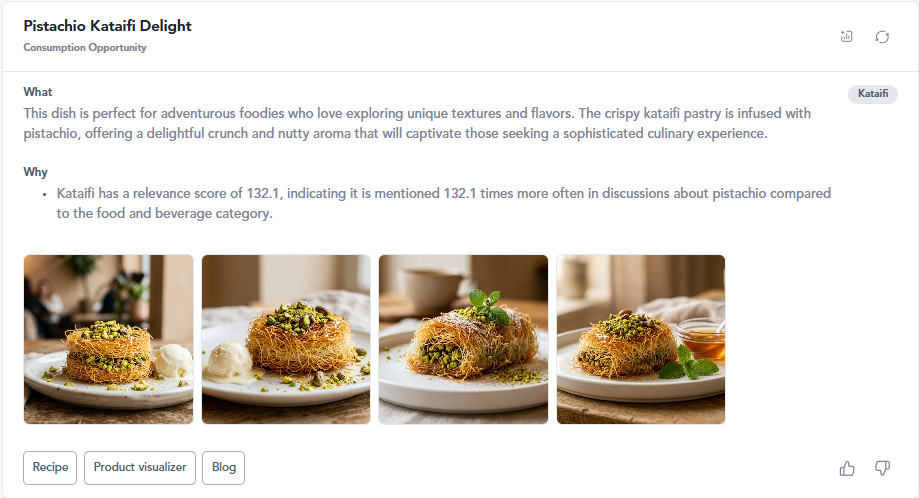
Cinnamon is a category-wide signal. Cinnamon bun as a dish format is up 23%, cinnamon bread is up 22%, cinnamon swirl is up 34%, and cinnamon as a standalone ingredient is up 26% in the past year. The UK bakery occasion has a clear, repeatable directional signal. Your bakery range needs at least one prominent cinnamon build.
The 2026 foodservice trends report contains the full ingredient signal set across savoury and sweet categories with operator whitespace mapped by segment.
What this means for your team’s next menu cycle
The UK menu trends picture in 2026 rewards operators who act on data before the signals become obvious. By the time a trend reaches the trade press, it has usually peaked. The dishes trending now (Korean barbecue, matcha variants, cinnamon-led bakery, hojicha) will be mature within 18 months. The early-stage signals (acai bowl, karahi) will be trending within the same window. Waiting is a positioning decision, not a neutral one.
Your foodservice menu innovation process should be built around three time horizons: act now on trending signals, build toward early-stage signals, and audit out the declining formats. That is not a complex framework. Most operators do not follow it because they do not have a reliable, continuous view of the data. That is the exact gap that real-time food intelligence closes.
The operators winning menu share in 2026 are not the ones with the largest kitchens or the most experienced chefs. They are the ones whose menu decisions are faster, more specific, and better evidenced than their competitors. That speed is a data problem, not a culinary problem.
Data sourced from the Tastewise platform, analysing 115 million UK menu items across 873,000 restaurants and 26,000 chains.
FAQs about UK menu trends 2026
Based on Tastewise data tracking 873,000 UK restaurants, the fastest-growing dishes at trending lifecycle stage include matcha latte (reaching consumers 33.5% faster than a year ago), Korean barbecue (up 29%), biryani (up 19%), dosa (up 28%), and cinnamon bun (up 23%). Sunday roast and fish and chips are also accelerating within the mature tier at 11.6% and 19% respectively. These signals reflect a structural shift toward globally influenced comfort formats and away from decline-stage dishes like craft beer, cupcakes, and espresso martini.
Matcha continues to be the defining beverage trend in UK foodservice, with consumers choosing it 33.5% more than they were a year ago and menu items doubling in the past 12 months. The differentiation opportunity has shifted to variant innovation: pistachio matcha, cold foam builds, and flavour-layered iced formats are the growth edge. Hojicha is the next signal to act on, reaching new consumers 63% faster than last year with a trending lifecycle classification. Iced latte formats are growing at 38%. The consistent decline of craft beer (down 31%) and gin (down 28%) points directly toward these non-alcoholic beverages as the category beneficiary.
The most effective approach is to separate signals by lifecycle stage before making menu decisions. Trending-stage dishes need a decision within the current quarter. Early-stage dishes like acai bowl and hojicha need a watch brief and a return review date in six to twelve months. Declining-stage formats (craft beer, cappuccino, cupcakes, and most sparkling wine) should be audited out at the next natural refresh point. The Tastewise 2026 foodservice report provides lifecycle classifications and whitespace mapping across all major UK menu categories.


We’d love to learn your goals and see how Tastewise fits
We’d love to learn your goals and see how Tastewise fits
Get a personalized demo
Good taste. Wise move.
Your demo request is confirmed. We’ll reach out within one business day to schedule your walkthrough.
What happens next

See what’s driving demand, then turn it into a sell-in story for retailers and operators.
- Connect consumer panels, market trackers, and agents into one evidence view
- Get the “why” behind what’s changing, with explainable demand drivers
- Walk away with a buyer-ready narrative and next steps to activate
Trusted by





“Tastewise is my secret tool for knowing what consumers want next and why.“