





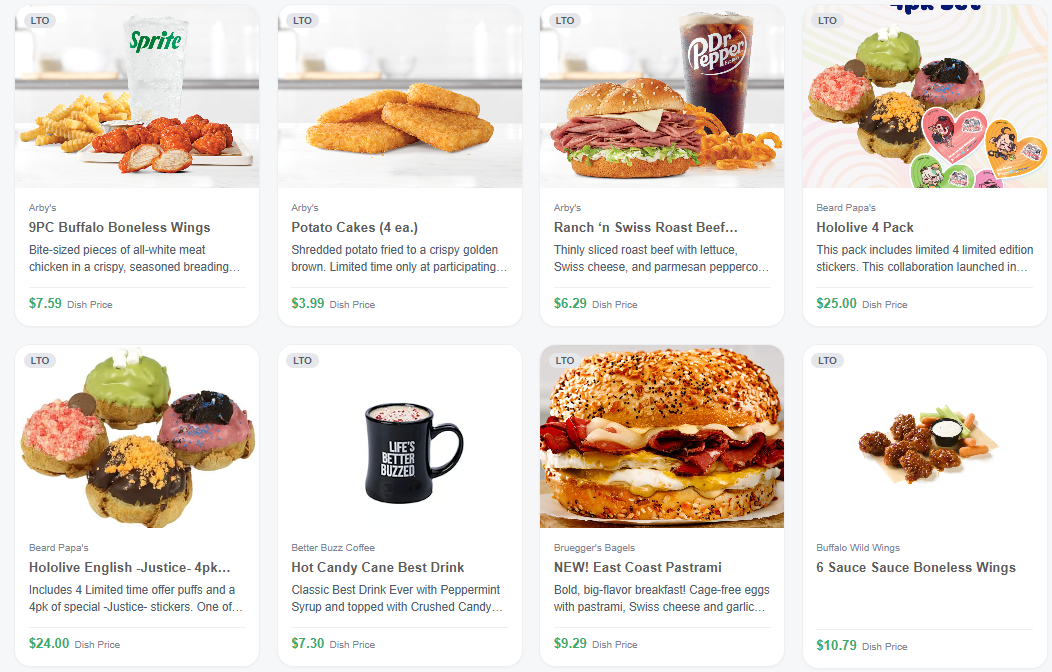
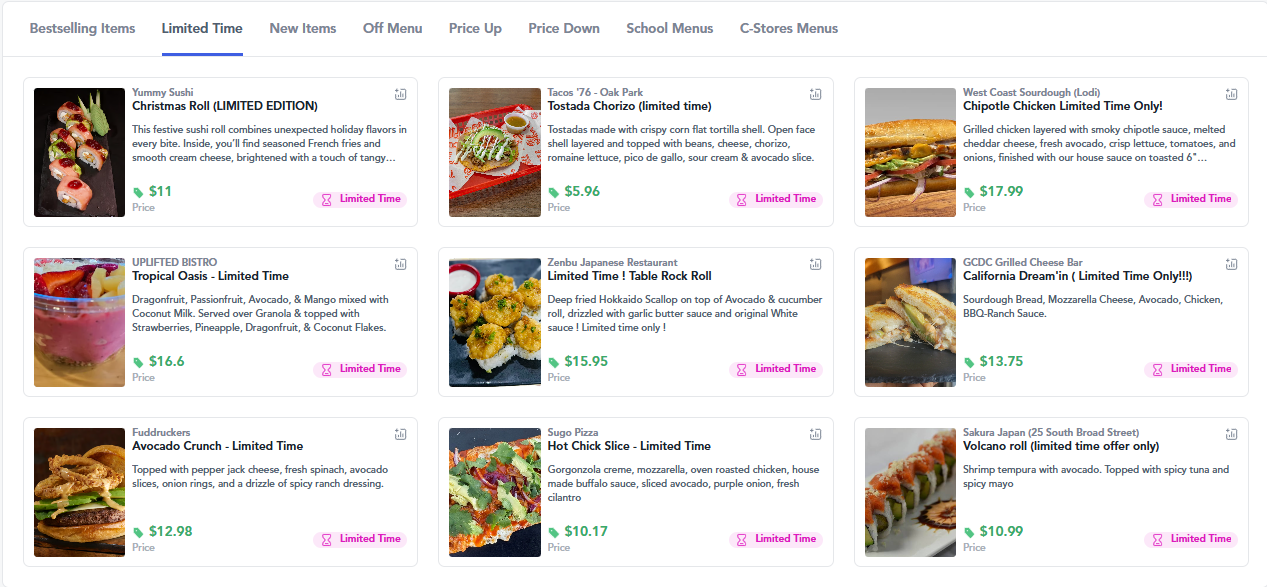
Limited time offer food trends now shape how brands and operators keep menus fresh across the United States. Across the past year the tactic has matured into a standing part of the menu rather than an occasional stunt. In Tastewise data the term maps to 93,652 menu items across 22,553 restaurants. Those menus sit alongside 21,568 social posts from 14,245 people. That scale tells you the format is mainstream. It also raises the bar, because consumers now judge a limited time offer on fit and craft.
Key takeaways
- Foodservice: limited time offers appear across 22,553 United States restaurants and 93,652 menu items, so this is a core menu tactic rather than a niche one.
- Foodservice: menu presence of limited time offers climbed steadily across the past 24 months, a sign operators still rely on them to refresh a menu.
- Social: consumer chatter about limited time offers cooled by roughly 17 percent over the past year, which means novelty earns less attention than it used to.
- Consumer: weekday occasions and summer each reach about 1 in 8 consumers, so daypart and season matter as much as the food itself.
- Consumer: Baby Boomers over-index on limited time offer interest, which widens the audience past the younger fast food core.
- Social: influencer audiences index at nearly twice the category benchmark, and Chipotle affinity rose about 12 percent over the past year.
Limited time offer food trends overview
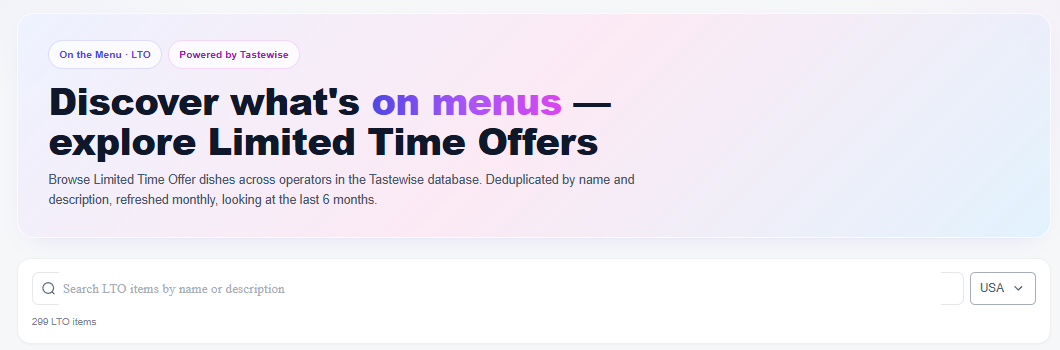
In plain terms, a limited time offer is a dish or drink a brand runs for a short window to test demand, mark a season, or drive a visit. For consumers in 2026 the appeal has shifted from surprise to relevance. They want a limited time offer that suits a real occasion, carries a clear flavour idea, and fits how they already eat.
The Tastewise signals point the same way. Menu presence keeps rising while social buzz softens, so the gap between what operators list and what consumers talk about is widening. Weekday and summer lead the occasions that drive these menus, each reaching about 1 in 8 consumers. Baby Boomers show the strongest interest of any group, and influencer audiences over-index by close to two times.
For your team the opportunity is to stop chasing pure novelty and start matching a limited time offer to a proven occasion and audience. That is where the data gives you an edge over a launch built on a hunch.
For the live view of these signals, explore the Tastewise platform, where you can track limited time offer demand as it moves.
Why limited time offers matter now
Some of the best LTO strategies for food and beverage start with a trend that already has momentum in consumer conversation, then time the launch to the seasonal window where demand peaks.
Momentum sits on three drivers. First, wellness and high-protein fuelling push consumers toward limited time offers that carry a functional reason to buy. Second, digital aesthetics reward dishes built to be filmed and shared, from viral blending hacks to bright seasonal colour. Third, macro-convenience keeps single-serve and on-the-go formats in demand for weekday routines.
The whitespace for research and development teams is clear. You can use familiar savoury or sweet bases to de-risk a bold limited time offer, then let real demand signals decide which idea earns a wider rollout.
How an innovation team could use the data
The following example is illustrative and generic, and it shows the kind of workflow the data supports. Picture a research and development innovation manager at a large snack brand who wants to justify a premium savoury limited time offer. Legacy market research is slow and leaves the budget hard to defend.
With Tastewise the team could track social posts and digital menus to validate demand for specific flavour directions before committing spend. That lets a decision-maker move with more confidence and less guesswork, and it shortens the path from idea to a menu test.
Consumer behaviour signals to watch
Consumers have moved from treating a limited time offer as a gimmick to expecting a considered, culinary-driven experience. They use these menus to customise a moment and to explore flavour without a long-term commitment. That shift shows up in the data as steady menu presence paired with softer social noise.
The read for your team is that attention is harder to win on novelty alone. The brands that keep interest tie a limited time offer to a clear occasion, a recognisable base, and a flavour idea consumers already search for.
Market opportunity for brands
The gap is the space between high menu presence and cooling social attention. It tells you differentiation comes from occasion fit and audience fit, not from sheer volume of new drops. The risk of waiting is that competitors claim the weekday and summer dayparts that reach about 1 in 8 consumers each.
The unmet demand signal is audience precision. Influencer audiences index at close to twice the benchmark, so a limited time offer built for that reach and for the Baby Boomer interest curve can travel further than a broad, untargeted launch.
To pressure test a concept against live demand, book a Tastewise demo and see the limited time offer signals for your category.
Channel analysis across at-home, out-of-home and social
At home, consumers recreate viral limited time offers using retail products, which keeps the format alive in the grocery basket between restaurant visits. Out of home, quick service and fast casual operators use exclusive sauces and seasonal builds to add reasons to visit, and Chipotle affinity for these menus rose about 12 percent over the past year.
On social the picture is quieter. Chatter cooled by roughly 17 percent over the past year even as menu presence rose, so a clear gap sits between social share and menu share. Quick service and fast casual remain the channels to benchmark for growth in limited time offer menu innovation.
Flavour directions for limited time offer food
The strongest flavour cues in the data lean toward bright seasonal profiles and weekday-friendly builds that suit summer occasions. Rather than quote ingredient-level growth we have not verified, treat these as directions to validate with a dedicated ingredient pull before you brief a kitchen.
Strategic recommendations by team
- Research and development: anchor a limited time offer to a familiar savoury or sweet base, then use demand signals to choose which flavour direction to scale.
- Marketing: lead with occasion and audience, since weekday and summer each reach about 1 in 8 consumers and influencer audiences over-index by close to two times.
- Sales: benchmark quick service and fast casual as the growth channels, and use the gap between menu presence and social share to frame the opportunity.
About this data
The insights in this report are powered by Tastewise, whose AI analyses billions of real consumer data points across social platforms, digital recipes and restaurant menus to give a real-time view of limited time offer food trends.
- Social panel: 21,568 posts from 14,245 people matched the query.
- Menu intelligence: 93,652 menu items tracked across 22,553 restaurants.
- Recipes: 28 matching recipes in the window.
- Updates: refreshed in near real time.
By blending social behaviour with menu and recipe signals, this method gives your team an evidence base for limited time offer decisions rather than a guess.
Ready to build your next limited time offer on evidence?
FAQs about limited time offer food trends
They are the short-run dishes and drinks brands use to test demand and mark occasions. In Tastewise data the term spans 93,652 menu items across 22,553 restaurants, so it is a mainstream tactic.
Menu presence rose steadily across the past 24 months while social chatter cooled by about 17 percent over the past year. Interest is stable to slightly up in the forward view.
Weekday routines and summer lead, each reaching about 1 in 8 consumers, while holiday occasions sit behind and are cooling.
Baby Boomers show the strongest interest of any group, and influencer audiences over-index at close to twice the category benchmark.
Quick service and fast casual are the channels to benchmark, with Chipotle affinity up about 12 percent over the past year.
Match a limited time offer to a proven occasion and audience, validate the flavour direction against real demand, then scale the version the data supports.




We’d love to learn your goals and see how Tastewise fits
We’d love to learn your goals and see how Tastewise fits
Get a personalized demo
Good taste. Wise move.
Your demo request is confirmed. We’ll reach out within one business day to schedule your walkthrough.
What happens next

See what’s driving demand, then turn it into a sell-in story for retailers and operators.
- Connect consumer panels, market trackers, and agents into one evidence view
- Get the “why” behind what’s changing, with explainable demand drivers
- Walk away with a buyer-ready narrative and next steps to activate
Trusted by





“Tastewise is my secret tool for knowing what consumers want next and why.“