





Beverages carry the highest purchase frequency during the Super Bowl. They are bought early, restocked often, and shared across the entire occasion. That makes soda one of the most competitive categories on game day. Standing out requires more than brand scale for today’s audience. It requires relevance to how people eat, pace, and pair food during the event.
Super Bowl soda trends show a category that stays stable at the top, expands at the edges, and evolves fastest where function and flavor intersect.
Legacy giants vs functional soda
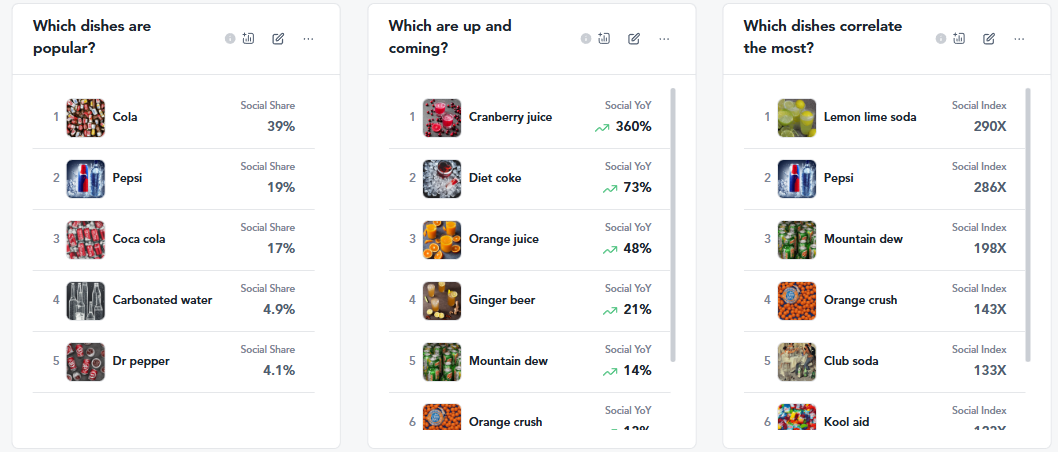
Legacy soda brands continue to anchor Super Bowl consumption. Cola still holds the largest share of conversation, followed by Pepsi and Coca-Cola, reinforcing how deeply these brands are tied to game day habits.
At the same time, functional sodas are growing through a different path. Olipop shows steady social growth of +23.5% YoY, while its presence on restaurant menus has accelerated sharply, reaching 0.7% share with +225.8% YoY growth. This points to operators testing functional soda as a better-for-you alternative during heavy eating occasions.
Poppi follows a similar but more mature pattern. Social discussion remains relatively flat at +5.5% YoY, while restaurant adoption is stronger, holding a 2.6% menu share with +14.3% YoY growth. This suggests Poppi is moving from novelty into habitual placement on menus rather than relying on social buzz.
For CPG marketing teams, this signals segmentation rather than replacement. Functional sodas are not competing head-to-head with legacy giants on volume. They are winning by addressing gut health, moderation, and balance during a high-intake occasion.
Flavor innovations in carbonated soft drinks
Flavor is where Super Bowl soda trends concentrates. Brands are testing new ideas without asking consumers to abandon familiar bases. Fruit-forward profiles and indulgent remix formats allow teams to drive trial while keeping risk contained. The data shows a clear split between formats that are already scaling through menus and formats that are still building demand through social discovery. That split is what makes this moment especially useful for limited-time offers.
| Soda format | Social growth YoY | What the data signals |
| Fruit soda (overall) | +18.6% | Broad curiosity with steady momentum |
| Yuzu soda | +41.3% | High interest, niche positioning |
| Blood orange soda | +21.3% | Event-driven spikes, seasonal appeal |
| Dirty soda | +260.5% | Customization-led experimentation |
For R&D teams, the pattern is straightforward. Formats with strong restaurant share support low-risk LTOs built for scale. Formats with fast social growth but limited penetration work best as premium or limited-run tests. Dirty soda shows that innovation does not always require new liquid development. Add-ins, mix-ins, and texture upgrades can create novelty on top of existing SKUs. Winning Super Bowl soda LTOs balance familiarity with controlled experimentation, using flavor and format to invite trial without retraining the consumer.
Planning Super Bowl products means making high-stakes decisions fast. The Super Bowl Playbook gives teams a clear view of what consumers expect, what operators are testing, and which menu ideas are built to perform. It helps align strategy, execution, and storytelling around formats that work in the real world.
Pairing soda with game day foods
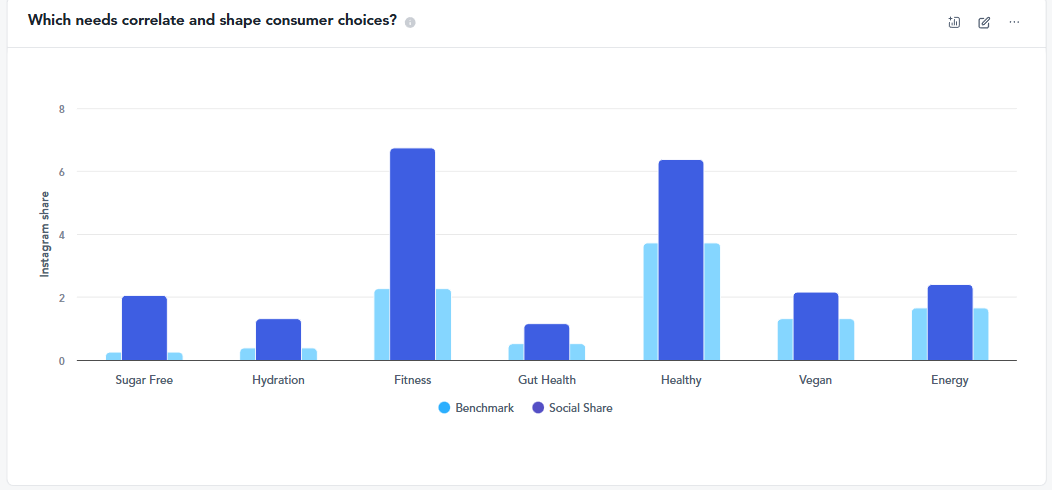
Soda earns its place on game day through food compatibility. Lemon-lime soda shows the strongest pairing correlation, followed closely by Pepsi and Mountain Dew, indicating how often these drinks appear alongside food in Super Bowl contexts.
High-acid sodas cut through greasy foods like pepperoni pizza and loaded nachos. Colas and Dr Pepper complement smoky and sweet profiles found in ribs, brisket, and barbecue wings. Higher sweetness and caffeine levels align with spicy foods such as buffalo wings.
Functional sodas appear more frequently alongside protein-forward foods and longer hosting windows, where pacing, digestion, and comfort matter more.
For foodservice operators, these insights translate into menu-ready logic. Pairing callouts, bundles, and combo pricing increase attachment while simplifying ordering decisions.
Game day beverage decisions do not happen in isolation. Soda performance during the Super Bowl is tightly connected to how the full spread comes together, from the foods people serve to the snacks they graze on throughout the game.
Understanding broader Super Bowl food trends helps explain why certain sodas show up more often in hosting baskets, while shifts in Super Bowl snack trends reveal which flavors and formats drive repeat pours. Together, these patterns shape beverage marketing strategies that align soda pairings with real game day behavior rather than standalone brand moments.
FAQs about Super Bowl soda trends
Beer leads in total volume, but soda remains one of the most frequently purchased beverages due to its role in family-friendly hosting, food pairing, and all-day consumption.
Yes. Clean energy has grown +77%, gut health +24%, and hydration +34%, supporting continued growth in zero-sugar and functional soda formats.
There is no single top choice. Legacy brands retain the strongest cultural association and foodservice presence. Dr Pepper over-indexes for savory and spicy food pairings. Functional brands like Olipop and Poppi continue to grow by meeting gut health and moderation needs. The best choice depends on whether the consumer prioritizes nostalgia, food pairing performance, or functional benefits.



We’d love to learn your goals and see how Tastewise fits
We’d love to learn your goals and see how Tastewise fits
Get a personalized demo
Good taste. Wise move.
Your demo request is confirmed. We’ll reach out within one business day to schedule your walkthrough.
What happens next

See what’s driving demand, then turn it into a sell-in story for retailers and operators.
- Connect consumer panels, market trackers, and agents into one evidence view
- Get the “why” behind what’s changing, with explainable demand drivers
- Walk away with a buyer-ready narrative and next steps to activate
Trusted by


“Tastewise is my secret tool for knowing what consumers want next and why.“