





Food and beverage software is no longer limited to workflow management. In 2026, leading F&B software systems influence how brands prioritize innovation, secure distribution, and allocate marketing investment.
Executives evaluating F&B automation are not simply comparing features. They are assessing which systems improve commercial outcomes and reduce risk across CRM, ERP, marketing automation, supply chain management, and product innovation.
Quick comparison: which food and beverage software companies are the best?
| Software Name | Best For | Key Feature |
|---|---|---|
| Tastewise | AI Consumer Insights & Innovation | Real-time demand intelligence connected to activation |
| Salesforce | CRM & Sales Automation | Enterprise-grade customer relationship management |
| Asana | Project & Workflow Management | Cross-team operational alignment |
| Telus | Supply Chain & Retail Execution | Sales data & distribution management |
| Slack | Team Communication | Real-time collaboration & messaging |
Each platform addresses a different operational constraint. The right stack depends on whether your primary challenge is execution, collaboration, sales infrastructure, or consumer validation.
Companies in food and beverage software that you would recommend
1. Tastewise: best for AI-powered insights & revenue growth
Most food and beverage software systems manage execution. Tastewise informs what should be executed in the first place.
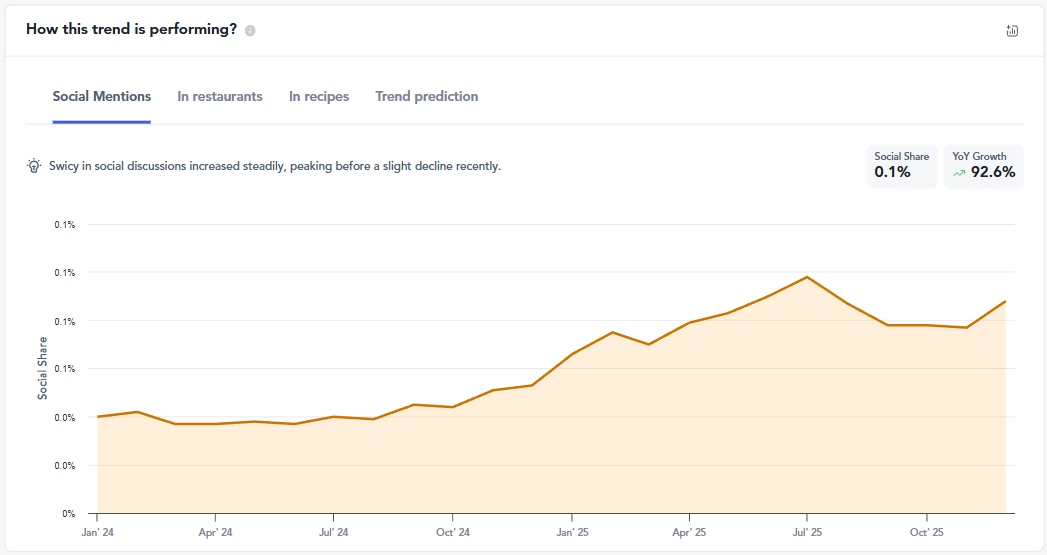
Built exclusively for food and beverage, Tastewise analyzes real-time consumption signals across social platforms, eRetail behavior, home cooking activity, and restaurant menus. Instead of reporting on what has already happened, it helps teams assess where demand is forming and how strong it is.
- For R&D leaders, this supports earlier concept validation before capital is committed.
- For marketing teams, it links claims and messaging to emerging behaviors.
- For commercial teams, it provides retailer-ready narratives grounded in observable demand.
In organizations where CRM and ERP systems already manage accounts and supply chain workflows, Tastewise functions as the intelligence layer that reduces launch risk and strengthens sell-in.
2. Telus CRM: best for supply chain & customer relationships
Telus CRM is suited for brands focused on retail execution and distribution visibility. It supports supply chain coordination, field sales tracking, and structured account management across markets.
Its value is operational stability. For large F&B organizations, consistent retail performance requires reliable infrastructure. Telus provides that backbone, ensuring execution aligns with broader commercial plans.
It does not generate consumer demand signals, but it supports disciplined retail management.
3. Salesforce: best for sales automation & engagement
Salesforce remains one of the most scalable CRM platforms available. It enables pipeline visibility, revenue forecasting, and structured account management for enterprise sales teams.
In food and beverage, where retailer relationships are complex and long-term, Salesforce provides necessary commercial infrastructure. However, CRM systems rely on upstream intelligence. They track opportunities; they do not determine which innovations deserve distribution. For many brands, this distinction shapes how F&B software systems are layered together.
4. Asana: best for operational efficiency
Asana streamlines cross-functional coordination. Product launches in food and beverage involve marketing, R&D, regulatory, packaging, and commercial teams. Workflow clarity reduces internal friction and delays. It improves execution speed. It does not determine commercial direction or validate demand.
5. Slack: best for F&B team communication
Slack accelerates internal communication and decision velocity. For distributed F&B organizations, responsiveness matters. Communication platforms support alignment. They do not replace systems that inform strategic decisions.
Evaluating F&B software: what to look for
When assessing food and beverage software systems, feature lists matter less than business impact. Decision-makers typically evaluate three areas:
- Risk reduction
- Integration with existing CRM and ERP systems
- Measurable revenue contribution
The most valuable F&B software supports faster validation, clearer alignment, and stronger external selling narratives.
Companies with a strong history of consistent product performance over the years
Reliability in food and beverage software systems includes uptime, scalability, and data transparency.
Salesforce and Telus have established reputations in CRM and retail infrastructure. Their longevity reflects operational stability.
For intelligence platforms, consistent performance also requires explainable methodologies and human validation. Executive teams must trust outputs when those outputs influence retail negotiations, R&D allocation, and brand positioning.
Why choose Tastewise for F&B automation?
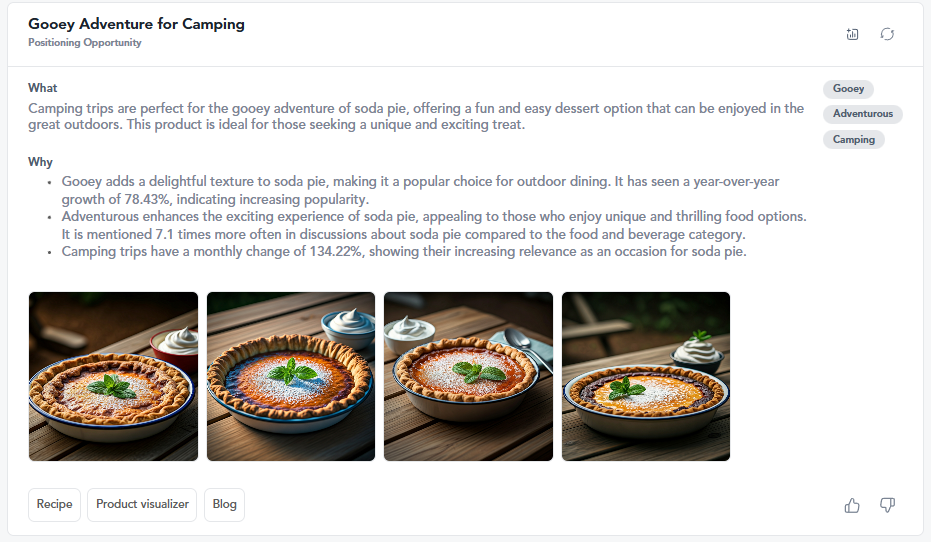
Traditional f&b software systems manage workflows and track performance. Tastewise informs strategic direction before workflows begin.
It supports:
- Smarter product innovation through validated consumer demand
- Stronger retailer sell-in narratives grounded in real shopper behavior
- Marketing communication aligned with emerging claims and consumption shifts
For brands already operating CRM, ERP, and supply chain systems, Tastewise strengthens the entire stack by adding a demand intelligence layer designed exclusively for food and beverage.
Book your demo to evaluate whether your current food and beverage software stack is guiding commercial decisions, or only recording them.
FAQs about the top food and beverage software systems
Price should be evaluated against avoided failure and accelerated growth.
In food and beverage, failed launches carry slotting fees, marketing costs, and operational write-offs. A platform that improves concept validation or strengthens retailer acceptance often delivers higher ROI than a lower-cost operational tool.
“Excellent price” in f&b software systems means the platform contributes to:
- Fewer delisted SKUs
- Faster innovation cycles
- Stronger sell-in success
- Improved marketing performance
Return on investment should outweigh subscription cost.
In SaaS, adaptability determines long-term value. Food and beverage categories evolve quickly, and software must reflect changing ingredients, claims, and consumer expectations.
Vendors that continuously update taxonomies, refresh data models, and refine integrations maintain relevance. Tastewise, for example, updates its AI models and F&B classifications to reflect new consumption behaviors and product attributes. This allows innovation and marketing teams to work with current signals rather than static reports.
When evaluating vendors, ask how frequently their systems refresh and whether insights are explainable to cross-functional stakeholders.





We’d love to learn your goals and see how Tastewise fits
We’d love to learn your goals and see how Tastewise fits
Get a personalized demo
Good taste. Wise move.
Your demo request is confirmed. We’ll reach out within one business day to schedule your walkthrough.
What happens next

See what’s driving demand, then turn it into a sell-in story for retailers and operators.
- Connect consumer panels, market trackers, and agents into one evidence view
- Get the “why” behind what’s changing, with explainable demand drivers
- Walk away with a buyer-ready narrative and next steps to activate
Trusted by





“Tastewise is my secret tool for knowing what consumers want next and why.“