





The best global CPG beverage companies 2026 are redefining how a modern market beverage company captures share. Growth is shifting away from legacy sugar-driven volume toward hydration systems, functional beverages, premium RTD coffee, and clean energy formulations. The top global CPG beverage companies 2026 are not winning by launching more SKUs, they are winning by aligning portfolio diversification with measurable consumer demand.
For brand managers, innovation leaders, and commercial strategists, this landscape serves as a benchmark. Understanding how leading operators allocate resources across hydration, gut health, adaptogens, and premiumization provides a clearer path to building competitive advantage, without needing multinational scale.
The Best Global CPG Beverage Companies 2026
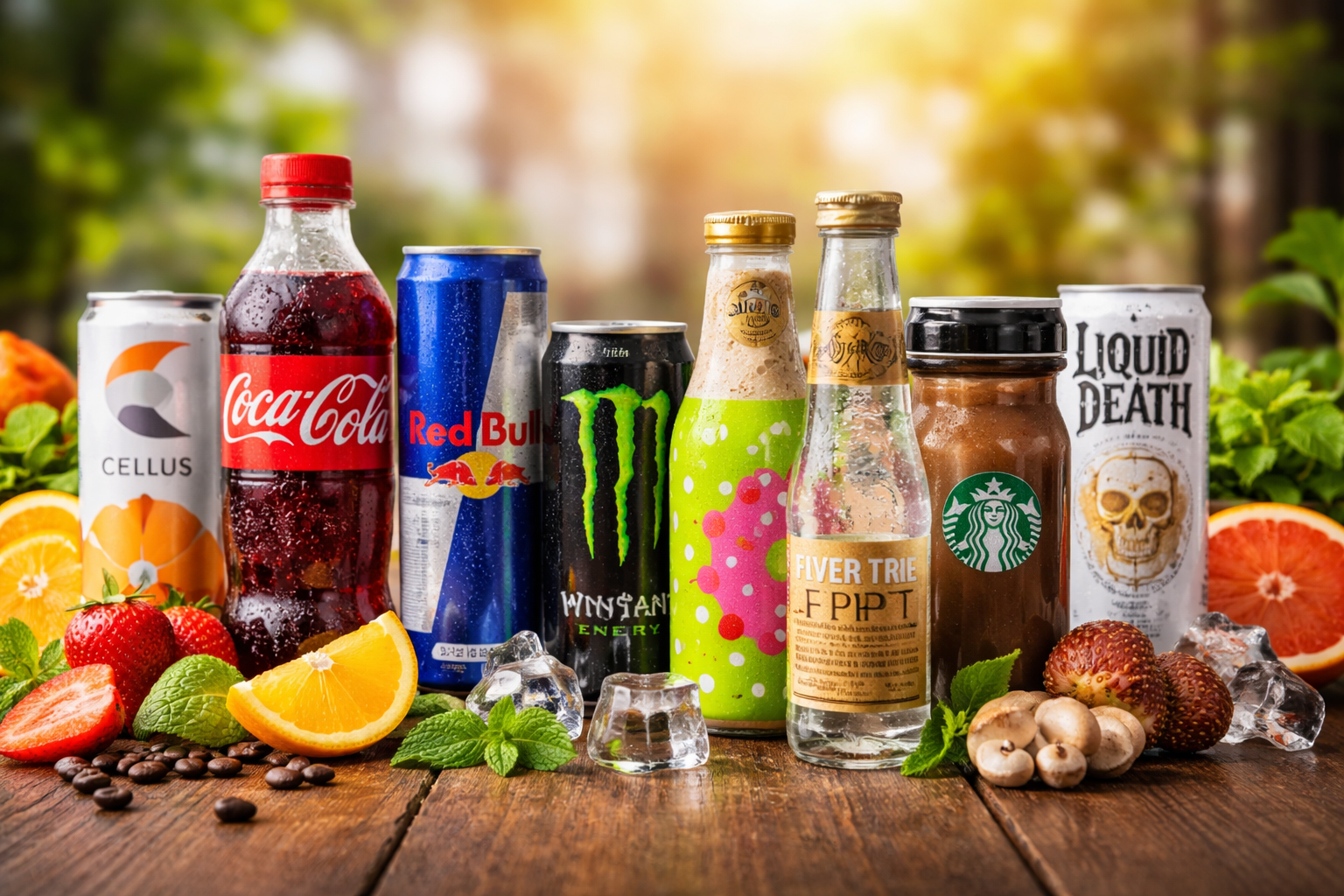
The top global CPG beverage companies 2026 are setting the benchmark for what a modern market beverage company looks like: diversified portfolios, functional innovation, and disciplined global scale. These operators lead not just in revenue, but in how they convert consumer demand into distribution and sustained market share.
1) The Coca-Cola Company
| Revenue | Core focus | Portfolio signal |
| $47.1B (FY2024) | CSDs, zero-sugar, water, sports drinks, RTD coffee/tea | Zero-sugar renovation at global scale |
Coca-Cola’s growth engine is portfolio renovation, not constant brand creation. The company is defending mature CSD share by pushing zero-sugar deeper into the core architecture while leaning on global systems to scale hydration and RTD platforms. The playbook is repeatable: protect distribution with renovated hero SKUs, then use the same route-to-market strength to grow faster formats.
2) PepsiCo
| Revenue | Core focus | Portfolio signal |
| ~$92B total company net revenue (2024) | CSDs, sports hydration, flavored water, at-home carbonation | Functionality moving into mainstream |
PepsiCo’s beverage strategy is built on portfolio diversification and claim modernization inside legacy segments. The move into prebiotic cola is a strong indicator of where the category is headed: functional cues are being embedded where distribution already exists, rather than being isolated in niche brands. That lowers innovation risk and increases the odds that “better-for-you” translates into real shelf velocity.
3) Nestlé
| Revenue | Core focus | Portfolio signal |
| CHF 91.4B group sales (2024) | Coffee, powdered beverages, RTD coffee | RTD coffee expansion beyond core markets |
Nestlé’s beverage advantage is format control in coffee, instant, pods, and RTD, paired with geographic scaling discipline. The strategy is less about chasing novelty flavors and more about making cold coffee accessible in more markets and occasions. For beverage teams benchmarking Nestlé, the lesson is that distribution expansion plus format relevance can outperform constant new-product churn.
4) Keurig Dr Pepper
| Revenue | Core focus | Portfolio signal |
| $15.4B net sales (2024) | CSDs, flavored water, juice drinks, coffee systems | Dual-engine model: cold + at-home |
Keurig Dr Pepper is a model market beverage company because it’s not dependent on one demand cycle. Cold beverages drive retail velocity, while at-home coffee systems create a defensible ecosystem that absorbs shifts in away-from-home behavior. This is portfolio risk management done well: multiple category engines, multiple consumption occasions, one coordinated distribution machine.
5) Red Bull
| Revenue | Core focus | Portfolio signal |
| €12.196B group turnover (2025) | Energy drinks, sugar-free | Controlled innovation through editions |
Red Bull’s strategy is discipline: a tight core platform, supported by limited editions that create rotation without diluting brand clarity. Sugar-free expansion and seasonal launches keep the brand modern while protecting the underlying proposition. For teams trying to compete in energy, Red Bull proves that fewer, better launches can outperform broad SKU sprawl.
6) Monster Beverage
| Revenue | Core focus | Portfolio signal |
| ~$7.49B (2024) | Energy, performance | Multi-brand expansion across sub-segments |
Monster’s growth vector is segmentation at scale, core energy plus performance, flavor-forward lines, and adjacent brand platforms. The opportunity is share capture across multiple consumer missions; the risk is complexity. Monster’s playbook works because the company has built a system for rolling innovation across sub-brands without losing distribution focus.
7) Danone
| Revenue | Core focus | Portfolio signal |
| €27.376B (2024) | Bottled water, hydration | Premium water as brand + execution system |
Danone’s beverage strength sits in hydration, where premium water brands win through consistency, trust, and execution. Packaging choices, sustainability posture, and refill/reuse behaviors increasingly influence brand preference and retailer support. Danone’s approach reinforces a key premiumization truth: operational credibility can be as important as formulation.
8) Suntory Beverage & Food
| Revenue | Core focus | Portfolio signal |
| €10.170B (2024) | Soft drinks, tea, coffee, water | Multi-category nonalcoholic scale, region-led |
Suntory’s beverage engine is built around nonalcoholic breadth, tea, coffee, soft drinks, water, anchored by strong regional leadership and translated into global scale where it has the right distribution advantage. The portfolio is designed to win across everyday drinking occasions, which makes it resilient when any single category slows.
9) Starbucks (packaged beverages)
| Revenue | Core focus | Portfolio signal |
| $36.2B net revenues (FY2024) | RTD coffee, creamers, at-home formats | Café equity converted into retail velocity |
Starbucks’ packaged beverage strategy is a blueprint for premium conversion: take café brand trust and translate it into RTD and at-home formats that deliver the same “treat” cues in a more scalable channel. The growth lever is occasion expansion, turning a café habit into a grocery basket staple, without needing to reinvent the product proposition every cycle.
10) JDE Peet’s
| Revenue | Core focus | Portfolio signal |
| €8.8B total sales (2024) | Coffee and tea across pods, ground, instant, RTD | Innovation systems applied to a mature category |
JDE Peet’s wins through portfolio architecture and innovation infrastructure in a mature category. Coffee growth increasingly comes from format strategy (pods, instant convenience, RTD access) and brand portfolio management, not just roast profiles. For teams benchmarking “most innovative consumer goods beverage company” behaviors, JDE Peet’s shows how process and platform discipline create repeatable innovation.
Top Premium CPG Beverage Companies to Watch
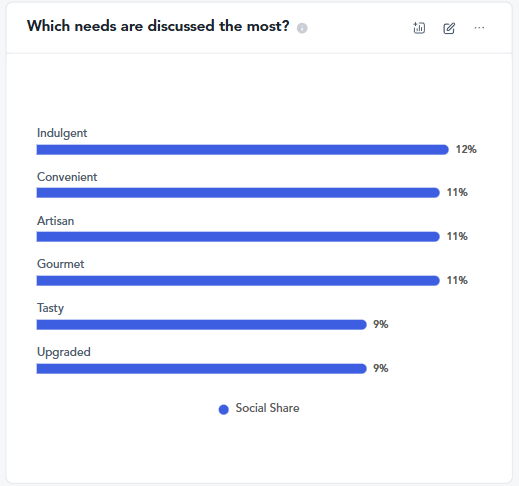
While the top global CPG beverage companies 2026 defend scale, the top premium CPG beverage companies 2026 are expanding margin. Their advantage is not distribution dominance, it is sharper positioning, tighter SKU discipline, and stronger consumer language clarity.
- Fever-Tree built premium mixers by reframing tonic and soda as craft ingredients rather than commodities. The brand wins by attaching itself to premium spirits growth and protecting price per ounce through ingredient transparency and packaging cues.
- Poppi inserted prebiotic functionality into the traditional soda occasion, demonstrating that gut health can live inside a familiar format. The brand’s momentum reflects a broader shift: functionality does not require a new aisle, it can modernize an existing one.
- Liquid Death proved that packaging architecture can create premium water velocity when brand voice and distribution strategy align. It reframed water as identity-driven rather than purely functional.
- Celsius scaled by anchoring energy in fitness performance and metabolic positioning, capturing consumers who view energy as daily routine rather than occasional stimulation.
These companies operate like a most innovative consumer goods beverage company not because of R&D scale, but because of positioning precision. Premiumization works when brands combine three factors: clear consumer benefit, price tolerance, and disciplined distribution expansion. Without all three, premium becomes short-lived hype.
For beverage teams benchmarking premium growth, the signal is clear: trade-up succeeds when it is anchored in measurable demand and repeat purchase, not aesthetic packaging alone.
Premiumization in beverages is increasingly ingredient-led rather than price-led. Social momentum behind layered flavor systems such as chocolate pistachio (+155% YoY), chocolate strawberry (+121% YoY), and strawberry matcha (+120% YoY) signals that consumers are rewarding complexity that feels crafted. Coffee remains the strongest premium anchor across beverage conversations, reinforcing café-inspired indulgence as a scalable trade-up platform.
This is why the top premium CPG beverage companies 2026 are succeeding. They are not simply charging more, they are building measurable flavor momentum, clear benefit language, and price tolerance before scaling distribution. The most innovative consumer goods beverage company models treat premium as a system: differentiated ingredients, disciplined SKU expansion, and proof of repeat purchase before retail expansion.
The Next Wave: Beverage Innovation & DNA-Informed Trends
Going into 2026 and beyond, beverage growth is concentrating in functional beverages, gut health, adaptogens, and clean energy formulations. The shift from sugar to functionality is structural, not cyclical.
Functional beverages are evolving from isolated “wellness drinks” into embedded category upgrades:
- Prebiotic and probiotic sodas
- Adaptogen-infused teas and sparkling waters
- Protein-forward RTDs
- Low-sugar energy systems with added metabolic or cognitive claims
What differentiates this cycle is personalization. Food & beverage companies are beginning to explore dna-informed meal cues USA, where beverage formulations and recommendations align with biometric data, metabolic response, or individualized nutrition tracking. While still emerging, the direction is clear: hyper-personalized hydration and functional alignment will shape long-term innovation pipelines.
For innovation teams, the takeaway is not to chase every claim. It is to evaluate which functional benefits have sustained consumer sentiment, retailer acceptance, and repeat behavior, and which are social spikes without commercial depth.
The leading US food and beverage companies 2026 are not experimenting blindly. They are sequencing functional rollouts carefully, validating language, and expanding only where velocity holds.
How to Compete with the Best Beverage Companies
The best global CPG beverage companies 2026 do not win simply because they are large. They win because they reduce uncertainty before they scale.
They validate:
- Whether demand exists
- Whether product language is legible to shoppers
- Whether retailers can believe the velocity story
Most mid-sized beverage brands fail not because the flavor is wrong, but because the internal case is weak and the external sell-in lacks evidence.
You do not need a billion-dollar R&D budget to compete with a market beverage company. You need access to the same real-time consumer intelligence that informs their portfolio decisions.
Tastewise enables beverage teams to:
- Quantify emerging demand before committing production
- Validate functional claims before packaging is finalized
- Identify flavor momentum across social, foodservice, and at-home behavior
- Build retailer-ready narratives grounded in measurable evidence
Want to spot the next big beverage trend before the leading US food and beverage companies 2026 do? Use Tastewise AI to analyze millions of consumer data points instantly.
FAQs about the best global CPG beverage companies 2026
The best global CPG beverage companies 2026 include multinational leaders such as Coca-Cola, PepsiCo, Nestlé, Red Bull, Keurig Dr Pepper, and major global brewers and spirits groups. These companies lead through portfolio diversification, strong distribution systems, and sustained innovation in hydration, energy, and functional beverages.
The top global CPG beverage companies 2026 are focusing on zero-sugar reformulation, functional beverages, gut health, premium RTD coffee, and clean energy positioning. Many are embedding health-forward benefits inside mainstream formats rather than creating entirely new subcategories.
The top premium CPG beverage companies 2026 include brands such as Fever-Tree, Poppi, Liquid Death, and Celsius. These brands succeed by combining strong consumer positioning, differentiated ingredients, and price tolerance, allowing them to grow margin as well as market share.
A successful market beverage company builds repeatable innovation systems. That includes validating demand before scaling, aligning product language with consumer sentiment, and creating retailer-ready narratives that justify distribution and shelf space.
Smaller brands can compete with leading US food and beverage companies 2026 by reducing uncertainty before launch. Access to real-time consumer intelligence allows teams to validate trends early, refine positioning, and build evidence-backed sell-in stories without the need for multinational scale.


We’d love to learn your goals and see how Tastewise fits
We’d love to learn your goals and see how Tastewise fits
Get a personalized demo
Good taste. Wise move.
Your demo request is confirmed. We’ll reach out within one business day to schedule your walkthrough.
What happens next

See what’s driving demand, then turn it into a sell-in story for retailers and operators.
- Connect consumer panels, market trackers, and agents into one evidence view
- Get the “why” behind what’s changing, with explainable demand drivers
- Walk away with a buyer-ready narrative and next steps to activate
Trusted by



“Tastewise is my secret tool for knowing what consumers want next and why.“