





Snacks are the lowest barrier to entry for Super Bowl activation. They require minimal commitment from shoppers, support trial, and scale quickly across channels. That is why Super Bowl snacks consistently act as the first signal of what will win the broader game day basket.
According to Super Bowl consumption data, snack-led conversations and purchases remain the most stable and repeatable entry point into game day hosting. The difference in 2026 is not how much people snack, but how deliberately they choose flavors and formats.
The rise of swicy and global heat
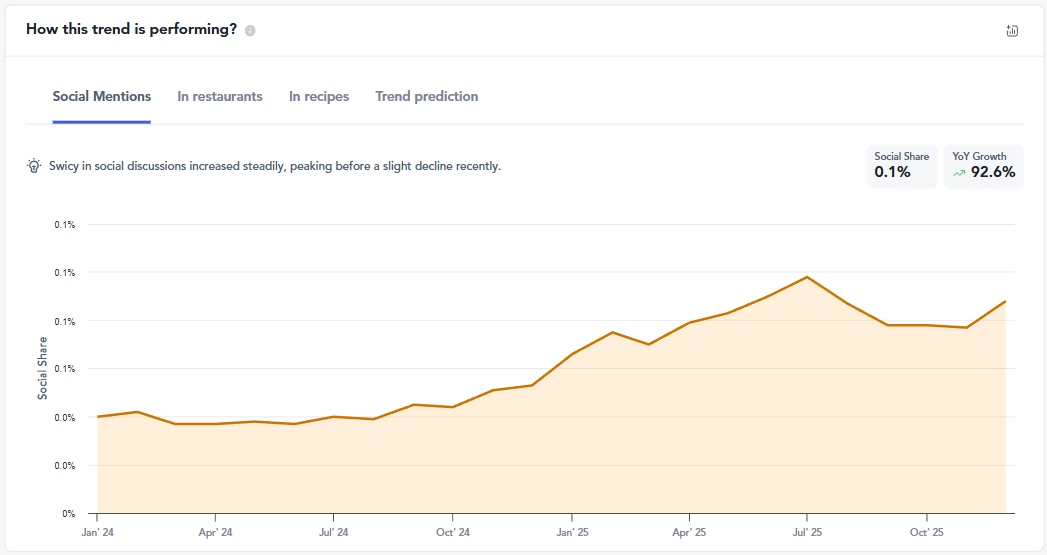
Sweet plus spicy or ‘swicy’ has moved from emerging to scalable. According to the Social F&B panel, sweet and spicy flavor cues in Super Bowl snack discussions are up more than 90 percent compared to last year, while demand for intense flavors in dips and snack adjacencies has grown +284 percent year over year.
Specific flavors show clear breakout patterns. Hot honey continues to lead, with Super Bowl related social discussion up +42 percent year over year, making it one of the most reliable bridge flavors between mainstream and adventurous eaters. Gochujang flavored snacks are gaining traction as Korean cuisine over indexes with Gen Z Super Bowl hosts, while ghost pepper maintains relevance as a heat-forward signal for younger and male-skewing audiences.
For flavor and ingredient suppliers, the implication is range, not risk. These flavors succeed when they are offered as adjustable systems rather than fixed heat levels. That makes them easier for brands to scale across chips, pretzels, and coated snacks while keeping consumer adoption broad and repeatable.
Healthy swaps and guilt free game day
Health is showing up on game day through function, not restriction. According to Tastewise consumer discussion data, interest in high protein dips is up +30 percent year over year, high fiber dips are up +40 percent, and anti bloat snack cues are up +19 percent around Super Bowl occasions.
Baked formats continue to outperform fried alternatives when positioned as part of the hosting spread rather than as better-for-you substitutes. Chickpea puffs and protein-forward crunchy snacks benefit from this framing because they deliver texture and satiety without changing how people snack.
For R&D leaders, this validates concepts that prioritize mouthfeel and flavor first, with nutrition acting as a supporting reason to say yes. The most successful healthy Super Bowl snacks feel additive to the table, not corrective.
The Super Bowl is less about trends and more about proof at scale. Brands and retailers need to know which formats convert, where to place risk, and how to justify seasonal bets internally and externally. Tastewise’s Super Bowl playbook creates that clarity before decisions lock.
Shareability and packaging formats
Format is a growth driver during the Super Bowl. Super Bowl food statistics show that hosting-oriented packaging outperforms single serve formats as shoppers plan for groups. Family size bags remain strong, but variety packs are gaining momentum because they solve multiple needs at once.
Variety formats align with real hosting behavior. Different spice tolerances, dietary needs, and snacking rhythms all coexist during the game. Offering multiple flavors in one pack increases basket size while reducing the risk of over commitment to a single SKU.
For retail-focused brand managers, this creates a clear upsell path. Packaging that signals abundance and flexibility earns space because it maps directly to how people host rather than how they snack alone.
Cross merchandising opportunities
Snack purchases frequently trigger secondary purchases. According to Tastewise consumption moments, chips are increasingly paired with yogurt-based dips, plant-based queso, and globally inspired sauces during Super Bowl shopping missions.
This pairing behavior creates natural cross merchandising opportunities. Placing bold dips next to chips or bundling them digitally increases total basket value while reinforcing usage. These adjacencies also help newer flavors feel more accessible by anchoring them in familiar formats.
For category teams, this is where snack trends translate into shelf logic. Coordinated placement turns flavor curiosity into repeatable purchase behavior.
Explore how these snack trends connect to broader categories in our Super Bowl Food Trends blog.
Seasonality and the Super Bowl opportunity
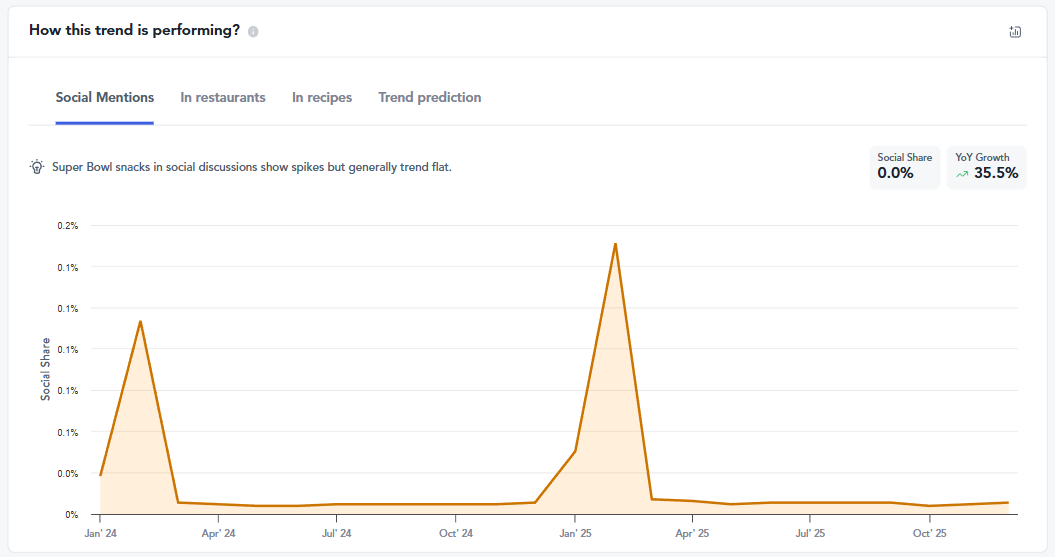
The Super Bowl concentrates demand into a short window dominated by fried, crispy, and shareable foods, the same contexts where swicy already performs best. With 17% of swicy usage tied to fried foods and 14% to crispy preparations, the flavor fits naturally into wings, tenders, sliders, dips, and snack mixes without requiring consumer education.
Trending swicy anchors like hot honey and Asian-inspired sweet heat translate easily into limited-time sauces and coatings, allowing brands and retailers to capture seasonal lift while pressure-testing repeat behavior beyond the event window.
FAQs about Super Bowl snack trends
Viral Super Bowl snacks center on sweet and spicy flavor systems, global heat cues like hot honey and gochujang, and shareable formats designed for dipping, stacking, and variety.
Plant based snacks are gaining traction when they deliver crunch, protein, and flavor. Chickpea puffs, plant based dips, and baked snacks perform best when framed as part of the hosting spread.


We’d love to learn your goals and see how Tastewise fits
We’d love to learn your goals and see how Tastewise fits
Get a personalized demo
Good taste. Wise move.
Your demo request is confirmed. We’ll reach out within one business day to schedule your walkthrough.
What happens next

See what’s driving demand, then turn it into a sell-in story for retailers and operators.
- Connect consumer panels, market trackers, and agents into one evidence view
- Get the “why” behind what’s changing, with explainable demand drivers
- Walk away with a buyer-ready narrative and next steps to activate
Trusted by





“Tastewise is my secret tool for knowing what consumers want next and why.“