





The KitKat food trend is being shaped by flavor experimentation, dessert usage, and regional demand rather than broad brand chatter. Tastewise Category Dashboard data shows engagement clustering around specific flavors, formats, and cultural cues, with Asia acting as the primary engine of innovation and adoption.
KitKat trend overview
- Flavor-led conversations around KitKat are concentrated in emerging variants, with Chocolate strawberry growing +178% year over year and Double chocolate up +115%.
- 6.94% (260,013) of U.S. restaurants offer KitKat dishes on their menus.
- The top consumer need driving KitKat consumption today is snack.
- Vegan KitKat is the most dominant dietary adaptation.
Regional demand patterns behind the KitKat food trend
Asia acts as the testing ground for innovation. Japanese KitKat flavors and Taiwan-led exclusives normalize seasonal releases, gifting packs, and unconventional flavor profiles. These markets shape expectations around collectability and rotation, feeding global demand signals within the KitKat food trend.
Beyond Asia, premium cues are emerging in the Middle East. “Dubai chocolate” appears as Emerging at both dish and ingredient lifecycle stages. This positions Dubai chocolate KitKat as part of a luxury-coded chocolate narrative linked to gifting and exportable indulgence.
KitKat food trend performance and market presence
Tastewise Category Dashboard data places KitKat firmly within the food and beverages category, with activity spanning home cooking, foodservice menus, and social consumption moments. Demand concentrates around desserts, drinks, and hybrid snack formats rather than single-bar consumption. Menu data confirms consistent presence across ice cream, shakes, and specialty desserts, reinforcing KitKat’s role as an ingredient-led brand within the KitKat food trend.
Consumer needs shaping KitKat demand
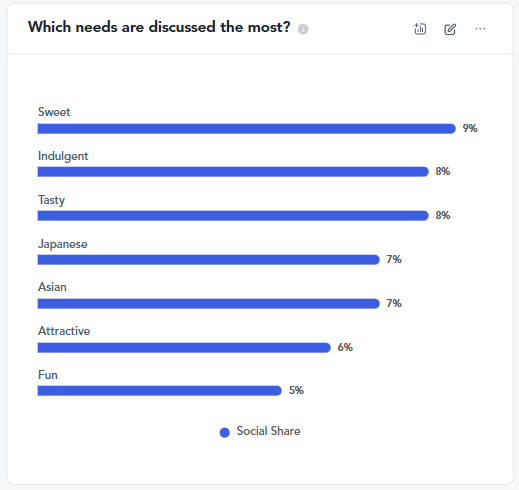
Consumer needs data shows “Sweet” (9%), “Indulgent” (8%), and “Tasty” (8%) as core drivers, but cultural cues play an equally strong role. “Japanese” (7%) and “Asian” (7%) rank among the most cited needs associated with KitKat. This positions the brand within broader Asian chocolate snack trends, where novelty, limited formats, and regional identity influence purchase and usage.
KitKat flavors gaining momentum
Tastewise flavor and ingredient data points to flavor-led demand. Chocolate strawberry shows +178% YoY growth at both dish and ingredient levels, while double chocolate grows at +115% YoY. These gains define current KitKat flavor trends, driven by mashups and dessert-forward builds rather than classic bars.
This KitKat strawberry flavor growth aligns with broader emerging dish signals such as chocolate strawberry desserts and premium chocolate variants. Flavor is functioning as a modular layer that allows KitKat to adapt across formats and regions.
Dessert and drink formats driving usage
Consumption moments show KitKat performing strongest in desserts and drinks. KitKat milkshakes, McFlurries, lattes, and soft-serve applications generate high engagement, with individual posts reaching 100K–400K+ likes. Dish correlation data supports this usage pattern, with McFlurry indexing at 141X and chocolate wafer at 131X.
These patterns explain sustained KitKat milkshake popularity and the expansion of KitKat dessert formats across both QSR and casual dining menus. KitKat functions as a textural and flavor add-on within established dessert systems.
Ingredient and dish lifecycle insights tied to KitKat
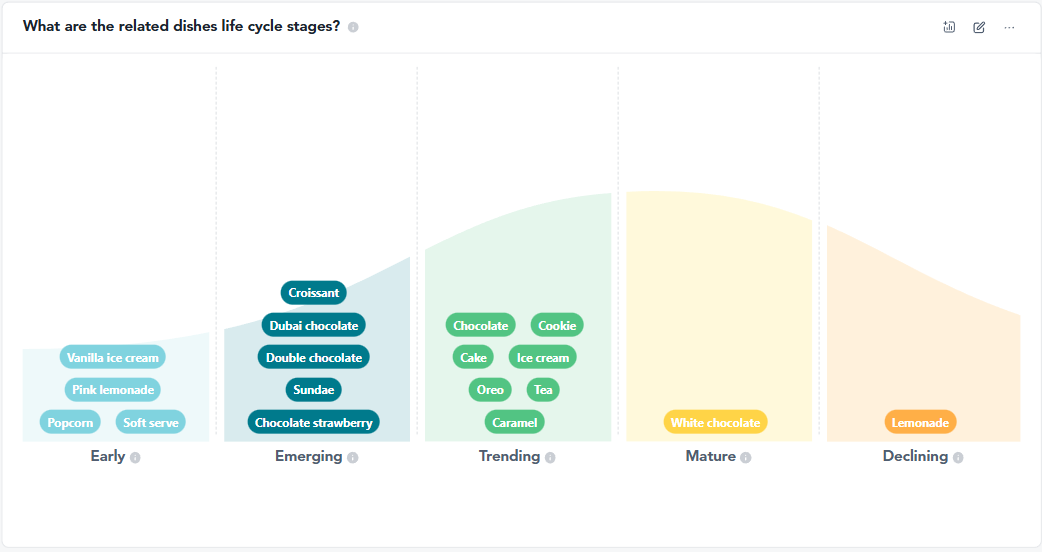
Lifecycle analysis shows chocolate strawberry and double chocolate in Emerging stages, supported by ingredient growth in sweet cream (+227% YoY) and oatmeal (+144% YoY). These inputs enable reinterpretation across desserts, drinks, and DIY formats. Trending ingredients such as matcha, berry, milk, and vanilla further reinforce KitKat’s adaptability within Asian and dessert-led contexts.
Retail and foodservice opportunities linked to the KitKat food trend
Menu data shows KitKat integrated into ice cream, shakes, and plated desserts with prices ranging from mass-market QSR to premium dining. At the same time, recipe data reveals strong performance for Vegan KitKat recipes, with saves reaching 1,300+ on creator-led platforms.
This indicates demand for plant-based and customizable versions without official product extensions. The wafer-and-chocolate structure supports remixing across retail, foodservice, and at-home formats, extending the KitKat food trend into better-for-you and specialty segments.
FAQs about KitKat Food trend
Flavor experimentation, dessert and drink usage, and strong cultural association with Asian markets.
Chocolate strawberry (+178% YoY) and double chocolate (+115% YoY), both in Emerging lifecycle stages.
Primarily in milkshakes, McFlurries, soft serve, and specialty desserts, supported by high engagement and strong dish correlations.
Regional exclusives, gifting formats, and frequent flavor rotation shape consumer expectations around novelty and collectability.
Yes. Plant-based and DIY recipes show strong save rates, supported by growth in alternative ingredients like oatmeal and sweet cream.


We’d love to learn your goals and see how Tastewise fits
We’d love to learn your goals and see how Tastewise fits
Get a personalized demo
Good taste. Wise move.
Your demo request is confirmed. We’ll reach out within one business day to schedule your walkthrough.
What happens next

See what’s driving demand, then turn it into a sell-in story for retailers and operators.
- Connect consumer panels, market trackers, and agents into one evidence view
- Get the “why” behind what’s changing, with explainable demand drivers
- Walk away with a buyer-ready narrative and next steps to activate
Trusted by




“Tastewise is my secret tool for knowing what consumers want next and why.“