






Key takeaways
The supermarket food trends of 2026 are no longer defined by novelty or price alone. According to Tastewise surveys across major US retailers, shoppers are filtering decisions through a stricter value logic shaped by food inflation, functional payoff, and shelf clarity. Nearly 1 in 3 grocery shoppers actively looks for energy-supporting products, while private label continues to gain trust as a value signal rather than a compromise. The future of supermarkets in 2026 belongs to brands that can defend their Stock Keeping Unit (SKU) with repeatable consumer evidence, sales velocity, and a clear role in the grocery assortment strategy.
The shelf has changed
The grocery trends of 2026 reflect a sharper consumer mindset than prior years. Inflation has not reduced ambition; it has increased scrutiny. Across Tastewise survey data, between 3 and 5 in every 10 shoppers choose a supermarket primarily for convenience, regardless of whether that retailer is premium-positioned or value-led.
Traditional POS systems explain what sold yesterday. They do not explain why a shopper chose a store brand over a national brand, or why certain SKUs survive shelf resets while others are cut during shelf rationalization trends. Tastewise closes that gap by connecting consumer intent, post-purchase behavior, and emerging demand signals across retail, foodservice, and home cooking.
Top supermarket food trends for 2026
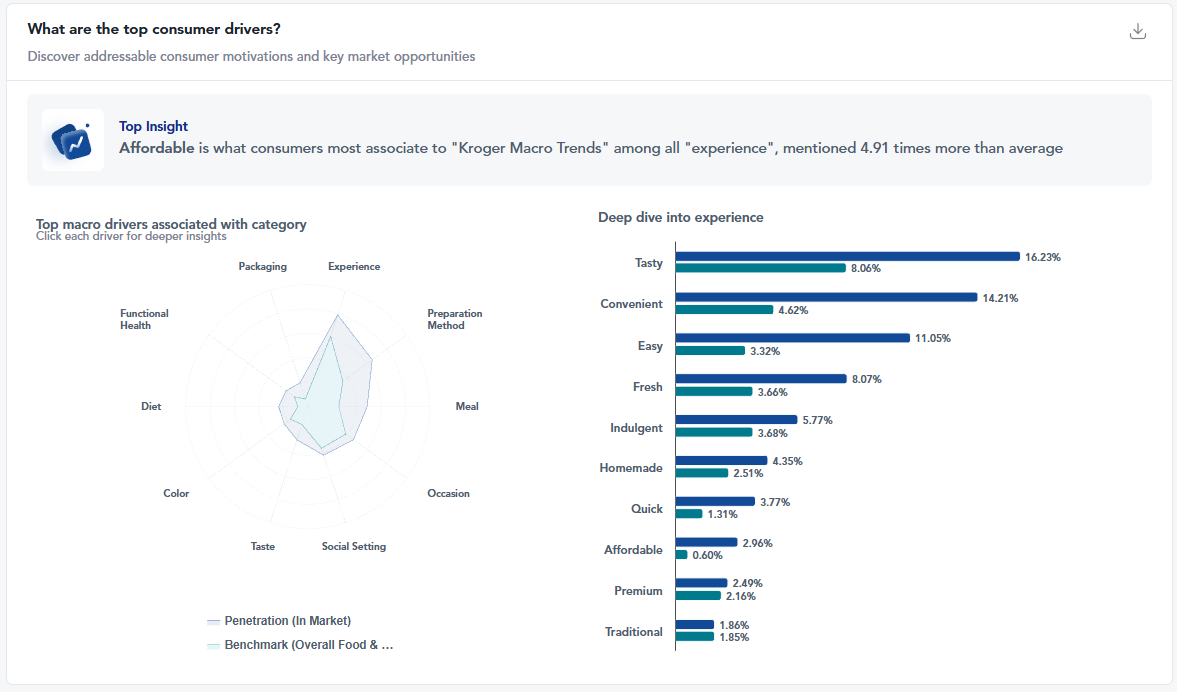
These trends reflect how shoppers are simplifying decisions under pressure. Across supermarkets, products win when their benefit is immediately clear, defensible on shelf, and aligned with how consumers define value in 2026.
From “free-from” to “full-of” (nutrient density)
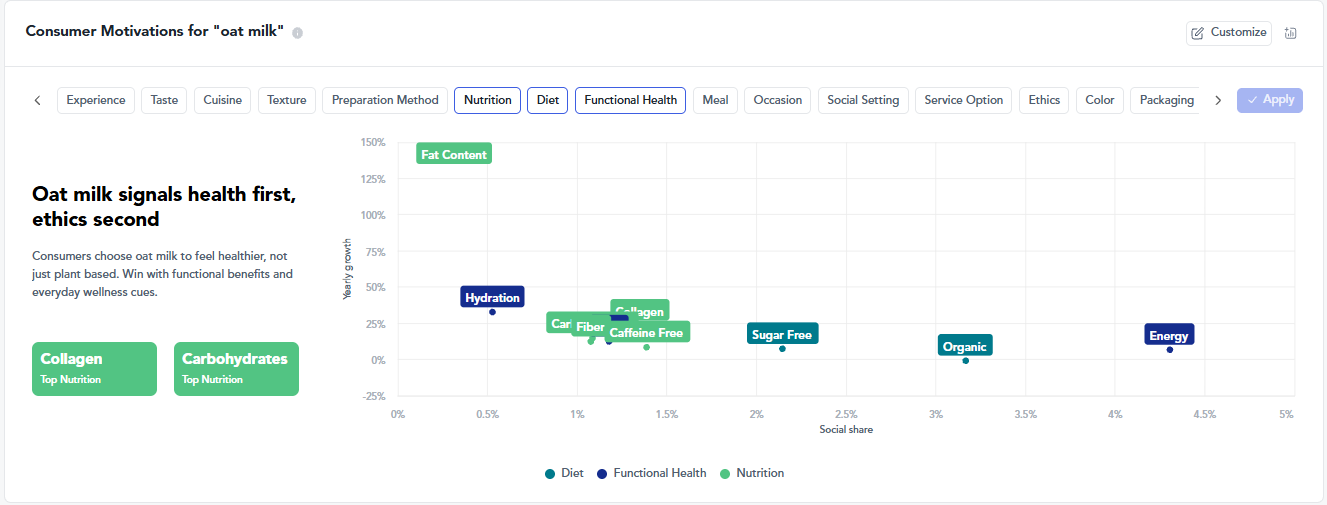
Across all retailers studied, energy is the most sought-after functional benefit. At mass retailers, nearly 1 in 3 shoppers actively looks for energy benefits, while club and specialty retailers show slightly lower but still dominant demand. High-protein and gut-health preferences consistently rank above sugar-free or avoidance-led claims, reinforcing a broader shift within 2026 food and beverage trends toward nutrient density and satiety.
What this tells us is that shoppers are no longer scanning labels for what is missing. They are scanning for what delivers. The GLP-1 impact accelerates this behavior by increasing demand for calorie efficiency, fewer calories, more functional return. Ultra-Processed Food avoidance without a compensating benefit no longer justifies shelf space.
For CPG brands selling into retail, this means leading with outcomes, not exclusions. Packaging, claims, and sell-in stories need to clearly communicate protein density, fiber, or functional benefit, supported by real consumption behavior. Home cooking panel data becomes critical here, showing not just intent but how products are actually used after purchase.
Private label is the new cool brand
Convenience consistently ranks as the top shopping motivation across retailers, while affordability outperforms premium positioning in mass and club channels. At some retailers, fewer than 1 in 10 shoppers cite premium quality as their primary reason for shopping. At the same time, Social F&B panel data shows growing positive sentiment around store-brand “dupes,” particularly among younger shoppers. This aligns with sustained supermarket private label growth and changing perceptions of value.
The implication for brands is clear: the private label vs national brands 2026 conversation is no longer about price alone. Store brands are often perceived as smarter, not cheaper. Gen Z shoppers, in particular, demonstrate value loyalty rather than brand loyalty.
To compete in this environment, national brands must earn their place on the shelf. That means clearly articulating what the product replaces, what occasion it owns, and why it deserves its price. Retail buyers increasingly expect sell-in narratives grounded in sales velocity, basket role, and performance logic, not brand heritage.
Accessible sustainability
Across retailers, roughly 3 to 5 in 10 shoppers say they care about locally sourced or sustainability-linked attributes. However, far fewer prioritize those claims when forced to trade off against price or convenience. Sustainability consistently ranks below functional benefits in purchase decisions, particularly in center store categories.
In practice, this means sustainability is now a baseline expectation, not a premium lever. Ethical positioning without price logic increases risk during shelf reviews, especially as slotting fees and productivity thresholds come under greater scrutiny.
For brands, the path forward is integration rather than elevation. Sustainability needs to be tied to supply chain efficiency, waste reduction, or ingredient performance. Claims should be validated before scaling, ensuring shoppers understand and believe the value being offered.
Consumer behavior: The “why” behind the buy
The lipstick effect in grocery
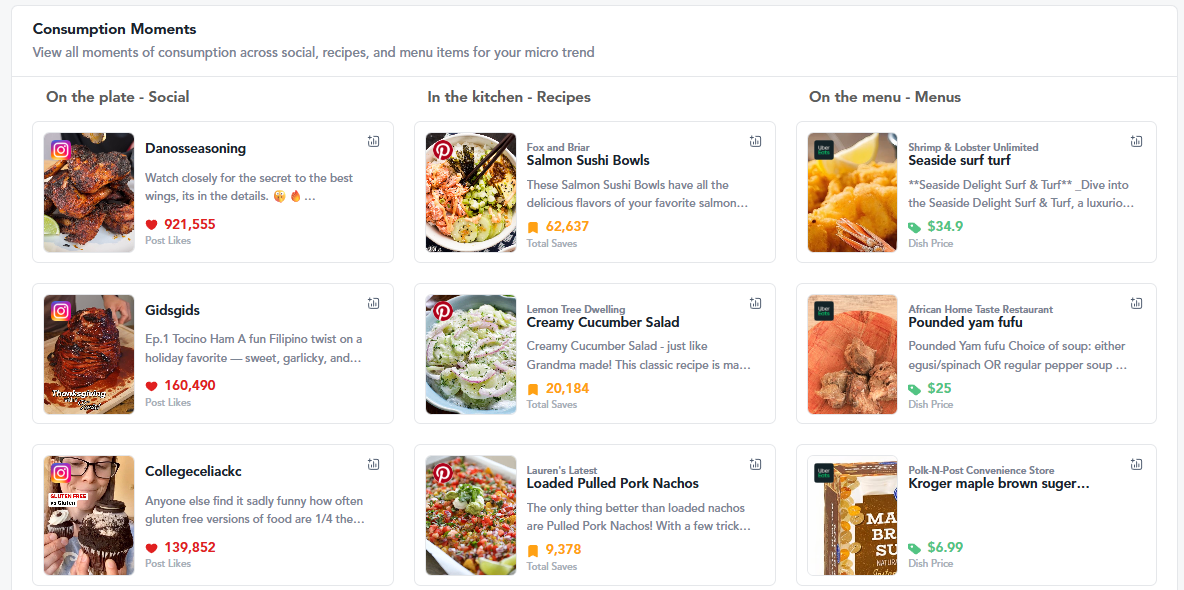
Foodservice data shows consumers reducing restaurant frequency, while Social F&B panel signals reveal increased engagement with indulgent grocery items positioned as affordable luxuries. Premium sauces, beverages, and desserts consistently outperform when framed as restaurant replacements rather than everyday staples.
Consumers are not abandoning indulgence; they are relocating it. Grocery has become the primary stage for small luxuries in an inflation-aware economy.
For brands, this creates an opportunity to sell occasions, not ingredients. Products that clearly replace dining-out moments are easier to defend on shelf and easier to sell into retail.
The hybrid shopper
Survey data shows shoppers simultaneously trading down on staples while trading up on specific moments. While premium is rarely the primary shopping driver, premium and artisan products still succeed when tied to clear need states or occasions.
The same shopper who buys the cheapest pantry staple may spend significantly more on a single indulgent or functional item in the same trip. This behavior complicates traditional retail category management strategies and breaks demographic-based segmentation.
Winning brands respond by building innovation and grocery assortment strategy around need states rather than shopper personas.
Strategic implications: How brands survive
Merchandising trends in 2026 favor clarity, velocity, and defensibility. Convenience drives store choice, functional benefits drive product selection, and value logic determines the final purchase. As retailers increase scrutiny of underperforming SKUs, the risk is not missing a trend, it is failing to defend a SKU’s role in the category, and ultimately failing at winning the shelf.
For CPG brands selling into retail, this means building sell-in narratives around sales velocity, occasion replacement, and shopper logic. Speed to shelf only works when paired with conviction, supported by explainable, repeatable evidence.
The shelf-readiness checklist: 5 questions for your brand
- Does your packaging communicate a benefit in three seconds?
- Can your product replace a dining-out occasion?
- Is your ingredient list kitchen-logic friendly?
- Are you targeting a need state, not a demographic?
- Can you prove demand with repeatable evidence to protect your SKU during shelf reviews?
Validate your strategy
In the future of supermarkets 2026, guessing is expensive. Food inflation, supply chain pressure, and shelf rationalization reward brands that can articulate, prove, and repeat their decisions. Tastewise turns consumer behavior into conviction, so teams can align internally and win externally.
Validate your 2026 category strategy with predictive consumer data. Download the playbook or book a demo.
FAQs about Supermarket trends 2026
Grocery trends in 2026 are defined by value discipline, not novelty. Shoppers are prioritizing products that deliver clear functional benefits, justify their price, and earn their place on shelf. Nutrient density, private label normalization, and price-neutral sustainability are shaping how consumers evaluate grocery assortments across channels.
The biggest supermarket food trends for 2026 are nutrient density, private label growth, and occasion-based buying. Consumers are moving away from avoidance-led claims toward products that clearly deliver energy, protein, satiety, or functional payoff. At the same time, store brands are increasingly trusted as smart choices, and indulgence is being reframed as an at-home occasion rather than an everyday habit.
Inflation has made consumers more selective, not less willing to spend. Shoppers are trading down on staples while trading up on specific moments that feel justified. This “value-ruthless” behavior explains why convenience and functional benefits dominate decision-making, while premium positioning only works when clearly defended.
CPG brands compete with private labels by proving their value, not by branding alone. Winning brands articulate what they replace, which occasion they own, and why they deserve their price. Retail buyers increasingly expect evidence around sales velocity, basket role, and shopper logic, especially during shelf rationalization and category resets.



We’d love to learn your goals and see how Tastewise fits
We’d love to learn your goals and see how Tastewise fits
Get a personalized demo
Good taste. Wise move.
Your demo request is confirmed. We’ll reach out within one business day to schedule your walkthrough.
What happens next

See what’s driving demand, then turn it into a sell-in story for retailers and operators.
- Connect consumer panels, market trackers, and agents into one evidence view
- Get the “why” behind what’s changing, with explainable demand drivers
- Walk away with a buyer-ready narrative and next steps to activate
Trusted by





“Tastewise is my secret tool for knowing what consumers want next and why.“