







A single livestream can put a pantry staple on shopping lists across the country within days. The spicy Korean tuna trend shows how that happens and why it holds. Korean spicy canned tuna, rice, mayo and a sheet of seaweed add up to a fast home meal with bold flavor and almost no prep. The tuna and rice TikTok trend has pulled in Gen Z, protein-focused eaters and adventurous home cooks alike. This guide covers why this tuna trend took off, how to remake the bowl and what food brands can learn from viral demand shifts.
Key takeaways
- Social interest in spicy tuna and tuna rice bowls rose 18% over the past 12 months across the Tastewise US panel.
- Gen Z leads interest in the trend, ahead of Protein Prioritizers and Keto consumers.
- Healthy fat (up 20%) and high protein (up 19%) are the fastest-rising consumer needs tied to the bowl.
- Hot pepper and miso dressing are the fastest-rising pairings, while avocado and mayo are declining.
- Fast casual accounts for about 1 in 4 US locations serving spicy tuna and gained share over the past year.
- The US online shelf carries only 20 spicy tuna products from 16 brands, with one new launch in 12 months.
Anatomy of the spicy tuna trend on TikTok
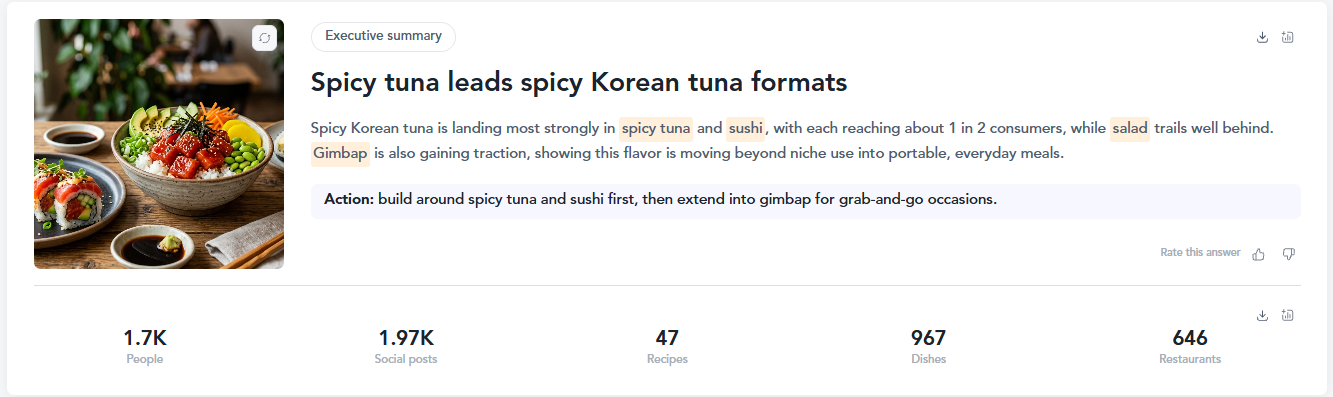
The spicy tuna trend reached a mass US audience after Cardi B showed fans how she eats it. In an Instagram Live session, she mixed Korean spicy tuna from H Mart with rice, mayo and chili sauce, then wrapped it in dried seaweed. Korea JoongAng Daily reported that an edited clip of the session passed 4 million views on YouTube.
Three traits turned one celebrity snack into a repeatable TikTok format. The first is minimal prep, since the bowl needs no cooking beyond warm rice. The second is access, because every core component is shelf stable or already in most kitchens. The third is visual appeal. Red chili flecks, glossy mayo and dark seaweed read well on a phone screen, and the hand-wrapped bite gives creators a natural close-up.
The data shows a trend that grew and then settled. Across the Tastewise US consumer panel, social interest in spicy tuna and tuna rice bowls rose 18% over the past 12 months. Interest peaked in spring 2026 and has leveled off since. The Tastewise forecast shows demand holding steady through August 2027, which marks the bowl as a lasting staple.
Gen Z leads interest in the trend, ahead of Protein Prioritizers and Keto consumers. Protein Prioritizers climbed through the summer and reached their highest level of the year in August 2026. That second audience matters for brands, because it links the bowl to everyday eating goals.
The spicy Korean tuna trend is one flavor shift among many that will shape next year’s launches.
Korean tuna trend in the everyday pantry
The Korean tuna trend turned a convenience food into a pantry hero for US home cooks. Korean brand Dongwon F&B has expanded exports of its spicy tuna to 28 countries, including the US, as demand grew. The wider category is moving too. Korean food exports totaled $7.02 billion in 2024, up from $3.5 billion a decade earlier, according to the same Korea JoongAng Daily report.
The bowl rests on staples most US kitchens already hold: canned tuna, mayo, sriracha, sesame oil and rice. In Tastewise data, rice and tuna anchor the format, with avocado and cucumber as the most common fresh additions. Avocado and mayo are now declining pairings. Home cooks are moving toward sharper heat and savory sauces.
The pantry version sets the flavor benchmark for everything that follows. Shoppers who make the bowl at home arrive at restaurants and shelves expecting the same heat, crunch and creaminess. That makes home cooking the proving ground for any spicy tuna product or menu item.
Ingredients behind the trend tuna craze
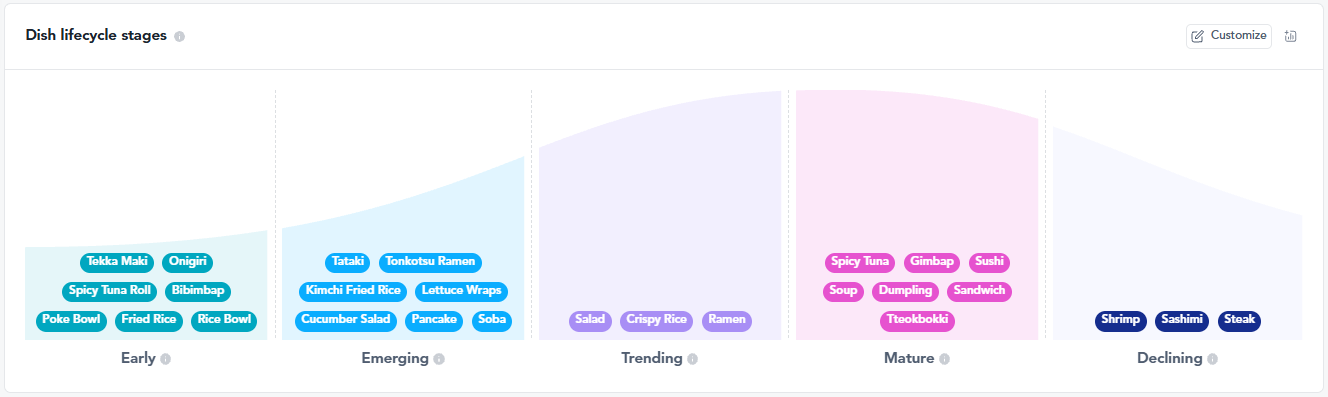
The authentic bowl needs seven components, each doing a specific job.
- Spicy canned tuna: Korean spicy tuna such as Dongwon’s arrives with heat and oil already mixed in. Plain canned tuna with chili sauce works as a swap.
- Rice: warm short-grain rice is the base, and it is the ingredient most closely tied to the bowl in Tastewise data.
- Mayo: Japanese-style mayo adds richness and softens the heat.
- Chili sauce: sriracha or gochujang sharpens the spice.
- Sesame oil: a few drops add nutty depth.
- Dried seaweed: roasted seaweed sheets turn each spoonful into a hand-wrapped bite.
- Fresh crunch: cucumber, avocado or bean sprouts add texture and cool the heat.
The combination works because each element balances another. Fat from mayo and oil tempers the chili, rice carries the sauce and seaweed adds salt and a crisp wrap.
To remake the bowl, mix one can of spicy tuna with a spoonful of mayo and a drizzle of sesame oil. Spoon it over warm rice and top it with cucumber and sesame seeds. Scoop each bite into a seaweed sheet.
The fastest-rising pairings show where the bowl is heading. Hot pepper and miso dressing are the fastest-rising pairings, followed by bean sprouts and chili crisp. Hot pepper, miso dressing and chili crisp all sit at the emerging stage, the point where an ingredient is gaining ground before it reaches mainstream use. For product innovation teams, those three are the clearest flavor extensions to test.
Consumer engagement with viral food formats
Short-form video keeps the tuna trend moving because every creator can add a twist without breaking the format. The base recipe stays fixed while toppings rotate, which gives each new video a reason to exist. Chili crisp, miso dressing and crispy rice versions all build on the same starting point.
Health framing is the strongest lever behind that engagement. Healthy fat (up 20%) and high protein (up 19%) are the fastest-rising consumer needs tied to the bowl. A consumer need is the reason people give for choosing a food. Both needs point to a bowl eaten as a balanced meal, which suits the Protein Prioritizers audience.
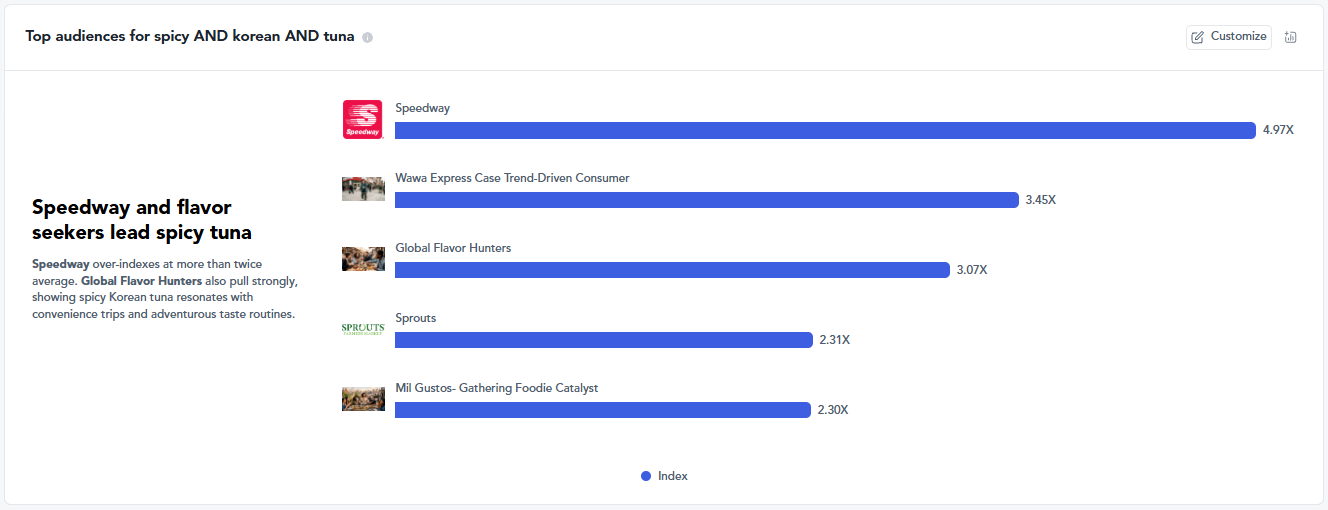
The trend also draws adventurous eaters. Global Flavor Hunters, the Tastewise audience of consumers who seek out international flavors, are nearly 3x more likely than the average consumer to engage with spicy tuna. Foodies are about 2x more likely.
Creators and CPG brands can act on this in three specific ways.
- Lead creator content with protein and healthy fat cues, since those are the needs rising around the bowl.
- Seed one new pairing per content wave, such as miso dressing or chili crisp, so creators have a fresh angle to film.
- Split campaigns by consumer segments, with heat and crunch for Gen Z and macros for Protein Prioritizers.
These moves fit within broader food marketing strategies built on what consumers already cook.
Retail and menu opportunities driven by viral demand
The shelf lags the spicy Korean tuna trend. Tastewise tracks only 20 spicy tuna products on the US online shelf, from 16 brands across 9 retailers. Just one new product launched in the past 12 months. The average shelf price is $8.07.
Shopper affinity already points to where new products should land. Sprouts shoppers are 2.7x more likely than average to engage with spicy tuna. Trader Joe’s shoppers over-index at 1.7x and Whole Foods shoppers at 1.3x.
Grocers and CPG teams can act on that gap in several ways.
- Bundle spicy canned tuna with microwave rice, roasted seaweed snacks and Japanese-style mayo in one online bundle or endcap.
- Launch a ready-to-eat spicy tuna rice bowl kit that closes the gap between the can and the restaurant version.
- Prioritize Sprouts, Trader Joe’s and Whole Foods for early retail sell-in, where shopper affinity runs highest.
On menus, spicy tuna is an established item and its menu share held steady over the past year. More than half of US locations serving spicy tuna are casual dining restaurants. Fast casual accounts for about 1 in 4 US locations serving spicy tuna and gained share over the past year, while casual dining lost ground.
Recent menu moves show where the dish is heading. The Cheesecake Factory added a Spicy Tuna item at $22.50. Erewhon lists Spicy Tuna Crispy Rice at $24 and a Spicy Tuna and Crispy Onion Roll at $23 in its Los Angeles area stores. Hy-Vee Fast and Fresh sells a spicy tuna roll at $9.29 in its convenience stores. P.F. Chang’s offers spicy tuna rolls on its catering menu, and California high schools such as Santa Clara High School serve them at lunch.
Foodservice operators can turn these signals into specific tests.
- Test a spicy tuna rice bowl in fast casual, with chili crisp or miso dressing as the add-on.
- Offer a build-your-own seaweed wrap kit for delivery, since the hand-wrapped bite is the trend’s signature.
- Add crispy rice or crispy onion as a texture upgrade on existing spicy tuna rolls.
Teams planning these changes can fold them into data-led menu planning for the next cycle.
Frequently asked questions about the spicy Korean tuna trend
The spicy Korean tuna trend is a TikTok meal of Korean spicy canned tuna mixed with mayo and served over rice with dried seaweed. Social interest in spicy tuna and tuna rice bowls rose 18% over the past 12 months across the Tastewise US panel.
The bowl needs no cooking beyond warm rice, uses shelf-stable pantry staples and looks good on camera. It spread in the US after Cardi B showed fans how she eats Korean spicy tuna in an Instagram Live session.
You need spicy canned tuna, warm rice, mayo, dried seaweed and a chili sauce such as sriracha or gochujang. Rice and tuna are the ingredients most closely tied to the bowl in Tastewise data.
Gen Z leads interest in the trend, ahead of Protein Prioritizers and Keto consumers. Global Flavor Hunters are nearly 3x more likely than the average consumer to engage with spicy tuna.
Social interest leveled off after peaking in spring 2026, and the Tastewise forecast shows demand holding steady through August 2027. Menu share held steady over the past year, which points to a lasting staple.
Brands can bundle spicy canned tuna with rice and seaweed, launch ready-to-eat bowl kits and add chili crisp or miso dressing twists. The US online shelf carries only 20 spicy tuna products, which leaves room for new launches.




We’d love to learn your goals and see how Tastewise fits
We’d love to learn your goals and see how Tastewise fits
Get a personalized demo
Good taste. Wise move.
Your demo request is confirmed. We’ll reach out within one business day to schedule your walkthrough.
What happens next

See what’s driving demand, then turn it into a sell-in story for retailers and operators.
- Connect consumer panels, market trackers, and agents into one evidence view
- Get the “why” behind what’s changing, with explainable demand drivers
- Walk away with a buyer-ready narrative and next steps to activate
Trusted by





“Tastewise is my secret tool for knowing what consumers want next and why.“