






Recipe generation stopped being a novelty feature and became part of the brand marketing stack. CPG brands using AI recipe generator tools now sit on a live loop between what people search for, what they cook and what they put in the cart. The output is only as good as the demand data underneath it. A generator running on a static content library keeps recommending the diet claims that were winning three years ago. That gap is where your team can move first in 2026.
Key takeaways
- Hot honey is the fastest-rising ingredient in US meal-prep cooking, up 22.2% in the past year and still at trending stage. A generator that surfaces it first hands your content team a flavor lead the category has not indexed yet.
- Keto claim signal is down 32.4% and clean eating down 31.7% in the same cooking data, while high-fiber claims are up 26.2%. A generator hard-coded to last cycle’s diet filters recommends against live demand.
- Oat milk holds 47.45% of US milk-alternative signal against almond milk at 45.74%, and almond is falling 14.9% since last year. Substitution logic built on older rankings offers your shopper the wrong swap.
- Format claims are moving faster than flavors, with one-pot cooking up 20.8% and sheet-pan up 13.6%, both weighted toward at-home cooking. Brief on format as well as ingredient and the recipe fits the occasion your buyer is planning.
How recipe generation can be used for your CPG brand
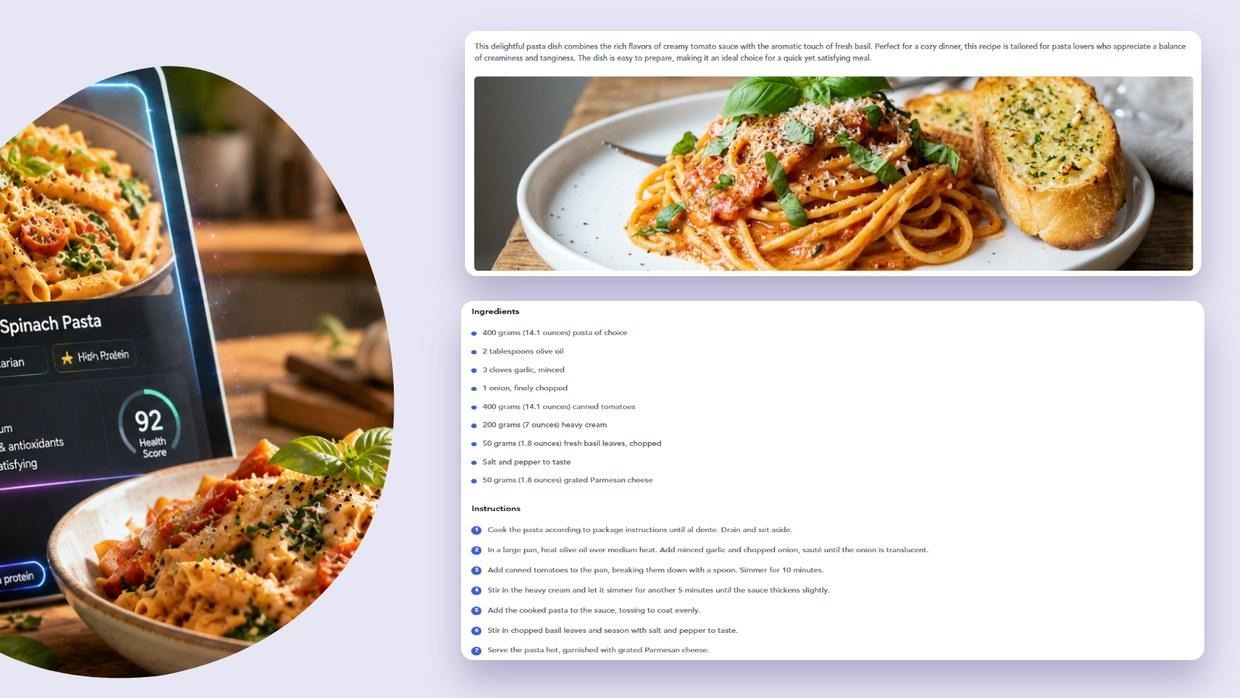
Consumers arrive at dinner with constraints rather than cravings. They have four usable ingredients in the fridge, half an hour, a protein target and someone at the table avoiding dairy. Recipe generation has become the interface that resolves all four at once, which is why it now sits on brand sites rather than only inside standalone apps.
The Tastewise platform tracks that resolution in live data. Across US meal-prep and weeknight cooking, protein carries 19.55% of claim share and high protein is up 6.7% in the past 12 months. In milk-alternative cooking, fiber claims are up 7.7% and blood-sugar claims are up 18.5%. These figures track ingredient and claim momentum in recipe, social and menu data, not consumer penetration.
That gives your team a brief rather than a guess. The recipes worth generating are the ones built on rising ingredients, rising formats and claims that are gaining ground. The AI recipe agent writes against exactly those signals instead of a fixed recipe library.
What is the evolution of recipe generation technology in the food industry?
Recipe generation moved from printed cookbooks and keyword-matched blog archives to context-aware systems that write instructions in real time. The inputs changed from a single search term to pantry inventory, dietary constraint, equipment, time available and regional flavor momentum.
From static search to interactive recipe AI generators
Early recipe search matched a string to a page. A modern recipe AI generator resolves several variables at once, including cook time, equipment and flavor pairing. That difference shows up in what rises. In US meal-prep cooking, sheet-pan preparation is up 13.6% and one-pot cooking up 20.8% in the past 12 months, both running roughly three to one toward home cooking over restaurant menus. Those are equipment signals rather than flavor signals, and keyword search never surfaced them. Your team can brief a generator on the pan before it briefs on the protein.
Shifting consumer demands for meal personalization
Personalization used to mean a diet label. It now means a physiological target. Across US cooking and menu data, creatine claims are up 55.7% and seed-oil-free claims are up 70.9%, while claims tied to weight-loss medication are up 32.4% on last year. Paleo is down 51.1% and intermittent fasting down 38.2% in the same data. An ai food recipe generator working from fixed diet categories keeps serving the falling set. AI-driven product innovation runs into the same problem whenever the claim library goes unrefreshed.
How does an AI recipe generator transform everyday cooking experiences?
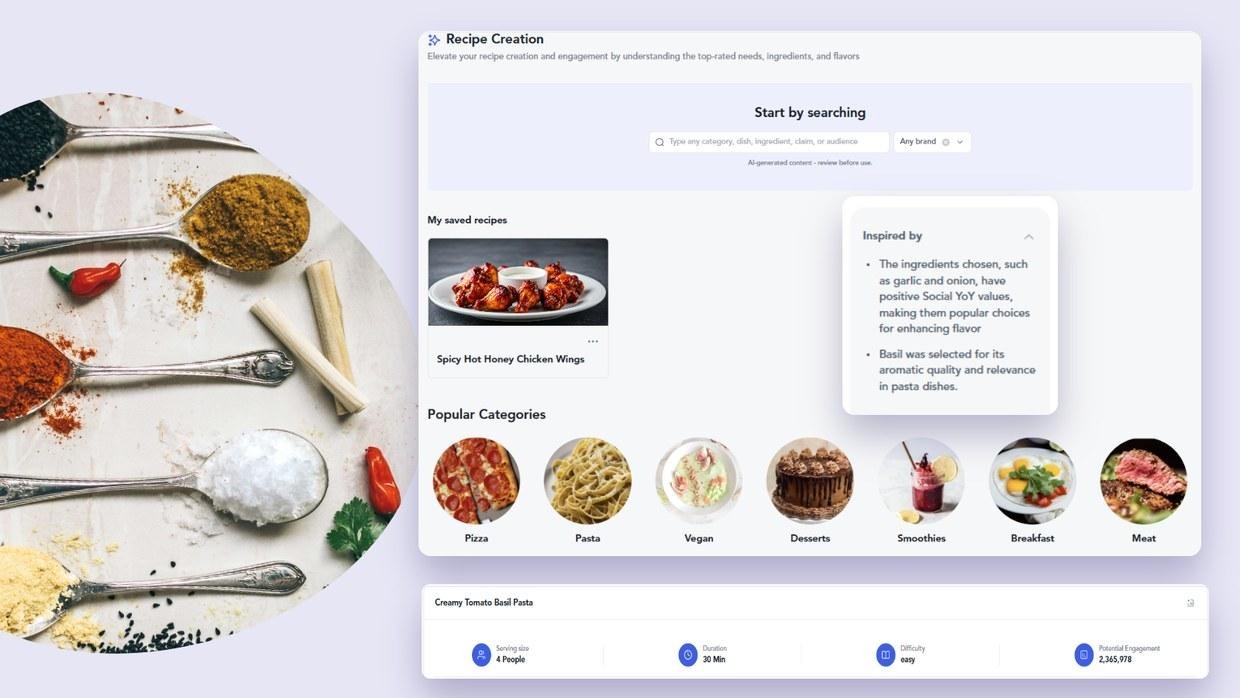
It turns what a household already has into something worth cooking tonight. The generator reads the available ingredients, applies the constraint and returns a recipe with the correct ratios. That removes the decision your shopper usually resolves by ordering delivery instead.
Pantry ingestion and waste reduction
Waste is the pressure point. USDA figures put food loss and waste at 30 to 40 percent of the US food supply, with 31 percent of that occurring at retail and consumer levels. An ai recipe generator based on ingredients works against that number by starting from what is already in the fridge. In the cooking data, leftovers hold 2.19% of claim share while weekly-staple framing is up 68.6%, which shows the behavior moving from salvage into planning. Build the generator around the staples your brand already sits in and you own the planning moment.
Real-time substitution and ingredient matching
Substitution is where a static tool fails visibly. Oat milk carries 47.45% of US milk-alternative signal and a 1.8% menu share, against almond milk at 45.74% and soy milk at 10.08%. Almond is down 14.9% while oat sits close to flat, so the ranking has already flipped for most swaps. Oatly, Planet Oat, Chobani and Califia Farms are the shelf reality behind that shift. A generator that defaults to almond milk when it swaps out dairy is handing your shopper the declining option.
Branded recipe generation on a real menu
The same logic already runs in foodservice. Starbucks built an oat milk platform rather than a single item, with the iced brown sugar oatmilk shaken espresso, the apple crisp oatmilk shaken espresso and the pecan crunch oatmilk latte all live on menu. Panera lists a Dubai chocolate pistachio cookie, which is the same viral flavor arriving in a bakery format. Both show one demand signal generating a family of items rather than a single launch. AI menu generators apply that pattern on the operator side of your business.
How will CPG brands use an AI recipe generator in the future?
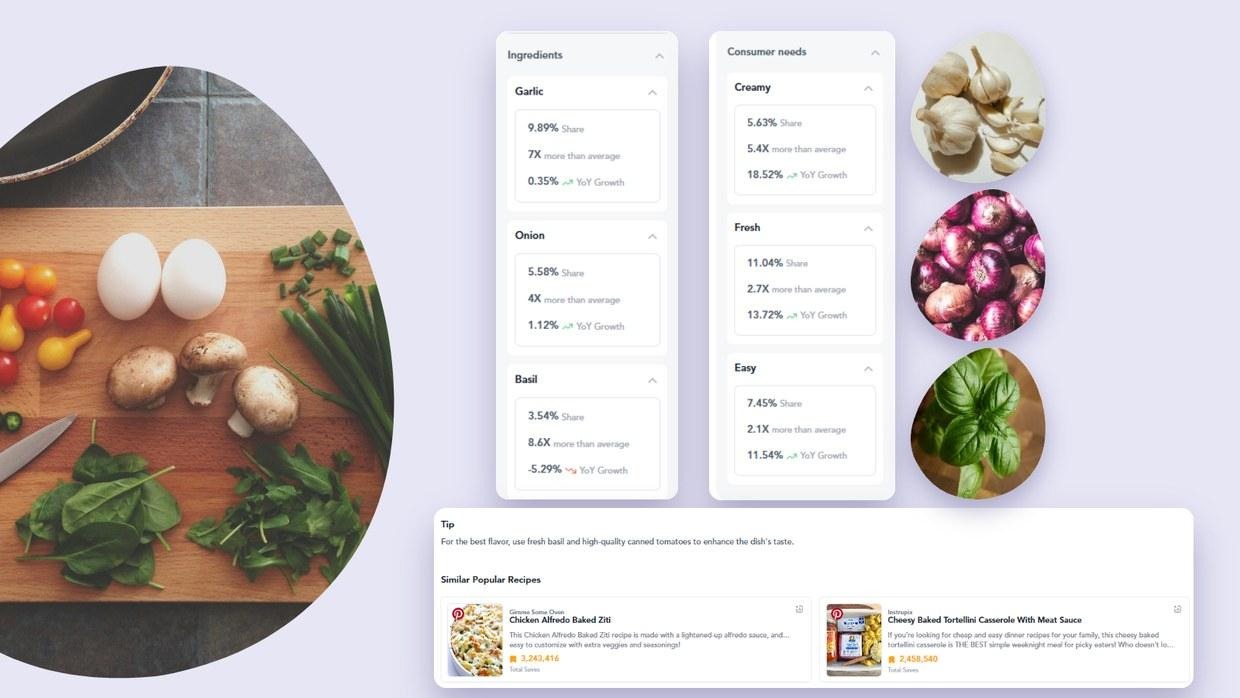
The next stage connects recipe output to the two places brands are measured, which are the retail cart and the innovation pipeline. That means treating the generator as a demand instrument rather than a content tool.
Closing the loop from discovery to retail cart
A recipe is a shopping list with instructions attached. When the generator writes the recipe around your SKU, the ingredient panel becomes the add-to-cart path, which shortens the distance between inspiration and purchase. That is the same evidence chain your retail sell-in story needs, because a buyer wants the demand proof and the conversion route on one slide.
Predictive flavor development for R&D
Aggregate recipe queries are an early read on formulation. Hot honey at 22.2% growth with a trending lifecycle status is the kind of signal that belongs in a concept screen before it reaches a campaign. Chicken bowl formats are up 15.9% and lemon herb seasoning up 16.1% in the same window, which points at savory pantry staples rather than dessert. Feed those into product innovation work and the concept arrives with its demand case already written.
Connecting real-time market trends to recipe output
The real difference between tools is refresh rate. A recipe tool running on a fixed content library returns the same answer in March and in September. The recipe creator agent rebuilds its answer from live recipe, social and review data, and pairs with the retail intelligence dashboard so the recipe and the sales read sit in one place. Emerging signals such as ube at 21.2% growth and hojicha at 23.4% appear there first, which is where a head start of several months comes from.
Frequently asked questions about CPG brands using AI recipe generators
An AI recipe generator writes a complete recipe from inputs such as available ingredients, dietary constraint, equipment and occasion. The useful versions score those inputs against live demand data. In US milk-alternative cooking, protein claims carry 23.69% of claim share, so a demand-aware generator leads with a protein angle rather than a generic one.
One workflow serves brand marketing, culinary content and R&D at the same time. Technique claims such as caramelized, up 49.8% in US cooking data, become a recipe, a social asset and a formulation question in a single pass rather than three separate projects.
Yes. An AI recipe generator based on ingredients starts from the pantry and builds outward, which is why the format suits waste reduction. Loaded framing is up 24.4% in US cooking data, and those recipes tend to use several fridge items at once.
It needs recipe, social, review, menu, and retail data refreshed continuously rather than licensed once a year. Cold foam rising 19.6% in beverage signal is exactly the kind of movement a quarterly data refresh misses entirely.
A generic tool invents a plausible recipe with no view of demand. A branded generator starts from your SKU and the live signal around it, so an emerging flavor such as cookie butter at 62.3% growth reaches your content calendar while it is still climbing.




We’d love to learn your goals and see how Tastewise fits
We’d love to learn your goals and see how Tastewise fits
Get a personalized demo
Good taste. Wise move.
Your demo request is confirmed. We’ll reach out within one business day to schedule your walkthrough.
What happens next

See what’s driving demand, then turn it into a sell-in story for retailers and operators.
- Connect consumer panels, market trackers, and agents into one evidence view
- Get the “why” behind what’s changing, with explainable demand drivers
- Walk away with a buyer-ready narrative and next steps to activate
Trusted by





“Tastewise is my secret tool for knowing what consumers want next and why.“