






Menu planning used to rely on intuition, historical sales, and occasional consumer research. The problem is speed. Consumer preferences now evolve faster than seasonal menus.
A flavor trend can move from TikTok to independent restaurants and onto national chain menus in months. When menu data coverage compared, operators that rely only on historical data often launch menu items after the demand peak has already passed.
So, what is an AI restaurant menu generator? An AI menu generator is a tool that uses generative AI and consumer demand data to recommend dishes, flavor pairings, pricing strategies, and menu descriptions that are most likely to perform well with diners.
These systems analyze signals across social food conversations, restaurant menu activity, and consumer cooking behavior to generate menu concepts grounded in real consumption patterns.
AI menu generators help restaurants in three main ways:
- Speed to market: AI generates menu concepts in minutes instead of months of research and testing.
- Data-backed flavor pairings: AI analyzes consumer demand signals to recommend dishes and flavor combinations diners already want.
- Automated copywriting: Generative AI writes high-converting menu descriptions that increase order rates.
Beyond efficiency: why you need an AI menu generator
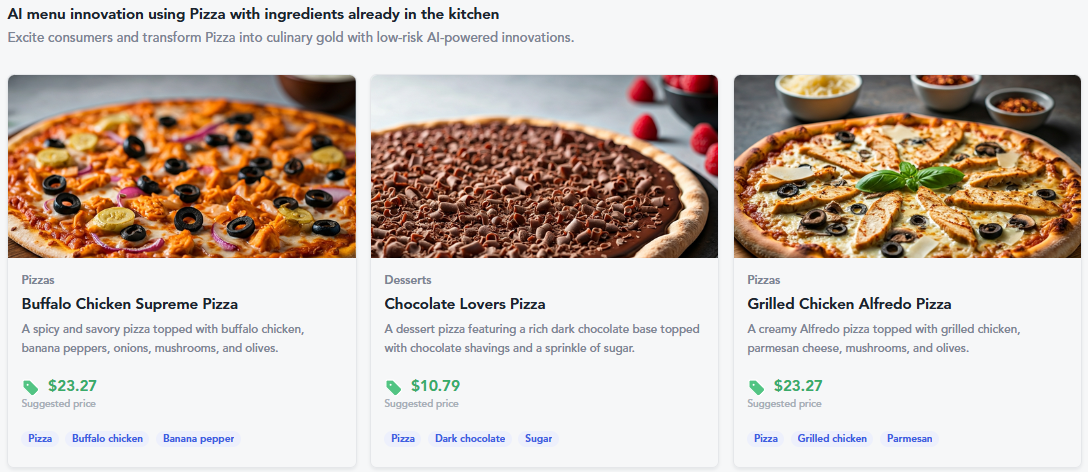
AI menu generators are often positioned as time-saving tools. The real value is revenue impact. Strong menu decisions determine traffic, average order value, and profitability. AI improves those decisions by grounding menu innovation in consumer demand signals rather than intuition alone.
Predicting consumer demand
The most effective AI menu generators analyze large volumes of consumer behavior signals across social media, restaurant menus, and local food trends.
Emerging flavor pairings often appear in consumer conversations and independent restaurant menus before they reach large chains. These early signals indicate which ingredients and flavor combinations are gaining traction.
AI systems connect these signals to generate dishes diners already want. For example, rising interest in sweet-heat flavor combinations may lead AI to recommend menu concepts such as spicy honey glaze wings or hot honey chicken sandwiches.
Optimizing menu engineering and pricing
Menu engineering requires balancing ingredient cost, perceived value, and consumer willingness to pay. AI tools can integrate with POS systems to analyze historical sales data, ingredient costs, and purchasing patterns. This allows restaurants to identify the pricing range where demand remains strong while protecting margins.
Survey modeling and synthetic data can also estimate price sensitivity before a new item launches, helping operators validate pricing decisions before committing to a full rollout.
Crafting high-converting descriptions
Menu descriptions influence ordering behavior more than many operators expect. Generative AI can analyze large sets of restaurant menus to identify language patterns that drive higher order rates. It can then rewrite menu copy to emphasize flavor, texture, and sensory cues.
For example, a simple description such as “grilled chicken sandwich with honey sauce” can be rewritten to highlight sensory appeal: Crispy grilled chicken topped with spicy hot honey glaze, melted pepper jack cheese, and house pickles on a toasted brioche bun. Restaurants increasingly generate and test multiple description variations before finalizing menus.
The best AI menu generators for restaurants (2026)
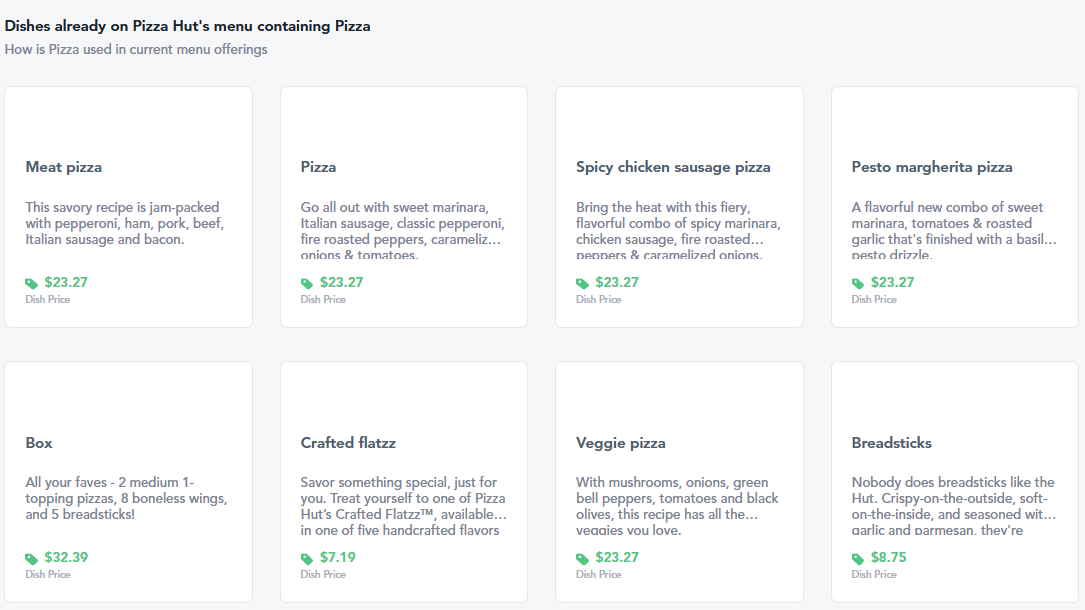
Restaurants use AI menu generators for different reasons. Some tools focus on menu innovation, others help with copywriting, and some integrate directly with operational systems to improve pricing and cost management.
The best AI menu generators for restaurants combine generative AI, consumer demand signals, and menu engineering tools to help operators create dishes, optimize pricing, and write descriptions that increase orders.
| Tool | Best use case | Strength |
|---|---|---|
| Tastewise | Menu innovation | Generates menu ideas using consumer demand signals |
| ChatGPT / Claude | Menu copywriting | Generates menu descriptions and language |
| Toast / Restaurant365 | Operational optimization | Uses POS data for pricing and cost analysis |
The best solution depends on whether the goal is generating new menu concepts, improving menu language, or optimizing profitability.
1. Tastewise (best for data-driven menu innovation)
Tastewise focuses on menu innovation grounded in real consumer behavior. Instead of generating menu ideas from general internet content, Tastewise’s agentic AI for food and beverage analyzes real-time food consumption signals across multiple datasets.
The platform combines generative AI with large-scale food intelligence to identify emerging ingredients, flavor combinations, and menu formats before they reach mainstream restaurant menus.
Tastewise can help restaurant teams:
- Identify emerging flavors and ingredients gaining traction
- Generate menu concepts aligned with consumer demand
- Validate menu ideas before launch
- Turn insights into launch-ready menu descriptions and concepts
Rather than simply producing menu text, Tastewise helps operators generate menus informed by real consumption patterns and billions of eating moments across the food ecosystem.
2. ChatGPT or Claude (best for basic menu copywriting)
General-purpose large language models such as ChatGPT and Claude are widely used for writing and editing menu descriptions.
Restaurants often use these tools to:
- Rewrite menu descriptions
- Generate menu names
- Brainstorm seasonal dishes
- Improve menu language
These models are strong at generating text, but unless you can ask TasteGPT about menu data, they typically lack access to real-time restaurant industry data, foodservice performance signals, or pricing analysis—functioning best as copywriting assistants rather than full menu innovation tools.
3. POS-integrated AI tools (Toast, Restaurant365)
Some restaurant platforms integrate AI capabilities directly into POS systems.
These tools focus primarily on operational and financial optimization, including:
- Food cost tracking
- Inventory analysis
- Menu profitability calculations
- Pricing adjustments based on sales data
POS-integrated AI tools are effective for managing margins and operational efficiency. However, they typically rely on internal restaurant data and may not analyze broader consumer demand signals or emerging food trends.
Traditional menu planning vs AI menu generation
Traditional menu planning often relies on intuition, historical sales data, and slow research cycles. Restaurants typically test menu ideas through trial and error, which can lead to costly experiments and underperforming dishes.
AI menu generation changes that process by using consumer demand signals, food trends, and sales data to guide menu decisions before items launch.
| Category | Traditional menu planning | AI menu generation |
|---|---|---|
| Data source | Chef intuition and historical sales | Consumer demand signals and food trend data |
| Speed | Weeks or months of research and testing | Menu concepts generated in minutes |
| Trend detection | Reactive to trends after they peak | Predictive based on emerging consumer behavior |
| Menu engineering | Manual analysis of pricing and costs | AI-assisted menu engineering and price modeling |
| Menu descriptions | Written manually by staff | Generated automatically with generative AI |
| Innovation risk | High experimentation risk | Reduced risk through data-backed validation |
Restaurants that adopt AI menu generation move from reactive menu planning to predictive menu innovation. Instead of guessing what customers want, operators can use restaurant menu AI tools to identify dishes already gaining traction.
How to use AI to generate your next menu
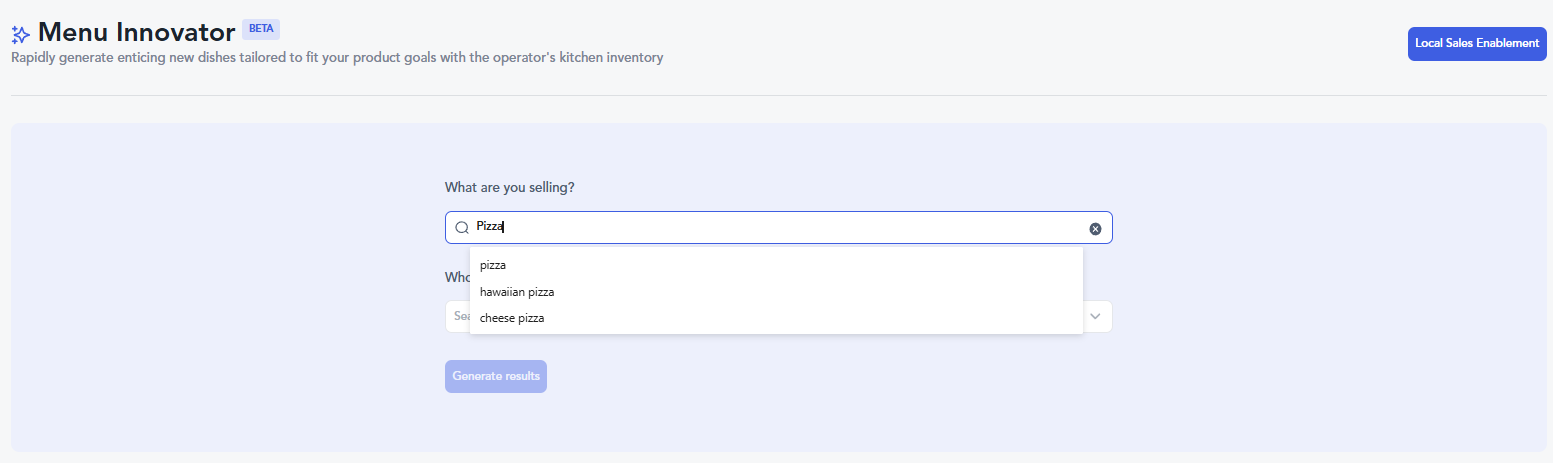
Restaurants typically follow a simple workflow when using an AI menu generator to design menus.
1. Input your core concept or ingredients
Start by defining the restaurant concept, cuisine style, or key ingredients you want to feature.
Examples include:
- fast-casual Mediterranean menu
- seasonal brunch menu
- comfort food limited-time offers
This helps the restaurant menu AI system generate ideas aligned with your brand.
2. Let AI analyze food trends and consumer demand
AI tools evaluate signals from social food conversations, restaurant menu activity, and cooking behavior to identify emerging ingredients and flavor combinations. This allows operators to see which dishes and flavors are gaining traction before they become mainstream.
3. Generate dish concepts and flavor pairings
The AI then generates menu ideas based on those demand signals. Example outputs might include:
- chili crisp noodle bowl
- hot honey chicken sandwich
- lemon ricotta breakfast toast
These concepts reflect both consumer interest and operational feasibility.
4. Refine pricing with menu engineering data
Finally, operators can use AI to optimize menu pricing. By analyzing ingredient costs, historical sales data, and demand signals, AI tools help identify the price range where items remain attractive to customers while maintaining healthy margins. This combination of AI menu creation and menu engineering allows restaurants to launch dishes with greater confidence and profitability.
Restaurant menu innovation does not happen in isolation. The same consumer signals shaping restaurant menus today are shaping the foodservice landscape for the next several years.
Download the Foodservice 2026 forecast report to see the ingredients, menu formats, and consumer behaviors expected to define the next wave of restaurant growth.
Tastewise helps restaurant and foodservice teams turn consumer signals into menu innovation with explainable, bespoke, and repeatable evidence across social, foodservice, and home cooking behavior.
If your team needs faster menu innovation and stronger internal alignment, Tastewise provides the evidence and workflows to move from insight to launch with confidence.
FAQs About AI Menu Generators
An AI menu generator is a software tool that uses generative AI and consumer data to create restaurant menu ideas, optimize pricing, and generate menu descriptions. These tools analyze signals from sources such as restaurant sales data, social food conversations, and food trends to suggest dishes that are likely to perform well with diners.
An AI menu generator works by analyzing large datasets related to food consumption and restaurant performance. These can include foodservice menu activity, consumer cooking behavior, and social food conversations. The system then generates menu concepts, suggests ingredient combinations, recommends pricing ranges, and writes menu descriptions designed to increase order rates.
Yes. Many AI menu generators combine consumer demand signals with menu engineering data to recommend dishes that balance popularity and profitability. By analyzing ingredient costs, pricing trends, and consumer interest, AI can suggest menu items that are more likely to sell while maintaining healthy margins.
Restaurants use AI menu generators to accelerate menu innovation and reduce the risk of launching unsuccessful dishes. Key benefits include faster menu development, data-backed flavor pairings, optimized pricing strategies, and automatically generated menu descriptions that improve customer engagement.
The best AI menu generator depends on a restaurant’s needs. Platforms like Tastewise focus on data-driven menu innovation and consumer demand analysis, while general AI tools such as ChatGPT help generate menu descriptions and brainstorming ideas. Some POS platforms also include AI features for pricing and cost optimization.





We’d love to learn your goals and see how Tastewise fits
We’d love to learn your goals and see how Tastewise fits
Get a personalized demo
Good taste. Wise move.
Your demo request is confirmed. We’ll reach out within one business day to schedule your walkthrough.
What happens next

See what’s driving demand, then turn it into a sell-in story for retailers and operators.
- Connect consumer panels, market trackers, and agents into one evidence view
- Get the “why” behind what’s changing, with explainable demand drivers
- Walk away with a buyer-ready narrative and next steps to activate
Trusted by





“Tastewise is my secret tool for knowing what consumers want next and why.“