






From US Proxies to Local Market Evidence: How Newly Weds Built Customer Conviction Across Europe
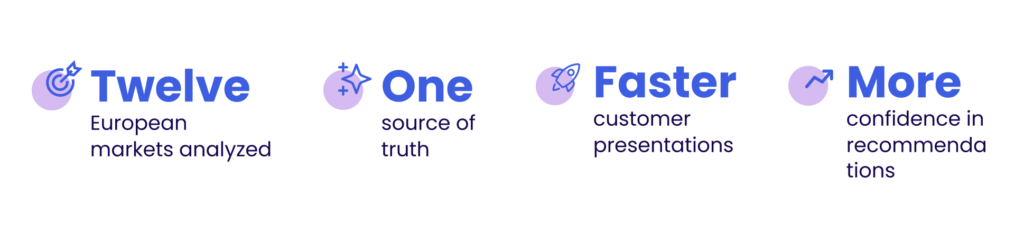
- 12+ European markets analyzed from one intelligence layer
- One source of truth for local demand
- Faster customer presentations
“A lot of our presentations contain fairly standardized charts. Narrative food trends change, but the underlying macro trends don't change dramatically year on year. So being able to update things is quite useful here”
 Andrew OvensMarketing & Culinary Controller, Newly Weds Foods
- Industry
- Food Ingredients & Foodservice Manufacturing
- Region
- Europe
- Use case
- Market intelligence, customer presentations, sales enablement, innovation research
- Categories
- Content MarketingProduct Innovation
When customers ask what is happening in France, Germany, or the UK, broad European trend reports are rarely enough.
Newly Weds Foods needed a faster way to understand local markets and build recommendations backed by evidence rather than assumptions. Previous data sources often relied on US proxies, while updating presentations across multiple countries required significant manual work.
Using Tastewise, the team combined consumer demand, menu activity, and recipe behavior across European markets into a single intelligence system. Instead of spending time collecting data, they could focus on understanding opportunities and building stronger customer conversations
Challenges
Understanding local demand across Europe presented several obstacles.
Recommendations relied on proxy data
. Many customer conversations depended on broad market assumptions rather than local evidence.
Confidence in European market intelligence was difficult to build.
Previous data sources created uncertainty around what was happening in individual countries.
Understanding multiple markets required significant effort
. Tracking trends across countries, cuisines, and consumer groups often meant pulling information from multiple places.
Presentations became outdated quickly.
Customer-facing trend decks required frequent manual updates.
Tastewise’s solution
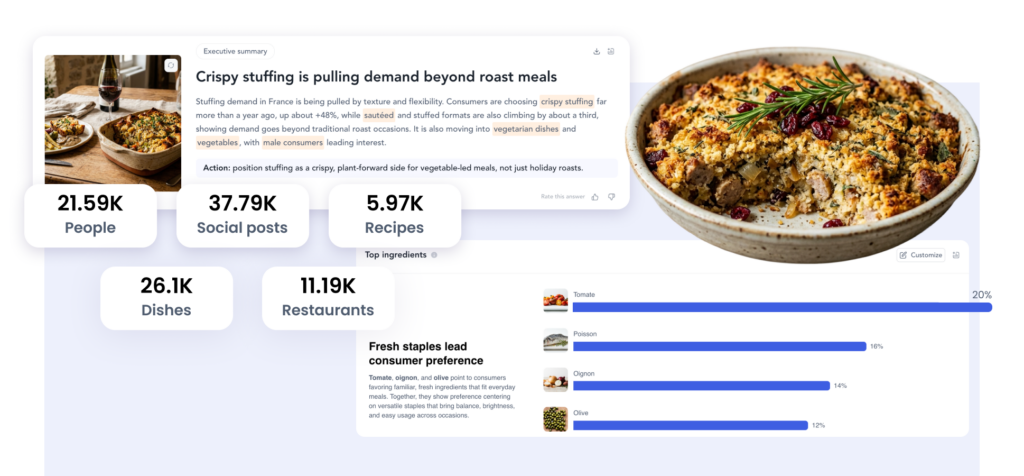
To understand what was happening across European markets, the team analyzed several layers of food and beverage behavior.
Consumer demand.
Consumer signals revealed changing preferences, needs, and occasions within individual markets.
Recipe behavior.
Recipe activity showed how ingredients, flavors, and applications were evolving across countries.
Menu activity.
Menu data provided a real-world view of what was gaining traction in foodservice environments.
Customer-ready narratives
. Food-trained AI agents transformed market evidence into concepts, recommendations, and presentation materials for customer conversations.
By combining these sources, Newly Weds could move from assumptions to evidence-backed recommendations tailored to each market.
How Newly Weds used Tastewise
- To understand what was happening across European markets, the team analyzed several layers of food and beverage behavior.
- Consumer demand. Consumer signals revealed changing preferences, needs, and occasions within individual markets.
- Recipe behavior. Recipe activity showed how ingredients, flavors, and applications were evolving across countries.
- Menu activity. Menu data provided a real-world view of what was gaining traction in foodservice environments.
- Customer-ready narratives. Food-trained AI agents transformed market evidence into concepts, recommendations, and presentation materials for customer conversations.
By combining these sources, Newly Weds could move from assumptions to evidence-backed recommendations tailored to each market.
Results
Tastewise helped Newly Weds build stronger recommendations, faster presentations, and greater confidence in local opportunities.
12+ European markets analyzed from one intelligence layer
One source of truth for local demand
Faster customer presentations
More confidence in recommendations
Teams could compare opportunities across countries without switching between multiple sources.
Consumer, menu, and recipe behavior were connected into a single view of the market.
Teams could update customer-facing narratives using live market evidence rather than rebuilding reports manually.
Local market evidence helped support customer conversations with facts rather than assumptions.
Want to see Tastewise in action for your brand?
Get a demoMore customer stories
All customer stories →Lucia Soave connects what's happening in the market with Irca's ingredients and innovation, supporting sales, R&D and a marketing team made up of chefs. Customer meetings are often 20 to 30 minutes, and a single market-trend request could take multiple days: find the data, select it, build a strategy, then build the deck.
Gluttonomy set out to build Akopi, a Mediterranean-inspired frozen Greek yogurt bar and lifestyle concept, in a category already crowded with global frozen-yogurt concepts. The agency needed a clear read on what consumers in the space actually wanted to build a differentiated, and defensible value proposition before committing to a full brand build.
A lean four-to-five person team at Newly Weds Foods fields more than 350 customer projects a year, each expected to turn around within a ten-business-day window. Client questions were getting deeper - customers wanted consumer insights and trends, what people think, what's rising, but the team had no data to answer them.


One intelligence system. Real business outcomes
Consumer panels, market trackers, and agents working together to help food and beverage teams expand distribution, accelerate innovation, and drive demand.
Book a demo