






The most expensive mistake in CPG isn’t a failed product launch. It’s a buyer meeting where the concept was right and the evidence wasn’t ready. Buyers don’t reject products. They reject decks that can’t answer four predictable questions about consumer demand, competitive context, category fit, and velocity. If you’re preparing to validate a product idea before your next retail pitch, you need more than internal enthusiasm and social test results. This piece is the framework for building the kind of buyer-ready evidence that actually moves a listing forward. For the broader context of what retail buyers evaluate at the category level, the retail category overview is worth reading alongside this.
Key takeaways
- 85% of new CPG products fail within their first year, according to NielsenIQ. Most of that failure is downstream of weak pre-pitch validation, not weak products. Your team’s job is to separate those two variables before the meeting, not after.
- Buyers evaluate your concept against their shelf math and their current SKU performance, not your brand story. If your validation data doesn’t speak to incrementality or white space, it won’t survive the first question in the room.
- A concept that clears all four validation steps (demand signals, competitive mapping, buyer questions, and velocity case) is buyer-ready. One that fails any single step needs revision, not a meeting booking.
- Speed to shelf depends on the quality of your data infrastructure, not just your development process. Teams working from continuous consumer demand signals validate concepts in weeks. Teams building data from primary research take quarters.
What product concept validation actually means in retail
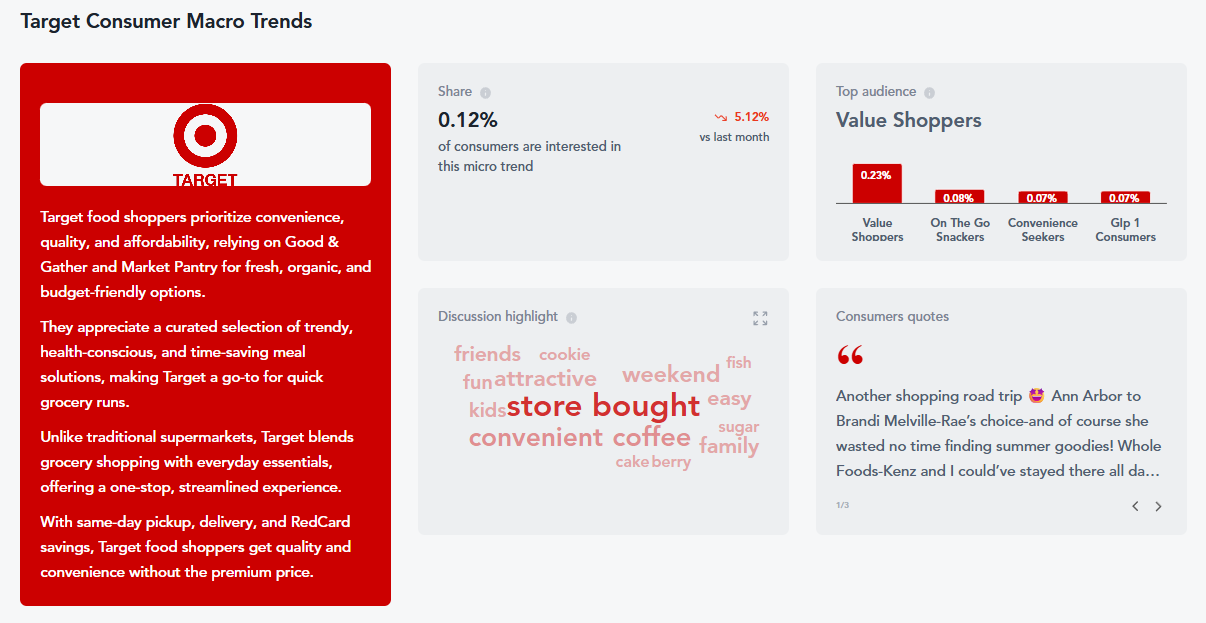
Product concept validation in retail is not about proving your team likes the idea. It is about demonstrating to a Whole Foods, Kroger, or Sprouts buyer that the consumer already exists, the demand is measurable, and your SKU fills a gap their current shelf doesn’t. That is a different job than internal sign-off, and it requires a different kind of evidence.
Tastewise tracks real consumer demand for food and beverage by triangulating menu adoption, social behavior, recipe trends, and retail data in real time. The picture that data creates is the picture a buyer is trying to build themselves before a category review. When your validation matches their framework, the conversation changes.
The opportunity for CPG brands and innovation teams is to build that evidence before the meeting, not inside it. A concept that walks in with stacked demand signals, a mapped competitive set, and a clear incrementality argument is not asking a buyer to take a risk. It is showing them where their shoppers are already heading. Explore how Tastewise supports product innovation and concept validation.
Why product validation usually happens too late
Most teams treat product validation as a stage gate after development. By that point, most of the budget is already committed. Buyers treat validation as the foundation of the pitch. The mismatch is why so many strong concepts get rejected: not because the product is wrong, but because the evidence behind it is downstream of the decision it was meant to support.
Internal validation is a necessary starting point. Focus groups, team taste tests, and friends-and-family feedback tell you whether a concept is coherent. They do not tell you whether it belongs on a specific retailer’s shelf, what it would displace, or whether it adds velocity to the category. Buyers evaluate against their shelf math, not your product story.
Every retail buyer evaluating a new product is running the same four questions in parallel: Who buys this, and how large is that consumer group? Why is demand rising now, not two years ago? Why this brand over a current shelf incumbent? What does this SKU do for the category that nothing already there is doing? If your pitch deck can’t answer all four, with data behind each answer, the concept is not validated in the terms that matter for a listing decision. The next section gives you the framework for getting there.
The 4-step pre-pitch validation framework
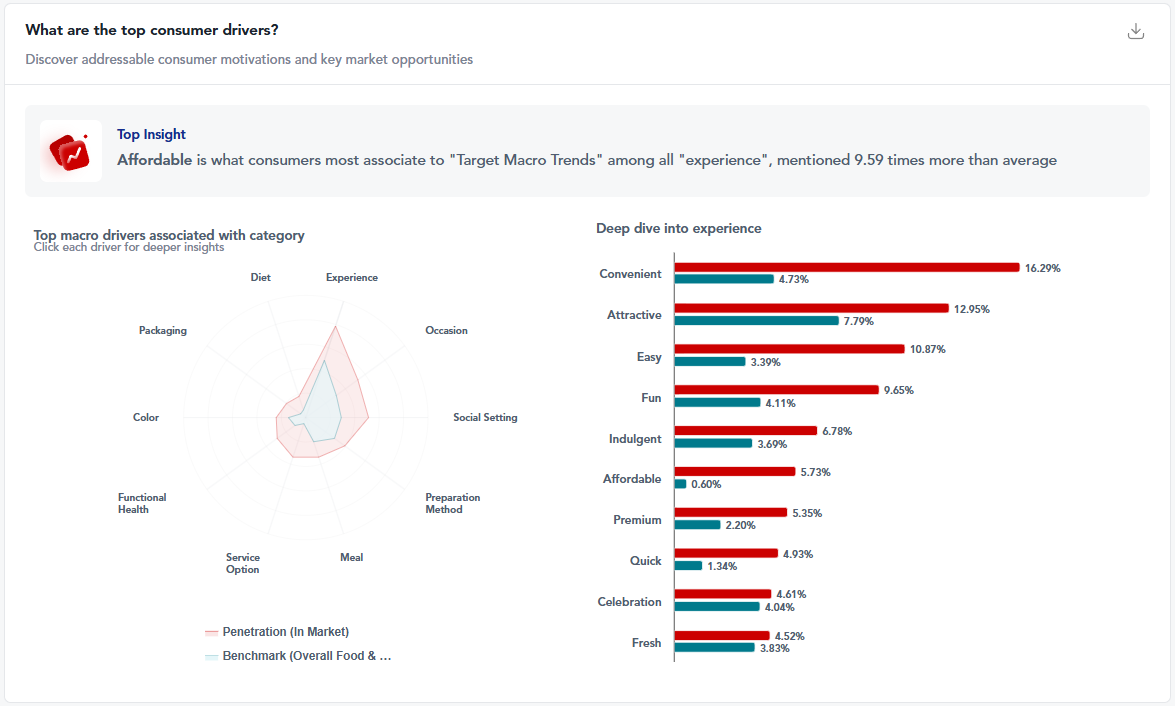
Before any buyer meeting, run the concept through four steps in order: demand signal validation, competitive context, category fit, and velocity case. A concept that clears all four is buyer-ready. A concept that fails any single step is not a no. It is a sign that the deck needs revision, not the meeting.
1. Validate consumer demand with stacked signals.
The concept must show rising demand across at least three independent signal types: menu adoption, social conversation filtered for non-creator audiences, and recipe or eRetail behavior. A single source is not validation; it is a hypothesis. Menu data tells you operators are already betting on this flavor or format. Recipe and retail signals tell you consumers are seeking it out in their own time. When all three point the same direction, you have conviction a buyer can check independently.
2. Map the competitive set the way a buyer will.
Buyers don’t compare your product to its closest taste profile. They compare it to whatever currently occupies the shelf space you’re asking for. Before the meeting, identify the three to five SKUs your product would displace or stand beside. Know their velocity, margin profile, and recent trajectory. If any of them are declining, you have a white space argument. If they are holding steady, you need a clear incrementality case. Either way, you need to know their numbers before someone in the room cites them for you.
3. Test against the four buyer questions.
Every category buyer asks the same four things: Who buys this? Why now? Why this brand? What does it do for the category? If your evidence can’t answer all four in one sentence each, with a data point per answer, the deck isn’t ready. This is the step most teams skip because it feels like preparation rather than validation. It is both. Running this test before the meeting tells you exactly which section of your pitch needs more evidence and which section is already solid.
4. Build the velocity case. Or the white space case.
Buyer-ready concepts win on one of two arguments: incremental velocity (you sell more units of this category than what’s currently there) or white space (you fill a gap no current SKU addresses). You need data behind exactly one of these. Concepts that try to claim both usually prove neither. Choosing your argument early also shapes which data you lead with in the meeting, which signals sharpness to a buyer who has seen a hundred undifferentiated pitches.
How long does product validation take before pitching a retail buyer?
Real product concept validation for a retail pitch takes four to eight weeks if you’re working from existing consumer demand data, and two to four months if you’re starting from scratch. Anything faster is usually skipping steps. The compression point is the data layer. Teams using continuous signal platforms validate in weeks; teams building data from primary research take quarters.
What buyer-ready validation actually looks like
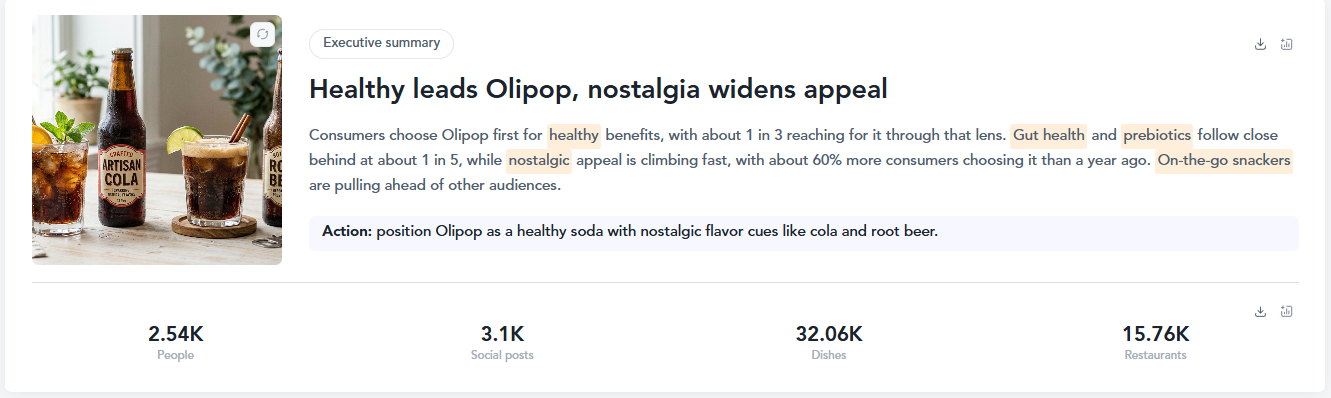
Buyer-ready validation is not a research report. It is a one-page evidence sheet that answers each of the four buyer questions with a data point, a source, and a comparable benchmark from the existing category.
Olipop’s entry into Kroger is a useful public example of how stacked demand evidence works in practice. Before broad retail distribution, the brand had measurable signals across multiple consumer touchpoints: recipe content, health and wellness social behavior, and early foodservice and specialty retail adoption. By the time they were pitching major grocery buyers, each of the four buyer questions had an answer with supporting evidence attached. The consumer group was defined (health-conscious Millennials and Gen Z switching away from legacy soda). The timing had a driver (the functional beverage shift in RTD). The brand rationale was specific (prebiotic positioning with clean ingredients). The category argument was clear (a soda alternative that grows the carbonated beverage set rather than cannibalizing it).
That is not a story Olipop told. It is a pattern of evidence they built before the meetings that mattered. The brief for your team is to do the same work before you book yours.
From validation to buyer-ready data
The bottleneck in retail product validation is rarely the framework. It is the data infrastructure underneath it. Teams that win listings consistently are not smarter about which trends to chase. They are faster at pulling stacked demand signals into a single view a buyer will sign off on.
Tastewise is an AI-powered consumer intelligence platform that tracks real consumer demand for food and beverage by triangulating menu, social, retail, and recipe data in real time. That means your team can run the four-step framework against live signals rather than last quarter’s reports. The sell-in story you build is grounded in what consumers are doing right now, not what they were doing when the data was last pulled.
For teams heading into a Whole Foods, Target, Albertsons, or Sprouts pitch, the question is not whether the framework works. It is whether your data infrastructure can support it at the speed a category review demands. That gap is where most validation efforts stall. Not in the framework, but in the time it takes to pull and stack the signals.
What data do retail buyers want to see in a product pitch?
Retail buyers want to see four data points in any product pitch: a defined target consumer with size and growth, a rising demand signal across multiple sources, a clear competitive comparison against current shelf SKUs, and an incrementality or white-space argument supported by category data. Everything else in the deck is supporting context for those four.
See what buyer-ready validation looks like for your category.
FAQ about how you can validate a product idea
Concept testing is typically done internally: focus groups, taste panels, and team reviews that evaluate whether a product idea is coherent. Product validation for a retail pitch goes further. It requires external demand evidence: menu data, consumer behavior signals, and competitive shelf analysis. That answers the questions a buyer will ask, not just the questions your team asks. Concept testing can happen before validation. It cannot replace it.
White space exists when rising consumer demand for a flavor, format, or function isn’t reflected in the current shelf set. The signal is usually visible in menu data and recipe behavior before it appears in retail velocity. If a flavor or ingredient is growing on menus and in recipe searches but is absent or underrepresented at retail, that gap is your white space argument. Tools like Tastewise’s food intelligence platform can surface that pattern before you build the pitch deck.
Buyers respond best to third-party consumer demand data they can verify independently. Circana and NIQ (formerly Nielsen) velocity data is standard for shelf performance benchmarking. Consumer panel data and syndicated trend research add credibility for demand claims. Menu and recipe signals from platforms that track operator behavior add a forward-looking layer that most competitive decks lack. The combination of shelf performance data and leading demand indicators gives a buyer a complete picture of where the consumer is heading, not just where they have been.





We’d love to learn your goals and see how Tastewise fits
We’d love to learn your goals and see how Tastewise fits
Get a personalized demo
Good taste. Wise move.
Your demo request is confirmed. We’ll reach out within one business day to schedule your walkthrough.
What happens next

See what’s driving demand, then turn it into a sell-in story for retailers and operators.
- Connect consumer panels, market trackers, and agents into one evidence view
- Get the “why” behind what’s changing, with explainable demand drivers
- Walk away with a buyer-ready narrative and next steps to activate
Trusted by





“Tastewise is my secret tool for knowing what consumers want next and why.“