





A fast consumer insights platform answers business questions in real time using integrated consumer intelligence. Instead of relying on analysts, reports, and dashboards, it connects datasets like the Social F&B panel, Foodservice, Home cooking panel, and AI-powered surveys, into a single system that produces answer-ready outputs teams can use immediately. Tastewise’s recent product update enables teams to answer consumer questions in real time and move directly from insight to action.
Teams use it to:
- validate concepts before internal approvals
- align marketing, R&D, and commercial on the same evidence
- build buyer-ready narratives grounded in current demand
- replace static consumer insights reports with real-time outputs tied to action
Insight delays are a commercial risk
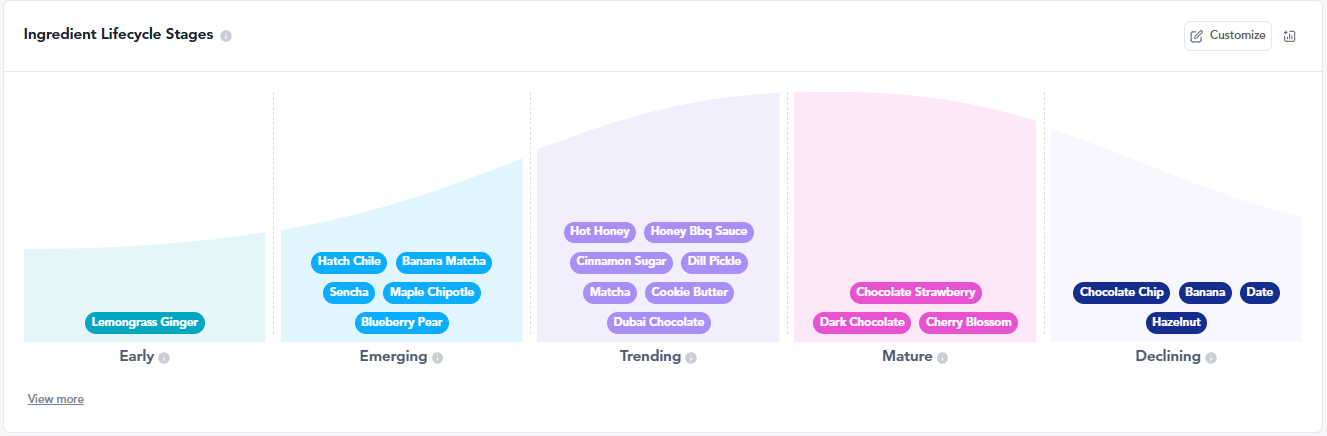
Consumer insights are not reaching teams in a form they can use at decision speed. Questions move through analysts, get shaped into reports, and return as static outputs that require additional interpretation. By the time they are reviewed, key decisions across pricing, innovation, and retail planning are already in motion.
The constraint sits in the workflow rather than the data itself. Insight only drives impact when teams can articulate it clearly, prove it simply, and use it in decisions.
Where traditional consumer insights workflows break
Consumer insights analytics workflows are structured around staged delivery, not direct answers. Each question enters an analyst queue, expands into a scoped request, and moves through research and analysis before any output is delivered. This introduces delays at the exact point where teams need clarity to act.
Outputs are then packaged into reports or dashboards that require interpretation before they can be used. A customer experience dashboard can show declining repeat purchase, but it does not identify which audience is driving the shift or what action will change the outcome. This creates friction across marketing, R&D, and commercial teams, where insight needs to translate directly into decisions.
Why dashboards and legacy tools fail under pressure
Most consumer insights platforms are built for visibility, not decisions. They require:
- manual slicing
- interpretation layers
- translation into business recommendations
This creates friction in internal alignment, where each team interprets the same data differently before acting. Insights remain open to interpretation instead of moving directly into decisions across marketing, R&D, and commercial teams.
The shift to real-time consumer insights
Consumer insights workflows are moving from staged research to direct response systems. Instead of progressing through research, analysis, and reporting, teams ask a business question and receive an answer tied to action.
This changes how consumer intelligence is used day to day. Questions about flavor prioritization, audience shifts, or LTO performance return clear, decision-ready outputs backed by integrated datasets across social, foodservice, and home behavior.
| Approach | Workflow |
| Traditional | Research → Analysis → Decision |
| Real-time | Question → Answer → Action |
The workflow becomes question to answer to action, allowing teams to operate at the same pace as consumer behavior and commercial decisions.
What faster consumer insights actually look like
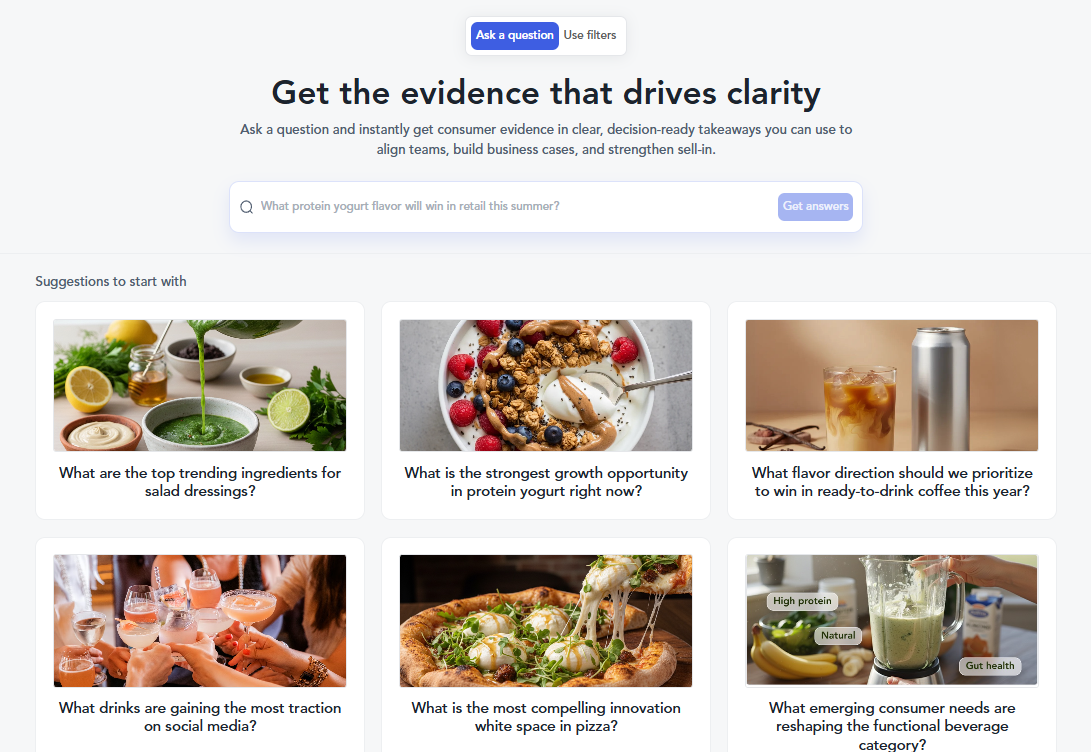
Speed only matters if it leads to better decisions. These are the types of questions teams need answered in real time:
Which snack flavors are growing fastest in the US right now?
According to the Social F&B panel, lemongrass ginger is leading, with nearly 5x more consumers reaching for it than a year ago. Maple chipotle and banana matcha are also accelerating at roughly 3x growth, pointing to demand for globally inspired, layered sweet-heat and tea-led profiles. GLP-1 consumers are driving a disproportionate share of total snack interest.
How is Gen Z engaging with orange beverages right now?
According to the Social F&B panel, blood orange is emerging as a leading flavor, while lemon dominates ingredient mentions. Nearly twice as many Gen Z consumers are engaging with citrus-forward orange drink cues versus last year. Burnt flavor notes are growing faster, though from a smaller base.
What should chicken dinner LTOs optimize for right now?
Foodservice data shows chicken dinner LTOs perform when indulgence is balanced with freshness cues. Builds that combine comfort-driven formats with lighter ingredients increase appeal and repeat purchase likelihood.
How to operationalize faster insights across teams
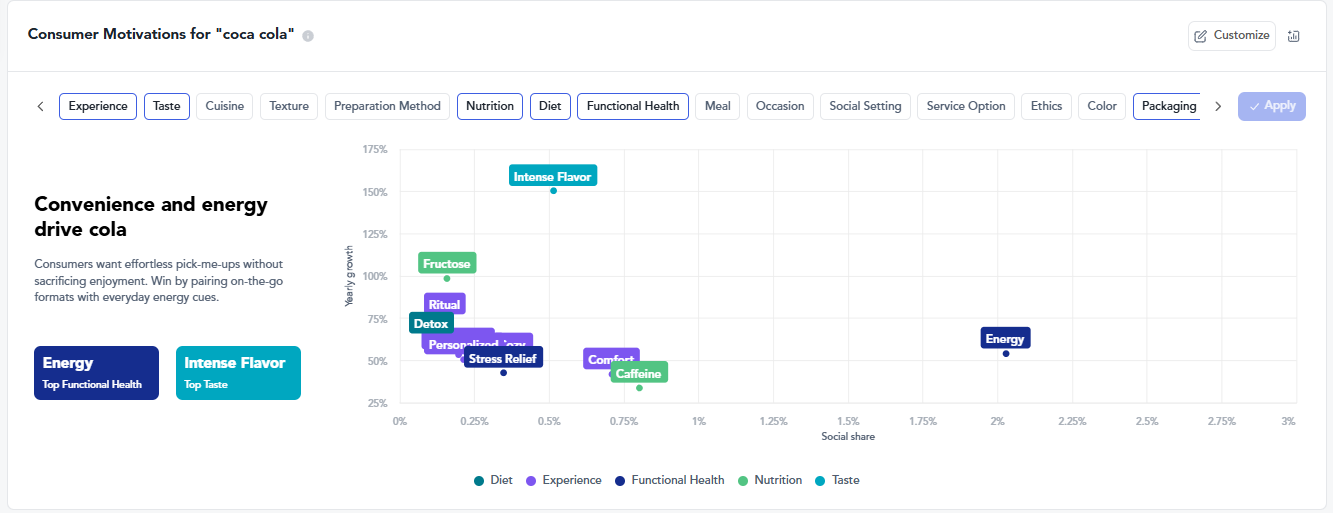
Faster insights only work if they are easy to defend internally and externally.
1. Replace static reports with query-based workflows
Teams should be able to ask and answer questions in real time without analyst mediation.
2. Anchor decisions in explainable evidence
Consumer behavior insights need to be simple enough for commercial teams to sell to buyers.
3. Build repeatable workflows
If the same question requires a new process every time, speed is lost again.
Consumer intelligence teams are now expected to deliver answers that marketing, R&D, and commercial teams can act on immediately.
- From report creation → to decision enablement
- From data delivery → to conviction building
- From monthly outputs → to real-time support
Retailers and operators do not buy insights. They buy proof. Faster consumer insights analytics gives teams the ability to present that proof while it still matters.
How Tastewise delivers real-time consumer insights at decision speed
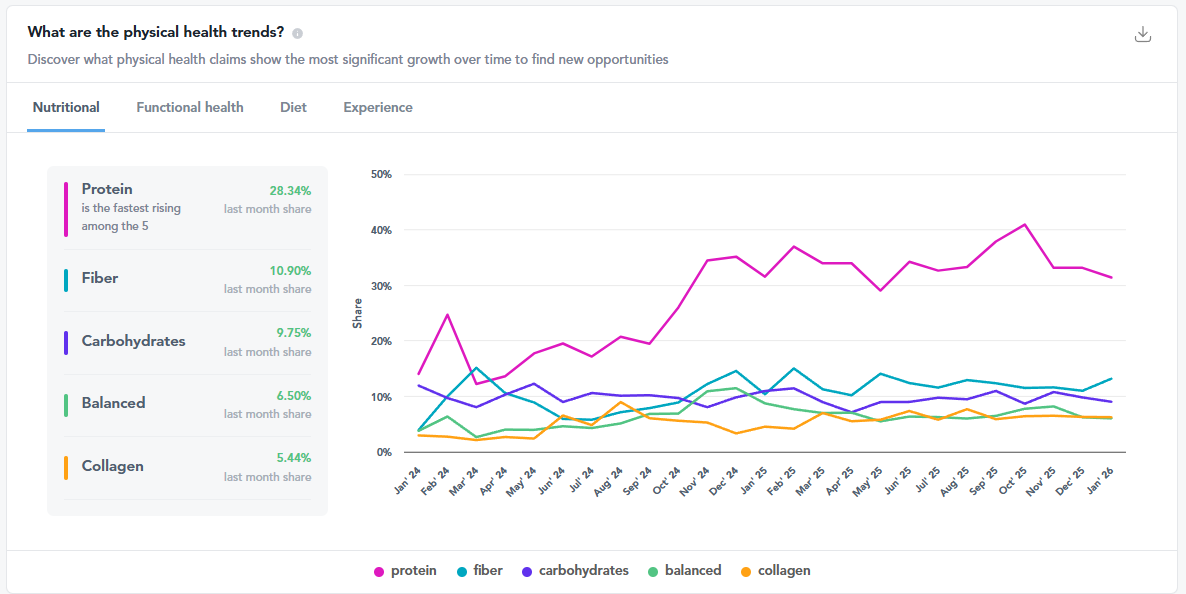
Tastewise replaces staged research workflows with a system built to answer questions and support decisions immediately. It connects the Social F&B panel, Foodservice, Home cooking panel, Surveys, and Internal studio into a single platform that produces explainable, ready-to-use outputs.
Teams move from question to answer without analyst dependency or report cycles. Each output is structured to support internal alignment and external sell-in, so marketing, R&D, and commercial teams work from the same evidence.
This allows teams to validate ideas earlier, respond to shifting consumer behavior faster, and bring buyer-ready narratives into retailer and operator conversations while demand signals are still current.
FAQs about consumer insights for CPG
Consumer insights analytics combines behavioral, transactional, and sentiment data to explain why consumers act and how to influence decisions.
They rely on analysts, manual workflows, and report cycles that delay decision-making.
It allows teams to ask business questions and receive immediate, actionable answers instead of waiting for reports.
They remove intermediary steps like manual analysis and deliver direct answers tied to business actions.
Identifying which menu trends will succeed in retail, understanding audience shifts, or optimizing pricing strategies based on real demand signals.
It connects multiple data sources into a single platform that produces explainable, repeatable, and action-ready insights instantly.




We’d love to learn your goals and see how Tastewise fits
We’d love to learn your goals and see how Tastewise fits
Get a personalized demo
Good taste. Wise move.
Your demo request is confirmed. We’ll reach out within one business day to schedule your walkthrough.
What happens next

See what’s driving demand, then turn it into a sell-in story for retailers and operators.
- Connect consumer panels, market trackers, and agents into one evidence view
- Get the “why” behind what’s changing, with explainable demand drivers
- Walk away with a buyer-ready narrative and next steps to activate
Trusted by



“Tastewise is my secret tool for knowing what consumers want next and why.“