





The candy salad trend is reshaping how consumers think about confectionery, and your innovation team should be paying close attention. What started as a TikTok ritual, scooping, layering and mixing candies into a single bowl, has become a meaningful signal about how consumers want to engage with sugar confectionery in 2026. The behavior is spreading from social feeds into the product aisles, and the brands moving now are building a position that will be harder to claim later. Tastewise, the food intelligence platform for food and beverage brands, has been tracking the consumer signals behind this shift, and the findings point to something bigger than a viral moment.
Key takeaways
- Nostalgic framing is up 89% among Gen Z candy consumers in the past year. This is not nostalgia for a single brand. It is nostalgia for the act of curating candy the way previous generations did at pick-and-mix counters. Your brand can own that ritual in a packaged format.
- “Personalized” and “build your own” signals are both growing in the confectionery space. Consumers are not looking for the best single candy. They are looking for the best combination. Innovation that gives them component-based formats is where the white space sits.
- Freeze-dried candy is in a declining lifecycle stage, down more than 50% in the past 12 months. The peak has passed. Teams anchoring their confectionery innovation to freeze-dried formats are building on a contracting signal, not a rising one.
- Soft textures are gaining ground in candy preferences among Gen Z, up 16.5% since last year. The crunch-first format that dominated recent years is giving way to a layered, soft-and-chewy experience. Your texture architecture matters more than it did.
Candy salad topic overview
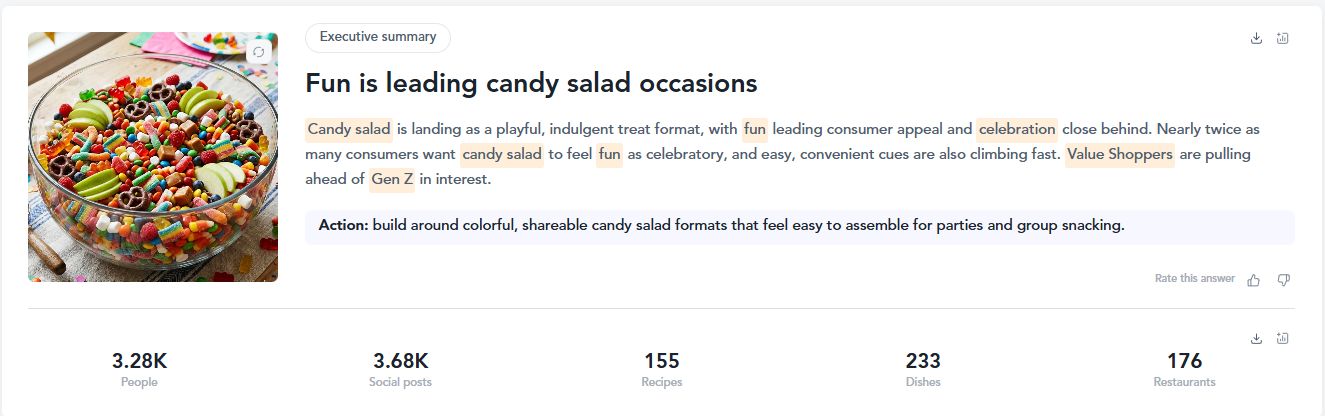
The candy salad trend is at its core a curation behavior. Consumers are choosing to mix, layer and assemble their own confectionery experience rather than accept a single predetermined format. This is not just a Gen Z habit. It is an expression of a broader shift toward personalization that is showing up across food categories, from grain bowls to coffee orders. In confectionery, it manifests as the deliberate blending of textures, colors and flavor intensities into a single serving occasion.
What the Tastewise consumer panel shows across the US confectionery category is clear: the signals driving this behavior are not primarily about sourness or novelty ingredients. Nostalgic framing among Gen Z candy consumers is up 89% in the past year. Personalization signals are growing. Soft textures are rising. The “fun” claim, which covers sensory and experience-oriented eating, is up 13.2% in the broader confectionery panel. Meanwhile, freeze-dried candy is declining at more than 50% and gummy bears as a standalone format are also contracting. The consumer is not moving toward a single hero ingredient. They are moving toward the mix.
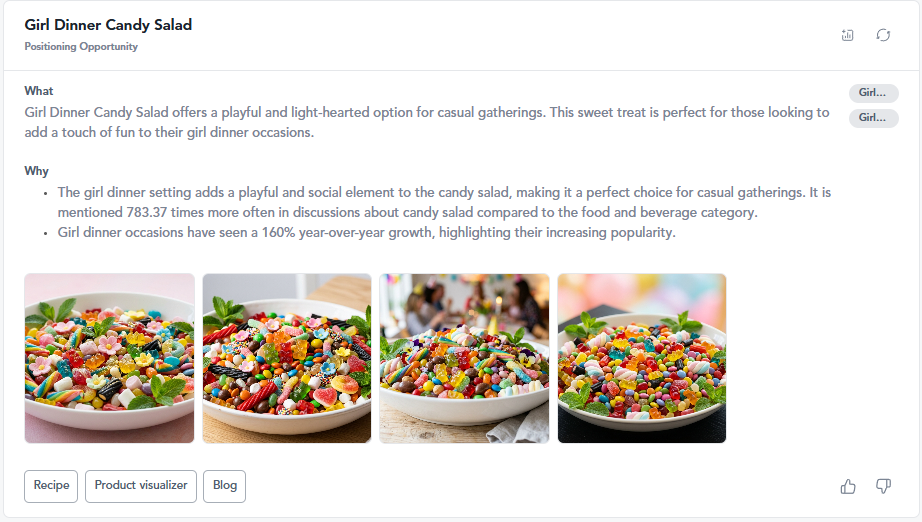
The opportunity this creates is precise. The candy salad ritual exists because retail has not yet given consumers a packaged version of it. Bulk assorted candy is everywhere on shelf, but the positioning is not curation. It is volume. A brand that repositions around the ritual, builds around component-based variety, and speaks to the nostalgia and personalization signals in its marketing copy has a clear path to a shelf story that no major player currently owns. The product innovation solution page shows how teams use consumer demand signals to validate exactly this kind of concept before committing to R&D investment.
What is actually driving the candy salad trend
The candy salad trend is not one thing. It is three overlapping consumer motivations landing at the same time in the same category, and understanding them separately is what lets your team build a product that holds.
The first is nostalgia. Among Gen Z candy consumers on the Tastewise US panel, nostalgic framing is up 89% in the past year. This is a striking number because Gen Z is not a generation typically associated with backward-looking comfort. What is happening is more specific. These consumers are not nostalgic for a particular brand or flavor. They are nostalgic for the pick-and-mix experience, the physical act of choosing, scooping and building their own candy assortment. The candy salad trend is a home recreation of a format that largely disappeared from retail. The demand never went away. The format did.
The second driver is personalization. “Personalized” and “build your own” claims are both growing in confectionery consumer data. The broader food culture has trained this consumer cohort to expect customization as a baseline, not a premium. When they reach the candy aisle and find only pre-sealed, pre-portioned bags, they go home and build what they wanted themselves. That behavior is the candy salad trend. The consumer gap your team should be mapping is the distance between what the shopper wants to experience and what the shelf currently offers them.
The third driver is texture. Soft textures are up 16.5% in Gen Z candy preferences since last year, and “chewy” remains one of the category’s most persistent claims. The trend is moving away from single-texture formats. Consumers who build candy salads are deliberately mixing gummy, chewy, soft, and coated components to create a layered mouthfeel that no single product delivers. This is the packaging and formulation brief your R&D team does not yet have.
Where freeze-dried candy fits, and why the timing matters
Your team has almost certainly had an internal conversation about freeze-dried candy in the last 18 months. Here is what the consumer data says now.
Freeze-dried candy is in a declining lifecycle stage on the Tastewise panel, down more than 50% in consumer engagement in the past 12 months. Fruit sours, which frequently appear in freeze-dried candy formats, are down 24.4% over the same period. Gummy bears as a standalone format are declining at 12.4%. These are not corrections after a spike. These are sustained directional moves away from the formats that drove the peak of the freeze-dried trend.
This matters for your innovation calendar in a specific way. If your pipeline has a freeze-dried candy SKU in development for 2026 or 2027, the consumer signal it was built on is now contracting, not growing. The question your insights team needs to answer is not whether freeze-dried was real, because it was. The question is whether the white space your team identified when the brief was written still exists. Consumer data from the Tastewise platform suggests the early-adopter consumer has already moved on.
The candy salad trend is, in part, what that consumer moved to. The curation ritual incorporates many formats, but the energy is not with any single ingredient. It is with the act of mixing. That is the brief worth building around now.
The retail white space your sell-in story is missing
The onTheShelf data from the Tastewise platform shows dozens of bulk assorted candy SKUs, sour variety packs, piñata candy mixes, chamoy combination kits, extreme sour assortments, all selling in quantity. These products are capturing the candy salad consumer by default, not by design. None of them have positioning that speaks to curation, ritual, or the nostalgia signal driving the behavior.
This is a textbook white space: high consumer demand, available retail formats, and zero brand owning the story. The consumer who builds a candy salad at home is buying the components from bulk bins, ordering variety packs online, or grabbing multiple single-flavor bags. A brand that packages the ritual, names the act, and markets to the personalization and nostalgia drivers is not creating a new category. It is giving a name and a story to a behavior that is already happening at scale.
The retail sell-in narrative writes itself. Confectionery buyers are looking for growth beyond the standard single-flavor peg bag. A format-level innovation that speaks to documented consumer demand for curation and personalization, backed by consumer panel data, is exactly the kind of story that moves a category review conversation forward. The retail sales solution page details how teams build this kind of buyer-ready narrative from consumer demand data.
The Swedish candy signal is worth flagging here too. “Swedish candy” is growing among Gen Z confectionery consumers on the Tastewise panel. Swedish candy culture is built entirely around the pick-and-mix format. This is a geographic reference point your team can use in both product and marketing framing to position a curation-based format with cultural credibility.
What your team should do with this now
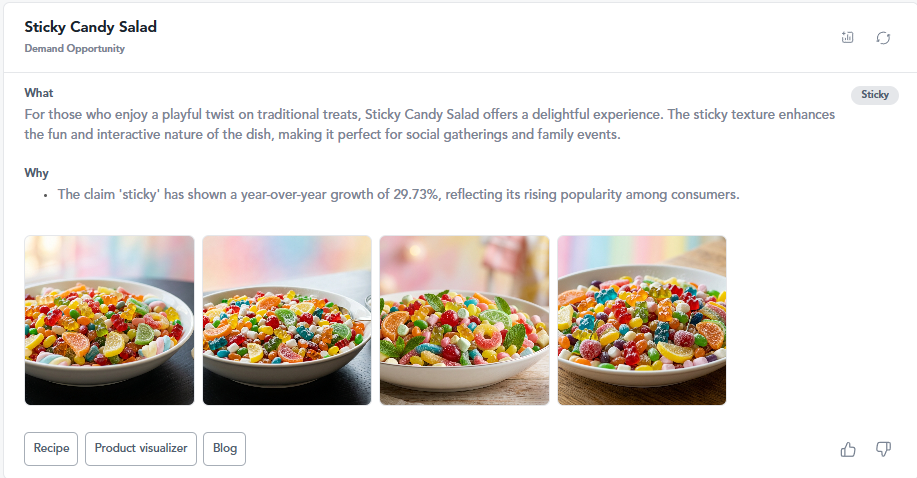
The candy salad trend gives your brand three clear action points, regardless of whether you are in R&D, marketing, or sales.
For R&D: the formulation brief is a component-based pack, not a single format. The consumer is building a mix of soft, chewy, and coated textures. Your product architecture needs to enable that layering experience in a single purchase. Soft textures are growing. Hard novelty ingredients like freeze-dried are contracting. Start the texture brief there.
For marketing: the claim set your copy needs to hit is nostalgia, personalization, and fun. Not sourness, not extreme flavors, not social virality. The candy salad consumer is motivated by the act of curating and the emotional resonance of the pick-and-mix memory. “Build your own” and “personalized” are both growing consumer signals. Your campaign language should reflect the behavior, not just the product.
For sales: the retail story is about white space in a growing behavior that no major brand currently owns on shelf. Buyer conversations that lead with documented consumer demand for curation-based confectionery formats, backed by panel data, land differently than stories about ingredient trends. The 2026 food and beverage trend forecast includes the consumer behavior signals that support this conversation directly.
FAQs about candy salad trend
The behavior is grounded in three consumer motivations that show up consistently in panel data: nostalgia for the pick-and-mix curation ritual, growing demand for personalized food experiences, and a preference for soft, layered textures over single-format novelty ingredients. Social amplification made the candy salad trend visible, but these underlying drivers are what give it commercial staying power. Teams building innovation briefs around the surface behavior without addressing these motivations will find the products date faster than expected.
The consumer data suggests caution. Freeze-dried candy is in a declining lifecycle stage on the Tastewise US consumer panel, down more than 50% in consumer engagement in the past year. Fruit sours, which frequently anchor freeze-dried formats, are also declining. If your innovation pipeline includes a freeze-dried SKU, the consumer signal that justified it is contracting. The stronger opportunity sits in curation-based formats that deliver on the personalization and texture layering behaviors that are currently growing.
Retail is the primary channel for the candy salad behavior. The onTheShelf data shows a high volume of bulk assorted candy SKUs already capturing this consumer by default, from sour variety packs to chamoy combination kits. The white space in retail is not in the products themselves but in the brand story and positioning. In foodservice, the trend appears at dessert bars, cinema concessions, and experiential dining formats as a build-your-own upsell occasion, but the commercial scale opportunity sits on shelf, not in the kitchen.

Read more from Kelia Losa Reinoso

We’d love to learn your goals and see how Tastewise fits
We’d love to learn your goals and see how Tastewise fits
Get a personalized demo
Good taste. Wise move.
Your demo request is confirmed. We’ll reach out within one business day to schedule your walkthrough.
What happens next

See what’s driving demand, then turn it into a sell-in story for retailers and operators.
- Connect consumer panels, market trackers, and agents into one evidence view
- Get the “why” behind what’s changing, with explainable demand drivers
- Walk away with a buyer-ready narrative and next steps to activate
Trusted by





“Tastewise is my secret tool for knowing what consumers want next and why.“