
The milkshake trend 2026 shows a classic drink holding its place on menus while its flavors shift. Nearly 1 in 7 US restaurants (14.5%) now list a milkshake, a share up nearly 5% on last year. Coffee, espresso and peppermint are adding menus fastest, while caramel and peach are losing ground. This guide covers the flavors, sales figures, regional patterns and formats you need if you run beverage, dessert or brand strategy.
Key takeaways
- Emergen Research values the US commercial milkshakes and soft serve market at $1.2 billion in 2024, with milkshakes the faster-growing segment.
- Nearly 1 in 7 US restaurants (14.5%) list a milkshake, up nearly 5% on last year. Milkshake menu items are up 11% over the same period.
- The average US restaurant milkshake costs $6.87, up 3% in the past 12 months.
- Vanilla and chocolate still lead, appearing on about 1 in 3 (34%) and nearly 1 in 4 (24%) US milkshake menus.
- Coffee and espresso are the fastest-growing everyday flavors. The share of US milkshake menus listing them is up 57% and 65% on last year.
- Milkshakes reach more restaurants in Australia (1 in 4) and the UK (nearly 1 in 5) than in the US or Canada.
Are milkshakes still popular?

Yes, and the menu data shows it. Across Tastewise US menu data, nearly 1 in 7 restaurants (14.5%) listed a milkshake in August 2026, up nearly 5% on a year earlier. Restaurants are also adding variety, with milkshake menu items up 11% in the past 12 months.
Milkshakes work as a dessert, a snack or a drink, which keeps them relevant as modern beverage trends change. Interest follows the seasons. Online interest in milkshakes dips in late fall and winter and peaks in spring and summer.
What are the top 10 milkshake flavors?
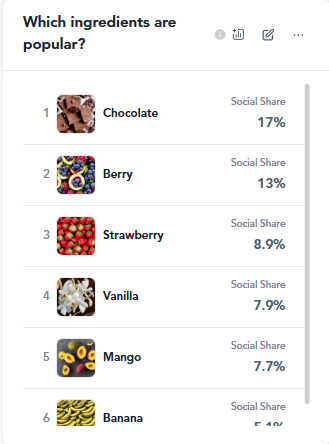
The best milkshake flavors in 2026 mix long-time favorites with a few fast risers. The figures below show the share of US restaurant milkshake menus that list each flavor, and how that share moved in the past 12 months.
Classic chocolate and vanilla
Vanilla appears on about 1 in 3 US milkshake menus (34%) and chocolate on nearly 1 in 4 (24%). Both slipped about 5% on last year. Premium versions are growing, with vanilla bean up 39%, so a better base is an easy upgrade for a classic shake.
Strawberry and mixed berry
Strawberry and berry each appear on nearly 1 in 20 US milkshake menus (5.7% and 6.4%). Both grew in the past year, by 2% and 4%. Fruit shakes connect with freshness-driven food trends and do well in warmer months.
Oreo and cookie-based milkshakes
Cookie appears on nearly 1 in 7 US milkshake menus (14%) and Oreo on about 1 in 12 (8%). Both dipped slightly on last year. Pair them with new textures or toppings to keep them fresh, and follow Oreo trends for brand-level shifts.
Caramel and salted caramel
Caramel is losing menu ground. It appears on 2.1% of US milkshake menus, down nearly 9% on last year. If you carry it, test caramel as a sauce on a growing base flavor such as coffee.
Peanut butter and chocolate combos
Peanut butter appears on 1.6% of US milkshake menus and is up 10% on last year. Online interest in peanut butter banana shakes is up 42%, a buzz figure that shows where demand may head next.
Coffee and mocha milkshakes
Coffee is the fastest-growing everyday flavor on the list. The share of US milkshake menus listing coffee is up 57% on last year, and espresso is up 65%. Both still sit on under 4% of menus (3.3% and 2.8%), which leaves room for operators who add a coffee shake now.
Banana and tropical flavors
Banana appears on 2% of US milkshake menus, up 7%, and mango on 3.6%, up 5%. Mango lassi, a yogurt-based shake, appears on 2.9% and is up 5%. These flavors also link milkshakes to smoothie-style drinks.
Matcha and green tea
Matcha does not yet appear among the top 45 milkshake ingredients on US menus. Among global flavors, ube shows clearer growth, with online interest in ube milkshakes up 30% on last year. Watch both alongside dairy trends before a full launch.
Vegan chocolate and plant-based options
Oat, almond and soy milk do not appear among the top 45 milkshake ingredients on US menus. That leaves vegan shakes as open space on most menus. If you serve dairy-free consumers, test one vegan chocolate shake before building a range.
Limited edition and seasonal flavors
Seasonal shakes can take a large share of menus for a short window. The Shamrock Shake appears on nearly 1 in 6 US milkshake menus (16%), though that share is down 20% on last year. Holiday flavors are growing fastest, with peppermint up 43% and peppermint bark up 154%.
Milkshake sales statistics and market Performance
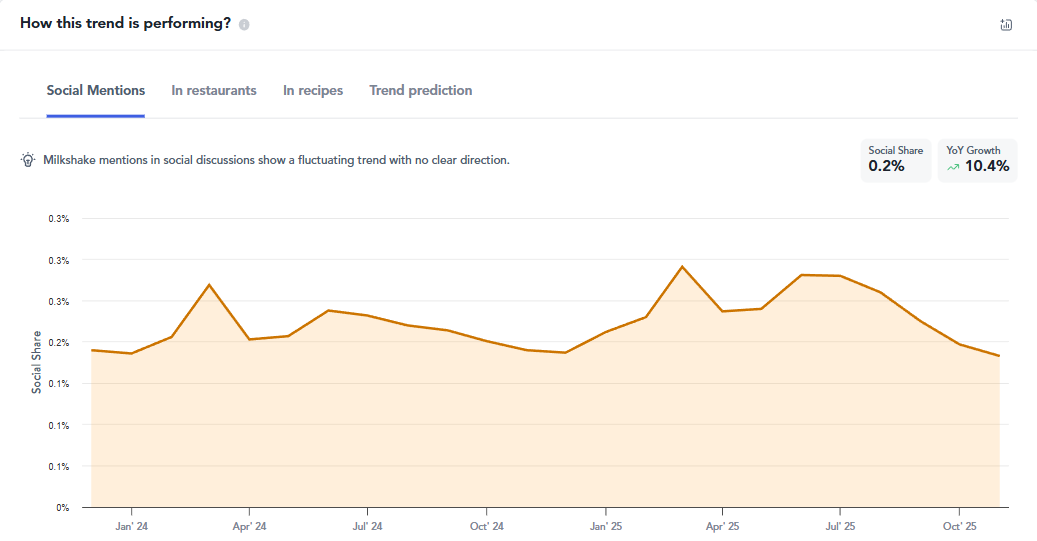
The milkshake trend 2026 builds on two years of steady gains on US menus. Figures from September 2024 onward come from Tastewise US menu data. Earlier years use industry-wide foodservice figures.
Milkshake market performance in 2025
In 2025, milkshakes reached more US menus. The share of restaurants listing a milkshake peaked at 15.2% in April 2025. Milkshake menu items rose about 14% between September 2024 and September 2025, while the average price rose from $6.48 to $6.63. For shifts in the dairy base under these shakes, see milk trends.
Milkshake market performance in 2024
By September 2024, nearly 1 in 7 US restaurants (14.4%) listed a milkshake at an average price of $6.48. The share dipped to 12.1% in December 2024 before climbing back through spring. Oreo appears on about 1 in 12 US milkshake menus today (8%), the clearest branded ingredient in the category.
Milkshake market performance in 2023
Tastewise milkshake menu tracking for this article starts in late 2024, so 2023 uses industry-wide figures. The National Restaurant Association forecast US foodservice sales of $997 billion for 2023, driven partly by higher menu prices (Nation’s Restaurant News). For milkshake-specific figures, use the 2024 and 2025 sections above.
Milkshake market performance in 2022
US foodservice sales reached $937 billion in 2022, above the association’s own forecast of $898 billion (Nation’s Restaurant News). That rebound in out-of-home dining set the base for the menu growth Tastewise tracks from 2024.
Overall market outlook
Market researchers expect commercial milkshakes to keep growing. Emergen Research values the US commercial milkshakes and soft serve market at $1.2 billion in 2024 and forecasts $2.5 billion by 2034 (Emergen Research). It expects milkshakes to grow faster than soft serve, at a compound annual rate of 9%. Shakes sit across dessert trends and beverage trends, which gives them more occasions than most drinks.
Milkshake consumer trends
Milkshake reach differs by market. Australia and the UK put shakes on more restaurant menus than the US or Canada.
Milkshake trends in the United States
Nearly 1 in 7 US restaurants (14.5%) list a milkshake, at an average price of $6.87. US operators that serve milkshakes list about 3 shake items each. Indulgent add-ins lead, with cookie and whipped cream each on nearly 1 in 7 milkshake menus (14% and 13%). Follow cookie trends for the toppings behind these shakes.
Milkshake trends in Canada
Nearly 1 in 7 Canadian restaurants (13.9%) list a milkshake. That share is up 8% on last year, faster than the US at 5%. The average shake costs C$8.43. In 2025, online interest in milkshakes in Canada was nearly twice as high in July as in December, so launch new flavors in early summer.
Milkshake trends in the United Kingdom
Nearly 1 in 5 UK restaurants (21%) list a milkshake. UK operators also carry deeper shake menus, with about 6 milkshake items each against about 3 in the US. Milkshake menu items are up 22% on last year, and the average price is £5.85, up 3%.
Milkshake trends in Australia
Milkshakes reach the most restaurants in Australia, where 1 in 4 menus (24.9%) list one. That share is up 9% on last year, the fastest of the four markets here. The average shake costs A$9.55, up 4%. Read ice cream trends alongside shakes if you plan flavors for this market.
Milkshake formats and occasions driving growth
Format decides the occasion and the price point as much as flavor does. Each format below suits a different buyer.
Classic diner-style milkshakes
Named classics still anchor menus. A vanilla milkshake appears on about 1 in 5 US milkshake menus (21%) and a chocolate milkshake on nearly 1 in 6 (17%). These are the base for classic dessert trends and the first shakes most guests compare on price.
Premium dessert milkshakes
Over-the-top shakes turn a drink into a full dessert. Online interest in whipped cream on milkshakes is up 17% on last year, and interest in custard shakes is up 45%. Emergen Research expects milkshakes to outgrow soft serve and names gourmet shakes as a driver (Emergen Research).
Ready-to-drink and takeaway milkshakes
Packaged shakes take the category into retail. Tastewise shelf data counts about 1,430 ready-to-drink milkshake products from 272 brands across 49 US online retailers, with 72 new launches in the past two years. Bottles lead the shelf at 158 products, with an average price of $10.26.
Health-adjacent and lighter milkshakes
Lighter shakes lean on dairy and fruit. The share of US milkshake menus listing milk is up 12% on last year, while sugar is down 17%. Yogurt is up 4%, and mango lassi adds a fermented option. These shifts track wider dairy trends and milk trends.
How brands can use Tastewise to track milkshake trends
Tastewise is the proactive AI food and beverage intelligence system that delivers before you ask. For milkshakes, it reads restaurant menus, retail shelves and consumer data as one story.
Identifying rising milkshake flavors
Tastewise shows which flavors are adding menus and which are slipping. That is how espresso (up 65%) and peppermint bark (up 154%) stood out in this article while caramel fell 9%.
Tracking ingredient and format shifts
You can follow the base of the shake as well as the flavor. Milk rising 12% on milkshake menus, soft serve falling 15% and new bottled launches on the shelf all sit in one view, by market.
Turning insights into action
Agents watch your categories and hand your team the finished work, such as a concept brief for a coffee shake or a buyer story for a retailer. Every figure carries its source, so your case holds up in the room.
Summary

The milkshake trend 2026 combines steady reach with fast flavor change. Nearly 1 in 7 US restaurants list a shake, prices are up 3%, and coffee and holiday flavors are adding menus fastest. Australia and the UK carry shakes on more menus than the US. For the audience side of the category, see Gen Z beverage trends.
FAQs
Chocolate remains the most popular milkshake flavour, followed by vanilla and Oreo-based options.
Yes, milkshake businesses can be profitable due to high margins, especially when focused on premium formats.
A good milkshake balances texture, flavour, and temperature while using high-quality ingredients.
Some luxury milkshakes include premium ingredients like rare chocolate or gold toppings and can cost hundreds of dollars.
Green milkshakes often contain matcha, mint, or plant-based ingredients and may signal health or global flavour trends.
A black and white milkshake usually combines chocolate and vanilla flavours.
TikTok trends include Oreo milkshakes, extreme toppings, and visually layered dessert drinks.
Tastewise tracks real-time consumer data to reveal rising flavours, formats, and occasions early.



We’d love to learn your goals and see how Tastewise fits
We’d love to learn your goals and see how Tastewise fits
Get a personalized demo
Good taste. Wise move.
Your demo request is confirmed. We’ll reach out within one business day to schedule your walkthrough.
What happens next

See what’s driving demand, then turn it into a sell-in story for retailers and operators.
- Connect consumer panels, market trackers, and agents into one evidence view
- Get the “why” behind what’s changing, with explainable demand drivers
- Walk away with a buyer-ready narrative and next steps to activate
Trusted by


“Tastewise is my secret tool for knowing what consumers want next and why.“