
Business
Boxing Day Food: Running High-Impact Shopper Campaigns


Boxing Day food is the meal after the meal: cold turkey, ham, cheese and whatever is left in the fridge on December 26. For US food brands, the day is small in search but large in behavior, because it sits inside the leftover peak that runs from Thanksgiving to New Year. This guide answers the common questions first, then shows how to build a shopper campaign with Tastewise consumer, retail and menu data from the past 12 months.
Key takeaways
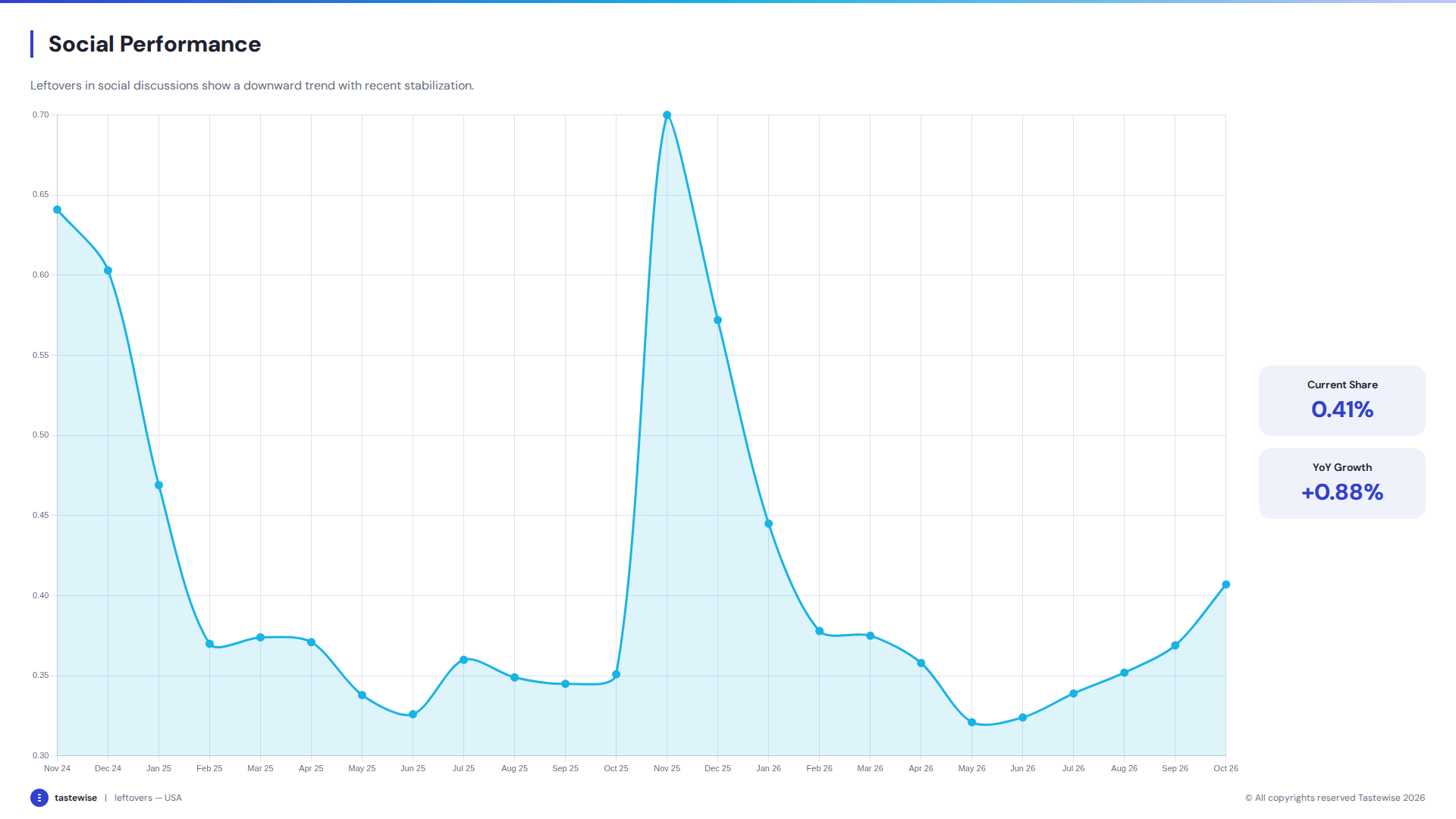
- Across the Tastewise US consumer panel, the share of consumers engaging with leftovers doubled from October to November 2025 and stayed about 60% above October through December.
- Nearly 3 in 10 US consumers engaging with leftovers (28%) describe them as convenient, and the need for easy leftover meals grew 12% over the past year.
- UK consumers engaging with leftovers link them to Boxing Day about 11 times as often as US consumers do.
- Takeout is a small but fast signal around Christmas food in the US, reaching 0.3% of consumers and growing 83% over the past year.
- Leftover-style dishes on US restaurant menus grew nearly 14% over the past year, with a sharp jump in December 2025.
- 1 in 3 products positioned around leftovers on US online shelves is a soup, broth or stock.
What Boxing Day is and who celebrates it
Boxing Day is December 26, the day after Christmas. It is a public holiday in the UK, Canada, Australia and other Commonwealth countries. In the US it is a regular working day, but many households treat it as a slow day of leftovers, returns and sales.
Traditional Boxing Day food is built from the Christmas table. Think cold roast turkey or ham, cold cuts, cheese and pickles, usually served as a relaxed buffet.
For US brands, the leftover moment is the more useful frame. Across the Tastewise US consumer panel, the share of consumers engaging with leftovers doubled between October and November 2025. It then stayed about 60% above its October level through December.
In 2026, December 26 falls on a Saturday, which turns the day into a full leftover weekend. That fits the shift described in the 2026 holiday trends report, where the weekend at home is replacing the single big night out.
UK and Canada comparison
Boxing Day carries far more weight outside the US. Among UK consumers engaging with leftovers, nearly 1 in 10 (11%) connect them to Christmas, about three times the US rate of 3%. Boxing Day itself comes up 11 times as often in the UK as in the US, and that link grew 17% over the past year.
Canada sits in between. Canadian consumers engaging with leftovers mention Boxing Day twice as often as US consumers, and that link grew 20% over the past year. Turkey is gaining as a UK leftover, up 9%, while it slipped 7% in Canada.
UK Boxing Day footfall figures for 2025 were 4.4% above the year before, and evening visits between 5pm and 11pm rose 9.6%, a likely lift for pubs and restaurants.
Boxing Day food traditions and leftovers
Boxing Day food traditions center on using up Christmas dinner. Common Boxing Day food ideas include turkey sandwiches, ham and cheese toasties and turkey pot pie. In the UK, bubble and squeak, a fry-up of potatoes and greens from the roast, is the classic.
Across the Tastewise US consumer panel, turkey features for nearly 1 in 10 consumers engaging with leftovers (9%). Ham is smaller at 2.7%, but it grew 5% over the past year. Recipe sites show the second meal in action, from leftover turkey enchiladas and cranberry cornbread muffins to leftover ham and macaroni soup.
Effort is what drives the moment. Nearly 3 in 10 US consumers engaging with leftovers (28%) describe them as convenient. Nearly 1 in 5 (18%) call them easy, a need that grew 12% over the past year. Comfort reaches nearly 1 in 20 (5%) and is growing faster, up 22%. Food waste matters too: 4.5% tie leftovers to cutting waste, up 13% from last year.
This matches the holiday retail trends we tracked last season, when nearly half of US consumers (46%) said saving time and effort was their priority for holiday meals.
On US online shelves, 1 in 3 products positioned around leftovers (33%) is a soup, broth or stock. Progresso, Prego and Zatarain’s carry the most leftover-positioned products. For retail sell-in, that is a ready story about the pantry items that turn a cold plate into a new meal.
Boxing Day food delivery and what is open

In the US, Boxing Day is not a federal holiday. Most grocery stores, restaurants and delivery apps run normal or near-normal hours on December 26, so Boxing Day food delivery works much like any Saturday. Hours vary by location, so check first.
If you are looking for food places open on Boxing Day in the UK, pubs and restaurants usually open, while several large supermarket chains close for the day. In Canada, Boxing Day is a holiday in several provinces and a major sales day, and opening hours vary by province and store.
Across the Tastewise US consumer panel, takeout reaches 1.1% of consumers engaging with leftovers, and it grew 24% over the past year.
Restaurants are responding. Leftover-style dishes on US menus grew nearly 14% over the past year, with a sharp rise in December 2025. Some operators name the idea outright: MáLà Project sells leftover fried rice and JJ’s Grill lists a leftover sandwich. Boston Market and Teriyaki Madness rank among the top operators for leftover-related menu items.
For foodservice operators, the post-Christmas week suits easy comfort food. Our Christmas food trends for foodservice guide covers the menu side in more depth.
Planning a Boxing Day shopper campaign

A Boxing Day shopper campaign targets the days right after Christmas, when people use up leftovers, restock basics and shop the sales. In the US, frame it as the leftover weekend. In the UK and Canada, name Boxing Day outright.
- Run it from December 26 to New Year’s Day. In 2026 the window opens on a Saturday, so plan the heaviest spend for that first weekend.
- Lead with easy and convenient claims. Healthy is losing ground here, down 19% among US consumers engaging with leftovers over the past year.
- Sell the second meal. Bundle broth, tortillas, pasta sauce or cheese with one recipe, such as leftover turkey enchiladas or turkey pot pie.
- Fill the savory gap on Christmas shelves. More than half of Christmas-positioned products online (56%) are candy or chocolate, which leaves room for meal-building products after the 25th.
- Partner with restaurants and delivery apps on weekend takeout offers.
Tastewise is the proactive AI food and beverage intelligence system that delivers before you ask. It tracks these signals across consumer, retail and menu data, so your team can brief brand campaigns on time and target the right consumer segments.
Boxing Day food is a small search term in the US, but the leftover weekend it names is a real shopping moment. Brands that plan for it now will meet shoppers when they are tired, hungry and ready to buy something easy.
FAQs about boxing day food
Boxing Day meals usually use Christmas leftovers like cold turkey, ham, cheese and pickles. In the UK, bubble and squeak is a classic. Among US consumers engaging with leftovers, ham grew 5% over the past year.
Boxing Day is not a federal holiday in the US, and few Americans mark it by name. Among US consumers engaging with leftovers, just 0.2% link them to Boxing Day, though that link grew 8.5% over the past year.
In the US, most grocery stores, restaurants and delivery apps open on December 26 with normal or near-normal hours. In the UK, pubs and restaurants usually open, while some supermarket chains close. Among UK consumers engaging with leftovers, takeout grew 13% over the past year.
Time it from December 26 to New Year, lead with easy and convenient claims, and sell the products that turn leftovers into a second meal. Among US consumers engaging with Christmas food, the need for quick meals grew 28% over the past year.
Sources cited in this article
- Boxing Day footfall figures theindustry.fashion
Cite this article
Reinoso, K. L. (2026). Boxing Day Food: Running High-Impact Shopper Campaigns. Tastewise. https://tastewise.io/blog/boxing-day-food