





The 2026 alcohol trend is a story about moderation, flexibility and format. Only 54% of US adults say they drink, a record low that held for a second straight year in Gallup’s 2026 drinking survey. Restaurants are still adding drinks built around that shift. Mocktails, low-proof serves and sealed takeout cocktails are spreading across US menus faster than most annual reports can capture.
You need to see these consumer trend alcohol shifts while they are still forming. Real-time AI consumer intelligence from Tastewise tracks menus, recipes and consumer interest every day. That lets your team act before a static annual report publishes.
Key takeaways
- The share of US restaurant menus carrying mocktails and zero-proof drinks grew 35% in a year, about 2.5 times the menu share growth of low-alcohol drinks (nearly 14%).
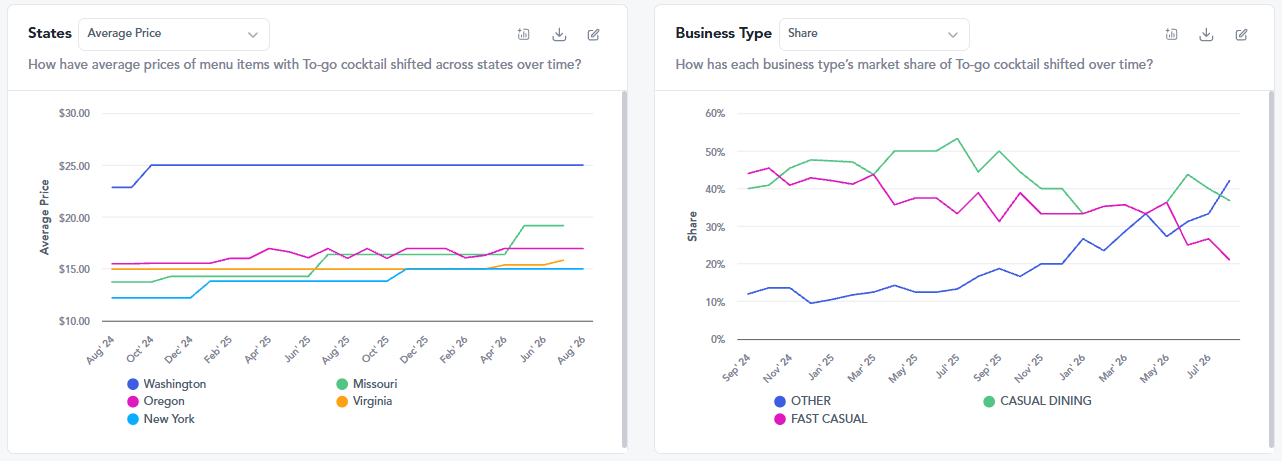
- To-go cocktail menu items on US delivery and takeout menus roughly doubled between August 2025 and August 2026.
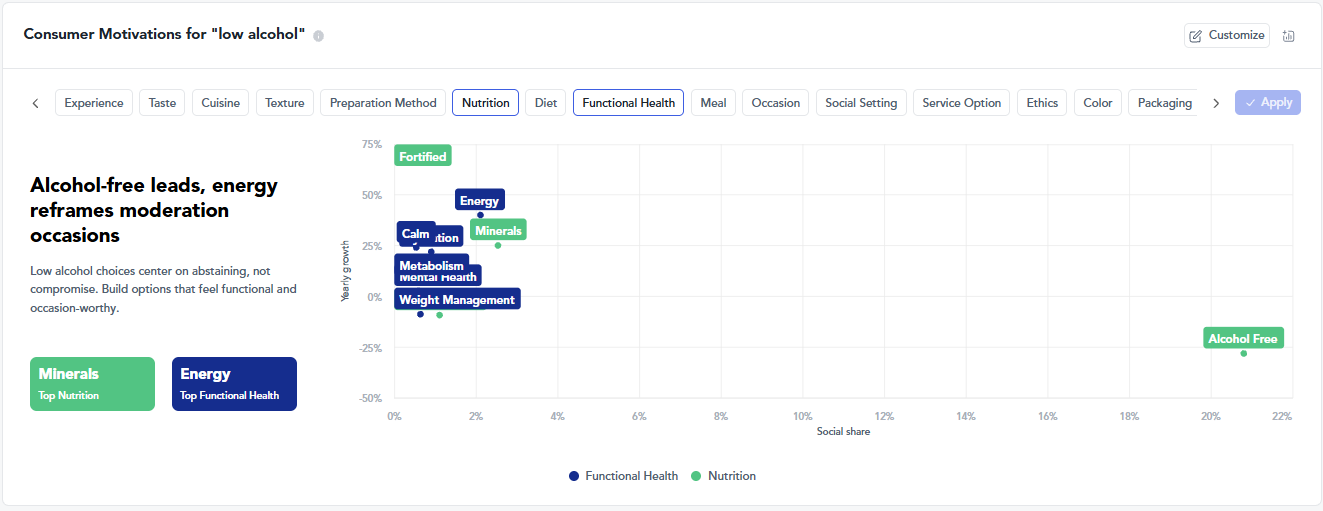
- Energy and calm are the fastest-rising functional reasons US consumers give for choosing cocktails, up 51% and 33% in consumer interest.
- Sicilian blood orange and stuffed green olive are early-stage cocktail ingredients that more than doubled in consumer interest, from a small base.
- Gallup found that 17% of Americans swapped a nonalcoholic beer, wine or spirit for an alcoholic drink in the past year.
- Average mocktail pricing on US menus held near $8, so a zero-proof serve still earns a paid round.
What are the primary factors driving the 2026 alcohol trend?
The 2026 alcohol trend is defined by mindful moderation, premium convenience and the rapid expansion of portable beverage formats. Beverage creators and hospitality brands are adapting to shifting alcohol consumption trend patterns by prioritizing low-proof recipes and sealed off-premise offerings.
The macro rise of mindful drinking and low-ABV choices
Wellness values now shape the low alcohol trend from both ends of the drink list. Gallup reports that 51% of US adults believe one or two drinks a day harm health. Drinkers are cutting back on volume and keeping the social ritual.
Operators are answering with two kinds of drinks. Across the Tastewise US restaurant panel, mocktail and zero-proof menu items grew 56% between August 2025 and August 2026. Low-alcohol drinks gained menu share over the same window, which fuels the lower-alcohol beverages trend US bars now build into their lists.
Consumer interest in low-alcohol drinks spiked in January and then settled 13% below the previous year. Menus kept adding these drinks through the summer anyway. Operators are building for steady demand across the calendar.
Analyzing the US alcohol consumption trend with Tastewise AI
The US alcohol consumption trend varies by venue, state and occasion. Tastewise reads digital menus, delivery listings, recipes and consumer interest signals every day. That shows you regional and channel shifts before legacy point-of-sale databases report them.
The live alcohol trend dashboard tracks the category’s menu and consumer signals in one view. The same daily method covers markets beyond the US, so you can read the global alcohol consumption trend side by side with home-market data. Product innovation teams use these signals to pick which flavor, claim and format to test first.
How does alcohol to go trend work and what drives consumer adoption?
The alcohol to go trend works by enabling licensed venues and brands to offer tamper-evident, sealed single-serve cocktails and draft beverages for takeout and delivery. Key benefits of alcohol to go trend packaging include extra revenue for on-premise venues and consumer flexibility for outdoor socializing.
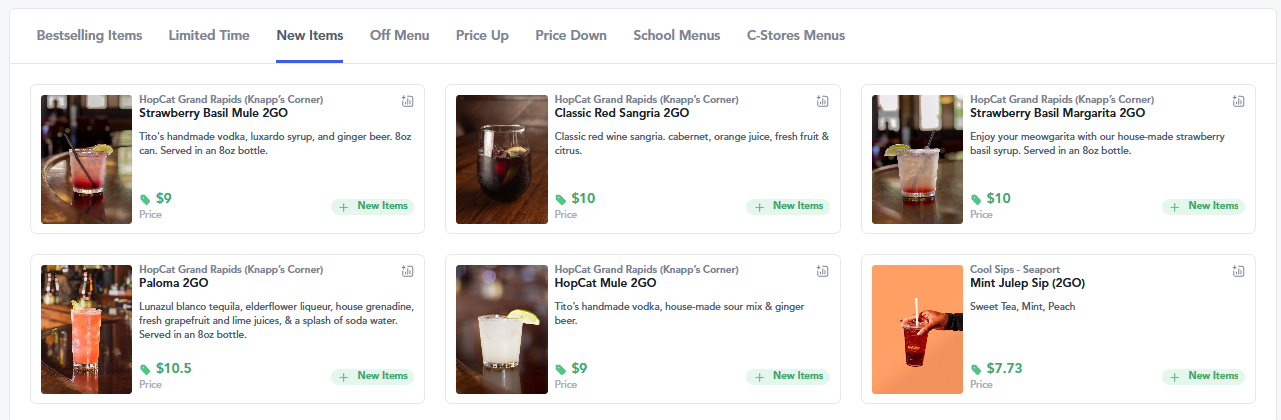
Tastewise menu data shows operators building full ranges. Restaurants that sell to-go cocktails now list about 3.6 per menu, up from about 2.4 a year earlier. The listings run from margaritas and mules to palomas and sangria, so the format stays anchored in drinks guests already order at the bar.
Consumers also want those drinks to do something. Energy and calm lead the rising functional reasons consumers give for cocktails, and flavor sits right beside function. Yuzu pineapple and blackberry sage are emerging cocktail ingredients, up 67% and 41% in consumer interest.
Evaluating sourcing, suppliers and retail pricing
Rules for alcohol to go are set state by state, and some cities add their own. Before you launch, confirm container, seal, labeling and delivery ID rules with your state alcohol regulator. A certified alcohol to go trend supplier should provide sealed, tamper-evident containers that meet those rules and keep drinks food safe in transit.
Pricing is moving fast. The average to-go cocktail on US menus fell from about $16 to about $11 between August 2025 and August 2026. Nueva Cantina lists a 12 oz skinny margarita at $16.90, while HopCat Grand Rapids listed its Paloma 2GO at $10.50. Set your alcohol to go trend price against that new midpoint, then use size and spirit quality to justify a premium.
If you sell into restaurants, the same price and format data strengthens foodservice operator pitches. It shows a buyer where the market already sits before you name your own price.
Cirrus Vodka two-packs as a to-go case
Cirrus Vodka sells sealed two-packs of 8 oz cocktails on DoorDash, including Lavender Lemonade, Cherry Limeade and a Jala-Piña Mule. Each two-pack lists at $15.99 and ranks among the best-selling to-go cocktail items in Tastewise menu data.
The format lines up with three signals in the data. Two servings work out to about $8 a drink, well under the $11 market average. Lavender gives a botanical cue, and the jalapeño and pineapple mule pairs heat with fruit. That mix of value, botanicals and bold pairings is what a best alcohol to go trend brand looks like on today’s delivery apps.
Understanding key alcohol trend concepts
These definitions explain the terms that come up most in alcohol trend data. Each one includes the context your team needs to use it in product and menu decisions.
What is a “better-for-you” alcohol?
Better-for-you alcohol refers to beverages formulated to reduce negative health associations. Brands usually get there through lower sugar, fewer calories, natural ingredients or added functional benefits like electrolytes or adaptogens. This category expands as health-conscious consumers seek balance over complete abstinence. That makes better-for-you alcohol trends a cornerstone of CPG product development. Electrolytes, for example, grew 9% as a reason consumers choose alcoholic drinks.
What does “clean-label” mean in alcohol?
A clean-label alcohol product uses a short, recognizable ingredient list with no artificial additives, synthetic dyes or artificial sweeteners. Clean-label is a consumer trust signal, and US regulators have not set a formal definition for it. For clean-label spirits and beverages, that trust comes from transparency in sourcing and production. Brand teams carry it into food and beverage marketing by naming every botanical and sweetener in plain words.
What is functional alcohol?
Functional alcohol incorporates active plant-based additions intended to deliver a secondary wellness effect. Examples include ashwagandha for stress balance or botanical tea extracts for relaxation. Formulators use functional alcohol ingredients to meet rising demand for mindful indulgence, and calm is one of the fastest-rising reasons consumers give for cocktails.
Real-time trend data vs. static trend reports
Static reports capture consumer habits at a single point in time, and their data can be months old when they publish. Real-time alcohol trend data, like that provided by Tastewise, tracks daily shifts in consumer interest, restaurant menus and recipes. That gives you alcohol consumer behavior insights you can use this quarter and a faster way to test low-sugar alcohol claims before launch.
Comparison: alcohol trends vs. general food trends
Alcohol trends follow occasions and regulation more closely than food trends do. The table below sets the two side by side. Wine brands face the same occasion logic, which the modern wine marketing playbook covers in depth.
| Dimension | Alcohol trends | General food trends |
| Primary driver | Occasion-based consumption, social identity and moderation rituals | Flavor exploration, daily nutrition and meal convenience |
| Value claims | Low-sugar alcohol claims, clean label, zero and low ABV, functional botanicals | High protein, organic, allergen-free, plant-based substitution |
| Purchase environment | Heavily regulated on-premise, specialized retail and emerging takeout channels | Standard grocery retail, e-commerce and direct delivery |
Next moves on the 2026 alcohol trend
Turn the data into three tests this quarter. Add a zero-proof spritz priced near $8 so moderating guests still buy a round. Launch a sealed two-pack of a margarita or mule priced under $16 for delivery. Pilot a Sicilian blood orange or yuzu pineapple cocktail and lead its menu copy with an energy or calm cue.
Frequently asked questions about the alcohol trend
The most significant alcohol trends include zero-proof drinks, low-sugar and natural better-for-you beverages, functional alcohol and sealed to-go cocktails. Real-time data from Tastewise shows mocktail menu share on US restaurant menus rose by more than a third between January and August 2026.
Nutrition claims tied to function are rising fastest in the alcohol category. Across the Tastewise US consumer panel, fortified (up 18%), minerals (up 17%) and high protein (up 12%) are among the fastest-growing claims consumers attach to alcoholic drinks. These claims reflect consumer demand for transparency and health alignment in their drinking choices.
Alcohol trends are heavily influenced by occasion-based consumption, social identity and wellness positioning. Those factors are less prominent in general food trends. Alcohol consumers also respond strongly to claims around moderation, ingredient sourcing and functional benefits, and Gallup reports that liquor has gained 12 points as US drinkers’ most frequent choice since 2016.
Trending cocktail ingredients lean bright and savory. Sicilian blood orange and stuffed green olive are early-stage ingredients growing fastest in consumer interest, while yuzu pineapple and blackberry sage have reached the emerging stage. The olive points to Martini-style serves, and the citrus points to layered fruit flavors in spritzes and sours.
Brands can use real-time alcohol trend data to identify rising flavor pairings, validate dietary claims before launch and monitor whitespace in their category. Tools like Tastewise track consumer interest, menu appearances and recipes daily. For example, Tastewise menu data shows the average to-go cocktail price fell from about $16 to about $11 in a year, which tells a product team where to price.
Yes. The sober-curious movement is influencing how brands position alcohol products and driving growth in low-ABV options, non-alcoholic spirits and mindful drinking occasions. Gallup found 20% of US drinkers swapped in a nonalcoholic beer, wine or spirit in the past year. Tastewise menu data shows zero-proof drinks gaining menu share faster than low-alcohol drinks, which points to a market splitting between full-strength and alcohol-free choices.


We’d love to learn your goals and see how Tastewise fits
We’d love to learn your goals and see how Tastewise fits
Get a personalized demo
Good taste. Wise move.
Your demo request is confirmed. We’ll reach out within one business day to schedule your walkthrough.
What happens next

See what’s driving demand, then turn it into a sell-in story for retailers and operators.
- Connect consumer panels, market trackers, and agents into one evidence view
- Get the “why” behind what’s changing, with explainable demand drivers
- Walk away with a buyer-ready narrative and next steps to activate
Trusted by



“Tastewise is my secret tool for knowing what consumers want next and why.“