





Wine Marketing Strategy 2026: Consumer Playbook
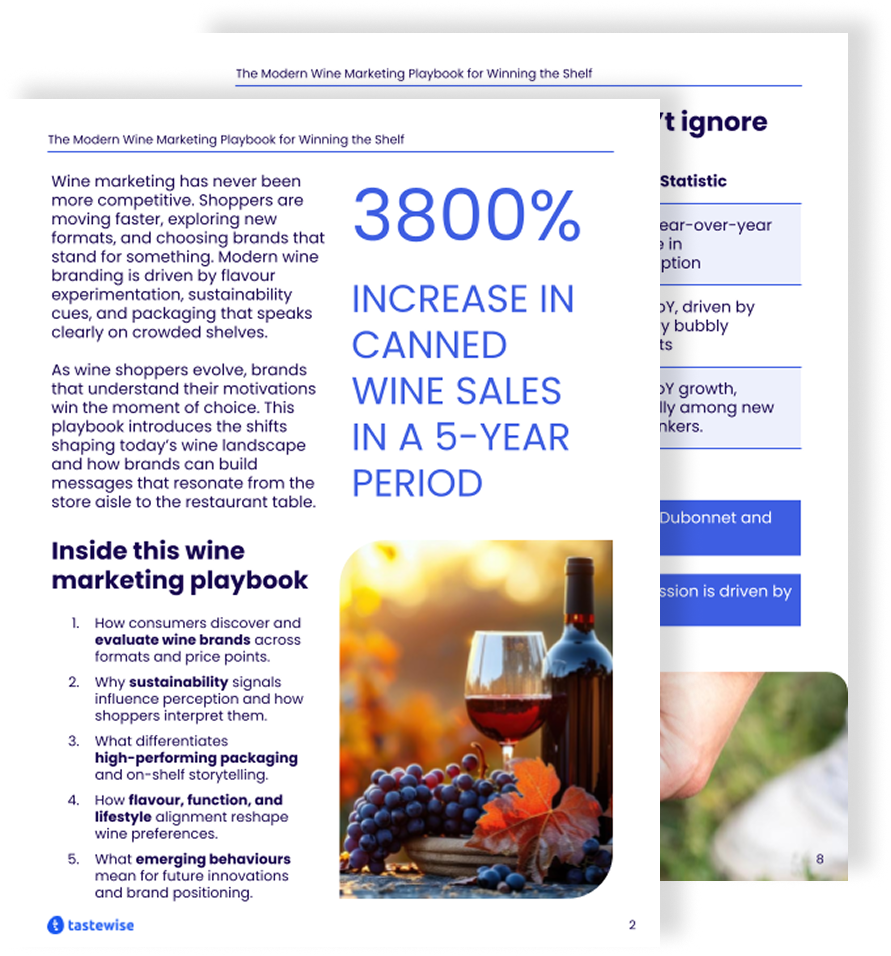
Download the Wine Marketing Strategy 2026 playbook, backed by exclusive consumer data, to win distribution and drive repeat purchase.

shoppers influenced by packaging

growth alcohol-free wine

consumers choosing reduced sugar
Download the report
What’s inside the wine marketing strategy 2026 playbook
From packaging and premiumization to alcohol-free acceleration and reduced-sugar positioning, see where category growth is concentrating.
Win through regional specificity
What are Millennials drinking? Why are Tuscan wines growing? Win premium trade-up with sub-region and grape clarity.
Use flavor-defined niches to capture incremental demand
Capture new wine interest with berry-led and fruit-forward profiles, with cherry leading growth in the category.
Make packaging and format your growth lever
Invest in sparkling, canned, and alcohol-free formats to align with visual-first, occasion-led purchasing, where packaging and new formats are driving growth.
Replace vague wellness claims with ingredient transparency
Lead with reduced sugar, organic certification, and clear sourcing to win today’s consumers. Broad “sustainable” positioning is losing impact as shoppers look for more specific, credible claims.
Turn wine trends into winning campaigns.
Use this playbook to identify the wine trends, formats, and occasions driving real category growth.
What do the pros say about wine marketing in 2026?

Lois Cho, Co-founder, Cho Wines
Wine brands that continue to market around prestige and legacy risk missing the next generation of buyers. Younger consumers are redefining value, prioritizing clarity, format flexibility, and cultural relevance over traditional wine status cues.”Gen Z isn’t chasing prestige… It’s value-driven, rather than prestige-driven.”
Source: Food & Wine coverage of Gen Z reshaping wine preferences.
FAQs about wine marketing trends
The shift towards visual, format-driven decisions (like canned wines) and everyday sparkling wine consumption, moving away from traditional, complex tasting notes.
Modern consumers, especially Gen Z and Millennials, prioritize sustainable packaging, natural fermentation, and low-ABV or botanical-infused options.
Gen Z and Millennials are driving demand for low-ABV, non-alcoholic, and flavor-led wines. They prioritize transparency, visual appeal, and modern formats over traditional cues like terroir or tasting notes.
Data-driven insights help brands understand real consumer behavior, validate product decisions, and build stronger retail and campaign strategies. This allows teams to move faster, reduce guesswork, and align with what consumers actually buy.
Wine brands need to focus on formats, clear positioning, and real consumer behavior data. Winning strategies are built around how people actually buy, across retail, on-premise, and emerging formats like RTD and alcohol-free.