







Unique supplements built on genetic insights promise a formula matched to how one body absorbs, stores and uses nutrients. Direct-to-consumer DNA tests made that promise feel personal, and consumers now expect supplement brands to speak to their own biology. The demand is large. The same Pew survey found that 78% of US adults take at least one supplement, led by vitamins and minerals at 67%.
Marketing personalized health supplements with genetic insights means turning DNA predispositions, such as nutrient absorption traits and metabolic rates, into clear benefit-led messaging. Your genetic data tells you which customers might benefit from a formula. Consumer demand data tells you which benefits they are actively looking for and how they describe them. Tastewise supplies that second layer, so your unique supplements launch on needs consumers already care about.
Key takeaways
- Nearly 4 in 5 US adults (78%) take at least one supplement for their health, according to a 2026 Pew Research Center survey.
- Across the Tastewise US consumer panel, interest in personalized nutrition as a label fell 24% over the past 12 months.
- Specific supplement needs grew over the same period, with metabolism up 26% and anti-aging up 22%.
- GLP-1 consumers over-index on supplements by about 17 times the US average, ahead of every other behavioral audience.
- Early-stage supplement ingredients are moving fast, with grape seed extract up 73% and spermidine up 34%.
- Among muscle recovery supplements, interest in no artificial flavors grew 69%, a clean-label cue sports brands can put on pack.
GLP-1 consumers over-index on supplements more than any other US audience. The 2026 GLP-1 CPG playbook breaks down their consumer trends and the strategies CPG brands are using.
How do genetic insights enhance supplement marketing strategies?
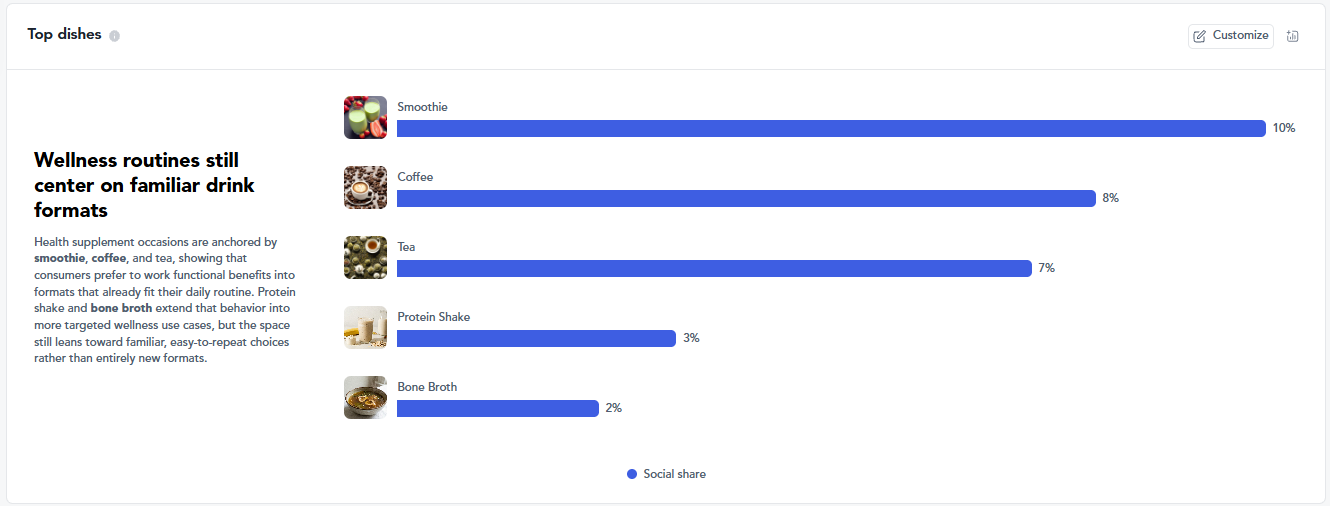
Genetic insights enhance supplement marketing by letting you match each message to a specific metabolic need, absorption rate or lifestyle goal. The message works when it names a benefit the consumer already wants, backed by science they can follow.
The opportunity for unique supplements sits in that match. A DNA report gives you a reason a formula fits a person. Consumer data gives you the words and the need that make the person act.
How does genetic profiling inform the creation of unique health supplements?
Genetic profiling flags predispositions that change how a body handles specific nutrients. Some people carry MTHFR gene variants that affect how the body processes folate, which is why methylfolate formulas exist. Lactase genes shape whether adults digest dairy comfortably, which matters for whey-based protein. Each trait points to a formula decision and a claim for unique health supplements and unique nutritional supplements.
Consumer demand already lines up with several of these traits. Across the Tastewise US consumer panel, interest in folate as a muscle recovery supplement need grew 52% over the past 12 months. Interest in metabolic balance as a supplement need grew 238% from a small base. A brand that maps its genetic panel to these growing needs launches with a message consumers recognize.
What role does personalized marketing play in today’s health landscape?
Personalized marketing works when it names the need. Interest in personalized nutrition as a general label fell 24% over the past 12 months across the Tastewise US consumer panel. Interest in named supplement needs rose over the same period. Metabolism grew 26% and anti-aging grew 22%, while polyphenols grew 21% and creatine grew 20%. The same move toward named benefits shows up across the functional beverage market.
Consumers respond to a specific outcome they can picture. Your consumer marketing should lead with the benefit and use the genetic insight as the proof behind it. The audience matters too. GLP-1 consumers over-index on supplements by about 17 times the US average, and protein prioritizers by about 6 times.
What are the most effective strategies for marketing unique supplements using DNA data?

The most effective strategies pair messaging built on genetic predispositions with plain, transparent education. Consumer demand data then keeps each biological claim tied to the needs and language your buyers use today.
Three moves carry most of the weight for unique supplements. Translate each genetic trait into one benefit. Validate that benefit against consumer demand before you print it. Segment your messaging by audience, since a GLP-1 user and a strength athlete want different outcomes from the same ingredient.
How can brands simplify genetic data to build consumer trust?
A genomic report lists variants, risk scores and pathways. A shopper reads one front-of-pack claim in a few seconds. Bridge that gap with one trait, one benefit and one ingredient per message. “Supports folate use for people with MTHFR variants” is a claim a consumer can follow and a regulator can review.
Trust also depends on how you handle the data itself. 23andMe’s 2025 bankruptcy put genetic privacy in front of millions of test buyers. Say clearly who holds the data, how long you keep it and how a customer deletes it. Clean-label signals reinforce the same message. Interest in no artificial flavors grew 69% among muscle recovery supplements over the past 12 months.
How does Tastewise AI translate real-time market data into tailored campaign messaging?
Tastewise watches consumer demand across social media, recipes, restaurant menus and retail shelves, then resolves it into one dataset. Wise, the Tastewise food ontology, reads “healthy,” “healthier” and “healthiest” as one need. That lets you see the full trend in one view. AI agents then hand your team finished work, such as the retailer deck or the new item one-pager, with every figure carrying its source.
For a supplement brand, that means mapping consumer needs like metabolism, muscle recovery and anti-aging to the traits your DNA test reports. You can see which consumer segments over-index on each need and which ingredients are rising with it. Tastewise holds no genetic data. It shows what consumers want, so your genetic insight lands on a need with momentum.
How do data-driven health solutions perform in real-world marketing scenarios?
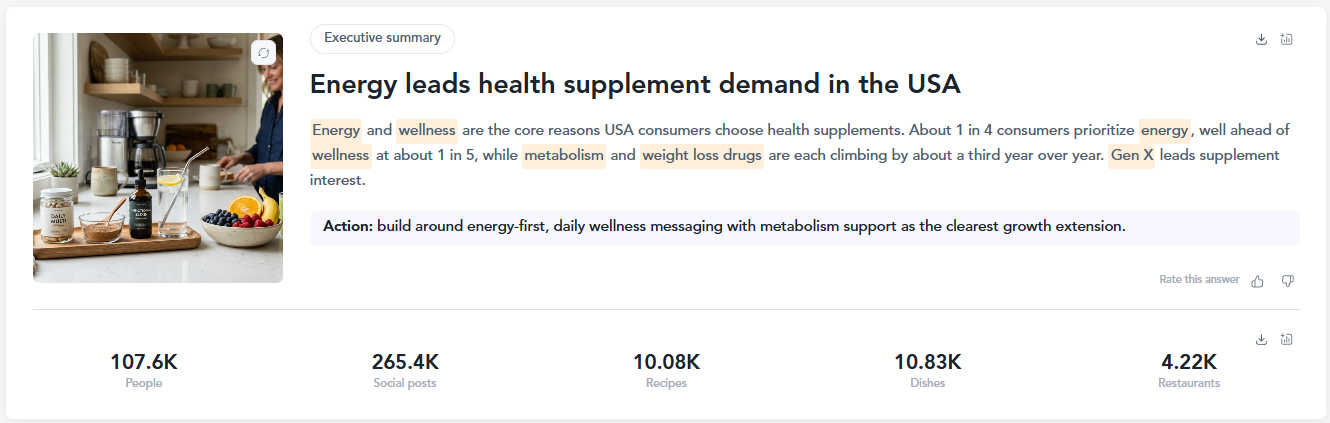
Data-driven health solutions perform best when a brand checks its genetic claims against verified consumer needs before launch. The two scenarios below are illustrative company types, built on real Tastewise consumer data.
Consumer data also shows where formats are moving for unique supplements. Supplements and functional foods are converging, and creatine now appears in kefir drinks and protein shakes. That shift opens drinks, powders and snacks to DNA-based formulas.
How do sports nutrition brands market unique sports supplements?
Picture a sports nutrition brand with its own DNA test for endurance athletes. Its product innovation team owns the next launch. The test results group customers by traits linked to recovery and inflammation. The brand needs to decide which recovery formula to build first and how to describe it.
Tastewise data answers the demand side. Among muscle recovery supplements, interest in glycine grew 53% over the past 12 months, and polyphenols grew 66%. No artificial flavors grew 69%. The brand builds its first line of unique sports supplements around glycine and polyphenols. It leads the pack with a clean-label claim and uses the DNA result to explain who each formula fits. Protein prioritizers, who over-index on supplements by about 6 times, become the first audience for its paid media.
How do health-tech startups build consumer loyalty through data transparency?
Picture a personalized wellness startup that sells a monthly supplement subscription after an at-home DNA test. It needs a reason for customers to stay past the first box. Its plan pairs metabolic insights from each test with full ingredient transparency.
Tastewise data shapes the formula and the follow-up messaging. Interest in metabolism as a supplement need grew 26% over the past 12 months. Early-stage ingredients such as grape seed extract grew 73%, and spermidine grew 34%. The startup adds one early ingredient each quarter and explains it in plain terms against the customer’s own results. Each box arrives with a new reason to stay, tied to functional nutrition needs consumers are already seeking. The startup also shows its data policy on every order page.
Unique supplements win when the genetic insight and the consumer need point to the same benefit. Your DNA data shows who a formula fits. Consumer demand shows what that person wants to hear and when. Bring both into one launch plan, and your unique supplements reach the shelf with a message that holds up.
FAQs about unique supplements
Genetic insights show how a person absorbs and uses specific nutrients, so a brand can match each formula to a real predisposition. MTHFR variants and folate are the best-known example. Interest in folate as a muscle recovery supplement need grew 52% across the Tastewise US consumer panel over the past 12 months.
Lead with one named benefit, back it with the genetic insight and target the audience that wants it most. GLP-1 consumers over-index on supplements by about 17 times the US average, which makes them a clear first audience for metabolism-led products.
Start with the traits your test reports, then check which matching needs and ingredients consumers are seeking. Holy basil grew 53% as a supplement ingredient over the past 12 months, and xylitol grew 111%. Build formulas where a genetic trait and a growing need overlap.
Supplement use is now mainstream, with 78% of US adults taking at least one, according to Pew. Consumers have moved from the general label to specific goals. Interest in personalized nutrition as a term fell 24% across the Tastewise US consumer panel while named needs like metabolism grew 26%.
Data tells you which needs are growing, which audiences care and which ingredients are early. Across the Tastewise US consumer panel, interest in supplements among Sprouts shoppers grew 97% over the past 12 months. That points to where a new personalized line can win shelf space first.





We’d love to learn your goals and see how Tastewise fits
We’d love to learn your goals and see how Tastewise fits
Get a personalized demo
Good taste. Wise move.
Your demo request is confirmed. We’ll reach out within one business day to schedule your walkthrough.
What happens next

See what’s driving demand, then turn it into a sell-in story for retailers and operators.
- Connect consumer panels, market trackers, and agents into one evidence view
- Get the “why” behind what’s changing, with explainable demand drivers
- Walk away with a buyer-ready narrative and next steps to activate
Trusted by


“Tastewise is my secret tool for knowing what consumers want next and why.“