







If you build menus for the Japanese market, the pressure this year is not coming from the dinner rush. Japan menu trends in 2026 are being set at breakfast, on the commute and in the mid-afternoon gap, where diners want something fast, warm and worth the money. The destination meal still matters, but the everyday occasion is where demand is moving. Your competitors are already testing coffee programmes, hot cases and portable formats to catch it. The real question is whether your menu is built for the way people actually eat now.
Key takeaways
- Coffee sits in a trending lifecycle in Japan, with buzz up about 16.5% in the past year across the convenient and on-the-go food conversation. Treat a strong coffee programme as the anchor of your daytime menu, not an add-on.
- Comfort as a menu cue is climbing, with related buzz up around 36% in the past 12 months. Lean warm, familiar and satisfying in your daytime formats rather than novelty for its own sake.
- The morning and everyday occasions are rising together, with morning buzz up about 22% since last year and everyday up around 26%. Design for the weekday routine, not only the weekend treat.
- Premium and upgraded cues are among the fastest movers in the general menu conversation, with upgraded buzz up nearly 40% on last year. You can charge more for the daytime occasion when the quality signal is clear.
The shift behind Japan menu trends
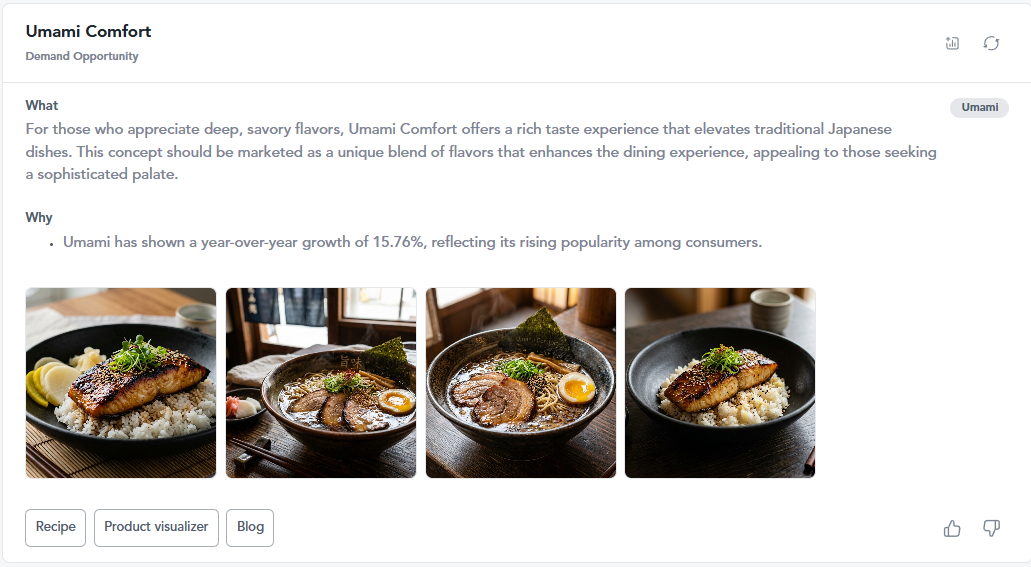
Here is what is happening in plain terms. Japanese diners are compressing more of their eating into short, functional windows. Long hours, small kitchens and single-person households push people toward food they can pick up, eat quickly and rely on. The convenience channel has trained a whole market to expect restaurant-quality food at speed.
The signal in the Tastewise platform is consistent. Across the Japanese convenient and on-the-go conversation, coffee is in a trending lifecycle with buzz up about 16.5% in the past year, drawn from more than 390,000 posts. Comfort cues are up around 36% and the morning occasion is up about 22% over the same window. These are buzz signals rather than sales, but they point steadily in one direction. The daytime routine is where attention is growing.
That creates a specific opening for your team. Most Japan restaurant menus are still built around the destination meal, so the everyday occasion is the space that is easiest to claim. Pair a credible coffee or hot-drink programme with comfort-led, portable food, and you meet demand that is rising while the competition is still forming.
What the Japan menu trends data shows
The clearest finding is that coffee has become an anchor, not an extra. It is the strongest single momentum signal in the daytime conversation, sitting in a trending lifecycle rather than a mature one. In the wider market, Seven-Eleven fresh-brewed coffee passed nine billion cups sold by the middle of 2025, which shows how central the coffee run has become to the daily food trip. For your menu, that means the hot-drink moment is the doorway to the whole daytime occasion.
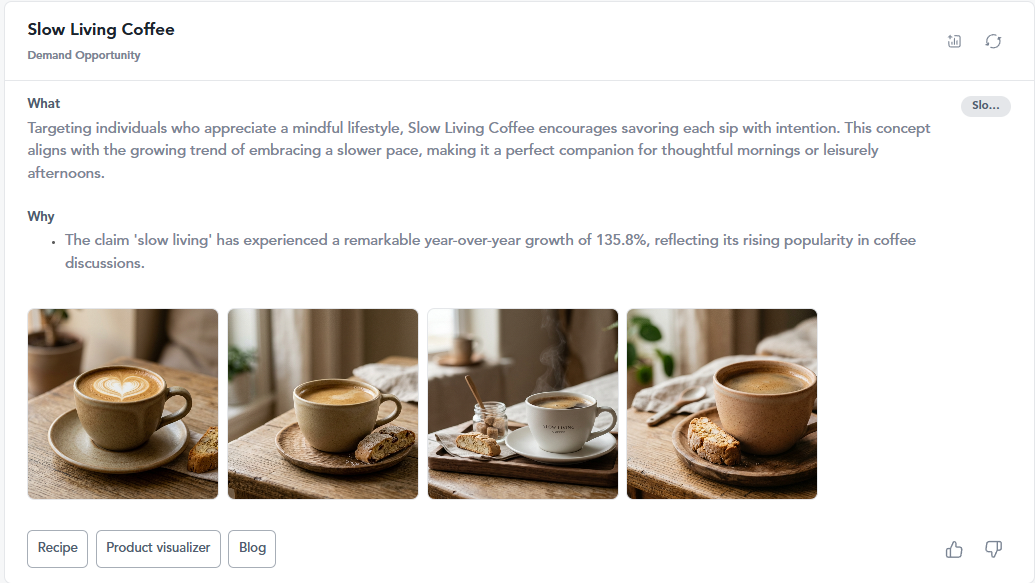
The second finding is that comfort and quality are rising together, not pulling apart. Comfort buzz is up around 36% in the past 12 months, while upgraded and premium cues are among the quickest movers in the general menu conversation. Diners want the familiar, warming option, and they will pay a little more when the quality is obvious. That combination lets you build a daytime item that feels both easy and worth it.
Where Japan restaurant menus have room to move
The gap is the everyday daypart. Japan restaurant menus over-index on the evening meal, so the morning and mid-afternoon windows are thinly served relative to the demand now building there. The risk of waiting is that the convenience channel keeps setting the standard, and it is already moving from grab-and-go retail toward fresh, made-to-order food. If operators own the daytime occasion first, later entrants inherit a category someone else has defined.
The practical move is to treat the daytime menu as its own project. Start with new concept validation on a small set of comfort-led, portable items anchored by a strong coffee or tea programme. Give your operator pitches a clear demand story so franchisees and buyers can see why the daypart is worth the space. The same signals feed straight into menu planning, so the daytime range earns its place on the board rather than crowding it.
How teams put this to work
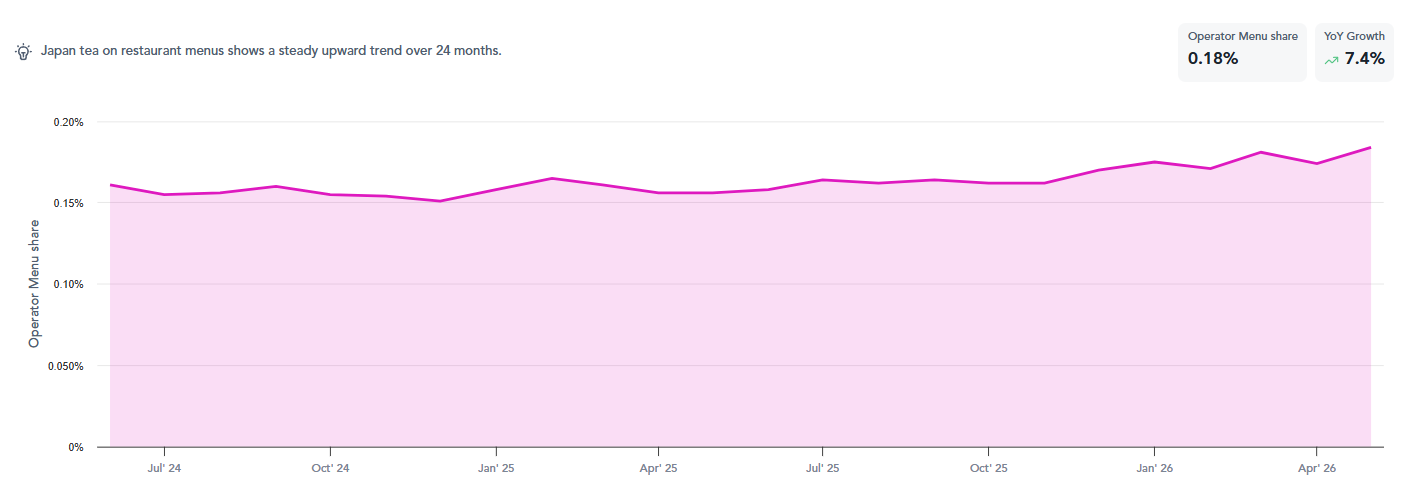
The following is an illustrative scenario, not a named client account. An innovation lead at a multi-unit chain sees the destination-dinner traffic flatten and needs a case for a daytime range before the next planning cycle. Working from live consumer signals, the team confirms coffee, comfort and the morning occasion as the rising themes, then validates three portable, comfort-led items around a hot-drink anchor. The result is a daypart proposal built on current demand rather than last season guesswork, ready for buyer conversations in weeks instead of months.
About this data
The figures here come from always-on intelligence that models billions of real-life food and beverage signals into a live view of the Japanese market. The growth figures in this piece describe momentum in consumer buzz, measured against the same period last year, not sales or the share of people who buy an item. Query scope shapes the exact percentages, so figures are cited within the theme they were pulled from.
One limitation is worth stating plainly. For markets outside the United States, operator and menu-level feeds can be sparse or unreliable, so this analysis leans on Japanese consumer signals and cross-checks them against public reporting on the convenience channel. Read the buzz figures as direction and velocity, and confirm any specific menu-share claim before you build a plan on it.
FAQs about Japan menu trends
The strongest signals sit in the daytime occasion. Coffee is in a trending lifecycle with buzz up about 16.5% in the past year, comfort cues are up around 36%, and the morning and everyday occasions are both rising. Together they point to a convenience-led daypart that most menus still underserve.
Both, and that is the point. Convenience-led occasions are growing while premium and upgraded cues are among the fastest movers in the menu conversation. Japan menu innovation that wins pairs speed and portability with a clear quality signal, so an everyday item can still command a higher price.
Start with the daytime menu as a focused project. Validate a small range of comfort-led, portable items around a strong coffee or tea anchor, then build a demand story your operators can take into buyer meetings. Live signals let you move on rising demand before the convenience channel sets the standard for you.



We’d love to learn your goals and see how Tastewise fits
We’d love to learn your goals and see how Tastewise fits
Get a personalized demo
Good taste. Wise move.
Your demo request is confirmed. We’ll reach out within one business day to schedule your walkthrough.
What happens next

See what’s driving demand, then turn it into a sell-in story for retailers and operators.
- Connect consumer panels, market trackers, and agents into one evidence view
- Get the “why” behind what’s changing, with explainable demand drivers
- Walk away with a buyer-ready narrative and next steps to activate
Trusted by





“Tastewise is my secret tool for knowing what consumers want next and why.“