






Granola trends are no longer being justified by novelty or indulgence. According to Tastewise data, granola demand is holding because both consumers and operators have found ways to keep it functional, defensible, and easy to deploy. The decision has shifted from whether granola belongs on menus or shelves to how it is framed, portioned, and operationalized.
Granola trends overview
- Menu listings 148.8K, up +18.5% YoY
- Social demand +16.9% YoY, stable share
- Unsweetened engagement nearly 2× benchmark
- Weight loss drug mentions +124% YoY
- Average price $12.60, up +3.4% YoY
If your next question is how these trends show up on real menus and shelves, the answer sits in execution. The Winning the Shelf Playbook for 2026 connects demand data to formats buyers already accept.
Demand is holding because granola has a clear operational role
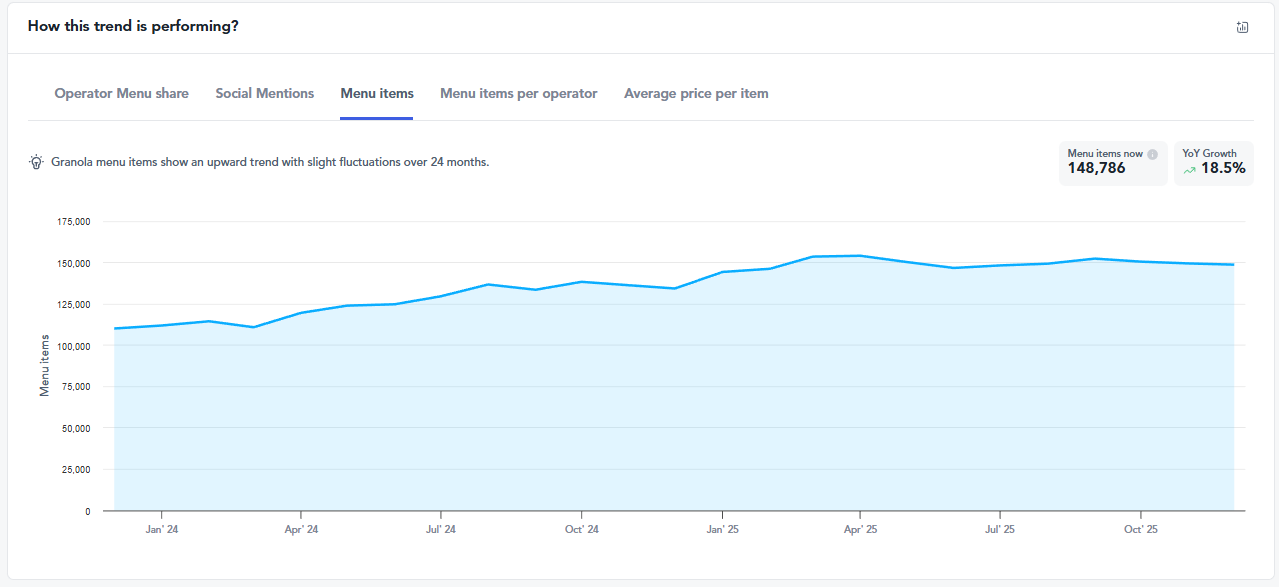
Foodservice data shows granola menu items reaching 148,786 listings, growing +18.5% YoY, while social discussion remains stable with +16.9% YoY growth in the Social F&B panel. This combination points to a mature category that earns its place through reliability rather than excitement. Granola trends support treating it as a permanent menu or portfolio component, not a rotating innovation bet. Brands should plan renovation and usage expansion instead of chasing incremental flavor differentiation.
Unsweetened is the claim that keeps granola permissible
In the Social F&B panel, unsweetened granola significantly over-indexes engagement compared to benchmark, outperforming grain-free, fat-free, and sprouted cues. Consumers are using sugar avoidance as the permission structure that keeps granola viable in their diets. Protein does not neutralize sugar skepticism. Product and marketing teams should lead with unsweetened or no-added-sugar positioning, then layer secondary benefits only where they support a defined need-state.
Weight loss drug behavior is changing portion logic, not demand
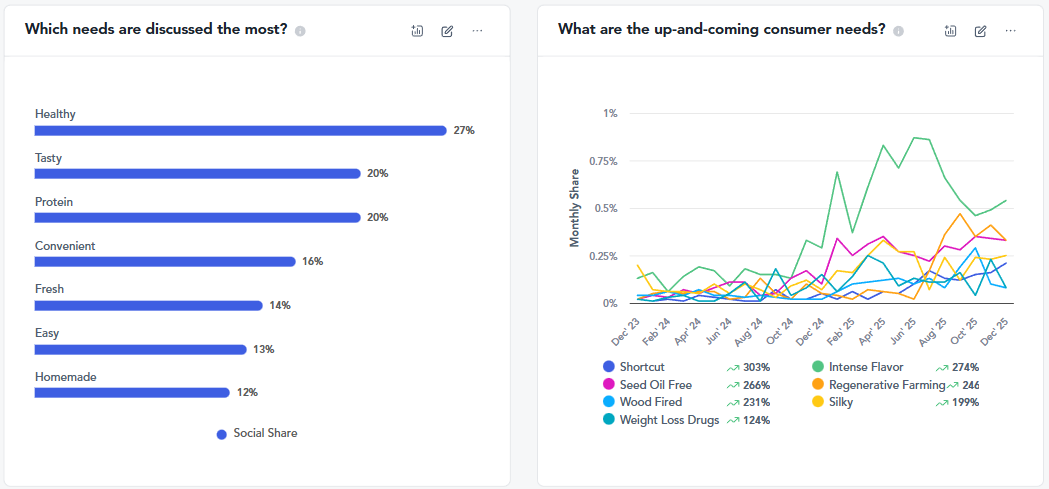
Mentions connecting granola to weight loss drugs are up +124% YoY in the Social F&B panel, without a corresponding decline in menu presence. Consumers are not eliminating granola but they are changing how they eat it. Portion size, satiety, and functional framing matter more than indulgent cues. Granola trends here favor smaller formats, sides, and toppings that fit appetite-managed routines without overclaiming.
Operators are scaling granola through format, not price
Average granola pricing sits at $12.60, up only +3.4% YoY, despite strong menu growth in Foodservice data. Operators are using granola as a volume-stable item rather than a premium margin lever. Pricing elasticity is limited. Brands should build base-plus systems that allow a single granola to flex across bowls, parfaits, and add-ons without introducing price resistance.
Homemade language matters more than homemade execution
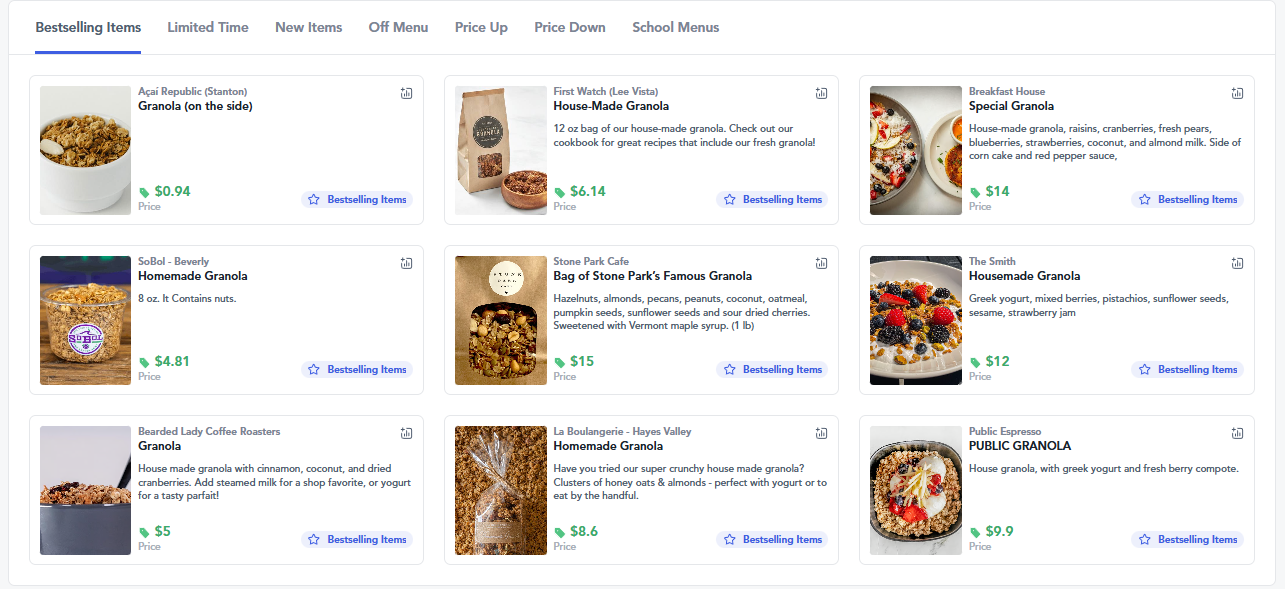
Bestselling menu items frequently reference “house-made” or “homemade,” while pricing and formats remain tightly clustered across operators. Consumers respond to craft cues, but operators need speed and consistency. Granola trends indicate that language and visual cues carry more weight than back-of-house complexity. Brands should support operators with clean-label, unsweetened bases that deliver homemade perception without operational risk.
Granola is functioning as a health anchor, not an innovation platform
Across channels, granola behaves as a flexible health anchor rather than a trend-driven innovation space. Its value comes from adaptability across breakfast and all-day occasions, not constant reinvention. Internal teams should stop debating flavors and align on role. Use Foodservice and Social F&B panel evidence to defend granola as a function-first item that earns its place through repeatability and ease of execution.
FAQs about Granola trends
Granola demand is stable and growing, driven by health-constrained consumers who are reframing usage around portion control and sugar avoidance rather than indulgence or novelty.
Yes. Foodservice data shows granola menu listings growing +18.5% YoY, indicating operators continue to rely on it as a flexible, low-risk menu item rather than a limited-time offer.
Social F&B panel data shows unsweetened granola over-indexing engagement versus protein, grain-free, and sprouted claims, suggesting sugar avoidance is the primary decision driver for consumers.
Weight loss drug mentions linked to granola are rising sharply, but demand is not declining. Consumers are adjusting portion size and usage format rather than removing granola from their routines.
Granola performs best as a base or modular component, bowls, parfaits, toppings, and sides, allowing operators to reuse one product across multiple occasions without price escalation.





We’d love to learn your goals and see how Tastewise fits
We’d love to learn your goals and see how Tastewise fits
Get a personalized demo
Good taste. Wise move.
Your demo request is confirmed. We’ll reach out within one business day to schedule your walkthrough.
What happens next

See what’s driving demand, then turn it into a sell-in story for retailers and operators.
- Connect consumer panels, market trackers, and agents into one evidence view
- Get the “why” behind what’s changing, with explainable demand drivers
- Walk away with a buyer-ready narrative and next steps to activate
Trusted by





“Tastewise is my secret tool for knowing what consumers want next and why.“