






GLP-1 weight loss has moved beyond healthcare headlines and into everyday food choices. More than 13 million Americans are using GLP-1 medications, and about 7 in 10 users now organize their eating habits around weight management. When appetite drops, scrutiny increases. Every product has to justify its place.
As medications like GLP-1 reshape how Americans eat, the ripple effects are already showing up in grocery baskets, portion sizes, and product demand. For CPG brands and retailers, adapting quickly isn’t optional. It’s becoming a competitive advantage. Access the GLP-1 US playbook for retail strategy
Let’s break down what the GLP-1 diet actually looks like in behavior, and where that creates pressure and opportunity.
What’s GLP-1 and why it matters for food
GLP-1 medications reduce appetite and slow digestion. That biological change shows up directly in how consumers evaluate food.
Interest in GLP-1-related eating is up more than 1 in 4 month over month. Growth at that pace signals momentum that teams should monitor closely. Early adoption patterns often set the direction for broader health-driven purchasing. This is the moment to assess which SKUs rely on portion size or indulgence rather than function.
At the same time, about 1 in 14 consumers engaging with this space are highly concentrated GLP-1 users. That clustering means behavior shifts can appear quickly within specific segments before spreading more widely. Brands that track these segments early can adjust messaging and reformulation before category averages move.
When consumers eat less often, they make sharper choices. Products without a clear job are easier to remove from the basket.
Why protein leads the best diet for GLP-1 weight loss
Among GLP-1-aligned consumers, more than 8 in 10 cite protein as a key factor in deciding what to eat. That makes protein the dominant decision driver.
When appetite is reduced, volume no longer communicates value. Function does. Protein reassures shoppers that what they are eating will satisfy them. Products that cannot clearly communicate a functional outcome risk being deprioritized.
We also see momentum in protein-forward formats. Protein snack cups, protein bowls, and protein desserts are all posting double-digit year-over-year growth. That breadth across formats shows this is not confined to one aisle.
For brands, this means auditing portfolios for “empty calories.” If a product cannot answer the question “what does this do for me?” in one line, it is vulnerable. Renovation may be more effective than incremental line extensions.
What is the GLP-1 diet in practice
Searches for “what is GLP-1 diet” and “best diet for GLP-1 weight loss” point to a simple question: what should I eat when I’m not as hungry?
The answer, based on consumer behavior, centers on nutrient density and function.
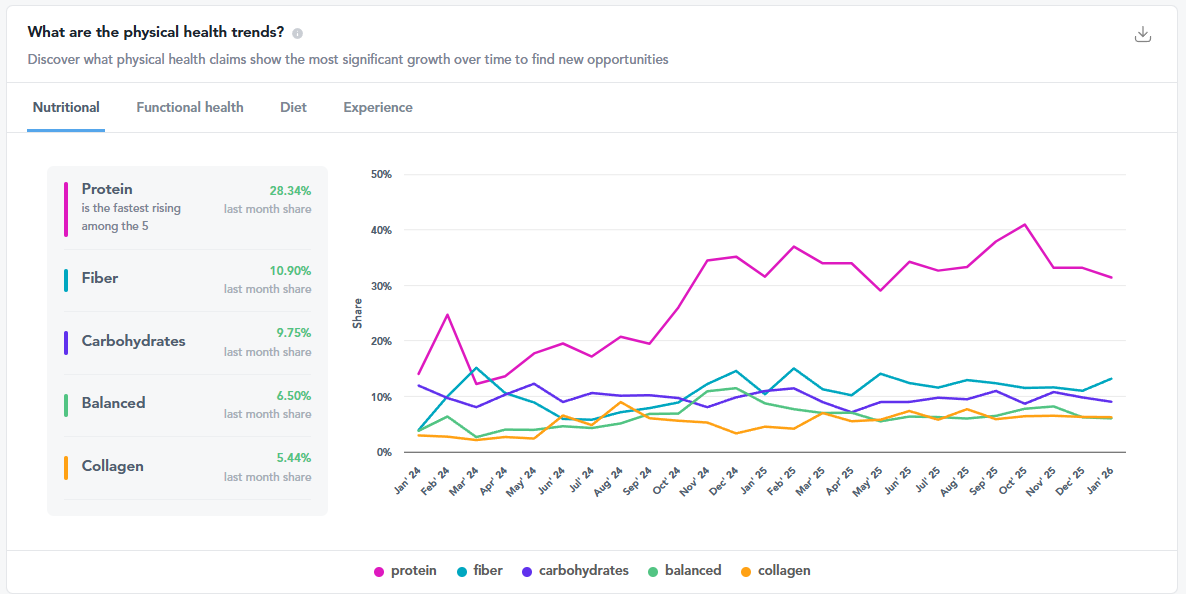
Roughly 1 in 3 consumers in this space prioritize protein as their primary nutrition cue. Protein now acts as a shortcut for satisfaction and staying power. When shoppers scan a shelf, protein signals fullness quickly. Brands should position protein around outcomes such as “stay full longer” or “steady energy,” rather than just listing grams on pack.
Fiber also plays a visible role, with about 1 in 9 consumers connecting GLP-1 eating to fiber-rich foods. That pairing of protein and fiber supports digestive comfort and blood sugar stability. Product teams should explore formulations that combine these cues clearly, especially in snacks and light meals.
Carbohydrates and “balanced” eating still appear in the conversation, but at lower levels. This suggests consumers are not eliminating categories entirely. They are filtering choices more tightly. That creates room for reformulation rather than full category exit.
How cravings and convenience shape GLP-1 diet behavior
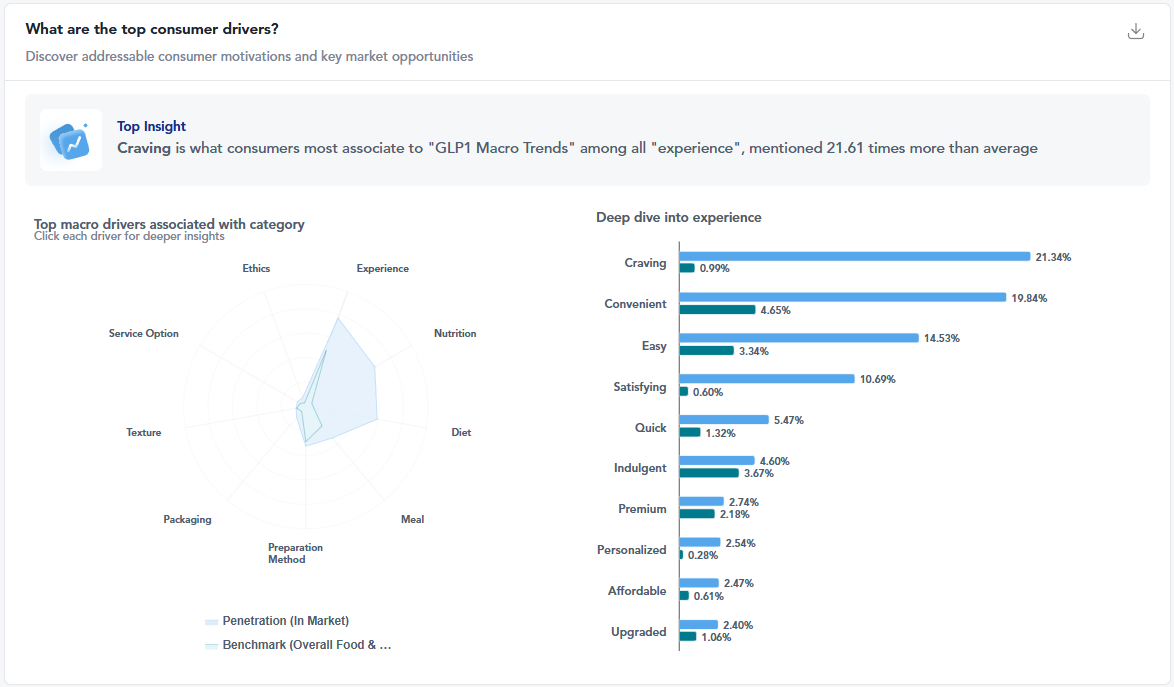
Cravings remain the top experiential driver in this space, showing up more than 20 times above baseline levels. Even with appetite suppression, desire does not disappear.
This is important. Consumers are still motivated by taste and enjoyment, but they are more selective. Winning products combine flavor satisfaction with functional reassurance.
Convenience and ease also over-index strongly. Many GLP-1 users report smaller, more intentional eating moments. That supports formats that are drinkable, portable, or easy to finish. Brands should consider texture and portion size alongside nutrition. A smooth, easy-to-consume product can outperform a higher-protein option that feels heavy or difficult to finish.
Which food categories are most exposed to GLP-1 weight loss pressure
Snack and dessert categories show negative year-over-year movement in this context. That signals exposure for indulgence-led portfolios.
At the same time, non-alcoholic beverages and seasonings hold stronger positions. Beverage formats in particular align well with lower appetite and functional positioning. Drinkable protein and smoothie-based offerings are gaining traction in foodservice, reinforcing that consumers are comfortable with liquid nutrition.
Brands heavily weighted toward indulgent snacks should evaluate whether they can introduce high-protein, fiber-supported alternatives within the same brand architecture. Beverage and hybrid formats may offer a more defensible entry point.
Trending ingredients influencing GLP-1 diet plan innovation
Ingredient growth adds another layer of insight.
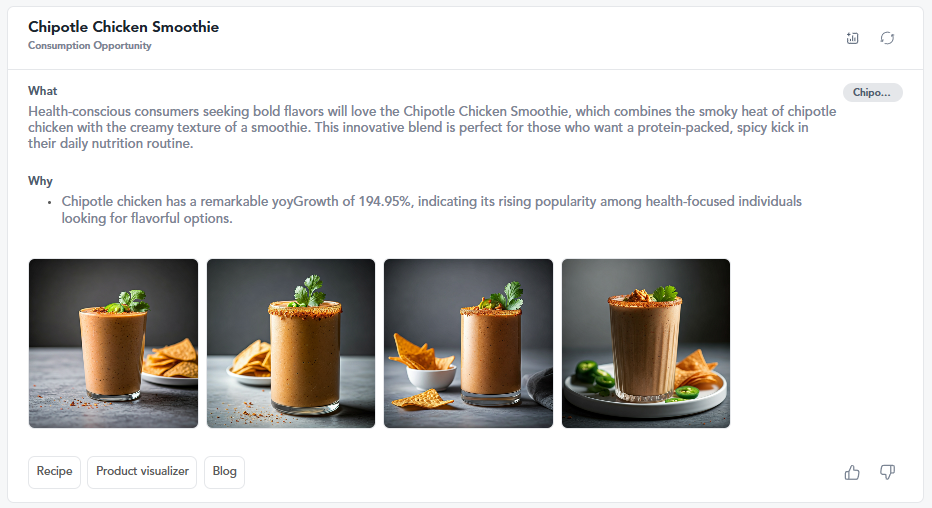
Chipotle is up nearly 2.7 times year over year, while arugula, Greek yogurt, sweet potato, and kale all show growth above 1.2 times. These ingredients combine bold flavor with nutrient density.
This tells us that GLP-1 diet behavior is not about bland restriction. Consumers are pairing protein and vegetables with flavor-forward elements. Product development teams can lean into strong seasoning profiles and familiar whole-food cues while maintaining protein density.
Greek yogurt’s growth is particularly relevant. It delivers protein and digestive familiarity in one ingredient. That makes it a strong base for snacks, desserts, and breakfast products targeting GLP-1 users.
Build your GLP-1 growth strategy. GLP-1 weight loss is reshaping how consumers choose food. See where your portfolio stands and where to focus next. Protein-led formats, smaller portions, and benefit-first claims are redefining shelf decisions. Download the full GLP-1 report to benchmark your portfolio before retailers do.
What GLP-1 diet recipes signal for product development and reformulation
Search interest around “GLP-1 diet recipes” reflects demand for practical guidance. Consumers are looking for meals that are easy to finish, protein-forward, and supportive of digestive comfort.
Recipes centered on lean proteins, vegetables, and moderate portions align with this pattern. Chicken salad, for example, over-indexes more than 4 times within this trend. Familiar, protein-led dishes can be repositioned with clear benefit-led messaging.
For brands, recipe content should mirror product strategy. Show how a product fits into a smaller, functional meal. Make the job obvious. “Keeps you full through the afternoon” communicates more clearly than a generic health claim. This ties to broader healthy food trends in 2026, where consumers increasingly connect high-protein and gut-friendly foods with wellness outcomes.
How to evaluate your portfolio against GLP-1 weight loss behavior
GLP-1 weight loss is concentrating attention on function, protein, and credibility. About 7 in 10 users are organizing their eating around weight management. More than 8 in 10 use protein as a key signal. Cravings still matter, but they are filtered through purpose.
For food and beverage leaders, the next step is a structured audit:
- Can each SKU be described by one clear functional outcome?
- Does protein support a specific benefit?
- Are snack formats aligned with smaller, intentional eating moments?
- Is messaging benefit-led and credible?
Teams that answer those questions directly will be better positioned as GLP-1 weight loss continues to influence how Americans choose food.
GLP-1 adoption is accelerating a broader shift in food consumption, from smaller portions to more intentional purchasing. For the food industry, that means rethinking assortment, pricing strategies, and product innovation. Find out what the latest GLP-1 trends mean for the shrinking basket.
Frequently asked questions about GLP-1 weight loss
GLP-1 is a hormone that regulates appetite and blood sugar. GLP-1 medications mimic this hormone, helping people feel full sooner and stay full longer. Because appetite decreases, eating frequency often drops, and consumers become more selective about what they eat. That increased selectivity is why protein, fiber, and functional foods are gaining attention.
The GLP-1 diet refers to the way people adjust their eating habits while using GLP-1 medications. About 1 in 3 consumers in this space prioritize protein as their main nutrition signal, and many focus on fiber and blood sugar stability. The diet typically includes smaller portions, lean proteins, vegetables, and easy-to-digest foods that provide steady energy.
The best diet for GLP-1 weight loss emphasizes high-quality protein, fiber, and balanced carbohydrates. More than 8 in 10 GLP-1 users use protein as a shortcut for deciding what to eat. When consumers search for the best diet for GLP-1 users, they are usually looking for high-protein, fiber-supported meals that are easy to finish and steady in energy delivery. Meals that combine protein with fiber, such as grilled chicken with vegetables or Greek yogurt with seeds, tend to align well with appetite changes and support muscle retention during weight loss.
GLP-1 diet recipes usually focus more on nutrient density and portion control. Because appetite is reduced, recipes often prioritize lean protein, vegetables, and easy-to-finish formats like bowls or smoothies. Familiar dishes such as chicken salad or protein smoothies work well when they clearly support fullness and steady energy.
Some GLP-1 users report digestive discomfort, so gut-friendly ingredients can be helpful. This is where interest in a glp 1 probiotic approach often appears, especially among consumers looking to manage digestive discomfort. About 1 in 2 consumers in this space associate GLP-1 eating with functional or gut-health foods. Products that combine protein with soluble fiber, fermented ingredients, or gentle digestive support may better meet those needs, especially in snack or beverage formats.




We’d love to learn your goals and see how Tastewise fits
We’d love to learn your goals and see how Tastewise fits
Get a personalized demo
Good taste. Wise move.
Your demo request is confirmed. We’ll reach out within one business day to schedule your walkthrough.
What happens next

See what’s driving demand, then turn it into a sell-in story for retailers and operators.
- Connect consumer panels, market trackers, and agents into one evidence view
- Get the “why” behind what’s changing, with explainable demand drivers
- Walk away with a buyer-ready narrative and next steps to activate
Trusted by





“Tastewise is my secret tool for knowing what consumers want next and why.“