







The UK frozen aisle is under more scrutiny than it has been in years. Supermarket buyers are managing tighter shelf space, compressed promotional windows and a growing list of challenger brands asking for listings in the vegan ice creams category.
If your innovation or sales team is preparing a summer sell-in and relying on last season’s category data, that story will not hold up. Consumer demand for plant-based frozen desserts in the UK is shifting in real time, and the gap between brands who understand that shift and those who are pitching on instinct is already visible on shelf.
Key takeaways
- The “comfort” motivation for vegan ice creams in the UK is up 63.7% in the past year. Consumers are not just choosing plant-based for ethics. They want indulgence, and they want it to feel familiar. Your sell-in narrative needs to lead with satisfaction, not substitution.
- Gluten-free claims on vegan ice creams in the UK are growing 16.4% since last year, while “indulgent” is up 6.4%. The consumer who was once happy with a functional claim alone now wants the full experience. Your product needs to deliver on both.
- Vegan chocolate ice cream dishes in the UK are up 7% on the operator side in the past 12 months, even as overall posts have softened. Foodservice operators are moving faster than retail brands. If your product is not on a delivery menu yet, a competitor’s SKU is taking that proof point into your next buyer meeting.
- Pistachio is the fastest-growing ingredient in the vegan ice cream space, up 42% in the past year with only minimal operator menu presence. It is the clearest white space in the category right now.
Vegan ice creams trend overview
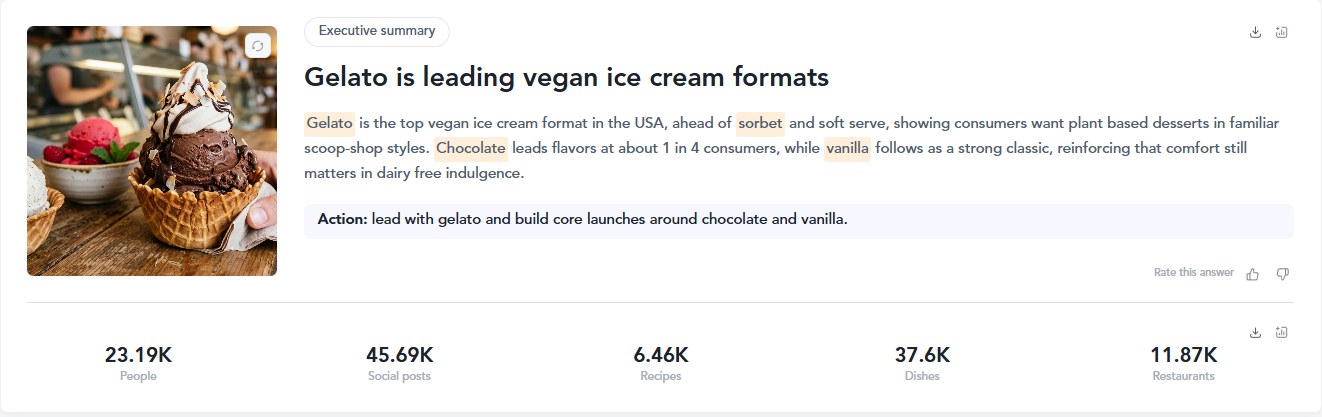
Vegan ice creams in the UK have moved past their novelty phase. The consumer driving this category today is not buying plant-based because it is the only option available. They are buying because the product has earned a place in their regular frozen routine, alongside traditional dairy. What they expect from the experience has changed accordingly: rich, creamy, and indulgent on one hand, with credentials on the other. The UK plant-based food market grew 14% in retail value in 2024, according to the Good Food Institute Europe, and the frozen aisle is where that growth is now concentrating.
Tastewise data from the UK ice cream category shows three consumer signals converging around vegan frozen this summer. “Creamy” is up 18.7% in the past year. “Fresh” is up 23.8%. “Rich” is growing at 52.1% in the past 12 months. Together, they describe a consumer who is no longer comparing vegan ice cream to a dairy alternative. They are holding it to the same standard as any premium frozen dessert and expecting it to compete.
The opportunity this creates is specific. Brands that can close the sensory gap, and communicate that closure clearly on pack and in the retailer pitch, have a credible argument for space in the mainstream frozen fixture, not just the free-from bay. The summer food trends 2026 report maps exactly where that demand is concentrated by format, flavour and occasion.
Buyer mindset and why efficiency beats novelty for vegan ice cream lines
UK supermarket buyers have a simple job: defend category value and grow basket size. A vegan ice cream pitch that leads with a trend name and a sustainability story does not give a buyer what they need to justify the facing. What gives them what they need is evidence that a specific consumer, already shopping their store, is actively seeking this product and not finding it.
That shift away from novelty-led pitches toward demand-validation pitches is the central change in how the UK frozen category is being bought right now. Buyers who were willing to take a risk on plant-based innovation in 2022 have since watched enough SKUs underperform to make them far more selective. The brands winning listings in 2026 are the ones arriving with a consumer demand map, not a concept board.
The Tastewise product innovation solution gives your team exactly that kind of pre-validated brief. It connects real-time ingredient growth signals, lifecycle stages and consumer motivation data to a pitch structure that answers the buyer’s core question: who is asking for this, and what are they willing to pay?
Top 5 summer wellness and plant-based trends driving frozen category growth
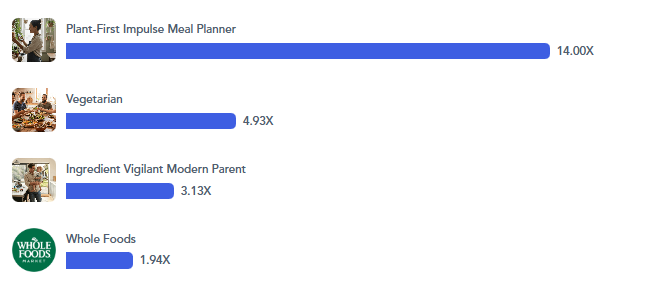
The signals below come from UK consumer data across the vegan ice cream category. Each trend is growing, each has a clear buyer rationale, and each maps to a consumer job your product can own.
1. Creamy indulgence without compromise.
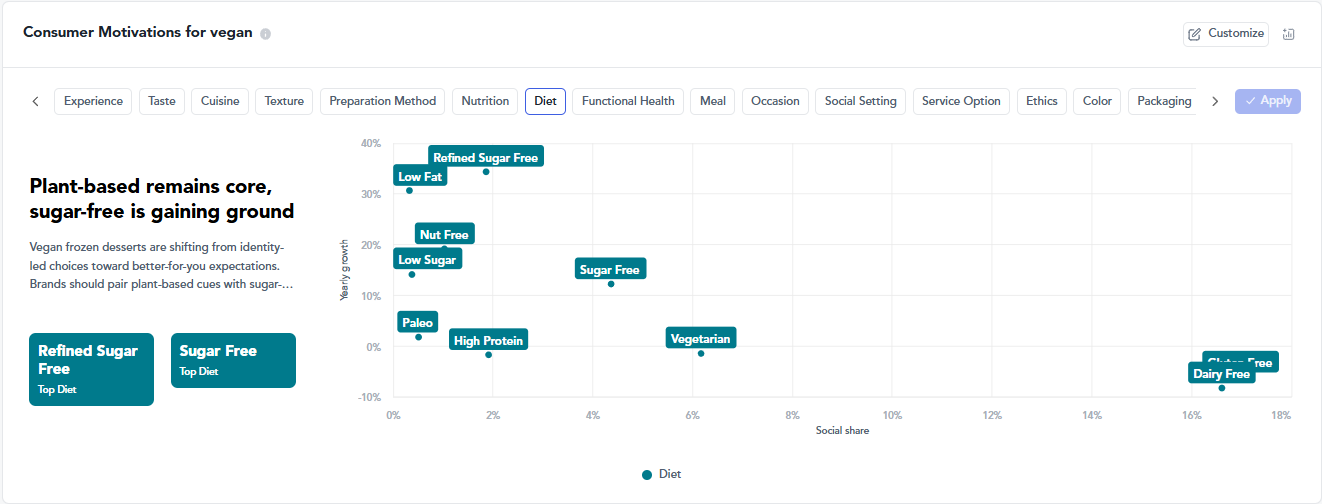
Consumers are combining “indulgent” (21.65% share, up 6.4%) with “gluten-free” (14.98% share, up 16.4%) and “dairy-free” (13.4% share) in the same purchase context. The buyer rationale: this is not a free-from shopper. This is a mainstream shopper who happens to have a restriction. The shift is well documented. Healthy ice cream alternatives are now a mainstream purchase decision, not a niche one, and UK buyers are adjusting their range architecture accordingly.
2. Freshness as a summer trigger.
“Fresh” is up 23.8% in the past year on vegan ice creams in the UK. Summer occasions (12.46% share) and “sunny” cues (up 11.7%) are concentrated in the same cluster. The buyer rationale: these are not all-year-round products. They are high-velocity summer SKUs, and the buyer needs to plan for that velocity window now.
3. Comfort eating, plant-based version.
“Comfort” on vegan ice cream is up 63.7% in the past 12 months. “Cozy” is up 56.5%. These are not summer signals in the traditional sense. They are year-round emotional purchase drivers, which means a vegan ice cream that leans into this has a longer trading window than a purely seasonal product. The buyer rationale: a listing that only moves in July is a risk. A listing that moves from April to October is a fixture.
4. Artisan and premium positioning.
“Artisan” is growing 18% in the past year. “Premium” holds a 3.14% share. “Rich” is the fastest-growing experiential claim at 52.1% growth in the past 12 months. Buyers at premium grocery banners are actively looking for SKUs that justify a higher price point. The buyer rationale: higher margin per unit, fewer promotional clashes.
5. Vegan chocolate as the anchor.
In the vegan chocolate ice cream subset, “tasty” leads at 37% share, with “indulgent” at 28% and “rich” up 55.1%. Chocolate remains the default comfort flavour and the one consumers benchmark hardest. A plant-based chocolate SKU that delivers on texture and depth is the range anchor that gives a buyer confidence to list the more adventurous flavours alongside it.
How to craft an unshakeable buyer story for vegan ice cream blends
A buyer story built on trend alone does not survive the category review. What survives is a story built on three things: who the consumer is, what occasion they are buying for, and what gap currently exists in the buyer’s range.
The data gives you all three. The vegan ice cream consumer in the UK in 2026 is not the committed vegan of five years ago. They are a mainstream dairy-free or flexitarian shopper choosing by experience, not ideology. The occasions are concentrated in summer (12.46% share) and weekends (14.3% share), with a secondary spike around “celebration” (4.09% share, up 22.1%). And the gap? Pistachio has only 5.88% social share in the broader category with 14% growth and almost no operator menu presence. That is a white space that your buyer does not know about yet.
The “why behind the buy” for a retailer is always the same: will this product grow my category value, or will it just replace an existing SKU? A pistachio vegan ice cream, positioned for summer weekend occasions with an indulgent-but-premium story, has a strong case for the former. It attracts the affluent flexitarian demographic that is not fully served by existing lines, and it does so in a flavour profile with real momentum.
The retail sales solution gives your sales team the sell-in kit structure to make this argument clearly, with category data built in from the start.
Proving your premium value with category analytics
Vegan chocolate ice creams attract a specific kind of shopper, and that shopper matters to a buyer’s category P&L. According to UK plant-based consumer data, “premium” holds a 3.14% share on vegan ice cream and is growing alongside “artisan” (5.73% share, up 18%). This is not the value-seeking buyer filling a basket. This is a consumer choosing quality, and willing to pay above the category average price point.
For a brand manager, this is the most important number in the pitch. A premium vegan chocolate SKU in the right positioning does not compete with a mainstream dairy block. It competes with the £6-plus ice cream tier, bringing a net-new shopper into the aisle rather than switching a loyalist. That is a category growth argument, and it is one that a buyer with a margin target will listen to.
The operator data confirms the direction. Crosstown Doughnuts is selling vegan dark chocolate sea salt ice cream at £7.95 per pint on Uber Eats. Chin Chin Ice Cream lists a banana pudding vegan ice cream tub at £3.95 in a high-frequency delivery context. The price range is wide, but the premium tier is active and well-supported. Your retail buyer already knows these brands. Showing them that the same consumer appetite exists in their frozen fixture is the job.
Micro-market targeting across regional and British store footprints
UK supermarket buyers are not managing a national category. They are managing a collection of store clusters, each with its own demographic profile and velocity pattern. A vegan ice cream trend performing strongly in urban London or Manchester will look very different in a rural or suburban store cluster in the East Midlands or South West.
Operator data tells part of this story. Scooperb in Rayners Lane is serving a dense urban vegan audience with sundaes priced from £9.49 to £13.50 and a full vegan menu. Toby Carvery locations in Maidstone and Morley are listing vegan apple pie at under £5.30, serving a different demographic entirely. These are not the same consumer, and a pitch that treats them as one will underperform in both stores.
The custom audiences tool lets your sales team build account-specific consumer demand maps before walking into a range review. You are not pitching a national trend. You are showing a specific buyer the specific consumer they are not currently serving in their specific store cluster.
According to data from the 2026 food and beverage trend forecast, regional demand variation in the plant-based frozen category is one of the clearest gaps between brand strategy and actual shelf performance in the UK. The brands closing that gap are the ones building geo-specific sell-in materials, not repurposing national decks.
What this means for frozen brands in 2026
- For innovation and R&D: Pistachio in vegan ice cream is up 42% in the past year with almost no brand response in the UK. Brownie is growing 40.2%. White chocolate is up 66%. These are not niche signals. They are your next three briefs.
- For category managers: “Comfort” growing at 63.7% means your vegan range has a year-round argument, not just a summer one. Build the range architecture around emotional occasions as well as seasonal timing and your shelf footprint becomes harder to reduce at range review.
- For sales enablement: The whitespace analysis shows Nando’s, Burger King and Morrisons Cafe as the top three operators with no vegan ice cream currently listed. That is a foodservice door your team has not opened yet. The consumer demand is already there.
The future of vegan ice creams
As the summer food trends blog shows, the brands winning seasonal windows are the ones moving from signal to SKU in weeks, not quarters. The UK frozen category is moving toward shorter reset cycles and faster private-label response times. Supermarket own-label vegan ice cream ranges have improved significantly in the past two years, and they are built to respond to exactly the kind of trend data a smaller CPG brand currently has to pay to access.
That speed differential is the core challenge. A brand that spots the pistachio signal today and takes 18 months to execute will launch into a category where three competitors and the supermarket’s own label have already moved. The brands that defend their listings in 2026 and beyond are the ones operating on always-on consumer intelligence, not quarterly insight cycles.
The category analytics that once lived in a research agency’s report are now available in the same platform your product and sales teams use every day. That is not a future state. It is the difference between brands winning shelf space right now and brands planning to win it next year.
FAQs about vegan ice cream trends
The strongest signals are around premium indulgence, with “rich” growing 52.1% in the past year and “creamy” up 18.7%. On the ingredient side, pistachio is the fastest-growing flavour at 42% growth with very little competition on shelf. Vegan chocolate remains the anchor format, with operator dishes up 7% in the past 12 months. The occasion data points to weekends and summer as the primary consumption windows, with comfort and celebration also driving year-round volume.
Start with the category gap, not the product concept. The Tastewise retail sales solution lets your team pull UK-specific consumer demand data, identify the shopper profile your buyer is currently underserving, and build a pitch around a net-new consumer rather than a brand switch. Showing a buyer that their current range misses the affluent flexitarian dairy-free shopper, backed by data on what that shopper is already buying in foodservice, is a more defensible argument than a trend deck.
Consumer motivation signals and ingredient growth rates shift measurably across seasons. The “summer” occasion cluster for vegan ice cream in the UK peaks between April and August, meaning the window to use this year’s data in a sell-in pitch is open now and will narrow fast. Brands using always-on intelligence from platforms like Tastewise pick up directional changes weeks before they show up in quarterly panel data, which is where the timing advantage in retail pitches actually comes from.




We’d love to learn your goals and see how Tastewise fits
We’d love to learn your goals and see how Tastewise fits
Get a personalized demo
Good taste. Wise move.
Your demo request is confirmed. We’ll reach out within one business day to schedule your walkthrough.
What happens next

See what’s driving demand, then turn it into a sell-in story for retailers and operators.
- Connect consumer panels, market trackers, and agents into one evidence view
- Get the “why” behind what’s changing, with explainable demand drivers
- Walk away with a buyer-ready narrative and next steps to activate
Trusted by





“Tastewise is my secret tool for knowing what consumers want next and why.“