





Favorite American foods in 2026 still start with the sandwich and the burger. The growth has moved elsewhere. Every one of the ten most-discussed American dishes lost share of US social posts between October 2025 and August 2026, compared with the same months a year earlier. Smaller regional dishes such as fish fry gained it, and within soul food and Indigenous cooking, dirty rice and hominy are rising fastest.
Restaurants now take the larger share of what Americans spend on food. Food away from home made up 56.3% of US food spending in 2025, according to the USDA Economic Research Service. For a CPG brand or a chain deciding which classic to rework next, the regional and heritage dishes are where consumer interest is building.
Key takeaways
- Sandwiches hold 8% of US social posts about American food, nearly twice the burger’s 4.3%.
- All ten of the most-discussed American dishes lost share versus last year, with cheeseburgers down the most at 20%.
- Fish fry is the only dish near the top still growing, up 5% over the past year.
- In soul food posts, dirty rice is up 63% while fried chicken is down 19%.
- Among Indigenous ingredients, hominy is up 59% and masa harina 33%, while wild rice is down 13%.
- Bison is on roughly 1 in 300 US restaurant menus, and operators that serve it list 12% more bison items than a year ago.
What are the top favorite American foods shaping US dining in 2026?
The top favorite American foods in 2026 are sandwiches, burgers, ice cream, soup and mac and cheese. These five lead US social posts about American food. The growth is coming from smaller regional dishes such as fish fry, New England clam chowder and chicken fried steak.
Scale and momentum have split. The five leaders hold the most attention, yet each has lost ground over the past year. Milkshakes are down 16% and fries 11%, and ribs and brisket have both slipped by more than 10%.
The regional plates are small but heading the other way. Fish fry holds 0.8% of posts, up 5% from a year earlier, and New England clam chowder is up 4%. Further down the list, regional desserts and Southern-style chicken dishes are growing fast from a low base: mud pie is up 45%, French silk pie 41% and Cajun chicken pasta 36%. Each still sits well under 0.1% of posts, so treat them as early signals for product innovation teams to concept test before the category fills up.
Exploring Indigenous culinary traditions and Native American favorite foods
Native American favorite foods are built on ingredients that fed the continent long before European settlement. Corn, beans and squash sit at the center, with wild rice, bison and game alongside. Tastewise tracked US social posts mentioning Indigenous ingredients such as bison, wild rice, tepary beans and blue corn.
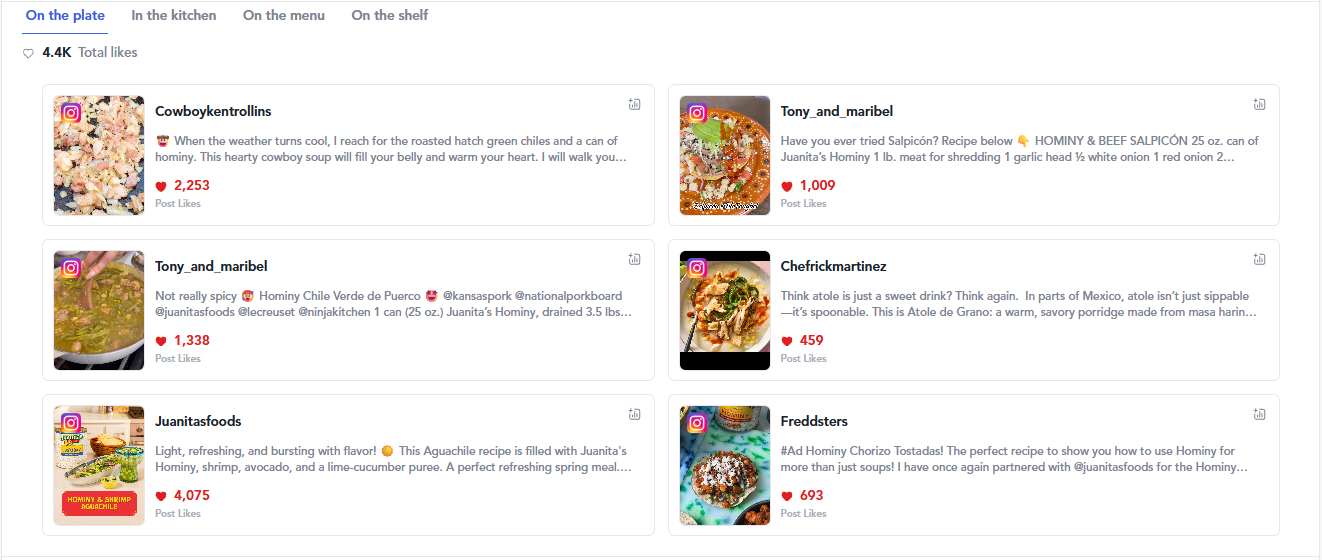
Wild rice dominates that conversation at 5.6% of posts, though its share is down 13% over the past year. The momentum is in corn. Hominy is up 59% and masa harina 33%, and both depend on nixtamalization, the technique Indigenous cooks in the Americas developed to soften corn and make it more nutritious. Mesquite, long ground into flour across the Southwest, is up 28%. Squash (down 25%) and venison (down 20%) are losing ground.
Restaurant menus tell a related story through bison. It appears on roughly 1 in 300 US menus, and that share has slipped 8% over the past year. The operators who still serve it are adding to their range, with 12% more bison items per menu than a year ago, while the average bison dish is 5% cheaper at $19.63. For brands, hominy and masa are the most scalable route into native American favorite foods, and bison works best as a premium menu anchor.
Uncovering cultural staples: African American favorite foods & heritage cooking
Soul food grew out of Black cooking traditions across the American South, and Gullah Geechee cooking carries West African rice traditions along the Carolina and Georgia coast. Most lists of African American favorite foods begin with these two traditions. Tastewise data shows which of their dishes are gaining attention now.
Cornbread leads US social posts about soul food and Southern heritage cooking at 5.1%, up 18% from a year earlier. Gumbo (1.4% of posts) is up 19%, banana pudding 22% and fried catfish 13%.
The sharpest gains are in rice and beans. Dirty rice is up 63% and red beans and rice 20%. Hoppin’ John, the Lowcountry dish of rice and field peas tied to Gullah Geechee kitchens, is up 13%. The fried centerpiece is losing share. Fried chicken still accounts for 4.4% of these posts but is down 19%, the same drop as shrimp and grits, while peach cobbler and sweet potato pie are holding flat.
For retail sell-in, that move toward rice, beans and baked sides gives brands a new story to take to buyers who already stock the classics.
How do demographics influence the top 10 favorite American foods?
Age and gender both change which American classics people keep posting about. Frozen yogurt is up 31% in Gen Z posts about American food and down 39% among Baby Boomers. Mac and cheese has dipped 4% with Gen Z but fallen 19% with Boomers, and burgers are losing share in every group Tastewise tracked here.
Gen Z is reaching for heartier home-style plates. Chicken pot pie is up 29% in their posts and pot roast 12%, while ribs and brisket are both down by about a quarter. Baby Boomers are moving toward diner and deli classics: tomato soup is up 24%, Salisbury steak 16%, stromboli 12% and po’ boys 11%. Fries are up 6% among Boomers against an 11% fall across all consumers.
Tastewise splits US social data by audience, including gender, generation and diet, so you can compare consumer segments before deciding which classic to rework.
Tastewise consumer data: most popular favorite foods among American women
omparing women and men in the same posts shows where the two groups split. Mac and cheese takes 2.7% of posts about American food among US women against 2.4% among men, and cornbread 2.4% against 1.9%. Men post more about burgers, at 4.0% of their posts against 3.0% for women, though burgers are down about 14% with both groups.
The growth differs too. Women’s posts are growing around shared sides and desserts: baked beans are up 17%, banana pudding 13%, potato salad 12% and cobbler 11%. Men’s growth sits in regional dishes, with beignets up 32%, fish fry 11% and fried catfish 9%. For brands, the most popular favorite foods among American women point to sides and desserts as the stronger launch space, while regional mains and fried seafood fit men better.
Ranking the top 10 favorite American foods
The table ranks the top 10 favorite American foods by share of US social posts about American food, October 2025 to August 2026, with the change versus the same months a year earlier.
| Rank | Dish | Share of posts | Change vs last year |
| 1 | Sandwich | 8.0% | -9% |
| 2 | Burger | 4.3% | -15% |
| 3 | Ice cream | 3.4% | -8% |
| 4 | Soup | 3.3% | -5% |
| 5 | Mac and cheese | 2.6% | -7% |
| 6 | Cheeseburger | 2.3% | -20% |
| 7 | Milkshake | 2.0% | -16% |
| 8 | French fries | 1.9% | -11% |
| 9 | Ribs | 1.3% | -14% |
| 10 | Brisket | 0.8% | -12% |
Soup has held up best, down 5%. Just outside the top 10, fish fry matches brisket at 0.8% of posts and is the only dish near the top still gaining share, up 5%.
Brand launch examples: modernizing heritage American favorite foods for retail
Consider a seasoning brand weighing a Southern heritage line for national grocery. The first check is the shelf. Tastewise retail data counts more than 80 brands selling Cajun and Creole seasonings online in the US at an average of $8.34, and only two new products launched in the past 12 months. Another all-purpose blend would struggle there.
The social data points to a more specific opening. Dirty rice and red beans and rice, both central to Black American favorite foods and Creole cooking, are among the fastest-growing dishes in soul food posts, and both are built on a seasoning blend. A line of single-dish blends named for those dishes, developed with cooks from those traditions and crediting each dish’s origins on pack, gives buyers something the shelf does not already have.
Two more scenarios apply the same test to different heritage foods. A pantry brand looking at Indigenous ingredients would start with corn ahead of wild rice. Hominy is up 59% in posts about Indigenous ingredients while wild rice is down 13%, which points to ready-to-cook hominy and masa harina. Sourcing them from Native-owned producers lets the brand state the origin on pack.
A frozen meals brand chasing Gen Z could look past the burger. Chicken pot pie is up 29% in Gen Z posts about American food, while burgers are down 16% in the same group. A single-serve pot pie with a regional filling is a direct test of that shift.
Why should food brands track shifting American favorite foods trends in 2026?

Tracking American favorite foods trends shows which classics are losing share and which regional dishes are gaining it, often before sales data catches up. Brands that act on that signal can launch into growing dishes first. The 2026 trend forecast set out the shifts expected to shape this year, and the 2027 Food Trends Forecast now covers ten trends for next year with every figure sourced.
Translating culturally rich staples into scalable CPG products
Start with a dish that is growing and has a clear format gap. Hominy and masa harina suit shelf-stable dry goods, while gumbo and red beans and rice suit frozen or ambient meal bases.
Build the product with the community it comes from. Source Indigenous ingredients from Native-owned producers where possible, pay cultural advisors for their time and name each dish accurately on pack.
Protect the clean label. Dry seasoning blends, parboiled rice kits and nixtamalized corn products reach long shelf life with short ingredient lists, which makes heritage products easier to place with health-focused buyers.
Future-proofing menus with Tastewise AI intelligence
Operators can use the same signals to time specials. Fish fry is the one dish near the top of the list still growing, which makes it a natural Friday special during Lent. Cobbler is rising in women’s posts and banana pudding in soul food posts, so a rotating fall dessert slot can test the two side by side.
With real-time data, menu planning becomes a weekly decision. Suppliers can bring the same view into operator pitches, showing which regional dishes are gaining before a chain commits a menu slot.
The most-discussed favorite American foods are still the sandwich, the burger and mac and cheese, and none of them is growing. The launches worth making next sit in the regional and heritage dishes gaining share now.
FAQs about favorite American foods
The top 10 favorite American foods in 2026, ranked by share of US social posts about American food, start with sandwiches, burgers and ice cream. Soup, mac and cheese and cheeseburgers follow. Milkshakes, French fries, ribs and brisket complete the list.
Native American favorite foods include wild rice, bison and corn dishes such as hominy. In US social posts about Indigenous ingredients, mesquite is up 28% over the past year.
Favorite African American foods include soul food and Gullah Geechee dishes such as cornbread, gumbo, red beans and rice, Hoppin’ John and peach cobbler. In US social posts about soul food, gumbo is up 19% from a year earlier.
Among US women posting about American food, sandwiches lead with a 6.1% share, followed by ice cream, burgers and mac and cheese. Potato salad is among the dishes gaining share in this group, up 12% on the year.
Fried chicken is still widely discussed, but its share of US social posts about American food is down 17% versus last year. In soul food posts, rice dishes such as dirty rice are growing faster.
omparing women and men in the same posts shows where the two groups split. Mac and cheese takes 2.7% of posts about American food among US women against 2.4% among men, and cornbread 2.4% against 1.9%. Men post more about burgers, at 4.0% of their posts against 3.0% for women, though burgers are down about 14% with both groups.
The growth differs too. Women’s posts are growing around shared sides and desserts: baked beans are up 17%, banana pudding 13%, potato salad 12% and cobbler 11%. Men’s growth sits in regional dishes, with beignets up 32%, fish fry 11% and fried catfish 9%. For brands, the most popular favorite foods among American women point to sides and desserts as the stronger launch space, while regional mains and fried seafood fit men better.
omparing women and men in the same posts shows where the two groups split. Mac and cheese takes 2.7% of posts about American food among US women against 2.4% among men, and cornbread 2.4% against 1.9%. Men post more about burgers, at 4.0% of their posts against 3.0% for women, though burgers are down about 14% with both groups.
The growth differs too. Women’s posts are growing around shared sides and desserts: baked beans are up 17%, banana pudding 13%, potato salad 12% and cobbler 11%. Men’s growth sits in regional dishes, with beignets up 32%, fish fry 11% and fried catfish 9%. For brands, the most popular favorite foods among American women point to sides and desserts as the stronger launch space, while regional mains and fried seafood fit men better.




We’d love to learn your goals and see how Tastewise fits
We’d love to learn your goals and see how Tastewise fits
Get a personalized demo
Good taste. Wise move.
Your demo request is confirmed. We’ll reach out within one business day to schedule your walkthrough.
What happens next

See what’s driving demand, then turn it into a sell-in story for retailers and operators.
- Connect consumer panels, market trackers, and agents into one evidence view
- Get the “why” behind what’s changing, with explainable demand drivers
- Walk away with a buyer-ready narrative and next steps to activate
Trusted by





“Tastewise is my secret tool for knowing what consumers want next and why.“