





Kelia Losa Reinoso is an SEO Content Specialist at Tastewise, where she writes about food and beverage consumer data, menu trends and product innovation.
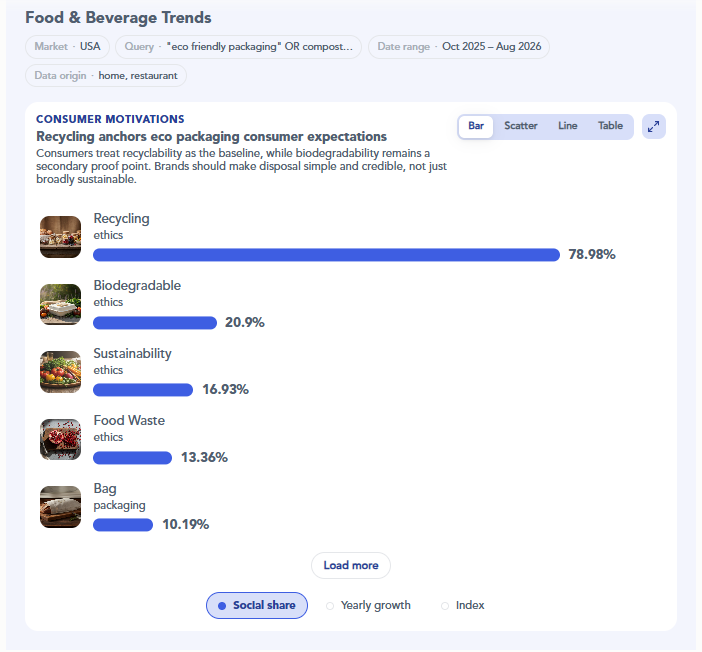
Eco friendly packaging has become a compliance line item for food and beverage brands in 2026. Across the Tastewise US consumer panel, nearly 4 in 5 consumers who engage with eco packaging (79%) connect it to recycling. At the same time, seven US states have passed packaging producer responsibility laws, so the wrong material now carries a direct cost. Real-time consumer intelligence from Tastewise shows which formats, claims and categories shoppers reward before you commit to a manufacturing run.
Key takeaways
- Recycling is the baseline expectation. Nearly 4 in 5 US consumers engaging with eco packaging (79%) tie it to recycling, a share that held steady over the past 12 months (+0.6%).
- Broad green language is losing ground. General sustainability framing fell 23% among these consumers, and the phrase sustainable packaging fell 15%.
- Boxes are the only pack format gaining share, up 7%, while bags and jars each fell 12% and bottles fell 8%.
- Coffee leads the categories, with nearly 1 in 10 eco packaging consumers (9%) linking it to coffee, up 5% since last year. Water consumers over-index 8.6x.
- Eco packaging is reaching mainstream grocery shoppers. Value shoppers over-index 2.5x and grew 9%, while vegan engagement fell 16%.
- Restaurant menus are moving faster than consumer conversation. Menu presence of compostable, recyclable and plastic-free formats rose nearly 7% while social share held flat (-0.3%).
What are the top trends in eco friendly packaging for 2026?
Top trends in eco friendly packaging for 2026 focus on plant-based compostable films, recyclable barrier materials and minimalist custom eco-friendly packaging design. Food and beverage brands are replacing single-use plastics with eco friendly food packaging made from seaweed, sugarcane bagasse and post-consumer recycled paper.
The Tastewise data adds an order of priority. Your shoppers judge eco packaging first on whether it goes in the recycling bin. Biodegradability comes second, cited by nearly 1 in 5 of these consumers (21%), and it slipped 2% over the past year. Tastewise forecasts that consumer interest in eco packaging will hold steady through 2027, which makes it a lasting requirement for your range.
The shift toward bio-based materials and circular systems
Eco friendly packaging boxes are pulling ahead of every other format. Box packaging gained 7% of the eco packaging conversation over the past 12 months. Eco friendly packaging bags lost 12%, jars lost 12% and bottles lost 8%. Most curbside programs accept paperboard, while multilayer flexible bags usually go to landfill.
Eco friendly beverage packaging follows the same logic. Water consumers over-index 8.6x on eco packaging, so cans, cartons and refill formats carry more weight in water than in any other drink. If your product ships in a flexible bag today, test a paperboard carton or a mono-material pouch with a clear recycling mark on the front panel.
Tastewise AI data for packaging innovation
Tastewise reads online reviews, social posts, recipes and restaurant menus together. That view shows what shoppers expect from packaging eco friendly formats before a supplier quote arrives. The clearest current signal is a gap between sources. Consumer social share for eco packaging held flat over the past year (-0.3%), yet menu presence of compostable, recyclable and plastic-free formats rose nearly 7%.
Operators are acting ahead of the conversation, which tells product innovation teams that packaging change is now a supply-side race. A brand that waits for consumer noise to spike will reach shelf after its foodservice competitors.
How do consumer preferences shape eco-friendly food packaging design?

Consumers prioritize structural integrity, easy unboxing and clear end-of-life disposal instructions when evaluating eco-friendly food packaging. Modern shoppers reject greenwashing and reward brands that use custom eco friendly packaging that keeps products fresh without environmental harm.
Consumer data on eco-friendly food packaging
Across the Tastewise US consumer panel, daily drinks anchor the eco-friendly food packaging market. Coffee leads, with nearly 1 in 10 eco packaging consumers (9%) connecting it to coffee, up 5% since last year. Tea grew nearly 6% and over-indexes 3.7x. Spirits grew 4% and sweet snacks grew 4%. Wine fell 8% and fresh fruit fell 5%.
The pattern points to repeat purchases. A shopper who throws away a coffee pod every morning notices the waste daily. That is where a packaging switch earns the most credit.
The audience data shows who is driving it. ShopRite shoppers over-index nearly 4x, and their engagement grew 81% over the past year. Sprouts shoppers over-index 2.4x and roughly doubled their engagement. Wegmans shoppers over-index 1.5x and grew 22%. Values-led groups are fading, with vegan engagement down 16% and vegetarian engagement down 23%. Eco packaging now belongs to mainstream consumer segments at regional grocers, which strengthens your retail buyer story with chains like these.
Durability and sustainability across categories
Eco friendly bakery packaging has the hardest barrier job. It must resist grease and moisture without the fluorinated coatings many states now ban. As of April 2026, 12 states restrict intentionally added PFAS in food service ware, and 10 more are weighing similar bills. Bakery teams should test PFAS-free molded fiber and uncoated paper bags with a compostable window film.
Eco friendly luxury packaging leans on rigid boxes. On US shelves, products carrying box packaging claims average $20.56, against $8.21 for bag claims. A premium paperboard box signals value and recyclability at the same time. Eco friendly cosmetic packaging faces the same recyclability test, though this article stays with food and beverage.
Cameron’s Coffee EcoPods launch story
Cameron’s Coffee, a roaster based in Minneapolis, built its single-serve range around a paper filter in place of a plastic cup. According to the company, its EcoPods use a mesh filter, ring and paper lid made from plant materials such as corn and beets. The pods are certified compostable in industrial facilities and ship in recycled paperboard boxes.
The launch lines up with three Tastewise signals. Coffee is the top category in eco packaging consumption. Boxes are the only pack format gaining share. Shoppers want honest disposal instructions, and Cameron’s prints that the pods are compostable in industrial facilities, with no home composting claim.
The market response is visible on shelf. Tastewise retail data shows Cameron’s Jamaican Blend EcoPods 24-count box holding a 4.6 rating across 150 reviews at $16.97. Compostable pods from Yummy Coffee sit beside it, a sign the format is spreading across the coffee aisle.
The lesson for your brand is specific. Pick the category where waste is visible every day, swap the problem component and state exactly how to dispose of the new pack.
Why is adopting eco friendly packaging essential for green brands in 2026?

Adopting eco friendly packaging reduces carbon footprint, builds brand equity and keeps products in line with tightening environmental regulations. CPG companies that apply best practices for eco-friendly packaging protect themselves against supply chain friction and shifting consumer loyalty.
In the US, the regulation is concrete. Seven states, from California and Oregon to Maine and Maryland, have passed packaging producer responsibility laws. These laws charge brands fees based on the packaging they put on the market. California has begun enforcing its SB 54 requirements this year.
Eco friendly packaging at scale
Here is how to make eco friendly packaging work across a full range. Start by mapping which of your SKUs sell in the seven producer responsibility states, since those packs carry fees first. Then audit every component by material and recycling route, and flag multilayer films and PFAS coatings for replacement.
Run barrier tests for shelf life, moisture and grease on one hero SKU before converting the line. Cost optimization for eco packaging solutions comes from cutting material weight and moving to mono-material formats, which simplify recycling.
Finally, write the claim with the data. Specific claims such as recyclable carton outperform broad sustainability language, which fell 23% among eco packaging consumers. Test the wording in your brand campaigns before it goes on pack.
Eco friendly product packaging ideas
Eco friendly custom packaging works best when it matches the category signal. For coffee, use industrially compostable pods and recyclable paper bean bags. For water and tea, test aluminum cans, paperboard cartons and refill pouches.
For eco food packaging in delivery, move to PFAS-free fiber clamshells and paper bags. Foodservice operators are already adding these formats, as the 7% rise in menu presence shows. For frozen items, replace plastic trays with paperboard trays and sleeves that carry one clear recycling instruction.
Our guide to food trends for businesses explains how teams turn signals like these into a launch calendar.
Eco friendly packaging decisions are expensive to reverse once tooling is ordered. Tastewise gives your team the consumer, menu and shelf data to choose the right material, format and claim the first time.
Frequently asked questions about eco friendly packaging
Eco friendly packaging is packaging designed to be recycled, composted or refilled with less environmental impact than conventional plastic. For most US shoppers it means recyclable, with nearly 4 in 5 eco packaging consumers (79%) tying it to recycling.
Best practices for eco-friendly packaging are specific disposal claims, mono-material formats and PFAS-free coatings. Vague green language is losing traction, with general sustainability framing down 23% among eco packaging consumers.
Paperboard boxes are the strongest idea right now, as the only pack format gaining share among eco packaging consumers (+7%). Compostable coffee pods, aluminum water cans and PFAS-free fiber delivery containers also fit current demand.
You make eco friendly packaging by auditing each component, replacing hard-to-recycle films and coatings, and testing barrier performance on one SKU first. Check state rules early, since 12 states now restrict PFAS in food service ware.
Coffee, water and tea lead eco friendly beverage packaging. Water consumers over-index 8.6x on eco packaging, and tea consumers over-index 3.7x with nearly 6% growth over the past year.
Yes, and restaurants are moving first. Menu presence of compostable, recyclable and plastic-free formats rose nearly 7% over the past year, and Tastewise forecasts steady consumer interest through 2027.


We’d love to learn your goals and see how Tastewise fits
We’d love to learn your goals and see how Tastewise fits
Get a personalized demo
Good taste. Wise move.
Your demo request is confirmed. We’ll reach out within one business day to schedule your walkthrough.
What happens next

See what’s driving demand, then turn it into a sell-in story for retailers and operators.
- Connect consumer panels, market trackers, and agents into one evidence view
- Get the “why” behind what’s changing, with explainable demand drivers
- Walk away with a buyer-ready narrative and next steps to activate
Trusted by



“Tastewise is my secret tool for knowing what consumers want next and why.“