
Business
Eating at Home Trends in 2026: Consumer Behavior & Market Strategy


Eating at home is getting cheaper relative to eating out. The USDA expects grocery prices to rise 2.5% in 2026 while restaurant prices climb 3.7%. That gap shapes what people cook, how they stock the pantry and which products earn a place in the cart.
Eating at home in 2026 is a deliberate choice built on value, comfort and control over ingredients. For food and beverage brands, knowing why people eating at home plan meals the way they do is how you win a bigger share of the grocery basket. Tastewise tracks home cooking across social posts and recipes, so you can see which dishes, ingredients and needs are growing in home kitchens now.
Key takeaways
- Among US consumers posting about home cooking, comfort grew 29% and family grew 18% over the past 12 months, while healthy fell 38%.
- Shortcut grew 191% and pantry grew 44% among home cooks, a sign that people want speed built on staples they keep on hand.
- Convenient is named by 1 in 2 home cooks (50%), and it grew 6% in the past year.
- Broth grew 19% and black pepper grew 25% among home cooks, while butter grew 9% and beef grew 7%.
- Lunch at home fell 30% and breakfast fell 20% as occasions, while weekday cooking grew 10%.
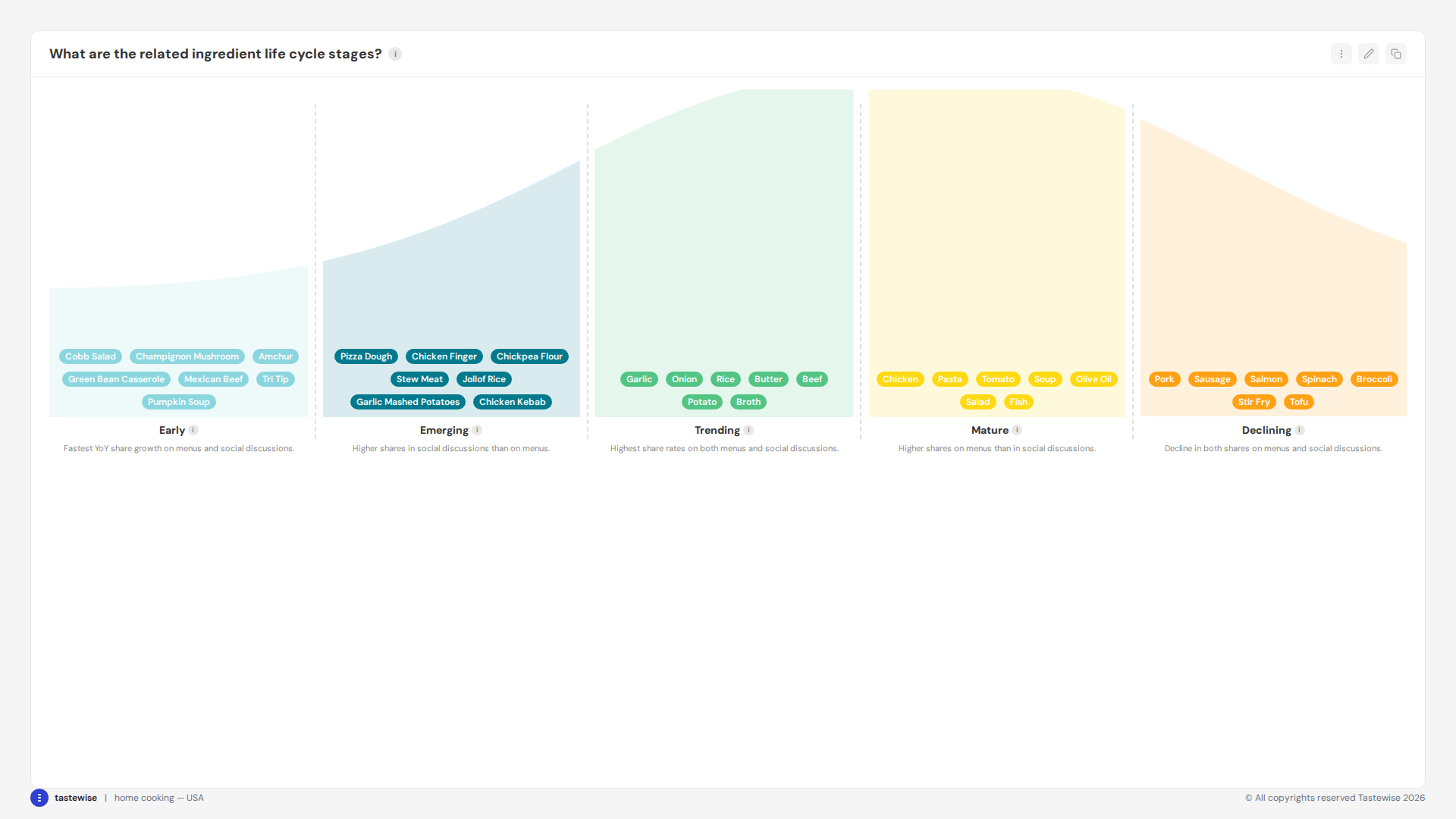
- Jollof rice, chickpea flour, stew meat and garlic mashed potatoes are emerging in home kitchens.
What are the key consumer motivations driving eating at home trends in 2026?
The motivations behind eating at home in 2026 center on saving money, comfort, family routines and speed. People still cook to control what goes on the plate, yet they now talk about home cooking as a source of comfort more often than as a health project.
Across the Tastewise US consumer panel, homemade comes up for about 4 in 5 consumers posting about home cooking (83%), and convenient for 1 in 2 (50%). Easy grew 6%, quick grew 3% and fresh grew 17%. Comfort grew 29% and cozy grew 52%. Healthy fell 38% and clean eating fell 47% as stated reasons. Healthy eating begins at home for many people, but the words they use for it have changed.
How do financial savings and value perceptions shape home cooking habits?
Price is the starting point. With restaurant prices forecast to rise faster than grocery prices in 2026, more shoppers ask how much money do you save eating at home and whether cooking at home is cheaper than eating out. The honest answer depends on the meal, but the gap between the two is widening in favor of the home kitchen.
Home cooks respond by building meals from staples. Among US home cooks, pantry grew 44% and shortcut grew 191%. Affordable grew 5%, and one pot meals grew 5%. Broth grew 19% as a base for soups and stews. CPG brands can position sauces, broths and pantry kits as the shortcut that makes a cheaper meal taste like a restaurant one. That is the most direct way to answer the question does eating at home save money with a product.
Why do health-conscious shoppers view home kitchens as essential for wellness?
Home kitchens give people control over portions and ingredients, which is why many believe cooking at home is healthier than eating out. The way they describe that control is shifting. Fresh grew 17% among home cooks, while healthy fell 38%, weight management fell 36% and gut health fell 27%.
People are cooking with real ingredients and talking less about diets. Garlic, onion, olive oil and potatoes all grew among home cooks. Practical solutions for eating healthier at home now look like fresh produce, simple proteins and a well-stocked pantry. Brands that make it easy to create a healthy eating environment at home without diet language fit the mood. For the personalized side of this trend, see our article on personalized nutrition at home.
How can food brands decode shifting dayparts and household dining occasions?

Food brands decode home occasions by tracking recipes, social meal posts and ingredient pairings by daypart and household. Seeing solo and family meals separately helps CPG teams set portion sizes, packaging and convenience claims.
Dinner is still the main home occasion, mentioned by nearly 1 in 3 home cooks (29%). It fell 11% over the past year, and the other dayparts fell faster. Weekday cooking grew 10%, slow cooked meals grew 20% and sheet pan meals grew 13%. Home cooks want weeknight dinners that take little hands-on time.
Texture tells the same story. Creamy grew 29% and crispy grew 23% among home cooks, and rich, buttery and melty textures are among the fastest risers. Home cooks are making comfort food, and they want it to taste like a treat.
How are solo dining and family meal routines evolving across dayparts?
Eating breakfast at home fell 20% as an occasion among home cooks, and eating lunch at home fell 30%. Hybrid workers still eat at home during the day, but they post less about it, which points to quick, routine meals.
Evening meals are moving toward the family table. Family grew 18% and date night grew 25%. Family eating dinner together at home is the occasion that is gaining. Eating alone at home is a smaller signal: single serve is mentioned by 0.1% of home cooks, though it grew 12%. Brands can serve both with family-size kits and single-portion add-ons built on the same recipe.
How does Tastewise AI translate home cooking data into actionable market clarity?
Tastewise reads home recipes and social posts alongside restaurant menus and retail products in one connected dataset, refreshed daily across 72 markets. A recipe for stew, a post about a slow cooker dinner and a broth product on shelf read as one story about comfort cooking.
The lifecycle view then shows what is coming next. Pizza dough, chicken fingers, chickpea flour, stew meat, jollof rice and garlic mashed potatoes are emerging among US home cooks. Cobb salad, green bean casserole, tri-tip and pumpkin soup are at the early stage. CPG innovation and marketing teams use this to see which dishes their products can support.
What actionable strategies enable CPG brands to win the at-home eating occasion?
Winning the at-home occasion means pairing real-time kitchen signals with easy, restaurant-style products and clear value messaging. Brands that give home cooks practical solutions for eating well at home earn repeat purchases.
How do CPG product developers utilize AI insights to innovate for home cooks?
Picture a sauce and broth brand planning its next launch. Broth grew 19% among home cooks, slow cooked meals grew 20% and stew meat is emerging. Jollof rice is emerging too. The team develops a ready-to-use jollof simmer base and a rich stew broth for slow cookers, each built for a weeknight dinner with one pan.
A frozen team can follow the chicken finger and garlic mashed potato signals with a crispy, family-size kit. Both concepts use real home cooking data to target eating dinner at home. Product innovation teams use this read to choose which concept goes to pilot.
How do brand marketers align packaging claims with active consumer health and value searches?
Front-of-pack copy should speak to comfort, speed and value. Among home cooks, comfort grew 29%, shortcut grew 191% and affordable grew 5%. Healthy fell 38%. A pack that says “weeknight comfort in 20 minutes” fits current language better than a diet claim.
The benefits of eating at home can still lead, framed around fresh ingredients and family meals. Your consumer marketing team can test copy against specific consumer segments such as families or solo diners. For more on planning these campaigns, read our guide to food marketing strategies.
Eating at home in 2026 runs on comfort, family dinners and pantry shortcuts. Brands that build for those needs, and track how they change, will earn a steady place in the home kitchen.
FAQs about eating at home
In 2026 the gap favors home cooking. The USDA forecasts grocery prices to rise 2.5% this year, compared with 3.7% for restaurant prices.
Cooking at home gives you control over ingredients and portions. Among US home cooks, fresh grew 17% as a stated priority over the past 12 months.
Lower cost, more control over ingredients and more family time. Among US home cooks, family grew 18% and comfort grew 29% over the past year.
Chicken, rice, pasta and soups lead. Broth grew 19% among home cooks, and jollof rice, stew meat and chickpea flour are emerging.
Dinner leads, mentioned by nearly 1 in 3 home cooks (29%). Lunch fell 30% and breakfast fell 20% as home cooking occasions.
Sources cited in this article
- grocery prices to rise 2.5% grocerydive.com
Cite this article
Reinoso, K. L. (2026). Eating at Home Trends in 2026: Consumer Behavior & Market Strategy. Tastewise. https://tastewise.io/blog/eating-at-home-trends


