





CPG influencer marketing is the practice of paying content creators to put your product in front of their audience, and it now sits inside brand planning rather than beside it. A flavor that surfaces in creator content on Tuesday reaches a category manager’s inbox by Friday.
That compression is the reason influencer marketing for CPG brands rewards timing over reach. This guide covers what the discipline is, what it delivers, how to build the strategy, and how to pick the creators and platforms that move trial and repeat purchase.
Key takeaways
- CPG influencer marketing works when creator selection is tied to demand signals rather than follower counts, because a flavor peaking in creator content can already be past peak by the time a campaign ships.
- Dubai chocolate shows the timing problem. Across Tastewise US social signal data for Gen Z, conversation volume around dubai chocolate fell about 22% since last year while it held roughly 4.5% menu presence, so operators were still building the trend as creator attention thinned.
- Hot honey is the live window. Gen Z conversation volume rose about 17% in the past year at similar menu presence, which makes it the better subject for co-branded creator work right now.
- Functional claims outlast novelty ones. Buzz around protein among Gen Z rose about 8% in the past 12 months while buzz on “trendy” as a claim fell by more than half, so creator scripts built on novelty alone have the shortest shelf life.
- Long-term creator partnerships move trial and repeat better than one-off posts, because repeated exposure from the same voice reads as a habit rather than an ad.
- Disclosure is a compliance requirement. The FTC treats free product, affiliate commissions and ambassador arrangements as material connections needing clear disclosure in the same medium as the endorsement.
What is CPG influencer marketing?
CPG Influencer Marketing is a dynamic strategy within the CPG marketing spectrum, focused on leveraging influential content creators to promote products.
This marketing approach capitalizes on the trust and rapport influencers have with their audience, encouraging organic interest and engagement towards the CPG brands.
Unlike traditional CPG marketing tactics which might rely heavily on mass media advertising, influencer marketing provides a more personalized and relatable touch to brand promotion.
By aligning with influencers who share the brand’s values and aesthetic, CPG companies can authentically introduce their products to a receptive audience, driving awareness, and ultimately, consumer action.
Benefits of influencer marketing in the CPG industry
There are a couple of benefits to incorporating influencer marketing into your CPG marketing strategy. Here are a few of them:
- Enhanced brand awareness: Popular influencers can introduce your brand to a wider audience, particularly those who may not have been exposed to your products before.
- Increased credibility and trust: Consumers often trust recommendations from people they follow online more than traditional advertising. Partnering with the right influencer can add a layer of authenticity and credibility to your brand message.
- Targeted audience reach: Influencers cultivate a captive audience with shared interests so aligning with those who match your target market puts your message directly in front of receptive consumers.
- Content creation and storytelling: Influencers are great at creating engaging content that resonates with their audience. This can be a valuable asset for CPG brands, as influencers can help develop creative and compelling ways to showcase your products in real-life.
- Boost sales and conversions: Effective influencer marketing campaigns can directly impact sales by driving product interest and purchase intent.
CPG influencer marketing strategy and ideas

Developing a successful CPG influencer marketing strategy requires careful planning and execution. Here are some important steps to consider:
Define your goals
Identify what you want to achieve with your influencer marketing campaign. Do you want to increase brand awareness, drive product trials, or boost sales? Having clear goals will help you select the right influencers and measure the success of your campaign.
Identify your target audience
Understanding your ideal customer is crucial. Do the right market research for your specific brand. Analyze demographics, interests, and online behavior to pinpoint the influencers your target audience follows and trusts.
Choose the right influencers
Follower count isn’t everything. Look for influencers who align with your brand values, know your target audience well, and create high-quality, engaging content.
Write the creator guidelines
Give the creator the campaign goal, the audience, the content format and the claim you want carried. Name the claim explicitly, because a protein line and a novelty line produce different scripts and different repeat rates. Include the disclosure wording you expect and where it has to sit in the caption.
Track and analyze results
Monitor key metrics such as engagement rates, website traffic, and sales conversions to assess the effectiveness of your campaign and make adjustments as needed.
Tips for using influencer marketing in the CPG industry
Here are some tips to optimize your CPG influencer marketing efforts:
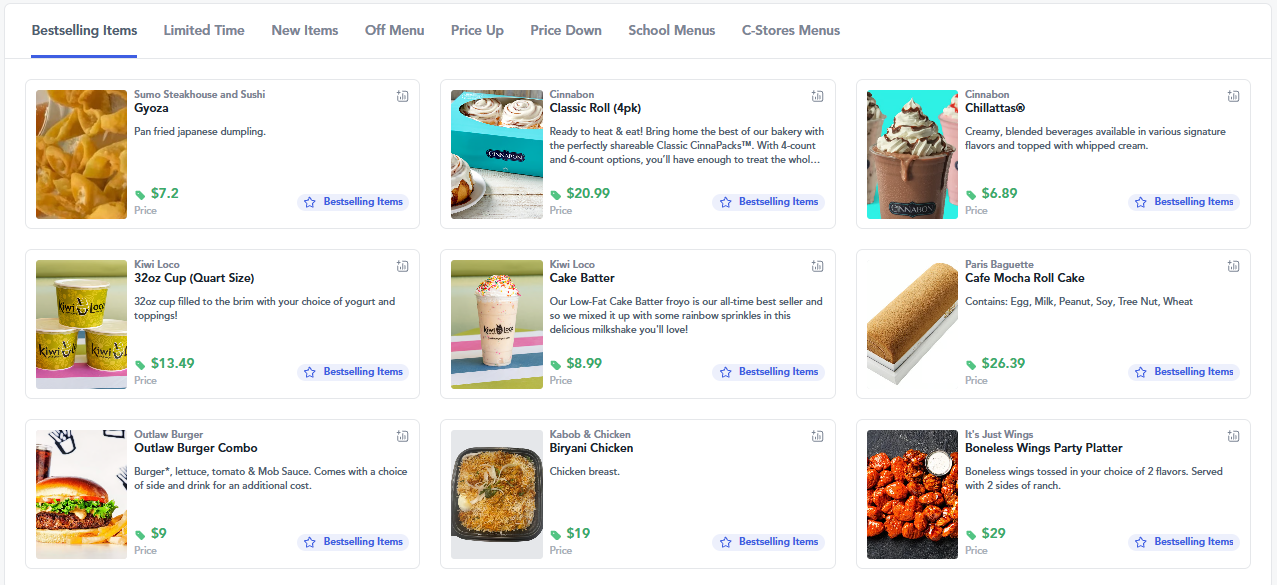
- Lead with demand signals: Tie creator selection to what is actually moving. The Tastewise live trend tracker shows which flavors are climbing and which have already turned, and the Marketing Agent builds the campaign around the ones with room left to run.
- Go beyond the post: Social media supports more than a single post format. Own your slice. Explore co-creating content series, hosting interactive challenges, or inviting influencers to participate in product development processes.
- Embrace different platforms: While Instagram is a popular platform for CPG influencer marketing, consider other channels like TikTok, YouTube, or food blogs to diversify your reach and cater to audience preferences.
- Focus on long-term partnerships: Building long-term relationships with a select group of relevant influencers allows for deeper brand integration and builds trust with the audience.
- Prioritize transparency: Always disclose sponsored content and avoid misleading advertising practices.
Maximizing ROI through social media influencer marketing and CPG strategies
Social media influencer marketing and CPG planning now run on the same input, which is why influencer marketing for CPGs belongs in the annual plan rather than the campaign budget. The gap worth watching sits between creator attention and actual menu or shelf presence.
Dubai chocolate makes the point. Across Tastewise US social signal data for Gen Z, it carried the highest buzz share in its set while conversation volume dropped about 22% since last year. Menu presence held at roughly 4.5%, with Starbucks running an iced dubai chocolate mocha, Shake Shack a dubai chocolate pistachio shake and IHOP a full dubai chocolate pancake stack. Operators were building the trend as creator attention thinned. A brand briefing creators on dubai chocolate today is buying the tail of that wave.
Creator selection and platform strategy
Working with social media influencers for CPG campaigns on TikTok and Instagram builds proof around a specific SKU rather than the brand in general. Hot honey is the open window here. Gen Z conversation volume rose about 17% in the past year at similar menu presence, and it is already running on the McDonald’s hot honey McCrispy and the Dunkin’ hot honey bacon sandwich, which gives creators a reference point consumers recognize.
Pair the roster with the claim doing the work. Buzz around protein among Gen Z rose about 8% over the past 12 months while buzz on “trendy” as a claim fell by more than half. A cottage cheese brand such as Good Culture gets more out of a creator scripting a 19-gram protein breakfast than out of a novelty reveal, and matching that script to the right consumer segments decides whether the spend lands.
Integrating social channels
Broader social media marketing for CPG work pays off when one creator asset carries across paid, retailer media and the product page. A CPG social media calendar built that way turns a single shoot into shelf-adjacent proof, which matters because the online grocery aisle keeps taking share. USDA Economic Research Service analysis cites projections of online grocery reaching roughly 15% of total grocery sales in 2026, up from close to 9% in 2020, per the ERS report on online grocery shoppers.
User-generated content is the cheapest way to keep social media for CPG performance running between paid flights. Repost customer content under the same claim the creators carried, and feed the winning angle into your retail sell-in story so the buyer sees velocity and demand evidence in one place. Teams running this as a standing motion tend to house it inside consumer marketing rather than treating each launch as a fresh brief.
Conclusion
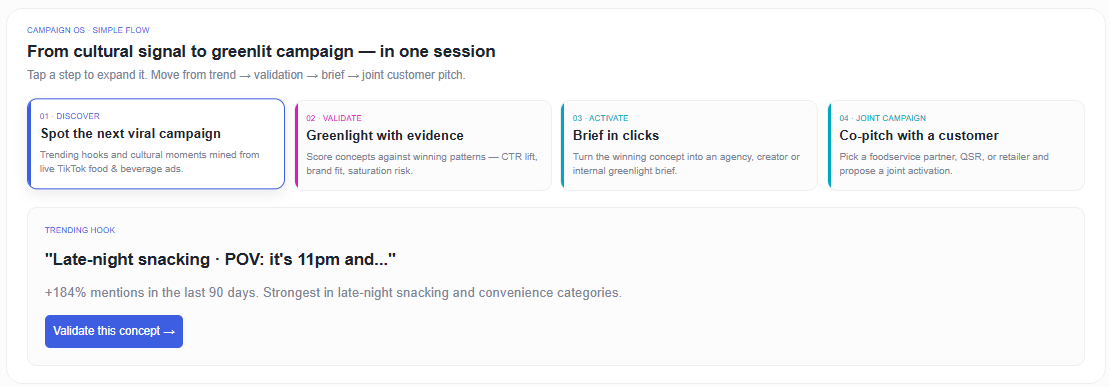
CPG brands can work through several CPG marketing challenges with creator content, provided the flavor and claim are chosen from live demand signals rather than from what looks busy on the feed. Dubai chocolate and hot honey sit at similar menu presence and move in opposite directions, and that difference decides which campaign returns.
Pick the claim first, brief the creators around it, then carry the winning asset into retailer media and your sell-in story. That sequence is what turns creator spend into distribution.
Frequently asked questions about CPG influencer marketing
Cost tracks audience size and scope, from product-only arrangements with micro creators to five-figure fees for established food accounts. Micro and mid-tier creators usually return better cost per trial for a single SKU. Budget for content licensing separately if you plan to run the asset as paid media.
Yes. Track code redemptions, retailer product page traffic and repeat purchase rate alongside engagement. Watch the claim as well as the creator, since buzz on “trendy” among Gen Z fell by more than half in the past year while protein buzz rose, which tells you which scripts hold up.
The FTC treats payment, free product, affiliate commissions and ambassador deals as material connections that require disclosure. Use plain wording such as “Ad” or “Sponsored” at the start of the caption and in the same medium as the endorsement. Tags like #collab or #gifted on their own do not meet the standard.
Start from the flavor or claim you want to own, then find the creators already posting it credibly. Check whether their audience matches the retailer or region you are trying to move, and look at comment quality rather than follower count. Creators with a track record in your category need less briefing and produce fewer compliance problems.
Pick one claim, one format and one platform, then run it long enough to compound. Growth comes from repetition against a rising signal, so choose a flavor with room left rather than one at peak, as hot honey is at roughly 17% growth in Gen Z conversation volume while dubai chocolate is down about 22%. Keep a standing creator roster instead of rebuilding one per launch.



We’d love to learn your goals and see how Tastewise fits
We’d love to learn your goals and see how Tastewise fits
Get a personalized demo
Good taste. Wise move.
Your demo request is confirmed. We’ll reach out within one business day to schedule your walkthrough.
What happens next

See what’s driving demand, then turn it into a sell-in story for retailers and operators.
- Connect consumer panels, market trackers, and agents into one evidence view
- Get the “why” behind what’s changing, with explainable demand drivers
- Walk away with a buyer-ready narrative and next steps to activate
Trusted by





“Tastewise is my secret tool for knowing what consumers want next and why.“