






Cheetos continues to hold a strong position in the global snack market as consumer preferences shift toward bolder flavors and familiar comfort foods.
Looking ahead, Cheetos trends in 2026 highlight how spicy innovation, cultural relevance, and changing snack habits are shaping one of the world’s most recognizable salty brands.
Are Cheetos trending?
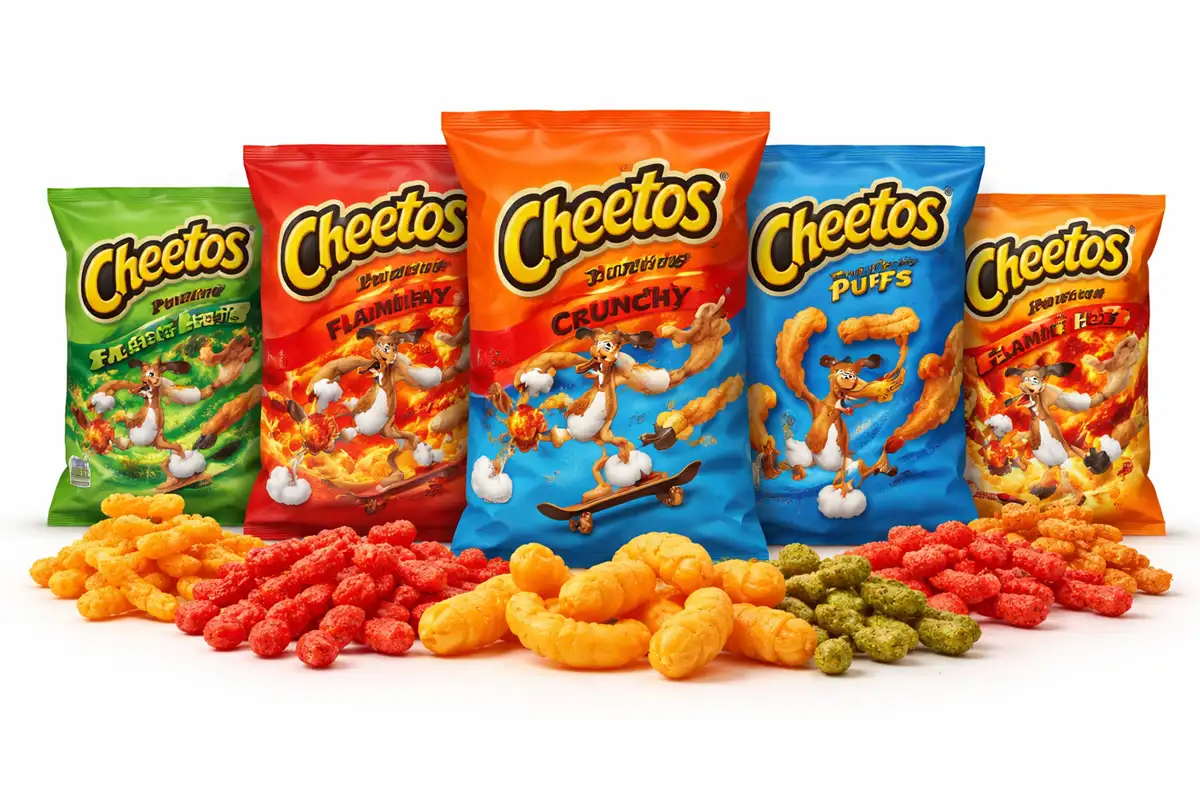
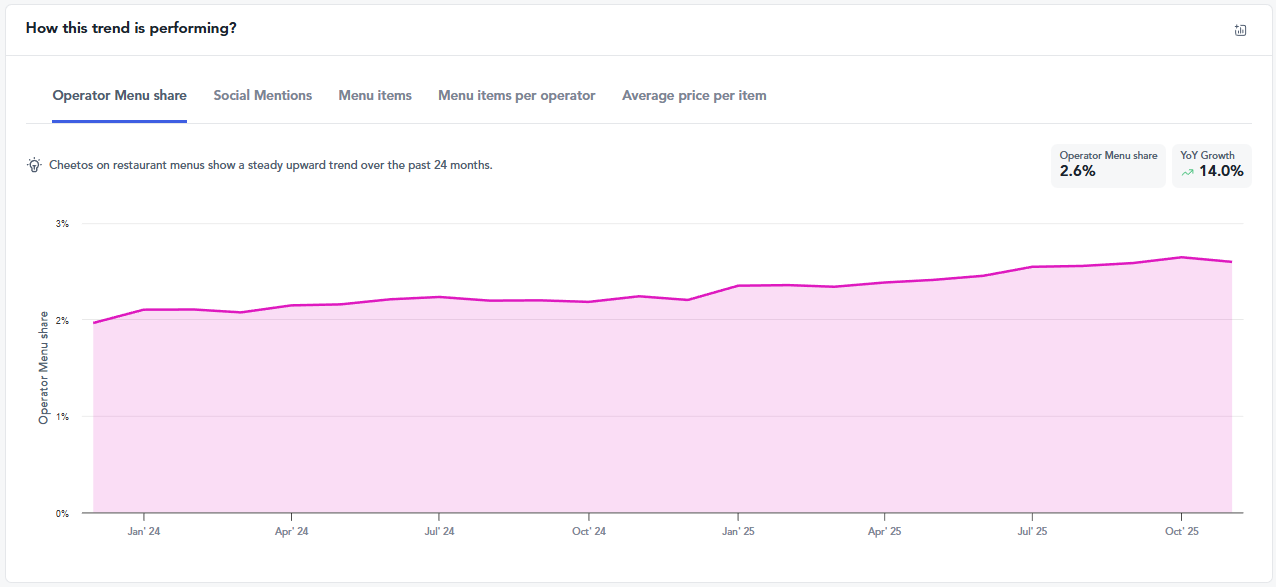
Cheetos is officially trending in foodservice. Over the past 24 months, Cheetos mentions on restaurant menus have followed a steady upward climb, showing consistent momentum rather than a short-term spike. Right now, the trend holds a 2.6% operator menu share, and it’s still accelerating with +14.0% YoY growth. It’s a strong signal that more operators are finding ways to bring bold, familiar crunch into sides, toppings, and snackable menu moments.
Unlike short-lived snack fads, Cheetos benefit from long-term brand recognition combined with constant flavor and format updates.
Social platforms, resale snack culture, and limited edition drops all help maintain relevance. This aligns with wider salty food trends, where consumers look for familiar brands that still offer something new.
Cheetos also benefit from overlapping cheese trends, as cheese-flavored snacks remain one of the most stable snack segments globally.
How many bags of Hot Cheetos are sold in a year?
Exact unit sales for Hot Cheetos are not published publicly by PepsiCo, but US retail and industry estimates help illustrate the overall scale and direction of demand.
Within broader Cheetos trends, Hot Cheetos stand out as a consistent indicator of repeat purchase behavior and long-term consumer interest.
Based on snack category performance, Frito Lay disclosures, and retail volume modeling, Hot Cheetos are estimated to sell hundreds of millions of bags per year in the US.
Below is an estimated view of US annual sales volume by year. These figures reflect approximate retail units sold, not revenue, and are intended to show trend direction rather than precise counts.
Estimated Hot Cheetos bags sold in the US
- 2021: 820 to 860 million bags
Pandemic era snacking drove strong at-home consumption, especially for comfort and spicy snacks. - 2022: 780 to 820 million bags
Volume softened slightly due to inflation and price increases, but demand remained very high. - 2023: 800 to 840 million bags
Sales stabilized as consumers adjusted to higher prices and continued prioritizing familiar snacks. - 2024: 830 to 870 million bags
Growth returned, supported by Gen Z-driven demand and strong convenience store performance. - 2025: 850 to 900 million bags
Hot Cheetos benefited from spicy snack momentum and high repeat purchase rates.
Cheetos sales statistics and market performance
Cheetos remains one of the top performers in the salty snack category in the US and other major markets. Based on industry data, Frito-Lay market share reports, and analysis from leading snack research firms, Cheetos sales show consistent volume growth, strong market penetration, and solid performance against competitors like Doritos. These figures combine retail, convenience, and grocery channel performance.
Below is a summary of key sales and market stats for Cheetos, total snack category context, and comparison with a major flavor competitor (Doritos) across recent years:
| Metric | 2021 | 2022 | 2023 | 2024 | 2025 (est) |
|---|---|---|---|---|---|
| Total Cheetos bags sold (US) | 1.2B | 1.18B | 1.21B | 1.24B | 1.27B |
| Hot Cheetos bags sold (US) | ~840M | ~800M | ~820M | ~850M | ~880M |
| Salty snacks category retail revenue (US, $bn) | 5.2 | 5.1 | 5.3 | 5.5 | 5.7 |
| Cheetos category revenue (US, $bn) | 1.10 | 1.08 | 1.12 | 1.15 | 1.18 |
| Cheetos share of salty snacks (US) | 21% | 20% | 21.5% | 21.8% | 22.1% |
| Doritos share of salty snacks (US) | 19% | 18.5% | 19% | 19.3% | 19.5% |
| Retail distribution (US) | 98% | 98% | 99% | 99% | 99% |
| Avg annual consumption per US household (bags) | 7.9 | 7.8 | 8.0 | 8.2 | 8.4 |
Cheetos consumer trends
Cheetos consumption patterns differ by market, but across regions the brand benefits from strong recognition, bold flavor demand, and growing interest from younger consumers.
These patterns reflect wider food trends in 2026, where familiar brands win by pairing comfort with strong, high-impact flavors.
United States
The US is Cheetos’ largest and most mature market. Demand is driven by Gen Z food trends, with younger consumers favoring spicy flavors, strong seasoning, and crunchy textures.
Hot Cheetos remain the top choice, especially in convenience stores and urban areas. Multi-pack formats and impulse purchases continue to perform well, supporting high repeat consumption.
Canada
In Canada, Cheetos consumption is more balanced between classic cheese flavors and spicy variants. Crunchy formats outperform puffs, particularly in grocery channels.
Canadian consumers tend to favor familiar flavors, but interest in Hot Cheetos has grown steadily, especially among younger shoppers influenced by US snack culture.
United Kingdom
In the UK, Cheetos are positioned more as an imported or specialty snack rather than an everyday staple. Demand is strongest among younger consumers seeking global snack experiences.
Crunchy Cheetos perform better than puffs, and spicy variants attract shoppers looking for bold flavors that stand out from traditional UK snack options.
Australia
In Australia, Cheetos are commonly purchased through convenience stores and specialty retailers. Flavor intensity and novelty play a larger role than brand loyalty alone.
Spicy and flavored cheese snacks compete closely with local brands, but Cheetos benefits from strong global brand recognition and bold seasoning profiles.
Most popular Cheetos options
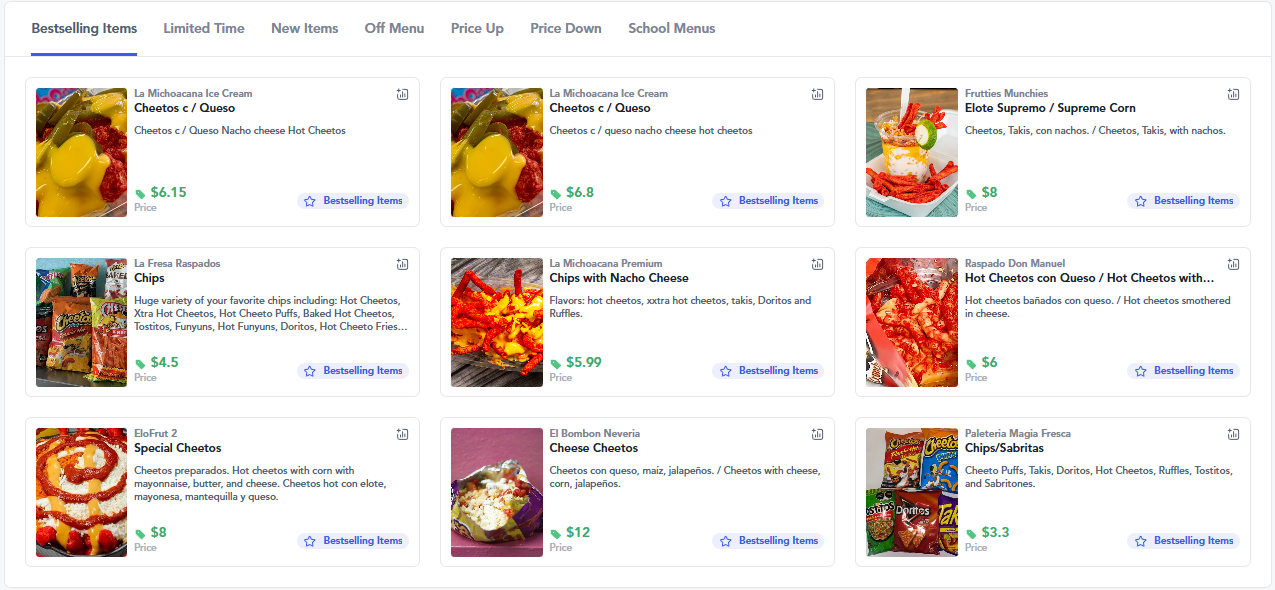
Cheetos success comes from offering clear format choices that match different eating occasions.
The most popular options in 2026 include:
- Crunchy Cheetos for consumers who prefer texture and stronger seasoning
- Cheetos Puffs for lighter snacking and family sharing
- Flamin’ Hot variants for spice-focused consumers
- Lime and chili combinations that tap into global flavor demand
These formats align with broader cheese trends, where flavor intensity and mouthfeel matter more than novelty ingredients.
Hot Cheetos popularity
Hot Cheetos remain the most culturally influential product in the lineup. Their popularity goes beyond taste and plays a role in identity, memes, and everyday social rituals.
For Gen Z consumers, Hot Cheetos are closely tied to energy, rebellion, and bold self-expression, making them a defining part of broader Cheetos trends.
In 2026, Hot Cheetos continue to benefit from strong demand for spicy foods and from consumers seeking more intense sensory experiences.
Ongoing heat level experimentation, combined with familiar branding, helps keep the product relevant without distancing core fans.
How brands can use Tastewise to track Cheetos and salty snack trends
Understanding snack trends requires more than social buzz. Tastewise helps brands analyze real consumption behavior across retail, foodservice, and digital conversations.
For Cheetos and salty snack trends, Tastewise allows teams to:
- Track flavor demand shifts such as spicy, cheesy, or tangy profiles
- Identify which snack formats gain traction across regions
- Compare consumer interest in Cheetos versus Doritos trends and other competitors
- Spot early signals for limited editions or line extensions
By focusing on actual demand signals, brands reduce risk when launching new snack concepts or packaging formats.
Summary
Cheetos trends in 2026 show how a legacy snack brand can stay relevant in a fast moving market. Strong flavor identity, spicy innovation, and cultural visibility keep Cheetos aligned with trending snacks and Gen Z food trends. As salty food trends continue to favor bold taste and familiarity, Cheetos remains a benchmark brand for snack innovation.
FAQs
In 2026, Cheetos innovation focuses more on seasoning blends than entirely new base ingredients. Brands experiment with spice layering, tangy acids, and flavor intensity rather than changing the core corn base.
Most Cheetos products are made without gluten containing ingredients, but they are not always certified gluten free. Consumers should always check packaging, as formulations can vary by region.
Cheetos are produced by Frito Lay, a subsidiary of PepsiCo. Production takes place in multiple countries, allowing local distribution while maintaining consistent flavor profiles.
Hot Cheetos were first introduced in 1991 and quickly became one of the most successful spicy snack launches in history.
Tastewise analyzes real world consumption signals to show how demand for Cheetos flavors, formats, and spice levels changes over time across markets.
Yes. Tastewise tracks spicy snack demand, including Hot Cheetos, by monitoring menu mentions, retail activity, and consumer conversations tied to heat and flavor intensity.
Tastewise highlights emerging Cheetos flavor trends by comparing growth rates across regions rather than relying only on social hype.
Brands use Tastewise insights to prioritize snack innovation, test new flavor ideas, and align launches with proven consumer demand instead of assumptions.



We’d love to learn your goals and see how Tastewise fits
We’d love to learn your goals and see how Tastewise fits
Get a personalized demo
Good taste. Wise move.
Your demo request is confirmed. We’ll reach out within one business day to schedule your walkthrough.
What happens next

See what’s driving demand, then turn it into a sell-in story for retailers and operators.
- Connect consumer panels, market trackers, and agents into one evidence view
- Get the “why” behind what’s changing, with explainable demand drivers
- Walk away with a buyer-ready narrative and next steps to activate
Trusted by





“Tastewise is my secret tool for knowing what consumers want next and why.“