







Functional food formulation is the R&D process of integrating targeted, bio-active functional ingredients, such as adaptogens, nootropics, and postbiotics, into F&B products to meet specific consumer health and wellness goals
Consumers are choosing products designed to support specific outcomes: clearer focus, sustained energy, improved digestion, or metabolic balance. Survey results show about 9 in 10 consumers want food that supports their personal health goals, shifting demand toward targeted functional benefits across everyday categories.
For R&D teams, this changes how innovation works. Functional food formulation is no longer about adding a health claim to an existing product. It begins with selecting ingredients that deliver clear benefits while maintaining taste, stability, and processing compatibility.
While this article focuses on formulation strategy, the consumer signals shaping these ingredient choices are explored in depth in the 2026 Personalized Nutrition Trends eBook.
Top functional ingredients to formulate with in 2026
- Adaptogens for stress and cortisol balance
- Nootropics for cognitive performance
- Postbiotics for heat-stable gut health
- Next-generation hydration ingredients for functional drinks
- Natural GLP-1 support ingredients
The shift to personalized nutrition
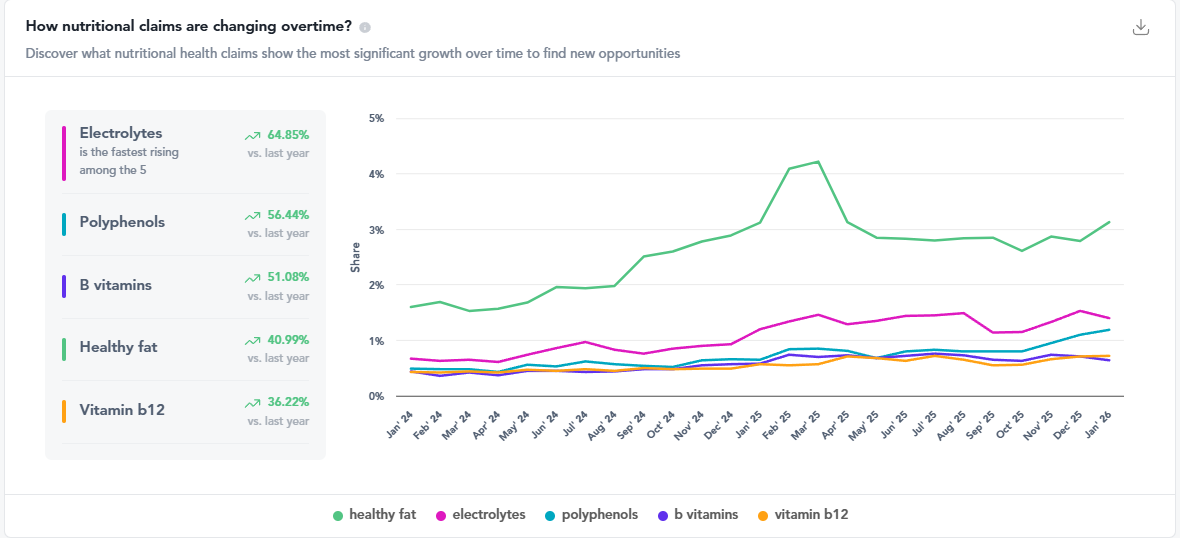
Personalized nutrition has moved from an emerging concept to a practical product strategy. The personalized nutrition market is projected to grow dramatically over the next decade, reflecting a major shift in how consumers approach food, health, and daily performance.
Consumers are increasingly choosing foods based on specific functional outcomes rather than broad wellness claims. Signals across the Social F&B panel and survey data point to a clear pattern: demand is clustering around benefits such as cognitive performance, digestive health, and sustained energy.
For product developers, this means ingredient selection must align with benefits consumers already understand and actively search for. The Personalized Nutrition Trends report breaks down the top motivations shaping these decisions, along with the ingredients consumers most strongly associate with each benefit.
5 functional ingredients gaining traction in food and beverage formulation
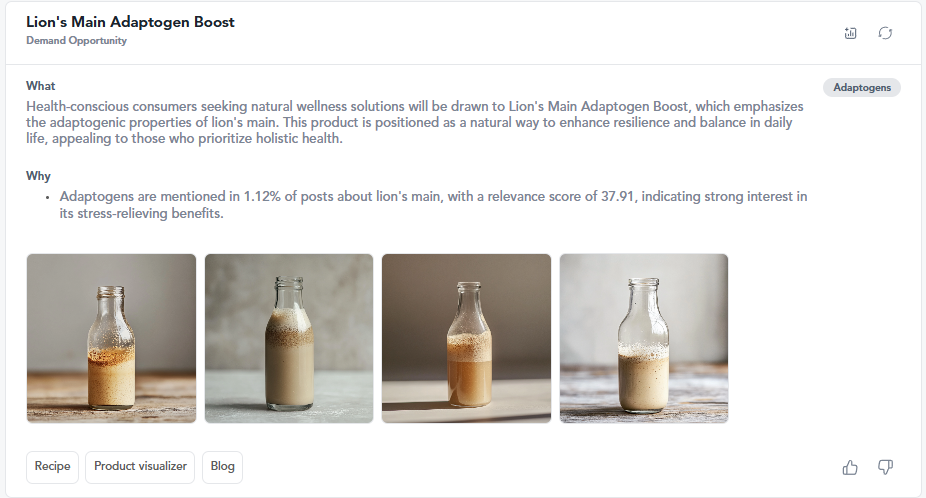
Several ingredient categories are emerging as strong candidates for functional food formulation as demand grows for targeted health benefits. The following ingredients are gaining traction across food and beverage innovation pipelines.
1. Adaptogens for stress and cortisol balance
Adaptogens remain one of the most recognizable functional ingredient categories. Ingredients such as:
- Ashwagandha
- Maca
- Holy basil
are widely associated with stress management and mood balance.
In the Social F&B panel, adaptogens appear most frequently in functional drink concepts, including wellness teas, powdered beverage mixes, and mushroom-based beverages. The primary formulation challenge is sensory. Many adaptogenic botanicals introduce:
- earthy flavor notes
- herbal bitterness
- lingering astringency
R&D teams typically manage these issues through encapsulation technologies and flavor systems designed to mask botanical bitterness. Products targeting evening relaxation or recovery tend to integrate adaptogens most successfully.
2. Natural satiety ingredients aligned with GLP-1 nutrition trends
Satiety and metabolic wellness are emerging as key themes in food innovation. Consumers are increasingly prioritizing foods that provide fullness and sustained energy rather than focusing only on calorie reduction.
Signals across retail and recipe behavior show rising interest in ingredients associated with satiety and metabolic balance.
Common ingredient systems include:
- soluble dietary fibers
- plant proteins
- resistant starches
- fermented ingredients
These ingredients increasingly appear in snack bars, breakfast beverages, and protein-enhanced snacks designed to support sustained energy and appetite control.
3. Postbiotics for heat-stable gut health
Digestive wellness remains one of the most stable functional food categories. However, probiotics introduce manufacturing limitations. Live bacteria can degrade during:
- pasteurization
- baking
- high-temperature processing
Postbiotics offer a more stable alternative. Postbiotics are metabolic by-products of probiotic bacteria that provide digestive benefits while remaining stable during heat processing.
This allows developers to bring gut-health positioning into categories such as:
- baked snacks
- protein bars
- shelf-stable beverages
As digestive health demand continues to expand, postbiotics are becoming a valuable ingredient system for functional food formulation.
4. Next-generation hydration ingredients in functional drinks
Hydration is changing from simple electrolyte replenishment into a broader performance category. Functional beverages now sit at the intersection of convenience, hydration, and targeted benefits. Survey insights show strong consumer adoption of beverages positioned around energy, digestion, and daily performance.
This shift is driving innovation in functional drinks and functional beverage formulation, particularly in ready-to-drink formats.
Next-generation hydration formulas increasingly combine:
- trace minerals
- nootropics
- botanical extracts
- electrolyte systems
However, these ingredients introduce formulation challenges. Common issues include ingredient precipitation, bitterness from mineral systems, and instability in acidic beverages. Encapsulation technologies and stabilizer systems are often required to maintain suspension and flavor balance.
5. Nootropics for cognitive performance
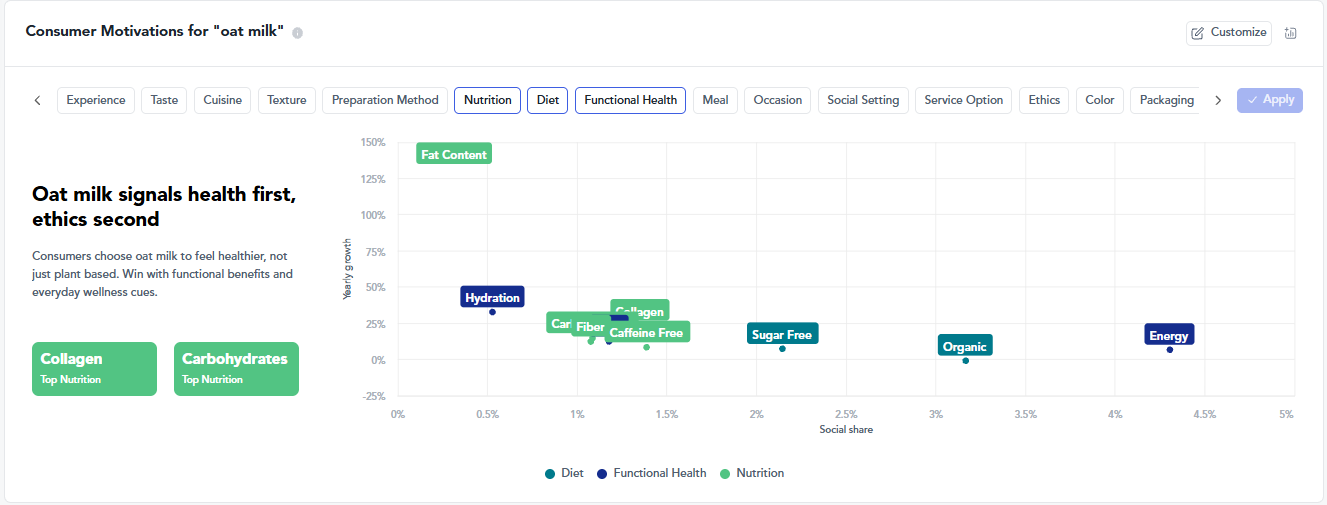
Cognitive performance is becoming one of the most visible benefit areas in functional foods and beverages. Survey data indicates that energy and focus are among the most common motivations for choosing functional products, placing cognitive ingredients at the center of many innovation pipelines.
Two ingredients currently driving nootropic formulation:
- L-Theanine
- Lion’s Mane mushroom
Lion’s Mane has become particularly prominent in beverages and snacks positioned around mental clarity and sustained focus. From a formulation standpoint, L-Theanine is attractive for functional beverage development because it:
- dissolves easily in liquid systems
- pairs naturally with caffeine
- supports “calm energy” positioning
These properties make it common in RTD teas, functional waters, and cognitive energy drinks.
The broader drivers behind this shift are explored in the Personalized Nutrition Trends report, which analyzes how consumer motivations around energy, digestion, and metabolic health are reshaping food innovation.
Key terms in functional food formulation: definitions and comparisons
Functional food versus fortified food
A functional food is formulated with bioactive ingredients chosen to deliver a specific, targeted benefit, such as cognitive support, stress balance, or digestive health. A fortified food is different. It has vitamins or minerals added back after processing, or added above their natural level, without being built around a single targeted outcome. Functional food formulation goes a step beyond fortification, since it involves selecting the bioactive ingredient, setting a meaningful dose, and matching the benefit to a personalized nutrition goal consumers already care about.
Probiotics versus postbiotics in food manufacturing
Probiotics are live microorganisms that can support health when consumed in adequate amounts. They are fragile, and heat, acidity, and oxygen all reduce their viability during processing. Postbiotics are the bioactive compounds created when probiotic bacteria ferment a substrate, including cell wall fragments, metabolites, and short-chain fatty acids. Because postbiotics are not alive, they hold up far better under high-temperature processing. That makes them the more practical choice for baked snacks, protein bars, and shelf-stable drinks, where live cultures rarely survive.
Adaptogens versus nootropics
Adaptogens are plant-derived compounds traditionally used to help the body cope with physical and mental stress, often described as acting on the HPA axis, the system that governs the stress response. Ashwagandha, rhodiola, and holy basil are common examples. Nootropics are ingredients associated with supporting cognitive function, such as focus, memory, and mental clarity. L-theanine and Lion’s Mane are two of the most visible in food and beverage. Both can play into a calm-focus positioning, but adaptogens are generally framed around stress resilience while nootropics are framed around mental performance.
What are GLP-1 support ingredients?
GLP-1, or glucagon-like peptide-1, is a gut hormone involved in appetite, insulin release, and the feeling of fullness. In functional food formulation, natural GLP-1 support ingredients are dietary components associated with supporting the body’s own GLP-1 response and a longer sense of satiety. Soluble fibers such as inulin and beta-glucan, resistant starches, and fermented ingredients are the systems used most often. They appear in snack bars, breakfast drinks, and meal-replacement products aimed at satiety and metabolic wellness. These are food ingredients, not a substitute for GLP-1 medications.
What is encapsulation in functional food formulation?
Encapsulation is a manufacturing technique that wraps a functional ingredient, such as an adaptogen, a probiotic, or an omega-3 oil, inside a protective shell that can be lipid, polysaccharide, or protein based. It does two jobs. It shields sensitive bioactive ingredients from heat, oxidation, and pH shifts during processing, and it masks off-notes like bitterness, earthiness, or fishiness. That combination is what lets many functional ingredients move into mainstream formats without hurting taste or shelf life.
Overcoming R&D challenges in functional drinks
Functional drinks present several technical challenges that do not typically appear in solid food products. Ingredients used in functional beverage formulation often behave differently in liquid systems, creating stability and sensory issues that must be addressed during development. One common challenge is ingredient precipitation, where powdered ingredients settle at the bottom of the beverage over time.
Texture issues can also occur, as protein isolates, mushroom powders, and fiber systems frequently create a chalky or gritty mouthfeel. In addition, botanical bitterness from adaptogens and plant extracts can introduce strong herbal notes that affect flavor balance.
Addressing these challenges usually requires a combination of encapsulation technologies, stabilizer systems that maintain suspension, and advanced flavor masking techniques. Successful functional beverage formulation ultimately depends on balancing ingredient efficacy with sensory performance to ensure the product remains both effective and enjoyable to consume.
How to validate functional ingredients before starting R&D
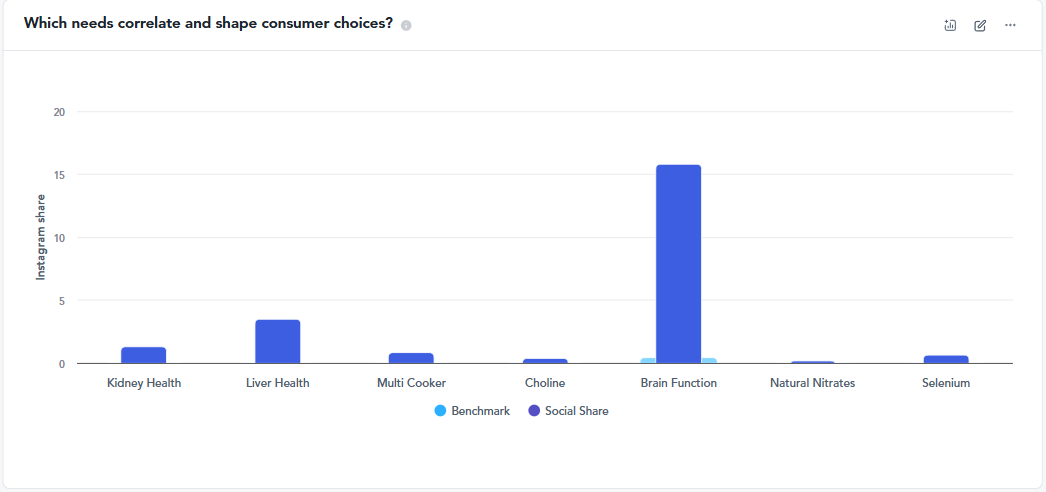
The biggest risk in functional food formulation is not ingredient functionality. It is investing development resources in concepts that lack consumer demand. Leading innovation teams validate ingredient demand before entering the lab.
Leading R&D teams use product innovation solutions to analyze billions of consumer consumption moments. Tastewise AI tells you exactly which functional benefits consumers are pairing with which flavors in real-time.
Tastewise identifies:
- which functional benefits consumers associate with specific ingredients
- which formats are gaining traction in foodservice
- which product concepts are most likely to succeed in retail
This evidence allows teams to align R&D, marketing, and commercial functions around innovation strategies supported by real demand.
FAQs about functional food formulatio
Functional food formulation is the scientific process of developing food and beverage products that provide specific health benefits beyond basic nutrition. This involves integrating bioactive functional ingredients like adaptogens, probiotics, or vitamins while maintaining shelf stability and taste.
Currently, the most popular functional ingredients in the CPG sector include nootropics (like L-Theanine) for cognitive focus, adaptogens (like Ashwagandha) for stress relief, and heat-stable postbiotics for advanced gut health support.
The main challenges in formulating functional drinks include masking the bitter or earthy off-notes of botanical ingredients, ensuring ingredient solubility so powders do not precipitate or settle, and maintaining the stability of sensitive vitamins during thermal processing.



We’d love to learn your goals and see how Tastewise fits
We’d love to learn your goals and see how Tastewise fits
Get a personalized demo
Good taste. Wise move.
Your demo request is confirmed. We’ll reach out within one business day to schedule your walkthrough.
What happens next

See what’s driving demand, then turn it into a sell-in story for retailers and operators.
- Connect consumer panels, market trackers, and agents into one evidence view
- Get the “why” behind what’s changing, with explainable demand drivers
- Walk away with a buyer-ready narrative and next steps to activate
Trusted by





“Tastewise is my secret tool for knowing what consumers want next and why.“