





Your marketing team is still treating AI as a research tool. Here is what happens when you stop. The gap between a consumer insight and a live campaign is where most food and beverage marketing budgets quietly bleed out. Your team finds a trend, briefs an agency, waits on creative, runs a campaign six months after the signal peaked. AI solutions for marketing are changing that sequence entirely. The brands moving fastest right now are not just using AI to surface data. They are using it to take that data all the way through to brief, asset and execution. If your team is still treating AI as a reporting layer, you are leaving speed on the table that your competitors are picking up.
Key takeaways
- AI-driven marketing solutions are compressing the insight-to-activation timeline from months to days. For food and beverage teams, that means your trend response can land while the consumer moment is still live, not after it has moved on.
- Consumer demand signals are shifting faster than annual planning cycles can track. Teams that run always-on AI workflows are making better decisions mid-campaign, not just at the start of a quarter.
- The brief is now the bottleneck, not the data. AI agents built for food and beverage marketing can generate campaign briefs, audience segments and content frameworks directly from consumer signals. Your team’s job is to judge and direct, not to manually compile.
- Food and beverage brands using agentic AI are reporting materially faster go-to-market cycles. The advantage is structural, not a one-time win.
AI solutions for marketing: the overview
Something has shifted in how food and beverage consumers engage with brands. Trend cycles are shorter, occasion-based demand is more fragmented and the window between a signal appearing and a category becoming crowded has narrowed significantly. Marketing teams that rely on quarterly insight reports to drive creative briefs are working with data that is already aging by the time it reaches the brief.
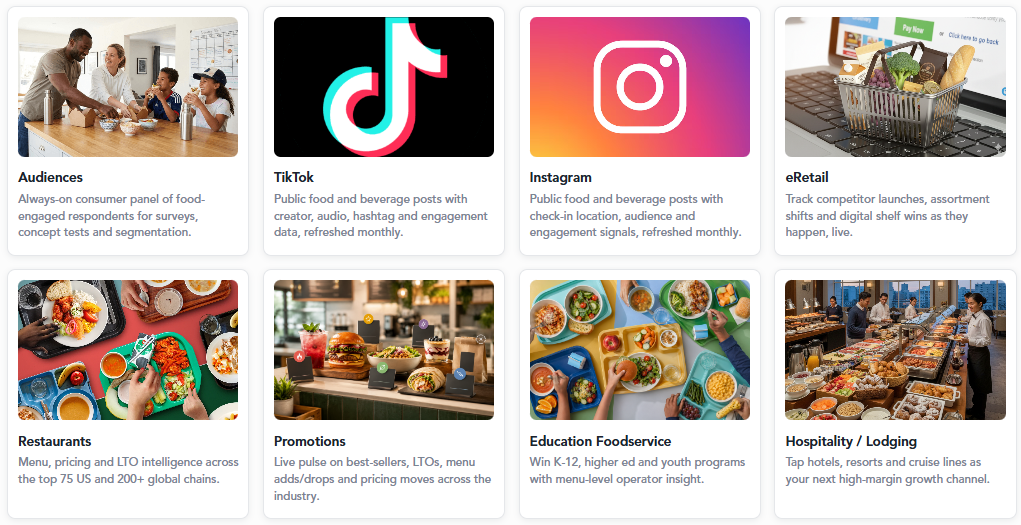
Tastewise tracks consumer demand signals across menus, retail, recipes and social behavior in real time. What that data shows is that the most commercially meaningful consumer moments tend to last weeks or a few months before competitive noise crowds them. Teams that act fast capture the moment. Teams that wait often brief campaigns into a category their consumer has already moved past.
The opportunity this creates is practical, not theoretical. If your marketing team can connect consumer signals directly to campaign briefs and creative frameworks without a six-step handoff process, you change the economics of the whole operation. Faster briefs mean faster creative. Faster creative means campaigns that arrive while the signal is still building. The 2026 food and beverage trend forecast shows the categories where this speed advantage is currently most pronounced.
Ready to close the gap between insight and activation?
Why AI-driven marketing solutions are changing how food brands brief campaigns
The traditional brief process has a structural problem. It was designed for a world where consumer insight moved slowly enough that a monthly or quarterly research cycle could keep pace. That world no longer describes food and beverage. Your consumer’s priorities around health, flavor, occasion and format are shifting continuously. A brief built on last quarter’s data is, by definition, already behind.
AI-driven marketing solutions address this by running the insight and the briefing process in parallel rather than in sequence. Instead of waiting for a research cycle to complete before writing a brief, your team can work from live consumer signals that update continuously. The brief reflects what consumers want right now, not what they wanted three months ago when the research was commissioned.
This matters most in categories where trend velocity is high. Functional beverages, better-for-you snacks, plant-based formats and flavor innovation all move fast. A team briefing a campaign in any of these categories without real-time consumer input is essentially making an educated guess. A team with live AI-driven signals is making a decision grounded in current demand evidence. Food marketing strategies for high-velocity categories increasingly depend on this distinction.
How AI-driven digital marketing solutions work in practice for food and beverage teams
The practical version of this looks different from the theoretical one. It is not a single AI tool that replaces your agency relationship. It is a set of connected workflows where AI handles the data-intensive steps so your team can focus on the judgment-intensive ones.
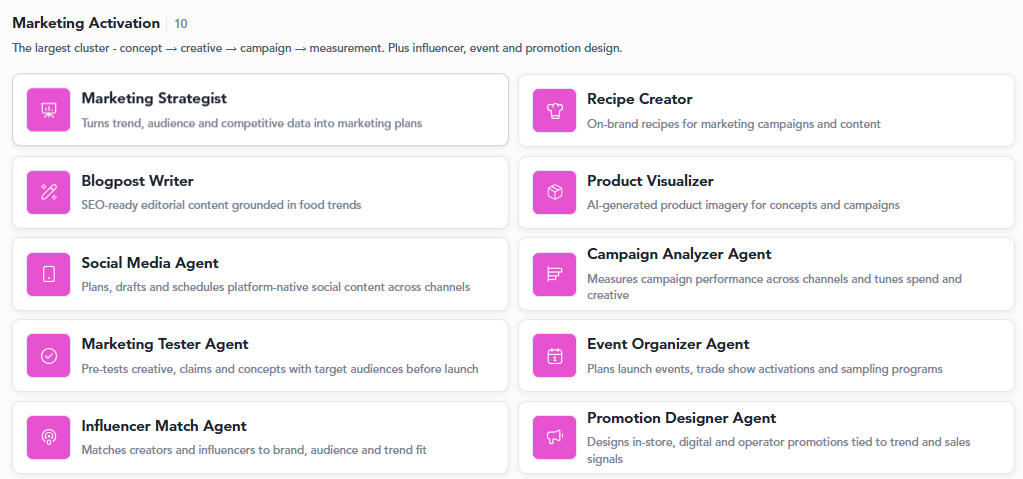
Here is what that looks like at the campaign level. Your team identifies a category signal, say a specific flavor profile or occasion type gaining consumer traction. An AI agent pulls the full consumer context: who is driving the demand, which formats they associate it with, which channels show the highest engagement, which competitors have already moved on it.
That context feeds directly into a campaign brief framework that your team refines and approves. The brief goes to creative with a consumer evidence layer already attached. Creative does not start from zero. They start from a grounded position. This is the value of agentic workflows at campaign scale.
The output is not just speed. It is quality. Briefs built on specific consumer evidence are more focused than briefs built on general category knowledge. They give creative teams something real to respond to. Consumer marketing built this way tends to perform better at launch because the consumer has already told you what they want. You are giving it back to them in the right format and moment.
What AI solutions for marketing look like when they are working well
The teams getting the most from AI solutions for marketing share a few things in common. They have stopped using AI exclusively as a reporting layer and started using it as a workflow layer, built around an AI marketing agent that runs continuously. They run always-on intelligence rather than periodic research pulls. And they have built internal processes that assume the brief will be ready in days, not weeks.
That last point is the one that changes everything operationally. When your brief cycle compresses, your whole campaign timeline compresses with it. You can respond to a consumer moment while it is building rather than after it peaks. You can test and iterate in-market faster. And you can carry more specific consumer evidence into buyer conversations, which matters if your team also has a retail or foodservice sell-in responsibility.
AI for CPG is increasingly being defined not by which tools a team uses but by how deeply those tools are integrated into the briefing and activation process. The teams treating AI as a step in the workflow, rather than a separate research function, are the ones closing the gap between insight and impact. The agentic AI workflows Tastewise has built for food and beverage marketing teams are designed specifically for this integration, connecting consumer signals to briefs, assets and channel execution without the handoff delays that slow most campaigns down.
The shift your team needs to make
None of this requires replacing your existing agency or creative structure. It requires changing where the brief comes from and how long it takes to build. Your agencies and creative teams are still essential. What changes is that they start from a stronger, faster, more evidence-grounded brief. That is a better input for them. And a better campaign outcome for you.
The brands that are winning in food and beverage marketing right now are not necessarily bigger or better resourced. They are faster and more specific. They respond to consumer moments while there is still room to own them. AI solutions for marketing are the mechanism that makes that speed possible at scale. Your next campaign brief starts with the right consumer signal.
FAQs about AI solutions for marketing food and beverage
AI solutions for marketing in food and beverage are platforms and workflows that use artificial intelligence to connect consumer demand signals to campaign briefs, audience segments and content execution. In practice, this means your team can move from a live consumer signal to a ready brief in days rather than weeks, reducing the lag between insight and activation that costs most brands commercial opportunity.
Standard market research captures a snapshot of consumer behavior at a point in time. AI-driven marketing solutions run continuously, updating as consumer signals shift across menus, retail shelves, recipes and digital behavior. The practical difference is that your brief reflects what consumers want now, not what they wanted when the last research cycle ran. For categories that move fast, this distinction is commercially significant.
No, and they are not designed to. AI-driven digital marketing solutions handle the data-intensive steps: signal identification, consumer context, audience framing and brief construction. Creative agencies still do the work that requires human judgment, taste and cultural fluency. What changes is the quality and speed of the brief they receive. Better briefs produce more focused creative. That benefits the agency relationship, not just the brand.


We’d love to learn your goals and see how Tastewise fits
We’d love to learn your goals and see how Tastewise fits
Get a personalized demo
Good taste. Wise move.
Your demo request is confirmed. We’ll reach out within one business day to schedule your walkthrough.
What happens next

See what’s driving demand, then turn it into a sell-in story for retailers and operators.
- Connect consumer panels, market trackers, and agents into one evidence view
- Get the “why” behind what’s changing, with explainable demand drivers
- Walk away with a buyer-ready narrative and next steps to activate
Trusted by




“Tastewise is my secret tool for knowing what consumers want next and why.“