





The way food and beverage marketing teams work is shifting faster than most internal processes have caught up with. The old model, where a trend report feeds an analyst deck, which feeds an agency brief, which eventually produces an asset, was already slow. Now it is becoming a liability. Agentic workflows in food and beverage are collapsing that chain into a single, always-on system. If your team is still running five handoffs to get from signal to shelf story, you are starting to feel the gap.
Key takeaways
- The average food and beverage marketing workflow involves five or more handoffs before a consumer signal becomes a retailer-ready asset. Each handoff costs time and dilutes the original insight. Your team can close that gap with a single connected workflow.
- AI agentic workflows are not the same as automation. They reason, adapt and act across tasks without a human triggering each step. That distinction matters for how you brief, build and deploy marketing content in 2026.
- Brands using agentic AI are compressing weeks of work into hours. The output is not just faster. It is more consistent and directly grounded in live consumer demand.
- The brands moving to agentic workflows now will own the briefing cycles, the retailer conversations and the LTO windows that slower teams will miss.
What agentic workflows mean for food and beverage marketing
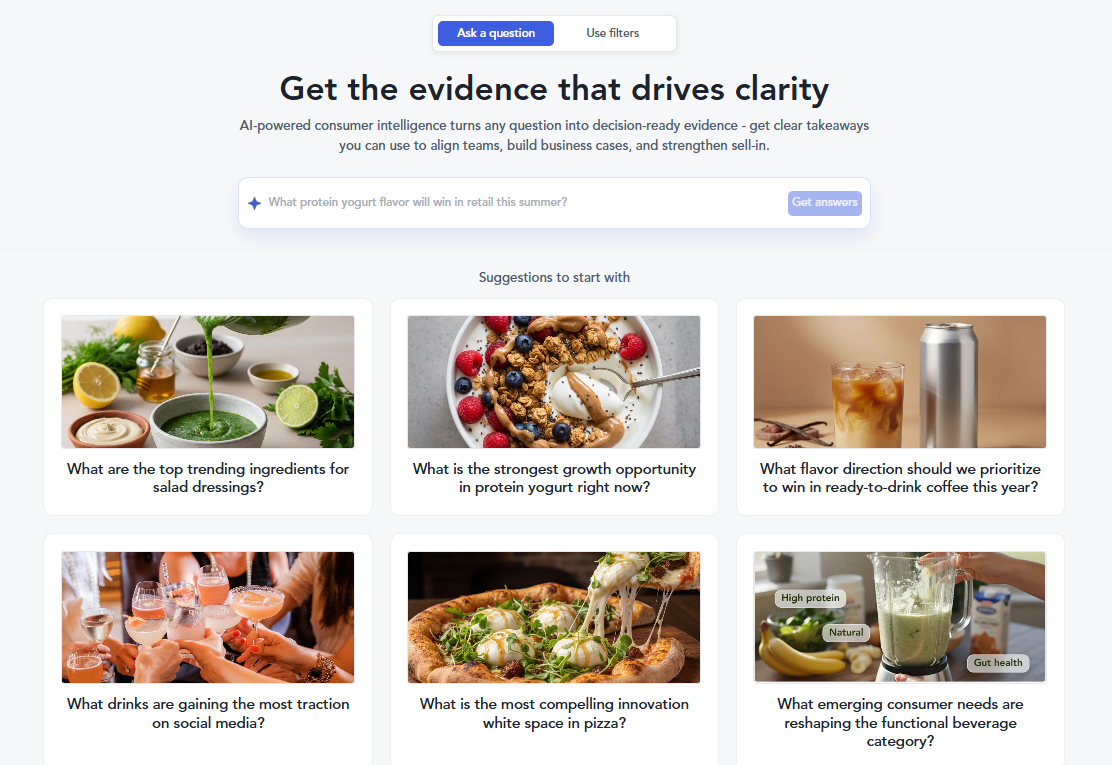
Consumer demand in food and beverage moves faster than most brand teams can track. A flavor signal that starts trending on menus this quarter can reach peak retail interest within six months. The teams that can close the gap between that signal and a finished campaign asset are the ones winning the category conversations.
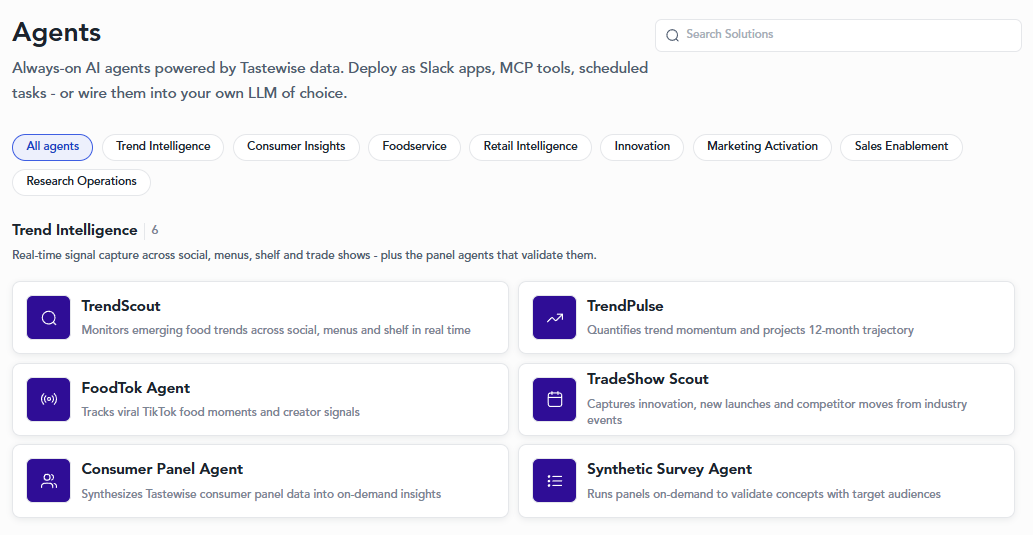
Tastewise tracks that signal continuously, across menus, consumer behavior and product launches. What agentic workflows add is the ability to act on it without a five-step internal process standing between the data and the deliverable. The system does not wait to be briefed. It monitors, interprets and produces.
The opportunity for your marketing team is specific. You stop spending the first two weeks of every campaign cycle gathering and formatting data. You start every brief already knowing what the consumer wants, which formats are gaining ground and what your competitor has not moved on yet. That is a different kind of starting position.
The 2026 food and beverage trend forecast covers the signals your team needs to be building around now. Start there.
The old workflow and what it actually costs your team
The standard food and beverage marketing workflow has not changed much in a decade. It runs something like this.
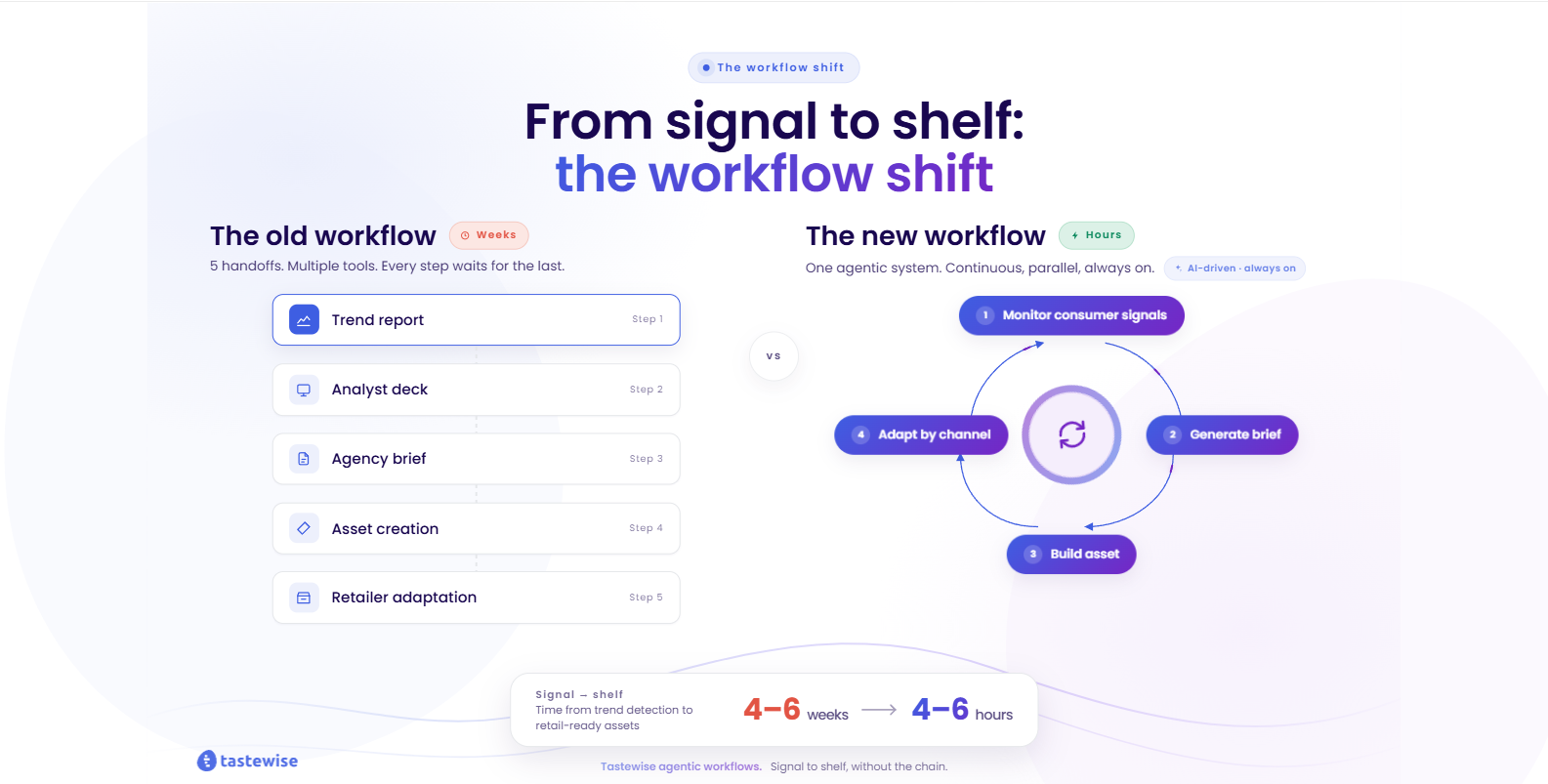
Your insights team pulls a trend report. An analyst turns it into a deck. That deck goes to a brand manager, who writes a brief. The brief goes to an agency or an internal creative team, who build the asset. Then the asset gets adapted for each retailer or operator channel. Five steps. Multiple tools. Weeks of elapsed time.
The cost is not just time. Each handoff introduces a version of the insight that is slightly further from the original data. By the time a brief reaches creative, the consumer motivation behind the trend has been summarized, edited and interpreted at least twice. The asset that comes out the other end reflects those interpretations, not the raw signal.
That gap between what consumers are doing and what your campaign says they are doing is where category authority gets lost. A competitor who can close it faster does not just move quicker. They move with more precision.
How AI agentic workflows work differently
An agentic workflow does not automate a task. It handles a sequence of tasks, makes decisions within that sequence and adjusts based on what it finds. That is the functional difference between automation and agentic AI, and it matters for how you think about applying it to food and beverage marketing.
Automation handles a fixed process. You define the steps. The system runs them. An agentic system defines its own steps based on the goal you give it. Ask it to build a retail sell-in story around a trending flavor, and it will find the consumer signal, frame the category context, identify the white space, draft the narrative and produce the asset without you managing each step.
The food intelligence and menu planning use case shows how this works in practice. The system does not just pull data. It interprets what the data means for a specific channel, a specific buyer and a specific moment in the product cycle.
For your marketing team, the practical implication is this. You set the goal. The system handles the journey. You review and refine the output rather than building it from scratch.
What your team gets back when the workflow changes
The most immediate change is time. Campaigns that used to take three to four weeks from signal to finished asset are running in days. That compression is real and it compounds across a planning cycle.
The second change is consistency. When a brief and an asset come from the same connected system, working from the same live data, the story holds together end to end. The consumer motivation in the brief matches the claim on the pack, which matches the angle in the retailer presentation. That coherence is hard to maintain across a five-step manual process.
The third change is coverage. A single team can monitor more signals, respond to more category moments and produce more channel-specific assets than was previously possible with the same headcount. The consumer marketing teams running agentic workflows at scale are not bigger than the teams they are competing with. They are just faster and more precisely targeted.
Your team does not need to rethink everything at once. A focused demo is the fastest way to see where the workflow can close your specific gap.
The agentic workflow in food and beverage marketing, step by step
Here is what a working agentic workflow looks like in this category.The system monitors consumer behavior continuously, across menus, social signals and purchase data. It flags when a signal crosses from emerging to trending. It identifies the white space: where consumer demand is rising and brand response is thin.
From there, it generates a brief. Not a summary deck. A structured brief with the consumer motivation, the competitive gap, the channel context and the recommended flavor or format angle. Your team reviews it rather than writing it.
The brief feeds directly into asset creation. The system drafts the copy, the sell-in narrative and the retailer-facing proof points. Your creative team refines the execution. They do not start from a blank page.
The final step is channel adaptation. The same core story gets formatted for your retail buyer, your foodservice operator and your brand campaign. Each version uses the same consumer evidence, shaped for the context it is entering.
That is the full loop. Signal to asset. One system. No five-step chain. The agentic AI infrastructure behind it is what makes the loop continuous rather than episodic.
Why this matters for food and beverage specifically
Most industries can afford to move on a quarterly planning rhythm. Food and beverage cannot. Menu cycles, LTO windows and retailer ranging decisions move faster than that. A flavor that is trending in January can already have three competitors on shelf by April.
The teams still running the old workflow are not losing because they are less talented. They are losing because the workflow itself was built for a slower market. The agentic model is not an upgrade to the existing process. It is a different process, built for the speed the category now demands.
For CPG brands, this means the briefing cycle shortens, the sell-in story arrives earlier and the retailer conversation happens when the signal is still fresh. For foodservice operators, it means LTO concepts are grounded in live demand evidence, not last quarter’s report. The CPG marketing implications run the full length of the planning calendar. The agentic AI in food and beverage context is worth understanding before you plan your next briefing cycle.
The brands building agentic workflows into their marketing operations now are not experimenting. They are repositioning how fast they can move, and they are doing it at a moment when speed is a structural competitive advantage.
Your next planning cycle does not have to start the old way.
FAQ about agentic workflow in food and beverage marketing
An agentic workflow is a connected system of AI agents that can reason and act across a sequence of tasks without a human managing each step. In food and beverage marketing, that means moving from a consumer signal to a finished brief, asset or sell-in narrative without running the process through five separate tools and teams. The system interprets the goal you set and handles the steps to get there.
Automation runs a fixed process you define in advance. An agentic workflow adapts in real time based on what it finds. If consumer demand shifts mid-cycle or a competitor launches into your white space, an agentic system can detect that and adjust the output. Automation cannot. That adaptability is what makes AI agentic workflows relevant to fast-moving categories like food and beverage.
Marketing teams running high-volume campaign cycles, sales teams building retailer sell-in decks and insights teams tracking multiple categories simultaneously all see significant gains. The biggest benefit tends to come at the briefing stage, where agentic workflows replace the most time-consuming and interpretation-heavy part of the current process. The product innovation pipeline is another area where teams are seeing material time savings.


We’d love to learn your goals and see how Tastewise fits
We’d love to learn your goals and see how Tastewise fits
Get a personalized demo
Good taste. Wise move.
Your demo request is confirmed. We’ll reach out within one business day to schedule your walkthrough.
What happens next

See what’s driving demand, then turn it into a sell-in story for retailers and operators.
- Connect consumer panels, market trackers, and agents into one evidence view
- Get the “why” behind what’s changing, with explainable demand drivers
- Walk away with a buyer-ready narrative and next steps to activate
Trusted by


“Tastewise is my secret tool for knowing what consumers want next and why.“