






Retail buyers heading into the late-2026 shelf resets are completely risk-averse. They are no longer swayed by sleek branding alone. They demand proof of consumer velocity and market incrementality before they hand over a single facing.
The prebiotic sodas category is one of the most scrutinised pitches in functional beverages right now, because the category has grown fast enough that buyers know the opportunity is real, but crowded enough that they are asking harder questions about which brands actually move product. If your team walks in without data, you are not losing on product. You are losing on preparation. Tastewise gives your team the consumer evidence to change that outcome.
Key takeaways
- Prebiotic soda dish activity is up 41.7% in the past year and 183 chains now stock these products. Your retail buyer already knows the category is growing. Your job is to prove your brand is the one driving it.
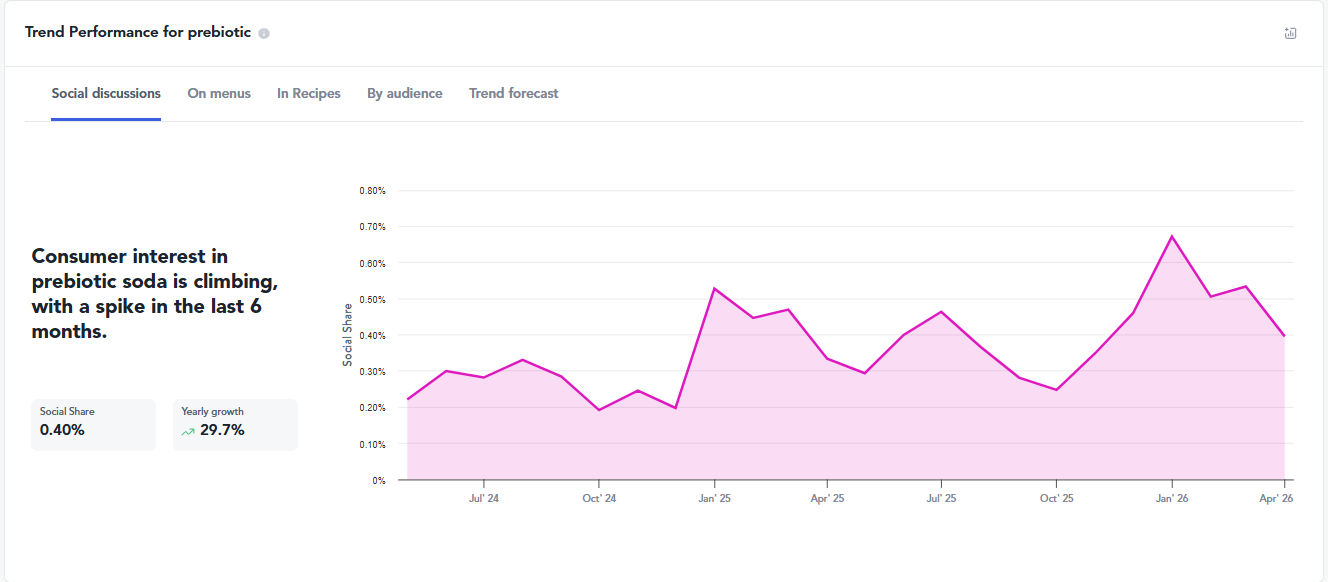
- The gut health claim reaches 33.4% share in the panel, while “refreshing” is growing at 60.2% in the summer-scoped functional soda dataset. That aligns with a broader summer food trend this season: 1 in 2 consumers choosing hydration products want a functional benefit alongside it. Prebiotic sodas are the format that delivers both.
- “Recurring favorite” is up 206.1% and “family” is up 208.4% among prebiotic soda consumers in the past year. Habitual repeat purchase is the velocity proof point your buyer needs to justify the linear space.
- Raspberry rose indexes 111 times higher on prebiotic soda menus than on adjacent beverage menus. Cherry vanilla is up 290% in the past 12 months. These are not trend hypotheses. They are validated flavor signals you can put in a sell-in deck today.
What is driving prebiotic soda demand in 2026
Prebiotic sodas are succeeding in retail because they solve the category’s hardest problem: getting a consumer to change what they reach for without asking them to change when or why they reach for it. The midday refreshment moment already existed. The afternoon pick-up already existed. These products slotted into both without requiring a behavioral shift. That is what makes the category incrementally valuable to a buyer. It is not stealing volume from diet soda. It is capturing a consumer who has already decided to upgrade.
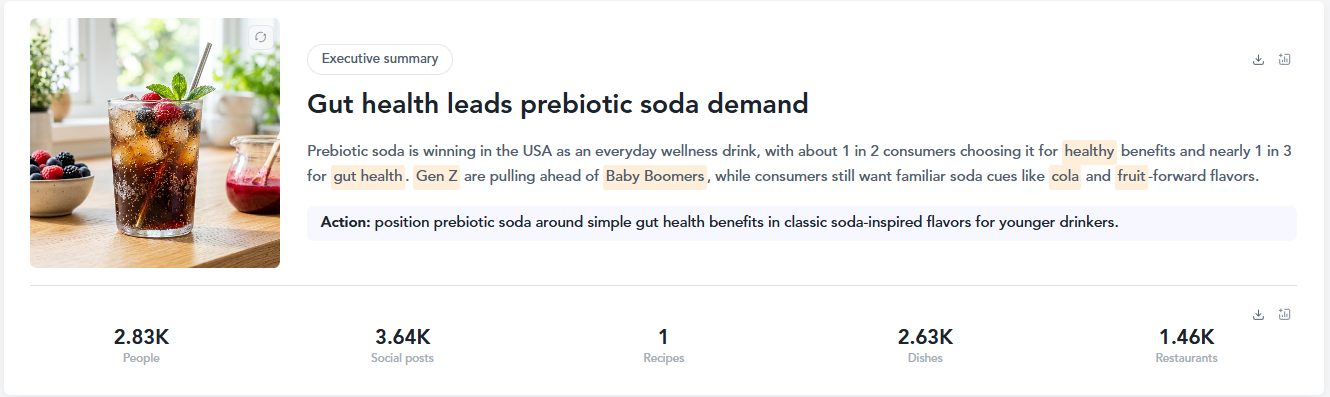
Tastewise consumer panel data shows 2,556 US consumers actively engaging with prebiotic sodas, with posts up 54.5% and dish activity up 41.7% in the past year. The gut health claim reaches 33.4% share in the panel, while “refreshing” is growing at 60.2% in the summer-scoped functional soda dataset. Across the operator layer, 1,948 restaurants and 183 chains are already stocking these products, led by Sweetgreen, Playa Bowls, The Coffee Bean and Tea Leaf, and California Fish Grill. These are the venues your retail consumer visits before they hit the grocery aisle. Foodservice presence is shelf velocity pre-validated.
Your buyer’s incrementality question is answered before you walk in the door. The consumer buying prebiotic sodas for gut health was not spending that dollar in the legacy carbonated soft drink set. They are a net addition to the aisle. Your sell-in story does not need to argue that prebiotic sodas are growing. It needs to prove that your brand is where that growth is going.
The seasonal demand data your buyer wants to see is already compiled.
The 2026 functional beverage shift: routine-led precision wellness
The best prebiotic sodas in 2026 have not won on health claims alone. They have won by becoming a daily ritual. That distinction is critical for your retail buyer conversation, because a product tied to a ritual has repeat purchase built in. A product tied to a health goal has churn built in once the goal is met or abandoned.
Tastewise data makes this concrete. “Recurring favorite” is up 206.1% in the prebiotic soda consumer panel in the past year. “Family” is up 208.4%. These are not trial signals. They are habit signals. The consumer is not discovering prebiotic sodas. They are scheduling them. That shift from novelty to necessity is the moment a category earns sustainable shelf space, and the data shows the prebiotic soda consumer crossed that line in the past 12 months.
The practical implication for your sell-in is specific. Buyers do not just want to see that a category is trending. They want to see that the trend has staying power. The “recurring favorite” signal is the staying power proof. Pair it with the 41.7% dish growth and 54.5% post growth in the same period, and you are showing a buyer a category that is simultaneously broadening and deepening. Broadening means new consumers coming in. Deepening means existing consumers buying more. That combination is what earns additional linear space, not just a trial placement.
Top flavor and formatting trends driving prebiotic sodas
Your retail buyer is looking at every new SKU through one lens: does this bring in a shopper who was not already here, or does it just move revenue from one shelf position to another? Flavor and format are where that argument is won or lost. Two trends have the data behind them in 2026.
Trend 1: Low-glycemic formulation
Low-glycemic formulation means building functional carbonated drinks with plant-derived alternative sweeteners rather than cane sugar. For the prebiotic soda category, this is not a nice-to-have. It is the entry requirement for a meaningful consumer segment.
Tastewise data shows the “low sugar” claim carrying 5.09% share in the prebiotic soda consumer panel, with positive growth trajectory among Gen Z consumers. “No artificial sweeteners” is up 101.9% in the past year. “Caffeine-free” is up 55.5%. These three together describe a consumer who has made a specific, deliberate decision about what goes in their body at 2pm. They are not looking for a diet version of a legacy product. They are looking for prebiotic sodas with no refined sugar that still taste like something worth choosing.
The buyer’s take here is a cannibalization defence. Prebiotic sodas with the lowest sugar content are not pulling volume from diet cola. The consumer choosing them was already avoiding that shelf. Your pitch is not “give us the diet soda space.” It is “give us a facing next to sparkling water, because that is where this consumer is currently landing by default.”
Trend 2: Sensory-forward fruit botanicals
Sensory-forward fruit botanical formulation means layering complex, low-acidity fruit profiles over a sparkling base to create a drinking experience that competes on taste, not just function.
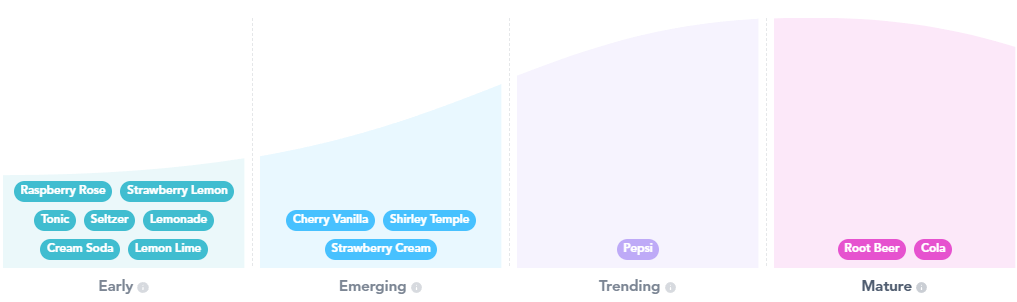
The flavor data from Tastewise is specific. Raspberry rose indexes 111 times higher on prebiotic soda menus than on adjacent beverage menus. Cherry vanilla is up 290% in the past 12 months. Strawberry lemon carries a 7.0% menu index across validated operators including Vessel Kitchen and Calif Chicken Cafe. These are the best prebiotic sodas with fruity flavors backed by operator velocity, not just formulation intent. The latest beverage trends data shows exactly which of these profiles peak in Q3.
For the retail buyer, flavour validation from the foodservice layer is an important proof point. When the same consumer who buys prebiotic sodas at Playa Bowls for $5.99 is standing in the grocery aisle, they are already pre-sold on the flavour. Your job is to be the brand they recognise. Fruity flavors with botanical complexity reduce the tasting-room risk for the buyer and the trial risk for the shopper. Both of those objections disappear when you show up with operator menu data behind your SKU selection.
Using AI signals to build a bulletproof sell-in story
The difference between a brand that wins a facing and one that loses it in 2026 is not the product. It is the evidence. Retail buyers are sitting across the table from multiple prebiotic soda brands, all with compelling products and compelling packaging. What separates the pitch that lands is a sell-in story grounded in real consumer behavior, not a focus group from 18 months ago.
Tastewise’s retail sales solution gives your sales team exactly that. Consumer panel data shows what consumers are choosing and why. Operator menu data shows which flavours are already moving at speed in foodservice, pre-validating the retail SKU. Claims data shows which health and taste attributes are growing versus fading, so your copy and shelf talker reflect what the consumer actually values today.
Consider what that looks like in a category review. Poppi prebiotic sodas are now listed across chains including Sweetgreen, California Fish Grill, Playa Bowls, and Bluestone Lane. That is not brand awareness. That is distribution velocity data that a retail buyer can map directly to foot traffic. When your sell-in deck shows the same consumer profile driving both the foodservice and the retail purchase, you are not asking the buyer to take a chance. You are showing them where the consumer is already spending money and asking to be on the shelf when they walk in the door.
The brands winning shelf resets in 2026 are not the ones with the best product pitch. They are the ones who showed up with a consumer demand map that made the buyer’s risk feel negligible.
Your next buyer meeting is closer than you think.
Proving incrementality via category analytics
The single question that kills more prebiotic soda pitches than any other is: “Is this incremental, or is it just trading?” Your buyer needs to be confident that placing prebiotic sodas for gut health does not simply shift spend from one part of the carbonated beverage set to another. If it does, the category economics do not justify the space.
The data gives you a clean answer. The gut health consumer reaching for a prebiotic soda was not, in most cases, buying a legacy carbonated soft drink. Tastewise data shows gut health at 33.4% share in the prebiotic soda panel, with alcohol-free at 8.06%. The cross-signal between gut health, alcohol-free, and low sugar describes a consumer who has already exited the traditional CSD aisle. They are coming from sparkling water, from kombucha, from plain seltzer. Prebiotic sodas are the upgrade that brings functional value and sensory satisfaction to a consumer the CSD set was not reaching.
That is the incremental argument. According to NielsenIQ, in-store purchases still account for around 77% of FMCG sales. The prebiotic soda consumer is shopping in-store and they are looking for a product that does not yet have consistent shelf presence in the venues they visit most. Your buyer’s real risk is not over-indexing on the category. It is under-indexing while a competitor takes the facing first.
The basket argument reinforces this. Prebiotic sodas retail between $2 and $6 per unit across the Tastewise shelf data, compared to legacy carbonated soft drinks at a significantly lower price point. A consumer switching from diet cola to a prebiotic soda is a trade-up in basket value. Your buyer benefits from that economics shift, not just your brand.
Localising demand for targeted regional resets
A pitch that works nationally does not always win locally. Retail buyers managing regional resets want to know that the flavour portfolio you are proposing fits their specific shopper. Generic distribution strategies leave money on the table and give savvier competitors the opportunity to over-index in the markets that matter most.
Tastewise data allows your team to cut the prebiotic soda consumer signal by location, identifying where specific flavour and health claim combinations are over-performing. Berry botanicals and raspberry rose profiles are indexed most heavily in health-forward urban markets where Sweetgreen, Playa Bowls, and Bluestone Lane cluster. Ginger lime and lemon-forward profiles carry stronger operator presence in everyday fast-casual venues including Calif Chicken Cafe and Vessel Kitchen, which skew toward suburban commuter demographics.
For a category manager building a regional reset pitch, this is the difference between a generic eight-SKU proposition and a five-SKU curated set that over-delivers on the specific consumer the regional buyer is trying to serve. Your buyer does not want the full range. They want the right range for their stores. Tastewise gives you the granularity to make that case with confidence. The next step is to explore the best AI food intelligence tools.
What the 2026 retail landscape means for CPG brands
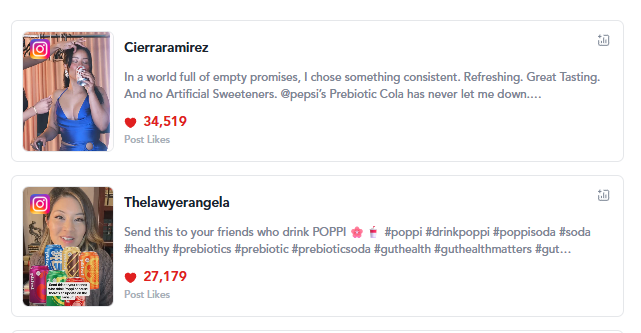
The data is clear. The consumer is ready. The question is whether your team has the infrastructure to act on it before the reset window closes.
For innovation and R&D
Cherry vanilla up 290%, raspberry rose indexed 111 times above the beverage category average, and “no artificial sweeteners” up 101.9% in the past year. These are your next flavor briefs. Stop building flavor variants in a vacuum and start building them against signals that are already moving on shelf and in the operator layer.
For category managers
The “recurring favorite” signal up 206.1% is your linear space defence. Habitual repeat purchase is the argument that justifies additional facings and protects existing ones. Pair it with the basket trade-up economics of a $3 to $6 prebiotic soda against a sub-$2 legacy CSD and you have a revenue-per-square-foot story that holds up under scrutiny.
For sales teams
The best retail sales enablement approach in this category is not a sample box and a one-page sell sheet. It is a consumer demand map built from live data that shows your buyer exactly where the consumer is, what they want, and why your brand is the one positioned to deliver it. Walk into your next category review with that, and the conversation changes.
For insights teams
The whitespace in this category is not consumer-side. It is operator-side and regional. Krispy Krunchy Chicken, L&L Hawaiian Barbecue, and Manhattan Bagel are top whitespace accounts in the Tastewise operator data with zero prebiotic soda presence. Map that gap for your leadership and you fund the next distribution push with evidence, not instinct.
The 2027 hyper-personalised retail outlook
The shelf reset cycle is shortening. Grocery retailers are moving toward more frequent, data-driven resets informed by real-time sell-through rather than annual category reviews. For CPG brands in fast-moving functional beverage categories, that means the advantage window for early movers is narrowing. A brand that earns its facing in the 2026 reset and then goes quiet on data will find itself displaced in 2027 by a brand that maintained an always-on view of consumer demand.
The prebiotic soda category is a preview of what that acceleration looks like. The consumer signal has moved fast enough that brands formulating or positioning based on data from 12 months ago are already behind the current buyer conversation. The flavor profiles winning on operator menus today will be the retail velocity leaders in 18 months. The health claims growing fastest in the consumer panel right now will be the shelf talker language your buyer expects to see in the next reset deck.
Tastewise’s agentic AI is built for exactly this environment. Always-on consumer intelligence means your team is not catching up to the category. You are ahead of it. That is the posture that wins space in a hyper-personalized retail environment, and it is the posture that keeps it when the reset cycle accelerates further into 2027.
FAQs about prebiotic sodas
Buyers in 2026 want three things in this order: proof that the consumer is real and growing, proof that the purchase is habitual rather than one-time, and proof that the placement is incremental rather than cannibalistic. Tastewise data answers all three. Consumer panel growth (posts up 54.5%, dish activity up 41.7% in the past year) handles the first. The “recurring favorite” signal up 206.1% handles the second. The gut health and low-sugar consumer profile, which comes from outside the legacy CSD aisle, handles the third. Walk in with those three data points structured as a buyer-facing narrative and you are speaking the language of the reset.
Poppi and OLIPOP are the validated operator anchors in the Tastewise data, appearing across Sweetgreen, Playa Bowls, The Coffee Bean and Tea Leaf, California Fish Grill, Bluestone Lane, and more than 40 other named chains. Coca-Cola Simply Prebiotic sodas represent the entry of a legacy player into the set, which is the strongest possible signal to a retail buyer that the category has reached mainstream credibility. Referencing the operator presence of leading brands demonstrates that the consumer has already validated the category in a high-friction, competitive setting. If they are paying $5.99 for it at Playa Bowls, they will reach for it on shelf.
The distinction between a trend and a structural shift is whether the consumer builds a habit around it. The Tastewise consumer panel shows “recurring favorite” up 206.1% and “family” up 208.4% in the prebiotic soda segment in the past year. Both of these are habit signals, not discovery signals. A consumer who calls something a recurring favorite and brings it into a family purchase occasion has made it part of their routine. That is the evidence that separates this category from a seasonal spike. Pair it with the 183 chains now carrying these products and the operator velocity data, and the structural argument is complete.



We’d love to learn your goals and see how Tastewise fits
We’d love to learn your goals and see how Tastewise fits
Get a personalized demo
Good taste. Wise move.
Your demo request is confirmed. We’ll reach out within one business day to schedule your walkthrough.
What happens next

See what’s driving demand, then turn it into a sell-in story for retailers and operators.
- Connect consumer panels, market trackers, and agents into one evidence view
- Get the “why” behind what’s changing, with explainable demand drivers
- Walk away with a buyer-ready narrative and next steps to activate
Trusted by





“Tastewise is my secret tool for knowing what consumers want next and why.“