





AI retail customer analytics has moved from a competitive advantage to a basic requirement for category leadership. Buyers are walking into 2026 shelf resets with more granular shopper data than most CPG brands have in their own planning decks. The brands closing that gap are not doing it with bigger research budgets. They are doing it with better, faster data pipelines. Tastewise connects real-time consumer demand signals to the category stories your sales team needs in the room, before the buyer asks for them.
Key takeaways
- Behavioral signals move faster than scan data. AI retail customer analytics identifies demand shifts weeks before they appear in point-of-sale reports. Your team needs to see the signal before the buyer does.
- Basket affinities and occasion data are the shelf arguments buyers respect most. When you can show a buyer how your product increases total basket value, you stop being a vendor and start being a category partner.
- Private label is not winning on price alone. It wins when branded teams fail to own a specific consumer need state. AI analytics shows you exactly which need states are undefended in your category.
- Regional variance is where most national plans break down. A consumer signal that drives volume in one metro market can be statistically invisible in another. Filtering to regional demand keeps your distribution decisions profitable.
What AI retail customer analytics actually does for your category
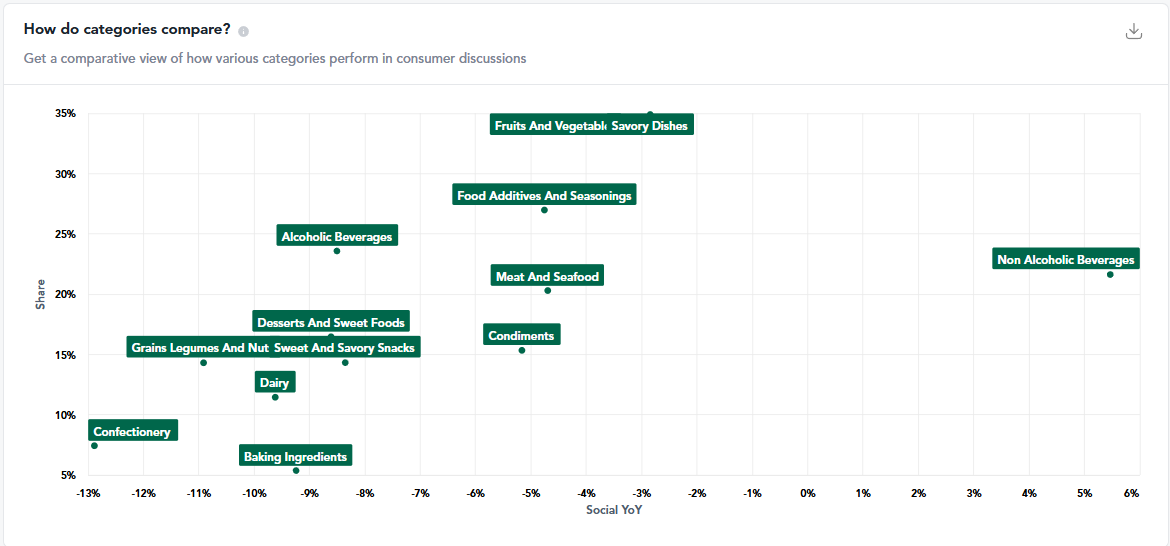
AI retail customer analytics is the practice of using machine learning and real-time behavioral data to interpret how shoppers make decisions in a category, before those decisions show up in backward-looking sales reports. It replaces the quarterly research cycle with a continuous signal feed. The brands using it are not just faster. They are arguing from a different kind of evidence.
The consumer motivation layer is what separates AI-driven analytics from standard syndicated data. Traditional metrics tell you what sold. AI analytics tells you why consumers reached for it, what occasion drove the trip, which ingredient or claim tipped the decision, and where a competitor has not yet responded. According to research from Deloitte on AI in consumer goods, brands that integrate AI-driven demand signals into their category planning cycles reduce time-to-insight by a significant margin compared to those still relying on syndicated-only data sources.
The opportunity for your team is in the gap between what the buyer already knows and what you can show them that they do not. Product innovation teams closing this gap with AI-powered consumer data are consistently producing category stories that hold up through a full line review, not just the opening slide.
The 2026 analytics mindset: live behavior vs. legacy retail metrics
The standard CPG research stack was built for a world where category reviews happened twice a year and trend data had a six-month lag. That world is gone. Buyers now have access to loyalty card data, e-commerce click streams, and social listening dashboards. They are not waiting for your quarterly deck to understand what is happening in their category.
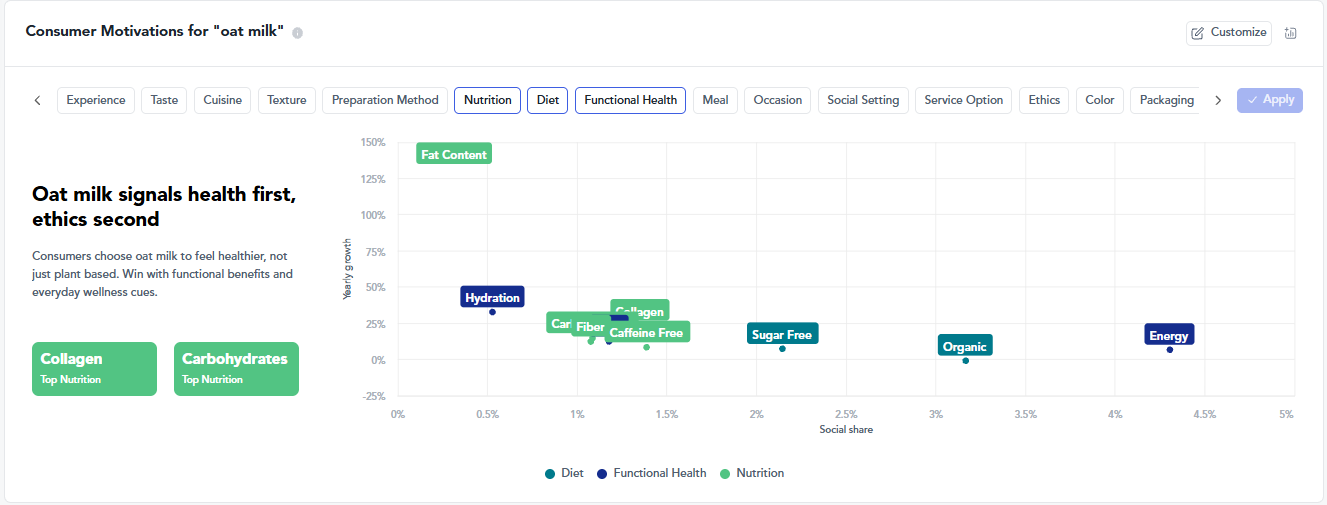
The shift your team needs to make is from descriptive to predictive. Descriptive analytics tells you what sold last quarter. Predictive AI analytics for CPG tells you what consumers are already reaching for and where no brand has yet built a response. The job-to-be-done framing is critical here: you are not tracking sales trends. You are tracking consumer intention before it becomes a sales trend.
The practical implication for category planning is to build a standing demand signal review into your monthly rhythm, not your quarterly one. Two weeks of compounding signal data is enough to distinguish a durable trend from a social media moment. Four weeks is enough to build a sell-in brief around it.
7 ways to master the category with AI retail customer analytics
1. Mapping basket affinities via AI customer analytics
Basket affinity analysis identifies which products consumers consistently purchase together in a single shopping trip, giving your team a data-backed argument for cross-merchandising placements.
It is one of the highest-value applications of AI retail customer analytics because it connects your product directly to purchase behavior in context, not in isolation. Buyers in 2026 respond to affinity data because it shows category value, not just SKU performance.
Buyer’s take: A buyer who can see that your product reliably increases basket size by anchoring adjacent purchases has a business case they can take to their own category director.
2. Tracking real-time usage occasion shifts
Occasion tracking maps when and why consumers reach for a product, identifying shifts in daypart, season, or life event that change the demand profile of an entire category.
Occasions are one of the fastest-moving demand variables in food and beverage. A sauce that was primarily a weekend grilling product in 2024 may have shifted to a weeknight convenience staple by 2026. AI analytics surfaces this shift before the planogram reflects it.
Buyer’s take: When you can show a buyer that a new occasion is driving incremental trips rather than cannibalizing existing ones, you are arguing for shelf expansion, not reallocation.
3. Predicting flavor velocity trends
Flavor velocity analysis measures how quickly consumer interest in a specific flavor profile is accelerating, allowing your team to time innovation and sell-in to the front of the trend curve, not the back.
This is where food intelligence platforms have the clearest edge over traditional research. Flavor signals appear in restaurant menus, recipe searches, and consumer motivation data months before they move retail volume. Your team can build a brief around the signal before a competitor files the innovation concept.
Buyer’s take: A category buyer who sees your innovation roadmap aligned to a documented flavor velocity signal treats your pipeline as a category plan, not a product list.
4. Diagnosing category underperformance
Underperformance diagnosis uses AI analytics to identify which consumer need states are unmet in your current category set, separating a distribution problem from a product-market fit problem.
Most category underperformance is misdiagnosed as a pricing or promotion issue when it is actually a need state gap. AI retail customer analytics separates these causes precisely, which means your team recommends the right fix rather than the most visible one.
Buyer’s take: Buyers trust brand teams that diagnose category problems accurately. Walking in with a root-cause analysis rather than a promotional proposal signals category partnership.
5. Countering private label threats
Private label threat analysis identifies the specific need states and price points where private label is most likely to gain share, so your team can build brand equity defenses around the attributes private label cannot credibly claim.
Private label wins when the branded product stops standing for something specific. Retail sales teams using AI analytics consistently find that the brands most vulnerable to private label substitution are the ones whose category story is built on price and convenience rather than a consumer need that requires brand trust to fulfill.
Buyer’s take: A buyer who sees a clear consumer rationale for why your brand cannot be private-labeled out of the set is a buyer who protects your listing in a cost review.
6. Spotting emerging ingredient pairings
Ingredient pairing analysis tracks which novel combinations are gaining traction in consumer behavior, giving your R&D and marketing teams early signals for formulation decisions and packaging claims.
Ingredient pairings are the earliest leading indicator of a macro flavor trend. They appear in operator menus and recipe content before they reach retail. CPG marketing teams that track these signals consistently launch into trend curves that are still ascending rather than already saturated.
Buyer’s take: When your innovation story is grounded in documented ingredient signal data rather than a trend report, a buyer can defend the ranging decision internally with evidence.
7. Cross-category merchandising optimization
Cross-category merchandising optimization uses consumer behavior data to identify secondary placement opportunities where your product belongs in a shopper’s mental model even if it does not belong there by traditional category logic.
This is where AI retail customer analytics creates shelf real estate that did not previously exist in a plan. When you can show that a specific consumer segment consistently buys your product in the same trip as a product in a different category, the secondary placement argument is built from behavior, not intuition.
Buyer’s take: Buyers approve cross-category placements when the shopper data is specific, not when the brand team thinks the packaging looks good next to another product.
Evaluating the best tools for AI retail customer analytics
The evaluation question most CPG teams ask is capability-first: does this platform have flavor analytics, occasion tracking, and basket data? The more useful question is speed-to-insight. A platform that takes three weeks to produce a category brief is not a competitive tool, regardless of how sophisticated its underlying model is. The best AI platforms for food trend analysis are the ones where your team can go from a question to a buyer-ready narrative in a single session.
The second evaluation criterion is data freshness. Category decisions made on 90-day-old consumer data are decisions made on a category that no longer exists exactly as described. The brands using AI analytics to competitive advantage are the ones pulling signal data on a rolling basis, not batch-refreshing once a quarter.
The third is explainability. A platform that produces a number your team cannot explain to a buyer is a liability in a line review, not an asset. Every insight that goes into a sell-in deck needs to be traceable to a consumer behavior, not just a model output. Agentic AI built on transparent consumer signals gives your team the confidence to defend every data point in the room.
5 questions to ask when choosing an AI retail analytics platform
- How fresh is the data? Can you pull consumer signals on a rolling basis, or does the platform batch-refresh once a quarter?
- How fast is speed to insight? Can your team go from a question to a buyer-ready narrative in a single session?
- Is every insight explainable? Can you trace each number back to a specific consumer behavior you can defend in a line review?
- Does it connect motivation to sales? Does it tell you why consumers reached for a product, not just what sold?
- Can it segment to the regional level? Can you filter demand by market before building a distribution story?
Building the sell-in kit using AI retail customer analytics
The gap between a generic category presentation and a sell-in kit that moves a buyer is almost always an evidence gap, not a creative one. Buyers have seen enough beautifully designed decks to be skeptical of packaging. They are moved by specificity: here is the consumer signal, here is the shelf gap it creates, here is why your current set is missing it.
The AI-powered sell-in kit builds this argument from the bottom up. Start with the consumer motivation signal, layer in the flavor or occasion trend driving it, then map the current shelf set against the gap. The retail sell-in narrative that results from this sequence is not a pitch. It is a category plan that your product happens to fulfill.
For foodservice sell-in teams, the same principle applies with operator trend data substituted for retail shelf analysis. The structure of the argument is identical. Only the channel evidence changes.
Regional relevance and localized shopper demand in AI retail customer analytics
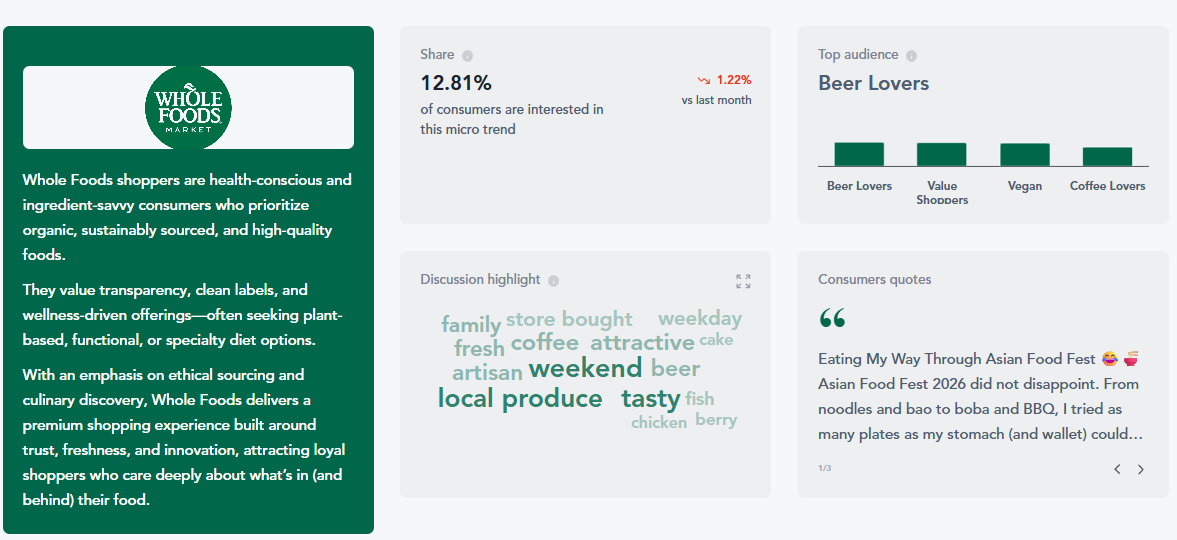
A national consumer signal is an average. It tells you something real is happening but not where your team should prioritize. Regional analytics is where the distribution decision actually gets made. A flavor trend with strong traction in urban coastal markets can be statistically flat in mid-market regional accounts. Acting on the national figure in both contexts wastes trade spend and erodes buyer credibility.
The practical step is to segment your consumer demand data by DMA before building any distribution or shelf story for a regional account. Consumer marketing teams that present regional-specific data to regional buyers consistently report faster listing decisions and fewer out-of-gate distribution compromises than those presenting national rollups.
The other regional variable that AI analytics surfaces is private label saturation by market. Private label share varies significantly by region and by retailer. Understanding where private label is strongest before you build your defensive category argument is the difference between a story that lands and one that gets challenged in the first five minutes.
What AI retail customer analytics means for CPG brands in 2026
- For retail-focused brand managers: Real-time demand signals let you build the consumer rationale for a new listing before the buyer asks for it, not in response to the question.
- For trade marketing teams: Occasion and basket data replace generic category decks with shelf reset narratives built on specific shopper behavior at the account level.
- For category managers: AI analytics shows exactly which need states your current SKU portfolio is leaving undefended, and how much consumer demand is accumulating there.
- For R&D and innovation teams: Flavor velocity and ingredient pairing signals give your pipeline a consumer-demand foundation that survives a buyer’s commercial review.
- For sales leadership: The team that walks into a key account meeting with AI-generated category data walks in with leverage. The team that does not is responding to the buyer’s agenda, not setting it.
The future of AI retail customer analytics: 2027 outlook
The direction is toward always-on category management. Agentic AI workflows are already compressing the time between a consumer signal emerging and a brand team producing a buyer-ready response. By 2027, the brands still running monthly or quarterly analytics cycles will be responding to trends their competitors closed six weeks ago.
The structural shift that follows is hyper-localized shelf allocation. Retailers with granular loyalty data are already piloting store-cluster planogram adjustments rather than regional resets. The brands that benefit from this shift are the ones whose consumer data operates at the same resolution as the buyer’s shelf-planning model. National averages will not match a store-cluster allocation tool.
The implication for your team is to start building the data infrastructure now, not in response to a buyer asking for it. The brands that will dominate category management in 2027 are the ones that treated always-on AI analytics as a core competency in 2026, not a project.
Build your category case with AI
The brands winning 2026 shelf resets are not arriving with bigger budgets. They are arriving with better retail sell-in stories built on real-time consumer evidence. Your team can do the same.
FAQs about AI retail customer analytics
AI retail customer analytics uses machine learning to interpret real-time consumer behavior signals, including motivation, occasion, flavor preference, and basket composition. Standard retail data describes what sold. AI analytics for CPG explains why it sold and where unmet demand is accumulating. The practical difference is that AI analytics produces a category argument, not just a performance summary.
A shelf reset is a category decision, not a product decision. Buyers are allocating finite shelf space to the SKUs most likely to drive total category growth. AI retail customer analytics gives your team the consumer demand evidence to show that your product is the mechanism for that growth, specifically through need-state gap analysis, flavor velocity signals, and basket affinity data.
The brands gaining category share in 2026 are pulling demand signal updates every two to four weeks. For high-velocity categories or in the six weeks before a major line review, a weekly pull is worth the operational cost. The goal is to detect a consumer shift before a competitor acts on it.
Look for three things above raw feature count: data freshness, speed to insight, and explainability. The platform should let you pull consumer signals on a rolling basis, move from a question to a buyer-ready narrative in one session, and trace every insight back to a consumer behavior you can defend in a line review. A number your team cannot explain to a buyer is a liability, not an asset.
It gives your innovation pipeline a consumer-demand foundation before you commit development budget. Flavor velocity signals show which profiles are accelerating, and ingredient pairing data surfaces novel combinations gaining traction in consumer behavior, often in menus and recipes before they reach retail. That lets your team brief concepts at the front of a trend curve rather than after a competitor has filed first.




We’d love to learn your goals and see how Tastewise fits
We’d love to learn your goals and see how Tastewise fits
Get a personalized demo
Good taste. Wise move.
Your demo request is confirmed. We’ll reach out within one business day to schedule your walkthrough.
What happens next

See what’s driving demand, then turn it into a sell-in story for retailers and operators.
- Connect consumer panels, market trackers, and agents into one evidence view
- Get the “why” behind what’s changing, with explainable demand drivers
- Walk away with a buyer-ready narrative and next steps to activate
Trusted by




“Tastewise is my secret tool for knowing what consumers want next and why.“