





Diners are chasing flavour and comfort at the same time, and your menu or product line has to keep pace. Tasty food trends have moved from a social curiosity to a real fixture on American plates. Right now a tasty-labelled dish sits on a large share of US restaurant menus, and the conversation around it keeps building. For any brand deciding what to launch next, that mix of scale and momentum is hard to ignore. This is where the signal starts to earn its place in your planning.
Key takeaways
- More than 2 in 5 US restaurant menus now carry a tasty-labelled dish, at 42.94% menu presence. That scale means your team is entering a category diners already recognise, not building demand from scratch.
- Conversation about tasty food is up around 12% on last year. Rising buzz gives your marketing team a live cue to time launches and claims while interest is still climbing.
- Everyday ingredients like rice, pasta, garlic and onion anchor the category, often paired with vegan-friendly and high-protein claims. That overlap points your R&D team toward familiar formats with a clear wellness angle.
Tasty food trends at a glance
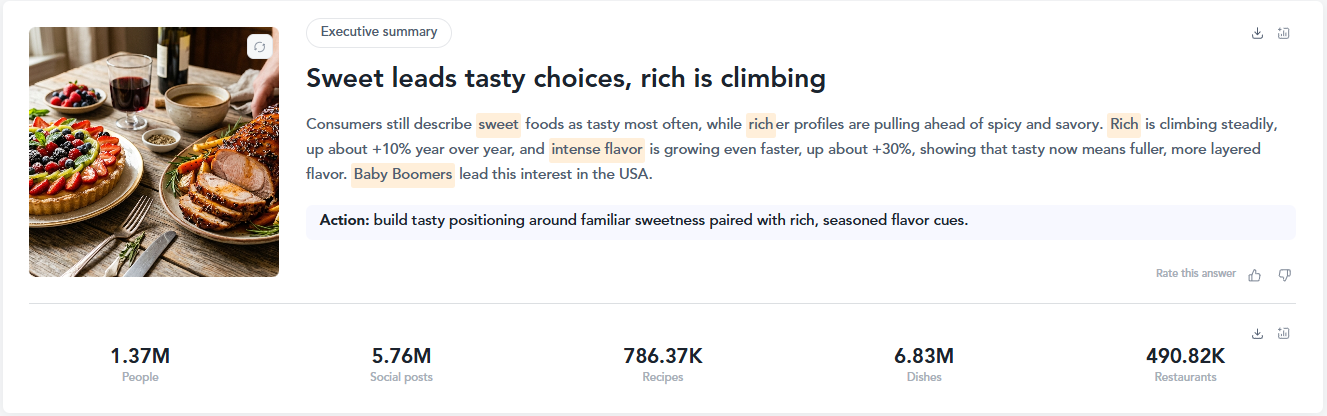
Tasty food is shorthand for dishes that lead with bold, satisfying flavour without asking the diner to trade off on health. Think comfort-forward plates built on familiar bases like rice and pasta, lifted with garlic, onion and other everyday aromatics. Consumers reach for it because it feels indulgent and sensible at once.
The data backs the shift. Tastewise, the food and beverage intelligence platform, shows tasty-labelled dishes on 42.94% of US restaurant menus, with conversation up around 12% over the past year. Vegan-friendly and high-protein claims travel alongside these dishes, which tells you the flavour story and the wellness story are landing together.
For your team, that is room to move. The category is broad enough to enter with a familiar format, yet still open enough that a sharper flavour or claim can stand out. The brands that read the signal now get to shape the space before it crowds.
What tasty food trends look like on the plate
Tasty food trends are less about one hero ingredient and more about a feeling on the plate. The category leans on rice, pasta, garlic and onion, the building blocks most kitchens already stock. That familiarity is the point, because it lowers the barrier for diners to try something and for operators to add it. The wider market is moving the same way, with the 2026 culinary forecast from the National Restaurant Association naming global, comfort-driven flavour as a leading driver of menu innovation this year. When you build on bases people already trust, adoption comes faster and your menu planning gets simpler.
The tasty food trends data your team can act on
The numbers give you a starting position, not just a headline. At 42.94% menu presence, tasty dishes are already mainstream on US menus, so the real question is differentiation, not proof of demand. Conversation growing around 12% in the past year shows the interest is still climbing rather than peaking. Read together, that is a category with scale and headroom. Your team can enter with confidence and still find a distinct angle.
How food brands are using tasty food trend data in 2026
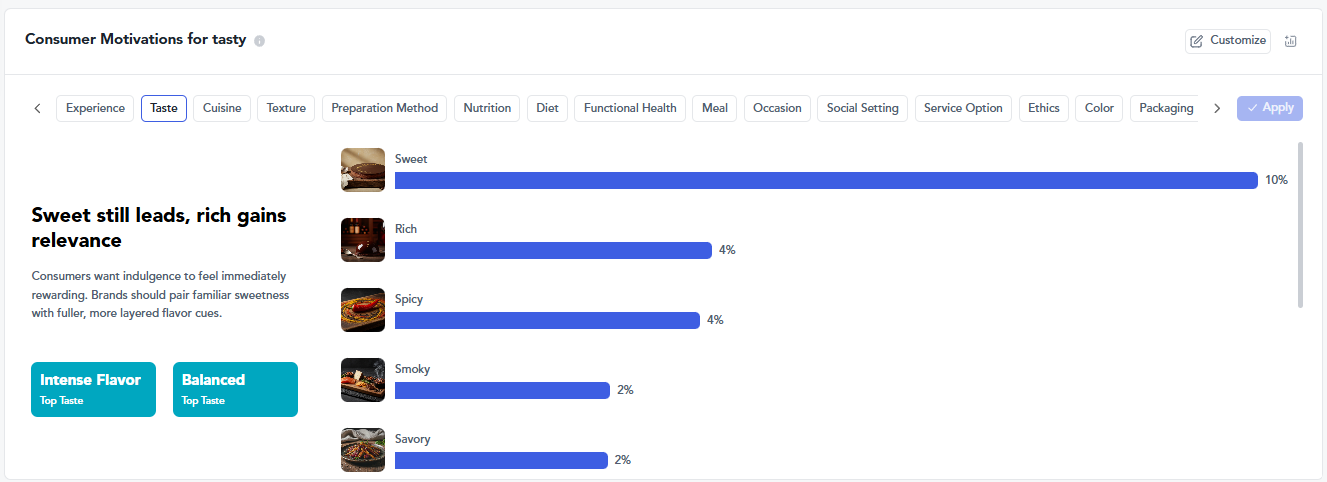
Data only matters when it changes a decision. Here is how three different teams turn tasty food trends into a move, framed as illustrative scenarios rather than named client results.
Use case 1: restaurant menu innovation
Picture a regional fast-casual operator weighing its next limited-time offer. Seeing tasty dishes on 42.94% of US menus, the team benchmarks its own line-up and spots where garlic and onion forward plates are thin against competitors. Using product innovation signals, it builds a vegan-friendly rice bowl with a bolder seasoning profile than the local field. The payoff is faster ideation and less guesswork, with a dish shaped by real demand rather than a hunch. That is how trend data turns a crowded category into a clear opening for your menu.
Use case 2: CPG product development
Now take a snack brand chasing the plant-based, nutrient-dense shift. Its R&D team uses tasty ingredient signals, rice, pasta, garlic and onion among them, to shape a new high-protein, vegan-friendly line. Because the formats are already familiar to shoppers, the team can move from concept to shelf with fewer reformulations and less back and forth. Grounding the brief in live demand, supported by AI for CPG workflows, keeps development pointed at what consumers are already reaching for. For your team, that is a shorter, more confident path to launch.
Use case 3: food marketing and claims strategy
Finally, consider a brand manager rewriting front-of-pack copy. By surfacing which claims are gaining traction alongside tasty dishes, such as vegan-friendly and high-protein, the team can mirror the language consumers already use on menus and in their feeds. That alignment makes packaging feel current and earns quicker recognition on shelf. It also keeps marketing and product telling the same story. Matched to what people are actually saying, your claims work harder without a bigger budget.
Where your team goes next
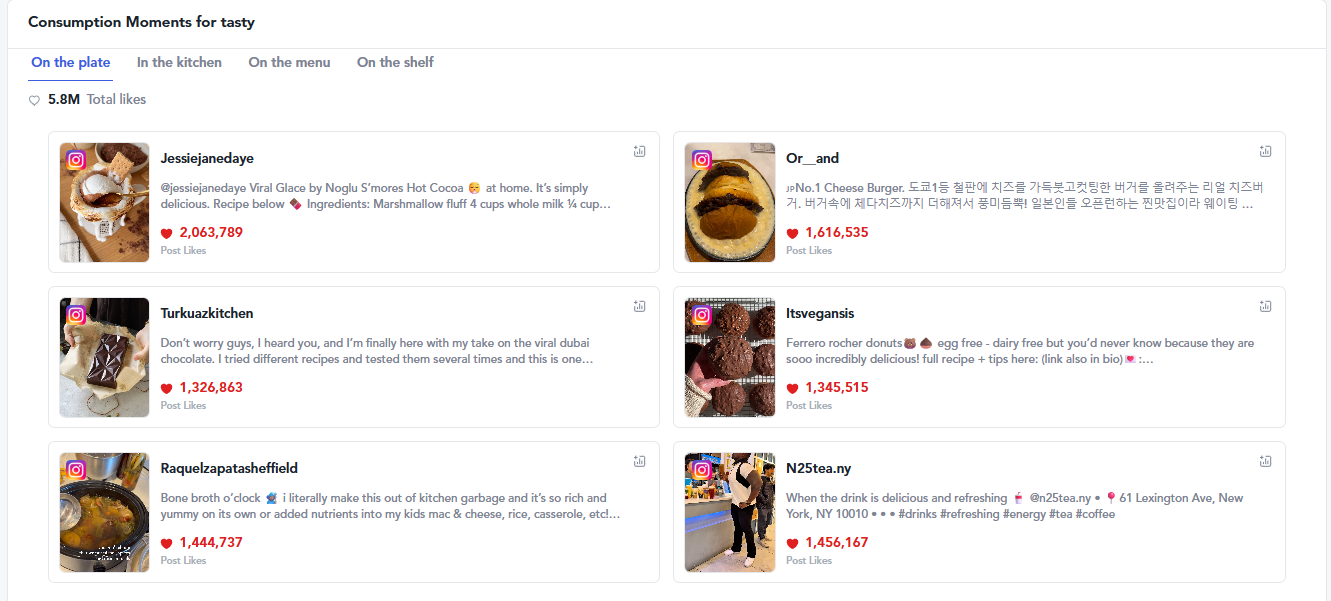
Tasty food trends are not slowing down, and the space rewards the teams who move while it is still open. The scale is proven, the conversation is still climbing, and the formats are ones your kitchen or line already knows. Get the read on your category and build the launch your buyers are already primed for.
FAQs about tasty food trends
Tasty food trends describe dishes that lead with bold, comforting flavour while still feeling health-conscious. They lean on familiar bases like rice and pasta, lifted with garlic, onion and similar aromatics, and often carry vegan-friendly or high-protein claims.
Brands use it to decide what to launch and how to talk about it. Restaurant teams benchmark menu presence to find white space, R&D teams shape formats around trending ingredients, and marketing teams align claims with the language consumers already use.
Everyday staples are doing the heavy lifting. Rice, pasta, garlic and onion anchor many tasty dishes, and they pair often with vegan-friendly and high-protein positioning, which points to demand for familiar formats with a clear wellness angle.

Read more from Kelia Losa Reinoso



We’d love to learn your goals and see how Tastewise fits
We’d love to learn your goals and see how Tastewise fits
Get a personalized demo
Good taste. Wise move.
Your demo request is confirmed. We’ll reach out within one business day to schedule your walkthrough.
What happens next

See what’s driving demand, then turn it into a sell-in story for retailers and operators.
- Connect consumer panels, market trackers, and agents into one evidence view
- Get the “why” behind what’s changing, with explainable demand drivers
- Walk away with a buyer-ready narrative and next steps to activate
Trusted by





“Tastewise is my secret tool for knowing what consumers want next and why.“