







Powerade vs Gatorade is one of the oldest rivalries in the drinks aisle, and the shelf behind it keeps getting more crowded. Tastewise counts 2,295 sports drink products from 168 brands on US online shelves in 2026. Electrolyte claims now sit on nearly 1 in 2 of those products (45%), while sugar free claims sit on nearly 1 in 5 (18%). Across the Tastewise US consumer panel, interest in electrolyte drinks among non-alcoholic beverage consumers grew 13% over the past year. This guide compares the two brands label by label, then shows what the shelf and consumer data say about where the category is heading.
Key takeaways
- A 20 fl oz Powerade carries 400 mg of sodium and 130 mg of potassium, against 270 mg and 80 mg in a 20 fl oz Gatorade Thirst Quencher.
- Both full-sugar drinks carry 34 g of sugar per 20 fl oz bottle. Gatorade uses sugar and dextrose, while Powerade uses high fructose corn syrup.
- Powerade Zero has 0 calories and keeps the full Powerade electrolyte load. Gatorade Zero has 5 to 10 calories and keeps the standard Gatorade sodium and potassium levels.
- Gatorade lists 795 sports drink products on US online shelves, about 1 in 3 of the category (35%). Powerade lists 246, about 1 in 10 (11%).
- Nearly 3 in 10 Powerade products are sugar free (28%), compared with about 1 in 6 Gatorade products (16%).
- Among US Gatorade and Powerade consumers, convenience as a reason to buy grew 21% over the past year, while healthy as a reason to buy fell 22%.
What is the difference between Powerade and Gatorade?
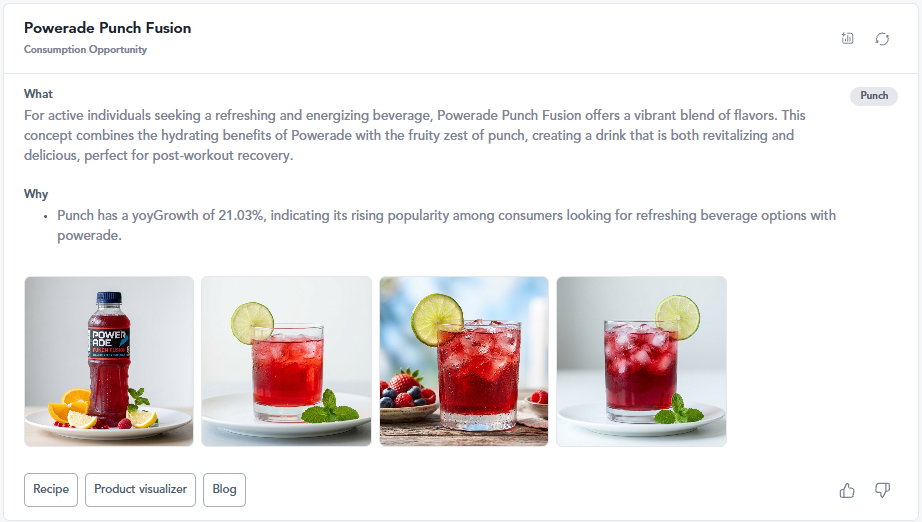
Powerade and Gatorade are both sports drinks built to rehydrate you and replace what you lose in sweat. Powerade uses its ION4 system of sodium, potassium, calcium and magnesium, with added vitamin B12 and vitamin C. Gatorade Thirst Quencher relies on sodium and potassium with a sugar and dextrose blend for quick energy.
That is the short answer to the powerade vs gatorade question. The longer answer sits in the label. The table below sets the main lines side by side, using each product’s printed 20 fl oz Nutrition Facts panel.
| Per 20 fl oz bottle | Gatorade Thirst Quencher | Powerade | Gatorade Zero | Powerade Zero | Core Hydration |
| Calories | 140 | 130 | 5 to 10 | 0 | 0 |
| Total sugars | 34 g | 34 g | 0 g | 0 g | 0 g |
| Sweetener | Sugar, dextrose | High fructose corn syrup | Sucralose, acesulfame potassium | Sucralose, acesulfame potassium | None |
| Sodium | 270 mg | 400 mg | 270 mg | 400 mg | 0 mg |
| Potassium | 80 mg | 130 mg | 80 mg | 130 mg | Added for taste |
| Calcium and magnesium | Not added | Added | Not added | Added | Added for taste |
| Added vitamins | None | B12 and C | None | B12 and C | None |
Hydration sits inside wider shifts in what US consumers drink, from functional claims to sugar reduction.
Electrolyte ratios & hydration performance
On electrolyte content, the powerade vs gatorade electrolytes comparison favors Powerade on raw numbers. A 20 fl oz Powerade carries about 48% more sodium than a 20 fl oz Gatorade Thirst Quencher, plus 50 mg more potassium. The ratio between the two minerals is close, at roughly three parts sodium to one part potassium in both drinks.
Sodium is the electrolyte you lose most in sweat, so it does most of the work in any gatorade vs powerade electrolytes debate. Powerade adds calcium and magnesium on top, at about 2% of the daily value each. Those extras help Powerade claim four electrolytes on pack, but sodium and potassium carry almost all of the load in both bottles.
Each brand also sells a higher-electrolyte line for heavy sweaters. Gatorlyte Zero lists 490 mg of sodium and 350 mg of potassium per 20 fl oz. Powerade Power Water lists 520 mg of sodium per 20 fl oz with zero sugar.
Core Hydration sits in a different place in any core hydration vs gatorade powerade comparison. It is purified water with potassium, magnesium and calcium added for taste, and its label lists 0 mg of sodium and 0 calories. For athletes, core hydration vs gatorade powerade for athletes comes down to sweat loss. Core works as everyday water, while Gatorade and Powerade are formulated to put sodium back.
The shelf reflects this focus on minerals. Out of 2,295 sports drink products on US online shelves, electrolyte claims appear on nearly 1 in 2 (45%) and hydration claims on about 2 in 5 (41%). Electrolyte claims also appear on about 3 in 4 sports drinks launched in the past 12 months (77%).
Sugar content, caloric profiles & low-calorie variants
On gatorade vs powerade sugar, the two full-sugar drinks are level at 34 g per 20 fl oz bottle. Gatorade carries 140 calories and Powerade carries 130. The difference sits in the sweetener, with Gatorade using sugar and dextrose and Powerade using high fructose corn syrup.
The powerade zero vs gatorade zero comparison is closer to a tie on sugar and a clear split on minerals. Both drop sugar to 0 g and sweeten with sucralose and acesulfame potassium. Powerade Zero keeps its 400 mg of sodium and 130 mg of potassium at 0 calories. Gatorade Zero keeps 270 mg of sodium and 80 mg of potassium at 5 to 10 calories.
For a powerade vs gatorade low calorie comparison, both zero lines land within 10 calories of each other. The choice then rests on whether you want more sodium per bottle or the Gatorade flavor range.
The shelf shows how differently the two brands have built their zero sugar ranges. Gatorade lists 130 sugar free sports drink products, against 69 for Powerade and 67 for Bodyarmor. As a share of each brand’s own range, nearly 3 in 10 Powerade products are sugar free (28%), compared with about 1 in 6 Gatorade products (16%). Powerade also launched five new sugar free products in the past 12 months, while Gatorade launched one.
Across the Tastewise US consumer panel, 0.55% of beverage consumers engage with zero sugar sports drinks, and that interest grew 7% over the past year.
Real-world use cases: endurance, illness & recovery
For powerade vs gatorade for marathon running, the main functional difference is carbohydrate. Both full-sugar drinks give you 34 g of carbohydrate per 20 fl oz bottle as fuel. The zero versions give you electrolytes without that fuel, so they suit lighter sessions or anyone cutting sugar.
For heavy sweat on a long run, Powerade gives you more sodium per bottle. Gatorade gives you a wider range of formats to choose from, including Gatorlyte for higher electrolyte needs.
For powerade vs gatorade when sick, the labels tell you what is in each bottle but not what you need. Both brands position their drinks for sweat loss during exercise. If you are dealing with vomiting or diarrhea, ask a doctor or pharmacist whether a sports drink, an oral rehydration solution or plain water fits best.
The core powerade vs gatorade differences come down to three label lines: sodium, sweetener and added minerals. On gatorade vs powerade which is better, there is no single winner. Powerade gives you more sodium and potassium per bottle and four electrolytes. Gatorade gives you the larger range and the stronger shelf presence.
Consumers choose both drinks for similar reasons. Among US consumers who drink Gatorade or Powerade, nearly 3 in 10 (28%) cite fitness and nearly 1 in 5 (19%) cite hydration. About 1 in 8 (13%) cite electrolytes as their reason to buy. Each of those three reasons dipped between 6% and 7% over the past year.
How Tastewise.io uses data-driven insights to predict sports beverage trends
Tastewise, the proactive AI food and beverage intelligence system that delivers before you ask, reads consumer panel signals, retail shelf listings and restaurant menus as one connected dataset. That data refreshes daily, so you can track powerade vs gatorade demand as it moves.
For a sports drink brand, that means one view of what consumers want, what they buy into and what already sits on shelf. Agents can watch your category on a schedule and send your team the finished work, from a category read to a retail buyer story.
Shift toward zero-sugar hydration
Sugar free claims sit on nearly 1 in 5 sports drinks on US online shelves (18%). They appear on nearly 1 in 3 products launched in the past 12 months (30%). That gap between the existing shelf and new launches is the clearest sign of where brands are placing new bets in the powerade zero vs gatorade zero race.
The reasons consumers give are shifting too. Among US Gatorade and Powerade consumers, easy as a reason to buy grew 23% and quick grew 15%. Healthy fell 22% over the same period. Zero sugar products that sell on convenience have more consumer momentum behind them than products that sell on health alone.
Interest in zero sugar sports drinks reaches 0.55% of US beverage consumers. Tastewise forecasts that interest to keep climbing through 2027. You can track the same signals for your own consumer segments.
Competitive intelligence & category dynamics
On powerade vs gatorade market share 2026, Gatorade controls more than 60% of the US sports drink market, while Powerade and BodyArmor each hold shares in the teens, according to reporting by Sportico. Coca-Cola also moved BodyArmor into Powerade’s March Madness sideline slot in 2026.
The online shelf tells a similar story. Gatorade lists 795 sports drink products, about 1 in 3 of the US category (35%), at an average listed price of $6.64. Powerade lists 246 products, about 1 in 10 (11%), at an average of $5.61. Of 56 sports drinks launched in the past 12 months, Gatorade accounted for 1 in 4 and Powerade for 1 in 5.
Convenience stores are where sports drink demand concentrates. US consumers who engage with Gatorade or Powerade are 4.4 times more likely than the average beverage consumer to be on-the-go snackers. Circle K shoppers are 2.8 times more likely to engage, and their interest grew 57% over the past year. Casey’s, Speedway and QuikTrip shoppers each over-index by 2.4 times or more.
Tastewise CPG insights pull these signals together for any category, from electrolytes to protein drinks.
Real-world success: driving functional beverage growth through AI analytics

Sports beverage brands and CPG teams use Tastewise to test electrolyte formulations against consumer demand, choose which low sugar claims to lead with and build the buyer story for a retail launch. Tastewise customers report 30% higher win rates.
Here is how that works in practice. Picture a functional beverage brand planning its next hydration launch. It needs to choose between a four-electrolyte zero sugar formula and a sodium-led full-sugar formula, then decide where to sell it. Every figure below comes from Tastewise US data for the past 12 months.
The team starts with the shelf. Fitness claims sit on 95% of sports drinks, so fitness alone will not set a new product apart. Electrolyte claims sit on nearly 1 in 2 products (45%), which makes them a requirement for entry. Sugar free claims sit on nearly 1 in 5 (18%), so there is still room.
Next, the team checks who already owns sugar free. Gatorade lists 130 sugar free products, Powerade 69, Bodyarmor 67, Propel 30 and Prime 28. Powerade has launched five sugar free products in the past 12 months and prices them at an average of $8.84. That gives the brand a clear benchmark for a powerade vs gatorade comparison on its own pricing.
Then the team reads the consumer side. Convenience as a reason to buy grew 21% among US Gatorade and Powerade consumers, while healthy fell 22%. On-the-go snackers are 4.4 times more likely than average to engage with these drinks.
The decision follows from the data. The brand launches a zero sugar, four-electrolyte drink in a single-serve bottle, the format on more than 1 in 2 sports drinks (53%). It leads with convenience and electrolytes on pack and prioritizes convenience store chains such as Circle K. A product innovation team can run this powerade vs gatorade hydration comparison and take it into the room with every figure sourced.
The same workflow applies to any gatorade vs powerade comparison or adjacent category. Teams using AI for CPG can repeat it each season as claims and consumer reasons to buy move.
Powerade vs Gatorade will keep shifting as zero sugar ranges grow and convenience reshapes why people buy. If your team needs to know which way the category moves next, start with the shelf and consumer data in one place.
FAQs about powerade vs gatorade
Powerade carries more electrolytes per bottle, with 400 mg of sodium and 130 mg of potassium per 20 fl oz against 270 mg and 80 mg in Gatorade Thirst Quencher. Powerade also adds calcium and magnesium in small amounts.
Both have 0 g of sugar and use sucralose and acesulfame potassium. Powerade Zero has 0 calories with 400 mg of sodium, while Gatorade Zero has 5 to 10 calories with 270 mg of sodium per 20 fl oz.
They are level at 34 g of sugar per 20 fl oz bottle. Gatorade uses sugar and dextrose, while Powerade uses high fructose corn syrup.
Both brands design their drinks for sweat loss during exercise, so neither is positioned as an illness remedy. Ask a doctor or pharmacist whether a sports drink, an oral rehydration solution or water suits your symptoms.
Core Hydration lists 0 mg of sodium and adds minerals for taste, so it works as everyday water. Gatorade and Powerade carry 270 mg to 400 mg of sodium per 20 fl oz to replace what you lose in sweat.
Gatorade leads with more than 60% of the US sports drink market, while Powerade holds a share in the teens. On US online shelves, Gatorade lists 795 sports drink products against 246 for Powerade.




We’d love to learn your goals and see how Tastewise fits
We’d love to learn your goals and see how Tastewise fits
Get a personalized demo
Good taste. Wise move.
Your demo request is confirmed. We’ll reach out within one business day to schedule your walkthrough.
What happens next

See what’s driving demand, then turn it into a sell-in story for retailers and operators.
- Connect consumer panels, market trackers, and agents into one evidence view
- Get the “why” behind what’s changing, with explainable demand drivers
- Walk away with a buyer-ready narrative and next steps to activate
Trusted by


“Tastewise is my secret tool for knowing what consumers want next and why.“