
Business
AI for Food Sensory Evaluation & Consumer Insights in 2026


Taste still decides the sale. According to IFIC’s 2026 Food & Health Survey as reported by FoodNavigator, taste is the top purchase driver for 88% of Americans, and convenience now outranks healthfulness. That raises the stakes for food sensory evaluation, the work that tells you whether a product delivers on taste, aroma and texture before it ships.
Food sensory evaluation is the scientific discipline that measures and interprets how people perceive food and beverages through all five senses. Trained panels score appearance, aroma, flavor and texture, plus sounds like the snap of a chip.
Lab panels give you precision but can’t show which textures your market is moving toward. Pairing classic sensory evaluation methods in food science with live consumer intelligence closes that gap. This guide shows how, using Tastewise data from the last 12 months.
Key takeaways
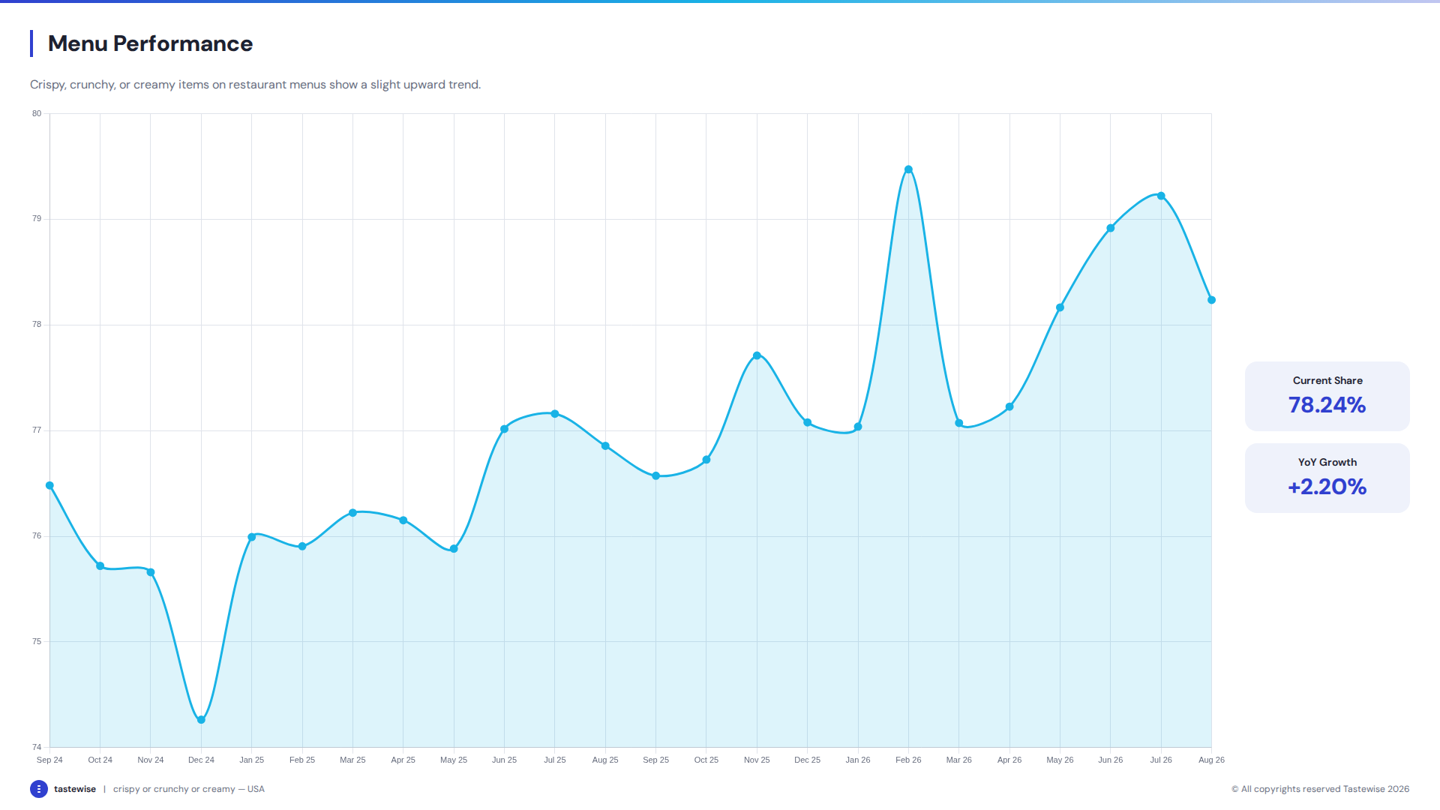
- Nearly 4 in 5 US restaurants (78%) list at least one crispy, crunchy or creamy item, and those menu items grew 12% in the last 12 months.
- Among US consumers who engage with crispy, crunchy or creamy food, silky is up 43% and soft is up 20% as a texture descriptor.
- Among US consumers who engage with sugar-free food, chalky is up 32% and aftertaste is up 17%, the two defects your panel should score first.
- Allulose is gaining 21% among sugar-free consumers while stevia fell 28%, a clear signal for sweetener selection in reformulation.
- More than half of the crispy, crunchy or creamy products on the US e-commerce shelf carry a texture claim on pack.
- Lab panels set the baseline, and live market data tells you which attributes to test first.
What are the key drivers behind modern food sensory evaluation in 2026?
Modern food sensory evaluation is driven by the need to match taste, aroma, mouthfeel and appearance to fast-moving demand for clean-label, functional and globally inspired food. The importance of sensory evaluation of food is simple. A health-driven reformulation that loses enjoyment puts the repeat purchase at risk.
Texture is the clearest example. Across the Tastewise US operator data, nearly 4 in 5 US restaurants (78%) carry at least one item described as crispy, crunchy or creamy. That share rose 2% over the last 12 months, while the number of matching menu items grew 12%. On menus, that looks like Taco Bell’s Crunchy Taco Supreme and The Cheesecake Factory’s crispy Brussels sprouts. Crispy chili oil’s menu presence grew 20% and crispy rice grew 10%.
How do traditional sensory evaluation methods in food science measure quality?
Three families of sensory evaluation tests for food set the baseline for sensory evaluation of food quality.
- Descriptive analysis uses a trained food sensory evaluation panel to score the intensity of defined attributes, such as crispness or bitterness, on a fixed scale.
- Discrimination tests, like the triangle test, check whether people can detect a difference between a control and a reformulated sample.
- Affective or hedonic tests ask target consumers how much they like a product, often on a 9-point scale from dislike extremely to like extremely.
A structured food sensory evaluation form ties it together. It lists your food sensory evaluation criteria so every panelist scores the same attributes in the same order. Typical criteria cover appearance, aroma, flavor and texture. Most forms add aftertaste and overall liking.
Why is integrating consumer context critical for the sensory evaluation of food products?
A sensory evaluation food tasting panel isolates physical attributes in a booth. Real eating depends on the occasion, health expectations and cultural familiarity.
Consumer data shows which attributes matter in those moments. Across the Tastewise US consumer panel, crispy and creamy each reach nearly 1 in 2 US consumers who engage with crispy, crunchy or creamy food (48% and 47%). Silky reaches only 1.6% of the same group but is up 43% in the last 12 months. Soft reaches nearly 1 in 10 (8%) and is up 20%.
The decliners matter too. Spicy reaches nearly 1 in 10 of the same consumers (8%) but fell 12%, and zesty fell 47%. A panel can score silkiness precisely, but only market data shows it gaining ground.
How can food companies bridge the gap between lab tasting panels and real-world consumer insights?

Food companies bridge the lab-to-market gap by pairing traditional panel testing with AI-powered consumer intelligence that reads flavor, texture and occasion signals across social, menu and retail data. Combining quantitative sensory data with live market signals closes blind spots and speeds up R&D validation.
The chart above shows the buzz side of that signal. Social posts about crispy, crunchy or creamy food rose 11% in 12 months, a buzz metric that flags where to look before you confirm reach.
Why do standalone tasting panels create blind spots in modern product development?
Panels are small by design. A few dozen trained assessors judge the samples in front of them and tell you little about the wider market.
Food sensory evaluation testing services also cost time and budget for every round. Geography and timing add bias. A panel recruited in one metro reflects that metro’s palate, while Tastewise operator data shows crispy, crunchy and creamy items over-index on menus in Mississippi, Arkansas and Iowa.
How does Tastewise AI translate raw sensory and flavor data into actionable market clarity?
Tastewise is the proactive AI food and beverage intelligence system that delivers before you ask. It resolves consumer, menu and retail sources into one dataset. A creamy dressing on a menu, a crispy creamy wafer bar on the shelf and a consumer calling a snack silky read as one story.
On the shelf, more than half (55%) of the crispy, crunchy or creamy products sold through US e-commerce carry a texture claim on pack. Nature Valley Crispy Creamy Wafer Bars build a whole line on that contrast, and the peanut butter chocolate bar holds a 4.7 rating across 2,561 reviews.
Tastewise AI agents then do the reading for you. They watch your categories and hand your team finished work, such as a whitespace map. Pair that with the retail intelligence dashboard and your panel tests what the market is already rewarding.
What actionable strategies enable R&D teams to leverage AI in sensory evaluation in food product development?

Using AI in sensory evaluation in food product development means building texture and flavor signals into concept screening, formulation and claim validation. You end up testing fewer, better-chosen prototypes, and product innovation teams set the panel agenda from demand rather than habit.
The chart above maps ingredients linked to crispy, crunchy and creamy food by lifecycle stage. Tacos, matcha, Greek yogurt and sourdough bread sit in the trending stage. Tempeh, masala dosa and fenugreek are early, which makes them candidates for exploratory panels before competitors catch on.
How do CPG product developers optimize formulations using AI-enhanced food sensory evaluation techniques?
Take a beverage brand reformulating a reduced-sugar protein latte for retail. The menu already sets the benchmark, with Starbucks and Dunkin’ both selling sugar-free vanilla protein lattes. Here is how AI-enhanced food sensory evaluation techniques find the pain points before scale-up.
- Pull the defect lexicon. Among US consumers who engage with sugar-free or no-added-sugar food, aftertaste reaches 0.4% and is up 17%. Chalky reaches 0.2% and is up 32%. Put both on your descriptive panel form.
- Set texture targets. Smooth reaches about 1 in 20 of the same consumers (6%) and is up 19%. Silky reaches 0.5% and is up 44%. Score both as must-hit attributes.
- Choose sweeteners with the market. Stevia still reaches nearly 3 times more of these consumers than allulose (1.4% vs 0.5%). Allulose is up 21% while stevia fell 28%, so run a triangle test of an allulose blend against your current stevia build.
- Validate with the right buyers. Run the hedonic test with protein latte buyers, then lead the pack claim with the top-scoring texture.
How do upskilling and sensory evaluation training for the food industry amplify AI adoption?
AI sensory metrics pay off when marketing, R&D and insights read them the same way. Structured sensory evaluation training for the food industry, or a food sensory evaluation course online, gives every function the same attribute vocabulary.
Start with three moves. Map consumer words like silky and smooth to the attributes your panel already scores. Run joint calibration sessions where marketers taste control and test samples next to the panel. Then test the resulting claims with the Concept Testing Agent or the AI Survey Agent against the consumer segments you plan to target.
Food sensory evaluation still needs trained palates. AI decides where those palates spend their time. Keep the panel, add live consumer, menu and shelf signals, and you launch products that taste like what the market already wants. For the bigger picture, the 2027 food trends forecast shows which flavors and formats come next.
FAQs about food sensory evaluation
Food sensory evaluation is the scientific measurement of how people perceive food through appearance, aroma, flavor, texture and sound. Texture alone shapes a lot of menus, and the average US operator lists about 13 crispy, crunchy or creamy items.
The three main families are descriptive analysis, discrimination tests and affective or hedonic tests. Use consumer data to choose what to score. Among US consumers who engage with sugar-free food, thick is up 20% as a texture descriptor.
It confirms a product delivers on taste and texture before you spend on scale-up. That matters most in reformulation, where ingredient choices shift fast. Xylitol is up 53% among US consumers who engage with sugar-free food.
No. AI shows which attributes and ingredients the market is rewarding, and the panel confirms whether your product hits them. Among US consumers who engage with crispy, crunchy or creamy food, rich reaches nearly 3 in 20 (13%) and is up 10%.
Start with a food sensory evaluation course online for the basics, then calibrate with your own panel on your own products. Build the lexicon from consumer language too. Balanced is up 24% among US consumers who engage with crispy, crunchy or creamy food.
Sources cited in this article
- 2026 Food & Health Survey foodnavigator.com
Cite this article
Reinoso, K. L. (2026). AI for Food Sensory Evaluation & Consumer Insights in 2026. Tastewise. https://tastewise.io/blog/ai-food-sensory-evaluation-consumer-insights


