





Brazilian lemonade is crossing over from restaurant menus and TikTok recipe content into US consumer kitchens, and the data suggests retail is next. Known in Brazil as limonada suíça, this creamy citrus blend of whole limes, condensed milk, and sugar sits at the intersection of two of the strongest beverage demand signals of 2026: creamy textures and refreshing citrus. Consumer interest is rising fast across the summer food trends landscape, and the branded RTD shelf position is still wide open. Your team has a narrow window to move.
Key takeaways
- The “summer” and “refreshing” signals for Brazilian lemonade are both growing at double digits in the past 12 months (summer +13.2%, refreshing +12.6%). This is a seasonal ritual in formation, position any launch or sell-in to align with the April-to-September window.
- The “creamy” claim is the fastest-rising texture signal, up 26.1% since last year. Lead on creaminess in formulation and pack copy. Generic lemonade positioning will not differentiate at shelf.
- Coconut is the one ingredient showing upward momentum, up 17% in the past year, while condensed milk holds 25.9% operator menu share. Two clear variant briefs: a classic dairy version and a growing dairy-free coconut alternative.
- Weekend (+67.9%) and tropical (+111%) are the two highest-growth occasion signals in the past year. This is a leisure drink, not an everyday one. Build your marketing and retail placement strategy around that occasion frame.
Brazilian lemonade and the summer citrus opportunity
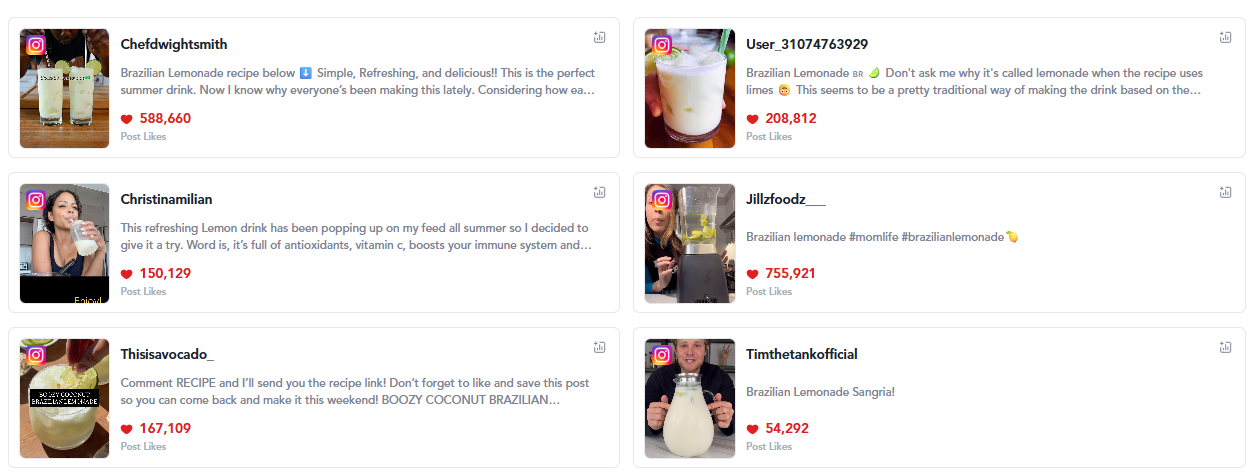
Brazilian lemonade is not a US lemonade variant. It is a categorically different drinking experience, whole-lime, creamy, and slightly bitter, that lands in a space no mainstream RTD citrus brand currently occupies. US consumers found it first through Brazilian restaurants and recipe platforms. They are now making it at home, which means the demand is real and repeatable. Across the Tastewise platform, the category shows 721 consumer posts (+6.5% in the past year), 229 restaurants carrying it, and a “fresh” signal up 49.4% since last year. The “smooth” signal is up 93.8% and “tropical” has more than doubled at +111%. These are direction signals, not noise.
The opportunity is a genuine early-mover position. Consumers making this drink at home are doing so from scratch. A well-formulated RTD or concentrate that delivers the creamy-citrus payoff with zero prep solves a real unmet need. The summer food trends 2026 report maps the full seasonal demand picture to anchor your sell-in story.
The consumer signals driving Brazilian lemonade in 2026
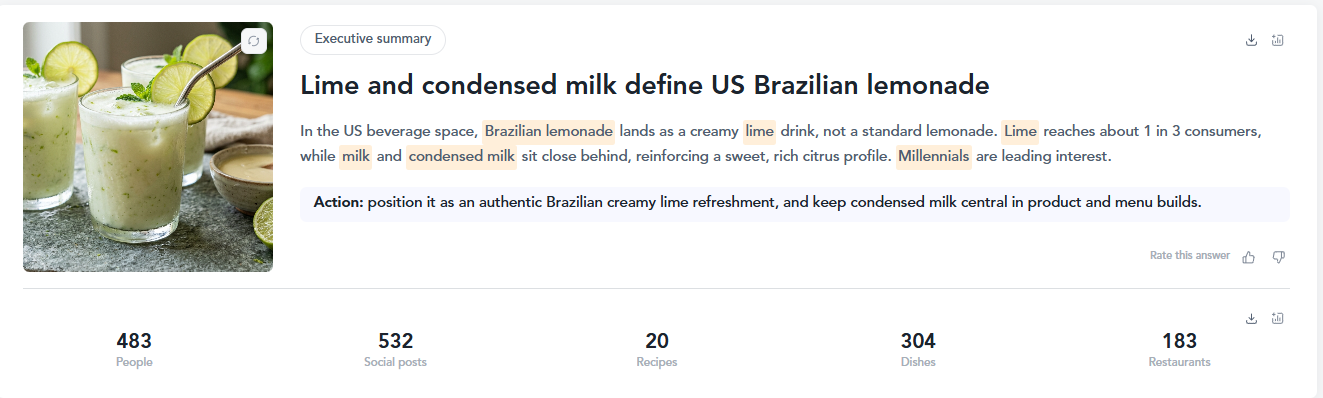
Three signals define what the consumer actually wants from this drink right now.
Texture is the differentiator. The “creamy” signal is up 26.1% in the past year and sits at a 17% share of all consumer signals for the drink. “Smooth” is up 93.8% and “silky” is growing in the broader creamy citrus beverage space. Nothing in the mainstream US lemonade set delivers this. That is your shelf distinction and your retail buyer’s net-new argument.
Occasion framing matters more than flavor. “Weekend” is up 67.9%, “tropical” is up 111%, “celebration” is up 95.4%, and “sunny” is up 78.8%, all in the past year for Brazilian lemonade specifically. This is a leisure-occasion drink, not an everyday functional beverage. Your positioning, your pack design, and your marketing window should all reflect that. April through September. Outdoor settings. Social moments.
A dairy-free variant is not speculative. The “dairy free” signal is up 68.8% and the “alcohol free” signal is up 46.4% in the past year. Coconut as an ingredient is up 17% and indexes directly to Brazilian lemonade recipes. The variant brief already exists in the data. Your R&D team does not need to guess at what comes after the core SKU.
How to build the retail buyer story for a Brazilian lemonade line

The strongest sell-in stories combine a consumer demand signal, a format gap, and a timing window. Brazilian lemonade has all three. Your demand signal is the double-digit growth across creamy, refreshing, and tropical claims. Your format gap is the absence of any branded RTD at shelf. Your timing window is the summer reset cycle, which for most major retail buyers runs from February planning through April placement.
The basket-building argument is your most important tool in the buyer meeting. The celebration, friends, and party signals tell you this is an incremental purchase, not a brand switch. A consumer buying Brazilian lemonade for a weekend gathering is adding a row to the receipt. Current foodservice prices range from $4 to $9.05 per serving at operators like Sugarcube New York and 7 Leaves Cafe. A retail RTD at $4 to $5 sits comfortably below that reference price. The buyer can see the value proposition without explanation.
The retail sales enablement tools on Tastewise let your team tailor this argument to each buyer’s regional consumer base. At a premium natural grocer, lead with the clean-label and coconut milk variant signals. At a mass-market chain, lead with the canned format signal (up 62.2% in the past year) and the foodservice-to-retail crossover story. The CPG retail guide walks through how to structure both.
What this means for your team in 2026
- Innovation and R&D: Two briefs, run in parallel. Classic condensed milk formula for the mainstream buyer. Coconut milk dairy-free variant for the premium natural channel. Keep both ingredient lists short, “few ingredients” is up 12.5% in the broader citrus beverage space and the consumer is actively asking for it.
- Category management: Lead with basket-building data, not product specs. The occasion signals (celebration, friends, weekend) are your endcap and fridge placement argument. Use foodservice pricing as a retail value anchor.
- Marketing: This drink belongs in your April-to-September campaign window. Outdoor, social, weekend occasions. The “canned” signal growing 62.2% tells you the format and the channel. Mirror that context in your content strategy.
- Sales: Brazilian lemonade is in the early lifecycle stage, real demand, almost no branded competition. The brands that build the category story now own the shelf position when the second wave arrives. The 2026 food and beverage trend forecast gives your team the lifecycle context to make that argument to internal stakeholders and retail buyers alike.
The consumer demand is there, the shelf position is open, and the summer reset window is closing. Want to build your Brazilian lemonade category story with Tastewise data?
FAQs about Brazilian lemonade trends in US retail
Brazilian lemonade (limonada suíça) is made by blending whole unpeeled limes with water, sweetened condensed milk or coconut milk, and sugar. The result is creamy, slightly bitter, and intensely citrusy, nothing like the clear, sweet US lemonade format. That textural and flavor distinction is why the “creamy” consumer signal is up 26.1% in the past year specifically for this drink. It occupies genuinely different shelf territory from anything currently in the mainstream RTD lemonade set.
Not in any meaningful branded form. The Tastewise operator data shows 229 restaurants carrying the drink and 322 menu items across foodservice, but the retail shelf position is effectively empty. Consumer signals including “canned” up 62.2% and “convenient” up 11.2% in the past year are direct demand signals for a packaged format. The product innovation tools on Tastewise help your team validate the formulation brief against those signals before committing to a development cycle.
The “summer” signal on Brazilian lemonade is up 13.2% and the “weekend” signal is up 67.9% in the past year. Both index heavily to the April-to-September window. For major retail buyers, summer reset planning typically runs February through April, which means your sell-in conversations need to happen now. The summer food trends 2026 report gives your team the seasonal demand framing to support those conversations with current data

We’d love to learn your goals and see how Tastewise fits
We’d love to learn your goals and see how Tastewise fits
Get a personalized demo
Good taste. Wise move.
Your demo request is confirmed. We’ll reach out within one business day to schedule your walkthrough.
What happens next

See what’s driving demand, then turn it into a sell-in story for retailers and operators.
- Connect consumer panels, market trackers, and agents into one evidence view
- Get the “why” behind what’s changing, with explainable demand drivers
- Walk away with a buyer-ready narrative and next steps to activate
Trusted by



“Tastewise is my secret tool for knowing what consumers want next and why.“