





Holiday retail trends are shifting fast, and 2025 is shaping up to be one of the most practical, snack-driven, and convenience-led seasons yet. Across food, ecommerce, and in-store retail, consumers are prioritising ease, familiarity, and small indulgences over big-ticket splurges. Holiday shopping trends point to one clear takeaway: people still want festive moments, but they want them to fit seamlessly into busy, budget-conscious lives.
From holiday food trends to ecommerce holiday trends, here’s what’s driving the season, and what brands need to prepare for as holiday 2025 trends come into focus. Want to know what we predict for 2026?
Holiday shopping trends: Less effort, more impact
This year’s holiday shopping trends show a clear pull toward efficiency. According to Tastewise’s Christmas Holiday 2025 Consumer Survey, 45.7% of consumers prioritize saving time and reducing effort when planning holiday meals and celebrations. That preference spills directly into retail behavior.
Shoppers are gravitating toward:
- Ready-to-serve and snackable formats
- Products that feel festive without requiring prep
- Familiar flavors with subtle twists rather than experimental launches
Even as inflation continues to influence purchasing decisions, most consumers aren’t abandoning holiday traditions entirely. Instead, they’re editing them. Tastewise data shows 96.3% of respondents are switching to more budget-friendly brands, rather than cutting categories altogether. For retailers, this means private label, value packs, and multi-use holiday SKUs have a stronger role than ever.
Holiday retail trends in 2025 are snack-led
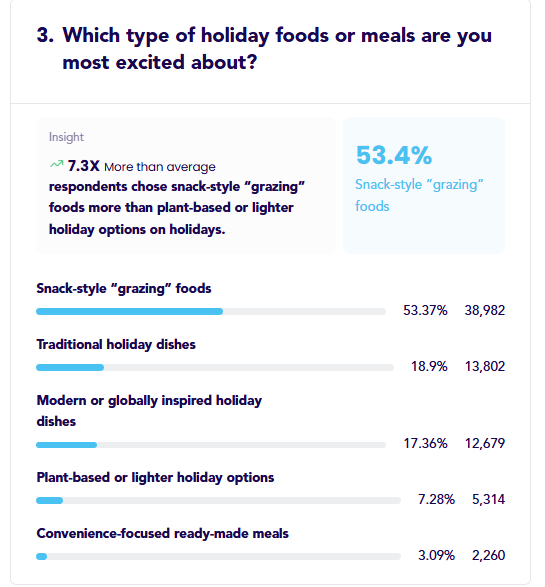
One of the most defining holiday retail trends for 2025 is the rise of snack-first celebrations. Large sit-down meals are no longer the center of every gathering. Instead, grazing is winning.
Tastewise survey results reveal:
- 53.4% of consumers are most excited about snack-style “grazing” foods
- Chocolates and confectionery lead all holiday treat categories, with 38.4% preference
- Cookies and baked goods follow closely at 35.9%
This shift explains why seasonal limited editions like cookie-flavoured milk, festive chocolates, and bakery-inspired beverages are gaining traction. These products hit multiple needs at once: nostalgia, indulgence, portion control, and convenience.
For retailers, holiday food trends are no longer about the biggest roast or the most elaborate dessert. They’re about modular indulgence, items that can be shared, sipped, or enjoyed solo.
Tastewise trend performance data shows that holiday food trends in 2025 are being driven by nostalgic flavours, hybrid dessert formats, and elevated seasonal beverages, with several concepts posting strong year-over-year growth.
| Holiday food trend | YoY growth (social mentions) | Trend status |
| Sticky toffee pudding cheesecake | +83.3% | Fast-growing, early-stage dessert trend |
| Maple espresso martini | +68.8% | Rapidly accelerating seasonal cocktail |
| Maple-glazed roast vegetables | +51.2% | Growing plant-forward holiday side |
| Miso honey | +48.1% | Growing sweet–savory flavor pairing |
| Smoked hot chocolate | +42.9% | Rising premium twist on classic holiday beverage |
| Brown butter | +20.7% | Established flavor with renewed momentum |
| Hot honey cider | +13.8% | Modest growth in sweet-heat seasonal drinks |
| Glazed ham | −25.4% | Declining traditional holiday centerpiece |
| Cranberry ginger spritz | −33.3% | Seasonal flavor with declining momentum |
Holiday food trends 2025: Nostalgia with a modern twist
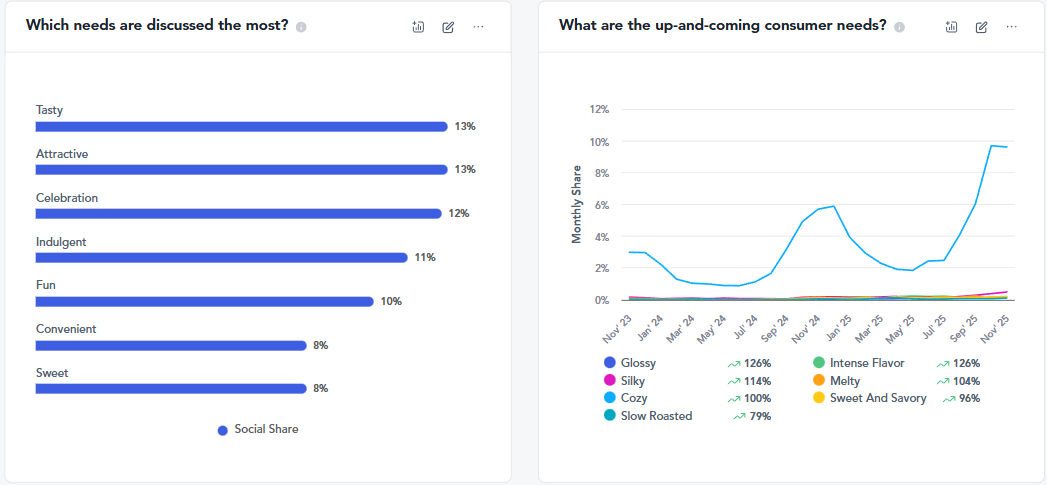
Holiday food trends in 2025 are rooted in comfort, but not boredom. Consumers want flavors they recognize, elevated just enough to feel special.
Tastewise trend analysis shows the most popular ingredients shaping holiday food include:
- Chocolate
- Sugar
- Apple
- Orange
- Berry
- Frosting
At the same time, flavor combinations like miso honey, smoked chocolate, maple espresso, and cranberry ginger are gaining momentum across beverages and desserts. These profiles allow brands to introduce something new without alienating shoppers looking for familiarity.
Another major driver is beverages. The Tastewise Christmas survey found that consumers are 8.3x more likely to prefer coffeehouse-style seasonal drinks over non-alcoholic or zero-proof options during December. That explains the rise of at-home latte kits, flavored milks, and holiday drink bases across both grocery and ecommerce.
Ecommerce holiday trends: Seasonal discovery without the store trip
Ecommerce holiday trends continue to grow, especially for food and beverage discovery. Shoppers are using digital channels to find seasonal products, compare prices, and stock up ahead of key moments.
Key ecommerce holiday trends include:
- Early holiday purchasing to avoid last-minute stress
- Bundled seasonal products that reduce decision fatigue
- Social-driven discovery, especially for limited-edition food items
Products that photograph well, feel giftable, or tie into viral moments are performing especially strongly online. Seasonal beverages, desserts, and nostalgic flavours are benefiting from this dynamic, particularly when paired with limited availability or exclusive packaging.
For brands, ecommerce is no longer just a distribution channel during the holidays. It’s where trends surface first, and where seasonal momentum can build quickly.
Holiday 2025 trends: Fewer conversations, stronger signals
Interestingly, overall holiday-related online conversations have declined year over year. Tastewise data shows holiday conversations are down 40.1%, yet snack-focused and plant-forward holiday offerings continue to grow.
This signals a more intentional season. Consumers may be posting less, but they’re still buying, with clearer expectations:
- Less complexity
- More flexibility
- Products that work across multiple occasions
Vegan and plant-based holiday foods continue to dominate dietary adaptations, reflecting broader shifts toward inclusivity and lighter options during traditionally indulgent periods.
What holiday retail trends mean for brands
The biggest lesson from holiday retail trends in 2025 is simple: success comes from meeting consumers where they are, not where traditions used to be.
Winning brands will:
- Design for snackable, flexible occasions
- Lean into familiar flavours with modern accents
- Offer value without sacrificing seasonal appeal
- Use ecommerce to test, scale, and amplify holiday launches quickly
Holiday shopping trends show that consumers still want joy. They just want it delivered faster, easier, and on their own terms.
As holiday food trends and ecommerce holiday trends continue to converge, the brands that move quickly, guided by real-time consumer data, will be the ones that stand out during the most competitive season of the year.
FAQs about holiday food trends
The biggest holiday retail trends for 2025 focus on convenience, snackable formats, and value. Consumers are prioritizing products that save time, reduce effort, and still feel festive. Snack-style foods, seasonal beverages, and budget-friendly alternatives are outperforming traditional, labor-intensive holiday items.
Holiday shopping trends are moving away from large, one-time purchases toward smaller, flexible buys spread across the season. Shoppers are editing traditions rather than abandoning them, choosing familiar flavors, private label options, and products that work across multiple occasions.
Holiday food trends in 2025 are led by snackable indulgences, nostalgic flavors, and coffeehouse-style seasonal drinks. Chocolates, baked goods, festive beverages, and grazing-style foods are gaining popularity, while complex holiday meals are becoming less central to celebrations.
Ecommerce holiday trends are accelerating seasonal discovery, especially for food and beverage products. Consumers are using digital channels to find limited-edition items, compare prices, and shop earlier to avoid last-minute stress. Social media and online exclusives are playing a growing role in shaping holiday demand.
Tracking holiday retail trends early helps brands identify emerging formats, flavors, and consumer needs before the season peaks. Early insight allows teams to optimize assortments, refine messaging, and move faster on seasonal launches while reducing the risk of overproduction or missed demand.


We’d love to learn your goals and see how Tastewise fits
We’d love to learn your goals and see how Tastewise fits
Get a personalized demo
Good taste. Wise move.
Your demo request is confirmed. We’ll reach out within one business day to schedule your walkthrough.
What happens next

See what’s driving demand, then turn it into a sell-in story for retailers and operators.
- Connect consumer panels, market trackers, and agents into one evidence view
- Get the “why” behind what’s changing, with explainable demand drivers
- Walk away with a buyer-ready narrative and next steps to activate
Trusted by





“Tastewise is my secret tool for knowing what consumers want next and why.“