







South Korea food trends are moving faster than most planning cycles can track. The signals that carried packaged snacks and drinks for a decade, indulgence, generic health, and grab-and-go convenience, are cooling. In their place, shoppers are rewarding food that does a job: more protein, better digestion, steadier energy. For any brand selling into Korean retail, that shift changes which products earn a place in the basket. This piece hands your team the signals that are climbing, and where the shelf is still open.
Key takeaways
- Protein is the largest rising health claim in South Korea right now, up 6% in the past year while indulgence cools. Lead your Korean pipeline with protein as a base, not a bolt-on.
- Metabolic cues are climbing fastest, with interest in blood sugar up around 30% and metabolism close to 38% off a smaller base. Watch these as the next claims to reach the mainstream shelf.
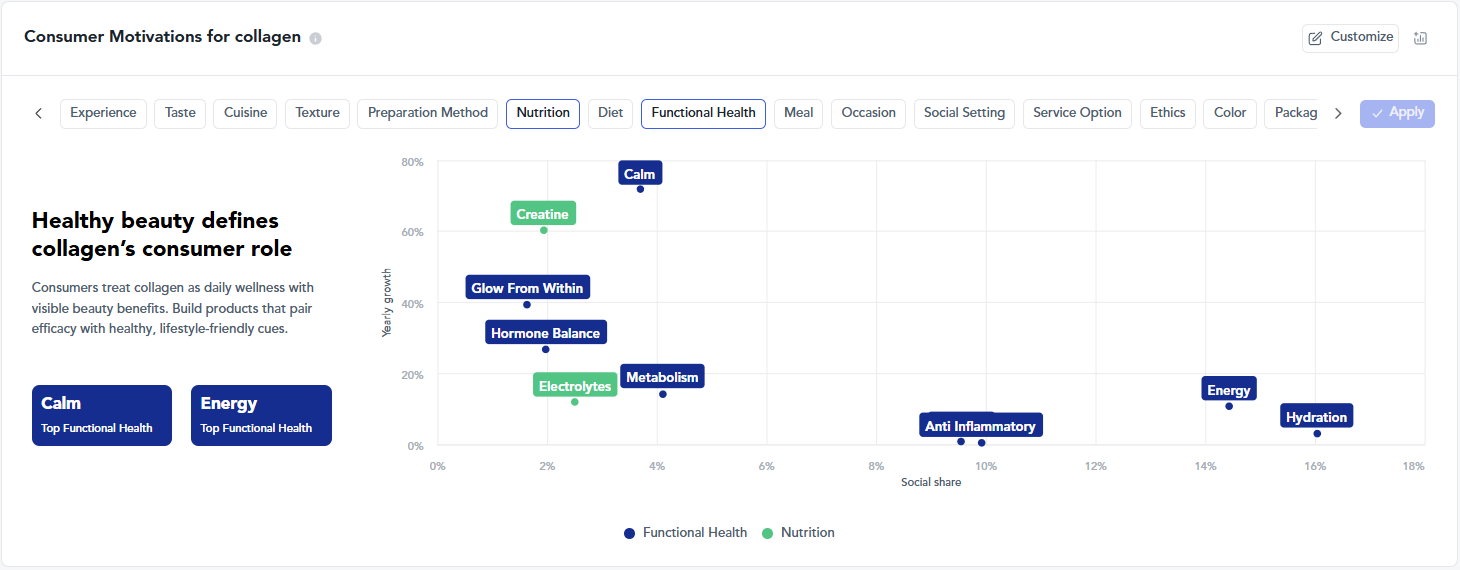
- Collagen, up close to 24%, and magnesium, up around 15%, are the fastest-growing functional ingredients in the category. They give R&D a familiar, low-risk way to add a functional story to everyday formats.
- Generic health and weight management claims are flat or falling. Vague wellness no longer sells in Korea, so a specific function is the safer bet for your next launch.
What is driving food trends in South Korea
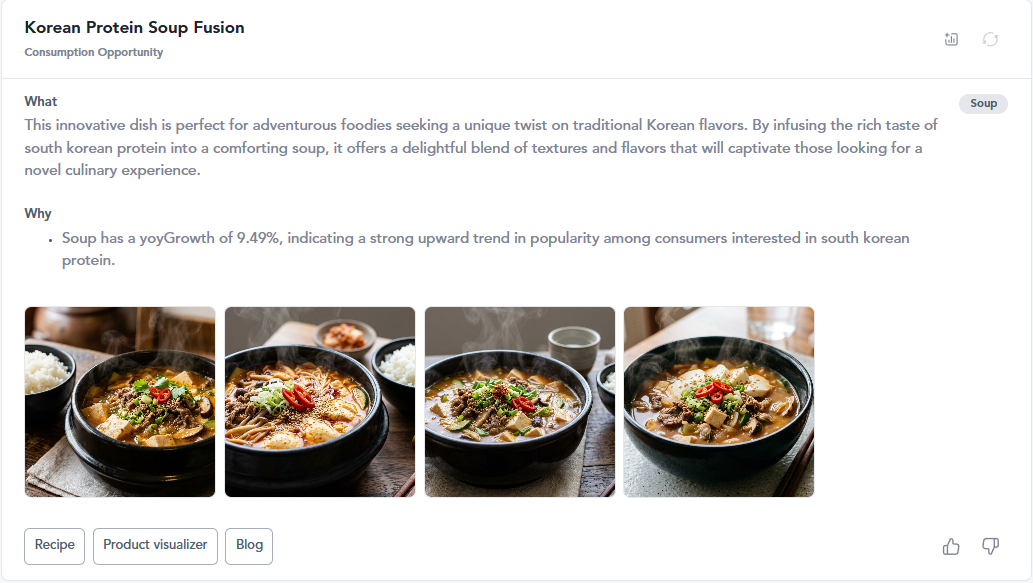
Korean shoppers are treating food as part of a health routine, not a break from one. The pressure is everyday: long working hours, an aging population, and a culture that has long tied food to wellbeing. Preventive health has moved from the pharmacy into the grocery basket, and shoppers now expect a snack or a drink to give something back.
These signals come from the Tastewise platform, which reads South Korean demand in close to real time. The fastest-rising claims in packaged food and snacking are all functional. Protein interest is up 6% in the past year, fiber sits close behind near 14%, and gut health is rising too. The sharpest movement is in metabolic cues, with blood sugar and metabolism both climbing at double-digit rates since last year.
That gives your team a clear read on where to build. The demand is no longer for one more indulgent treat or a vague health halo. It is for everyday food that carries a specific, believable function, and Korea’s shelf is not yet crowded with it. Explore Tastewise product innovation or browse the Q3 2026 food trends forecast.
The functional shift reshaping South Korea food trends
The core move in South Korea food trends is from indulgence to function. Since last year, indulgent claims have fallen by around 17% and generic nutritious framing by roughly a third, while protein, fiber, and gut health all climbed. Consumers are not eating less for pleasure. They are asking pleasure to come with a payoff. A health halo used to justify a premium on its own. Now the claim has to name a benefit a shopper can feel, and the winning brief starts with function.
The pattern shows up beyond the panel as well. Production of protein supplements and fortified beverages in Korea rose 19% in the past 12 months, which the food safety regulator tied to consumer interest in protein intake. When production data and demand signals point the same way, your team can move with more confidence.
The steepest curves are metabolic. Interest in blood sugar is up around 30% and metabolism close to 38% in the past 12 months, both off a smaller base than protein. These sit further back in the adoption curve, so they read as early rather than mainstream. The direction is consistent though, and the base is growing, so treat them as the claims most likely to move from niche to normal on the Korean shelf next.
Ingredients tell the same story. Collagen is the fastest-rising functional ingredient in the category, up close to 24% and still in a trending stage, with magnesium up around 15%. Both are familiar to Korean shoppers from the supplement aisle, which lowers the risk of carrying them into food and drink. They give R&D a low-friction way to add a credible functional story to products people already buy.
Where the CPG and retail whitespace is
The gap is functional food in everyday formats, not another supplement. Korea’s functional demand still concentrates in pills, powders, and shots, yet the rising claims point to snacks, drinks, and staples that can carry the same benefits. Bring a believable function into a familiar format and you meet demand the supplement aisle cannot fully serve.
For marketing, the move is to lead with one specific benefit rather than a broad wellness message. The claims losing ground, generic health and weight management, are exactly the vague ones. Consumer marketing that names a single function, better digestion or steadier energy, will travel further than a catch-all health story.
The risk of moving slowly is that the shelf fills without you. The 2026 trend forecast shows functional cues rising across several markets at once, so Korea is not an isolated case. First movers get to define the benefit language before it becomes a category norm.
Ingredients and claims to watch
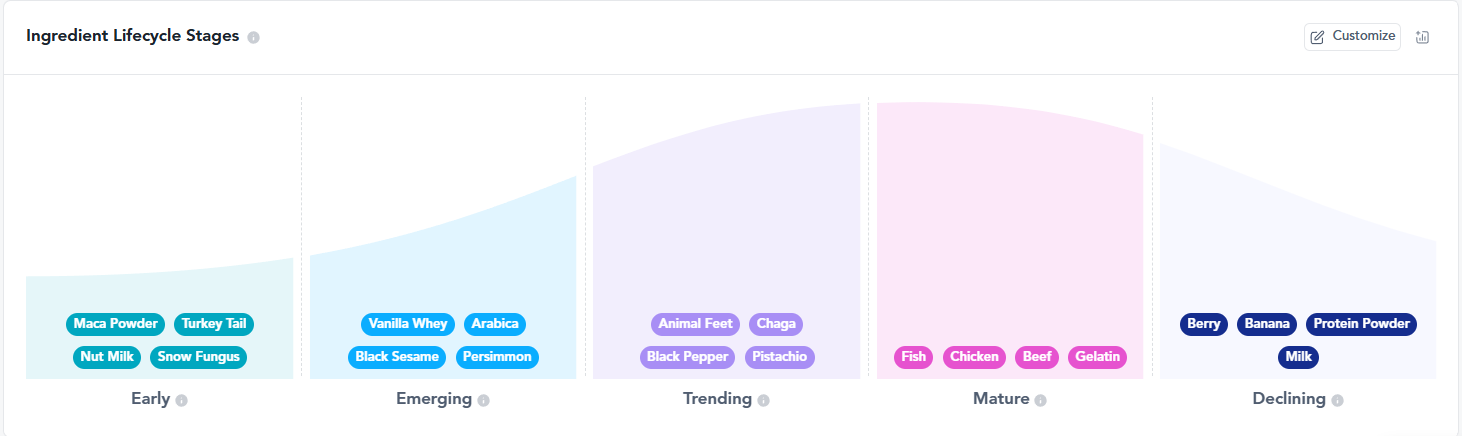
A few early signals are worth tracking before they scale. Interest in polyphenols, lion’s mane, bone broth, and millet is rising quickly in Korea, though each still sits on a small base. Read these as watch items rather than proven trends, and revisit them each quarter with real-time AI workflows before you commit a launch.
About this data
The signals in this article come from the Tastewise South Korea panel, which models consumer behaviour from billions of food and beverage data points and updates in close to real time. For South Korea, the figures reflect consumer interest and demand signals rather than retail sales or menu penetration, so a growth rate describes how fast a signal is rising, not how many shoppers have adopted it. Query scope shapes the numbers, so the figures here are drawn from a packaged snacking and functional food view of the market. External production figures are cited from South Korea’s Ministry of Food and Drug Safety through trade reporting.
FAQs about food trends South Korea
The clearest theme is the move from indulgence to function. Protein, fiber, and gut health are the rising claims in packaged snacking, while metabolic cues like blood sugar and metabolism are climbing fastest off a smaller base. Generic health and weight management messages are losing ground.
A live view beats a static food trend report for South Korea, because signals like collagen, up close to 24% than last year, move faster than an annual document can capture. The Tastewise platform tracks these shifts as they happen, so your team works from current demand rather than a snapshot.
Collagen and magnesium lead the established set, both rising over the past year and familiar from the supplement aisle. Earlier signals include polyphenols, lion’s mane, and bone broth, which are climbing quickly but still sit on small bases, so they belong on a watchlist rather than a launch plan.





We’d love to learn your goals and see how Tastewise fits
We’d love to learn your goals and see how Tastewise fits
Get a personalized demo
Good taste. Wise move.
Your demo request is confirmed. We’ll reach out within one business day to schedule your walkthrough.
What happens next

See what’s driving demand, then turn it into a sell-in story for retailers and operators.
- Connect consumer panels, market trackers, and agents into one evidence view
- Get the “why” behind what’s changing, with explainable demand drivers
- Walk away with a buyer-ready narrative and next steps to activate
Trusted by





“Tastewise is my secret tool for knowing what consumers want next and why.“