






Soup trends show demand concentrating around functional meals, lighter preparations, and repeatable weekday occasions. Tastewise data indicates that how consumers use soup is changing decisions around formulation, format, pricing, and channel strategy.
Soup trends overview
- Meal replacement up +18% YoY
- Broth-based formats growing ~2x faster
- Single-serve up +15% YoY
- Health cues up +24% YoY
- Soup functions as a side or bundle item in foodservice, but as a standalone meal in retail
Soup trends show meal-replacement usage is growing faster than indulgent occasions
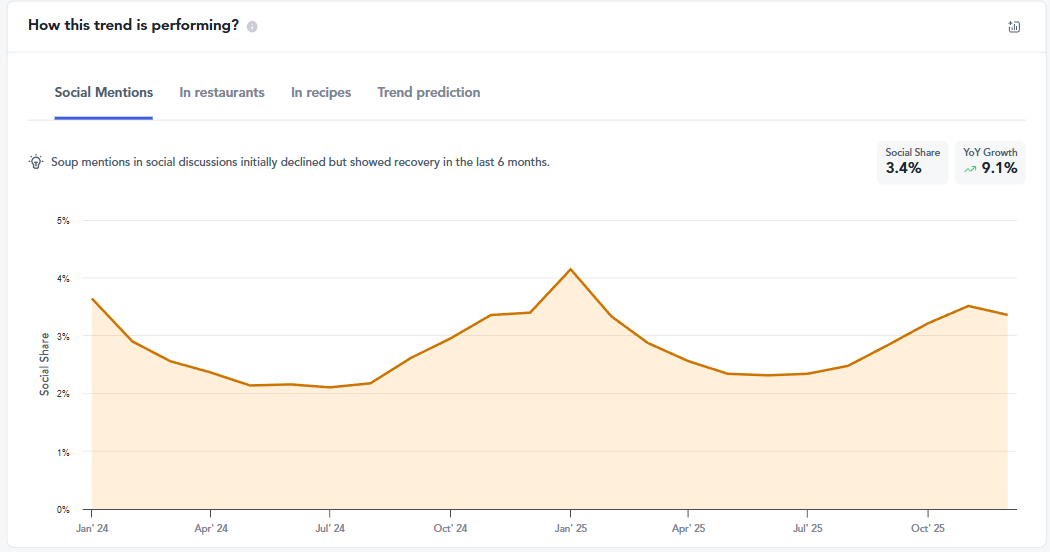
Social F&B panel data shows soup discussion peaking in winter months, with a clear seasonal spike around January, followed by a mid-year dip and a recovery heading into fall, reinforcing soup’s role as a seasonally amplified, but year-round staple rather than a one-off seasonal item.
In the Home cooking panel, soup usage tied to meal replacement is up +18% YoY, while indulgence-led occasions are flat to declining. Post-shopping behavior shows soup replacing prepared meals and skipped lunches more often than other center-aisle categories.
That repositions soup as a functional meal alternative, not a supplemental side. Brands should renovate soups toward protein density, satiety cues, and visible ingredients, and defend pricing against fresh prepared foods rather than canned staples.
Global flavor signals are concentrating around intensity, not experimentation
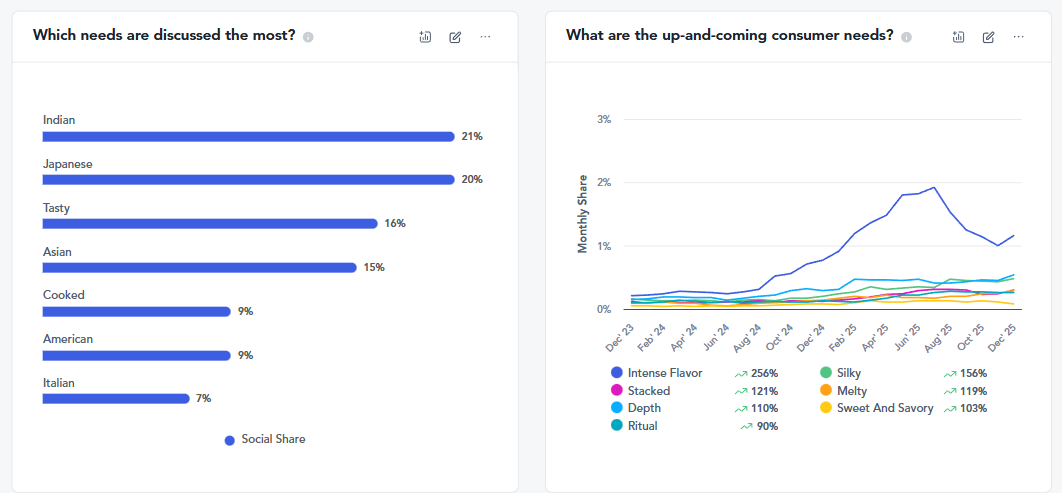
According to the Social F&B panel, global flavor references in soup skew heavily toward Indian (21%) and Japanese (20%), followed by broader Asian profiles (15%), while Italian and American trail below 10%. At the same time, up-and-coming consumer needs show sharp growth in intense flavor (+256%), depth (+110%), and stacked flavor (+121%), outperforming sweet or novelty cues.
This indicates global flavors are working when they deliver concentrated umami, spice, and layered savoriness, not when they function as cuisine tourism. For soup innovation, this shifts the decision from launching “global-inspired” SKUs to using global flavor systems to reinforce broth intensity and meal satisfaction, which are easier to defend with buyers and more repeatable on shelf.
Broth-based preparations are outperforming cream-led formats
Ingredient and preparation data shows broth-based soups growing ~2x faster YoY than cream-heavy varieties. Vegetable-forward, clear, and lightly spiced builds are driving higher repeat usage across panels.
This changes R&D priorities away from richness toward digestibility and routine consumption. Teams should deprioritise heavy cream bases and scale broth-first cooking methods that support daily use and clearer functional claims.
A clear example of this demand concentration can be seen in broth-forward recipes like Nourishing Bone Broth and Collagen Soup, which aligns with growth in protein and recovery-led soup occasions.
Functional ingredients are driving soup trends, not flavour novelty
According to the Social F&B panel, soup content tied to health, recovery, and immunity is up +24% YoY, significantly outperforming novelty or indulgent positioning. Engagement clusters around routine language rather than excitement.
This reduces the value of flavor-led launches without a functional role. Marketing teams should anchor soup messaging in clear need-states (recovery, digestion, fullness) and pressure-test claims using synthetic data before launch.
Recipes like Pumpkin Ginger Miso Soup reflect this shift, combining digestive, warming, and savory cues that map directly to functional demand.
Soup trends diverge by channel, changing how soup earns margin
Foodservice data shows soup performs best as an add-on or bundled item, with limited traction as a standalone menu hero. In contrast, retail soup usage skews toward solo consumption, especially lunch and early dinner.
That channel split changes soup’s role from traffic driver to margin stabiliser in foodservice, and from side dish to complete meal in retail. Operators should optimise soups for pairing and bundling, while retail teams should defend shelf space using meal-replacement evidence.
Spiced protein-led soups like Guajillo Pepper Chicken Soup align with foodservice pairing behaviour while remaining portable enough for retail adaptation.
Formats winning in soup trends favor frequency over variety
Single-serve, ready-to-heat formats are growing +15% YoY, outpacing family-size packs, which show lower repeat frequency. Consumption is clustering around predictable weekday routines. This shifts innovation risk away from flavor fatigue toward format efficiency. Commercial teams should prioritize single-serve, high-frequency formats and align case counts, pricing, and shelf placement with weekday demand.
What changes and what to do next
Soup trends now reward repeatability, function, and format discipline, not seasonal flavor storytelling. Teams should align R&D, CPG marketing, and commercial decisions around meal replacement proof, validate claims with Tastewise panels, and anchor sell-ins to recipes and formats that already show repeat behavior.
Across Tastewise panels, soup demand is concentrating into fewer, clearer roles: weekday meal replacement, broth-led functionality, and single-serve frequency. That concentration changes shelf logic from range expansion to range discipline. The soups that earn space are the ones that replace a meal, move with repeat velocity, and carry claims buyers can defend. Shelf wins now depend on proving what the soup replaces, when it’s consumed, and why it deserves its price band, using repeatable evidence across retail and foodservice.
FAQs about soup trends
Soup trends show demand concentrating around meal replacement usage, broth-led preparations, and weekday routines, supported by growth in functional claims and single-serve formats across Tastewise panels.
Home cooking panel data shows soup increasingly used as a standalone meal, especially for lunch and early dinner, replacing prepared meals rather than complementing them.
Single-serve, ready-to-heat soups outperform family-size formats in repeat usage and frequency, making them better suited for high-velocity retail shelf space.
Foodservice data shows soup over-indexing as an add-on or bundled item, while retail demand skews toward complete-meal usage, changing pack size, pricing, and merchandising decisions.
Broth-based, vegetable-forward, and protein-supported soups are growing faster than cream-heavy builds, reflecting demand for lighter, digestible, and functional meals.
According to the Social F&B panel, repeat soup consumption is driven by health, recovery, and routine need-states rather than novelty or indulgence, making functional positioning easier to defend with buyers.


We’d love to learn your goals and see how Tastewise fits
We’d love to learn your goals and see how Tastewise fits
Get a personalized demo
Good taste. Wise move.
Your demo request is confirmed. We’ll reach out within one business day to schedule your walkthrough.
What happens next

See what’s driving demand, then turn it into a sell-in story for retailers and operators.
- Connect consumer panels, market trackers, and agents into one evidence view
- Get the “why” behind what’s changing, with explainable demand drivers
- Walk away with a buyer-ready narrative and next steps to activate
Trusted by





“Tastewise is my secret tool for knowing what consumers want next and why.“