
Baking and pastry trends 2026 are moving fastest on restaurant menus, where a handful of flavors and textures are spreading from specialty bakeries into mainstream foodservice. Across US menus, kataifi grew 533% in the past year and chocolate with pistachio grew 144%. Classic formats like tiramisu are gaining new versions on the menus that already carry them. This guide covers what pastry chefs, bakery operators, CPG brand managers and menu strategists can act on now.
Comfort and novelty drive most of these choices. Guests reach for flavors they know, like speculoos and tiramisu, and they try new textures when the base feels familiar.
Want the complete picture of what is coming next? Get the full food trends forecast and explore the data and opportunities shaping the year ahead.
Key takeaways
- Kataifi is the fastest-moving pastry on US menus. It now appears on 1.5% of restaurant menus, up 533% in the past year, while its average item price fell from about $16 to $12.
- Chocolate and pistachio appear together on 3.1% of US menus, up 144%. Operators that carry the pairing list an average of 2.6 items each.
- Speculoos and Biscoff reach 1.8% of US menus, up 67%, as a nostalgic flavor that works as a drizzle, spread or filling.
- Classic desserts are being remade. Tiramisu menu items rose 20% in the past year while the share of restaurants serving it held just under 5%.
- On US bakery menus, latte grew 38% while espresso fell 16%, so coffee pairings are moving toward milk-based builds.
- Labor shapes the latest bakery trends. In a 2022 industry survey, 61% of bakeries said they were adding automation, second only to raising wages.
10 pastry trends shaping 2026
These are the baking trends showing the strongest momentum in menus, recipes, and social media, and are led by an unexpected global favorite.
Kataifi
Kataifi now appears on 1.5% of US restaurant menus, up 533% in the past year. Its delicate threads add crunch and visual texture to baked goods. The average kataifi item fell from about $16 to $12 over the same period as the pastry spread to more menus. Social buzz around kataifi fell 27% while menus kept adding it, so the menu side is now catching up with what social media made popular.
Cruffins
Part croissant, part muffin, cruffins bridge indulgence and convenience. They remain a niche hybrid, on 0.04% of US menus, but that share grew 38% in the past year. The average cruffin sells for $6.94, up 6%, which keeps it in the elevated quick-treat slot.
Paris Brest
The choux-based classic holds steady as a premium item. Paris Brest sits on a small, stable share of US menus, and its average price rose 15% in the past year to $13.56. Hazelnut praliné, almond and chocolate versions show how traditional French baking still inspires modern product development.
Cake pops
Cake pops appear on 1.3% of US menus, up 13% in the past year, at an average of $5.50 each. They suit portion control and portable snacking. Reflecting the snack trends of 2026, they combine craft, visual appeal and quick snacking.
Chocolate pistachio everything
Chocolate and pistachio together appear on 3.1% of US menus, up 144% in the past year. Operators that carry the pairing now list 2.6 items each on average, up 44%. The average item price fell 18% to $12.48 as more operators added it.
Fig jam fillings
Fig jam appears on 0.44% of US menus, up 12% in the past year. The average fig jam item costs $19.88, well above the $5 to $7 range of cake pops and cruffins. That gap shows most fig jam still sits outside the pastry case, which leaves room for puff pastry twists and filled breads.
Speculoos revival
Speculoos and Biscoff now appear on 1.8% of US menus, up 67% in the past year. This nostalgic cookie spread shows up in frostings, brioche centers, cake fillings and layered baked goods that balance spice with comfort.
Sweet-salty mashups
“Swalty” combinations like miso caramel, brie and honey, and maple with sea salt bring global flavors into familiar bases. Caramel itself is growing on US dessert menus, up 7% in the past year.
Healthier indulgence
Fruit is the clearest health cue on bakery menus. Berry appears on 12% of US bakery menu items, up 11% in the past year. Mango rose 12% and strawberry rose 8%. Fruit-forward toppings and fillings let you add freshness while keeping the dessert indulgent.
Roast coffee pairings
Coffee appears on 8% of US dessert menu items, up 13% in the past year. Espresso-infused ganache, mocha glazes and coffee-soaked sponges show how baked goods and coffee trends move together.
What’s driving these pastry trends?
Consumers want baked goods that reflect culture, comfort and creativity. Across TikTok, Instagram and YouTube, creators are redefining what baked goods can be, from laminated dough experiments to savory danishes filled with seasonal ingredients.
We’re also seeing a resurgence in foundational baking skills, particularly bread. Sourdough, Japanese milk bread and naturally fermented loaves continue to grow as people reconnect with slow baking at home. Meanwhile, commercial bakeries are focusing on small-batch production, premium inclusions and multi-texture products.
The role of consumer data platforms in predicting what’s next
Tastewise data shows that consumer demand for pastry is rooted in indulgence, comfort and sensory novelty. Social media often moves first, and menus follow. Kataifi is the clearest case: social buzz around it fell 27% in the past year, yet its share of US restaurant menus grew 533%.
Social-first content drives much of the discovery cycle. Overhead baking videos, viral recipes and bakery tours influence what people want to taste next. Immersive formats such as ASMR folding, butter layering and sourdough stretching keep curiosity high.
Exploring the latest dessert trends 2026 in pastry arts
The latest dessert trends 2026 reward textures and flavors that guests can see and taste in one bite. Shredded kataifi, crisp lamination and molten centers do that work on US menus right now. Lava cake is the clearest dish example. Social buzz around it grew 332% in the past year, and ladyfinger buzz grew 137% alongside it.
Menus show where that interest turns into product. Tiramisu sits on just under 5% of US restaurant menus, a share that held flat over the past year. Yet tiramisu menu items grew 20% in the same window, because operators that already serve it now list more versions. It is a low-cost way to innovate, since the new flavor rides on a format guests already order.
Fusion flavors follow the same logic. Chocolate and pistachio now appear together on 3.1% of US menus, up 144%. Ube reaches 1.1% of menus, up 25% in the past year. Functional ingredients are moving more slowly on dessert menus. The health cue that is growing is fruit, with berry up 4% and strawberry up 4% on US dessert menu items.
For commercial bakeries and restaurants, the latest dessert trends offer a way to stand apart without rebuilding the menu. You can add a kataifi crunch to a cheesecake you already sell, or swap a pistachio cream into an existing croissant. Each change keeps prep familiar while giving guests a reason to order. The dessert trends overview covers category-wide consumer needs. This section tracks how those dessert ideas reach pastry menus.
These shifts feed directly into the wider baking and pastry trends 2026 that shape commercial dessert innovation. Teams running product innovation can use the same menu signals to decide which flavor reaches the pastry case first.
Dessert and cake trends continue to shape product development
Sweet categories remain dominant. Cake trends still command 33% of social share across desserts. That includes birthday cake, chocolate cake, and new players like bento cakes. Visual appeal and novelty drive engagement. The bento cake boom (up 245% in 2024) is a good example, it’s fun, customizable, and perfectly Instagrammable.
On the flavor side, dessert trends are leaning global and nostalgic. Alfajores and dacquoise are growing, while ingredients like pandan (+47%) and tahini (+95%) reflect expanding palates. TikTok has fueled recipe discovery, where sweet-savory combos often go viral.
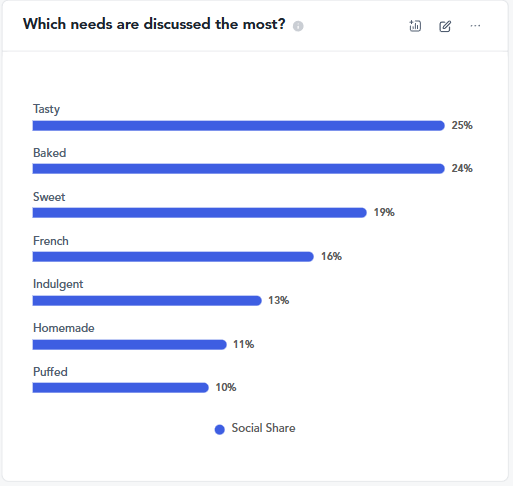
Tastewise reveals that consumer conversation is dominated by sensory and emotional food needs, with “Tasty” (25%) and “Baked” (24%) leading, followed by “Sweet” (19%) and “Indulgent” (13%). These preferences highlight a strong demand for comforting, craveable formats.
Functional or health-led attributes like “Homemade” (11%) and “Puffed” (10%) trail behind, suggesting that taste and experience continue to outweigh wellness cues in social conversation. For brands, the takeaway is clear: to drive engagement, lean into sensory language and formats that deliver on flavor, familiarity, and indulgence.
Why do pastry and coffee trends work so well together?
Bakery menus and coffee menus are now blending more than ever. Latte-flavored fillings, espresso-glazed croissants, and tiramisu-inspired offerings are showing up on both sides of the counter. Iced lattes saw 338% menu growth, while coffee itself holds a strong 17% social share.
Pairings matter here. Chocolate and coffee remain top duo choices. But roast coffee’s rise is pushing more nuanced pairings, think single-origin flavors and pastry fusions inspired by bean terroir.
Final thoughts
There’s no single direction for baking in 2026, but one thing is clear: baking trends continue to evolve through global inspiration, social influence, and emotional connection. As people search for comfort, novelty, and creativity, brands that use real-time data to act quickly will win. Pastries and baked goods aren’t just part of the meal, they are shaping how the future of food feels, tastes, and delights consumers around the world.
FAQs about pastry and baking trends
Cake, bread, cookies, and hybrid baked formats like cruffins and crookies lead demand. Items blending sweet and savory elements are trending up across markets.
Bakeries use TikTok and Instagram as real-time testing grounds. Viral baking recipes often become menu specials, and visual storytelling influences what consumers crave next.
Yes, alternative flours, reduced-sugar formulas, sourdough viennoiserie, and fruit-forward fillings are growing fast as consumers look for baked goods that feel indulgent but balanced.


We’d love to learn your goals and see how Tastewise fits
We’d love to learn your goals and see how Tastewise fits
Get a personalized demo
Good taste. Wise move.
Your demo request is confirmed. We’ll reach out within one business day to schedule your walkthrough.
What happens next

See what’s driving demand, then turn it into a sell-in story for retailers and operators.
- Connect consumer panels, market trackers, and agents into one evidence view
- Get the “why” behind what’s changing, with explainable demand drivers
- Walk away with a buyer-ready narrative and next steps to activate
Trusted by





“Tastewise is my secret tool for knowing what consumers want next and why.“